
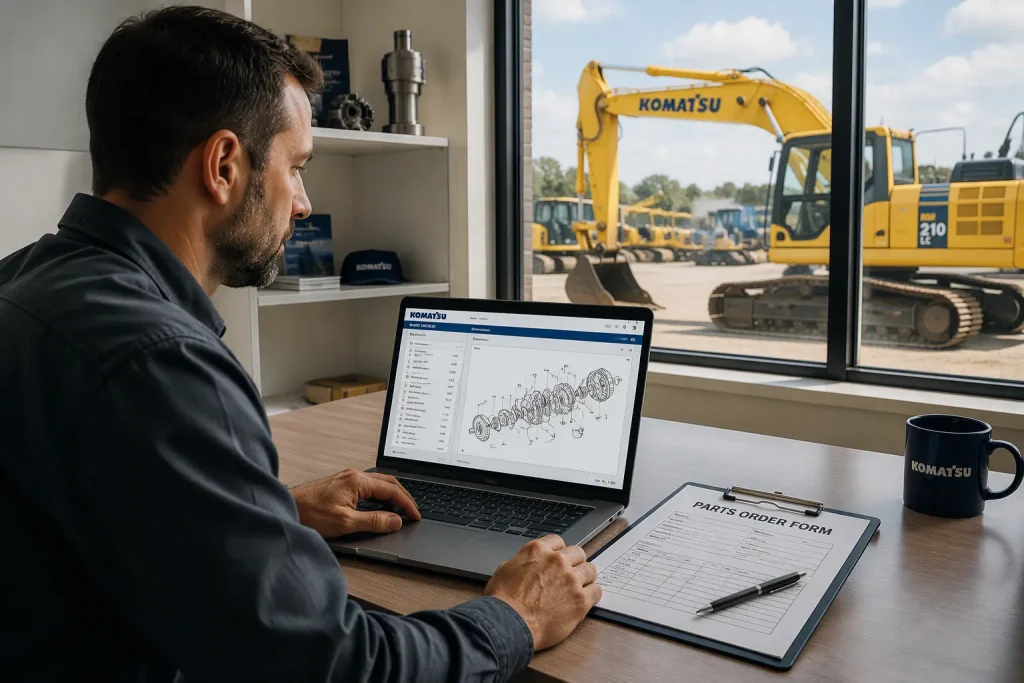
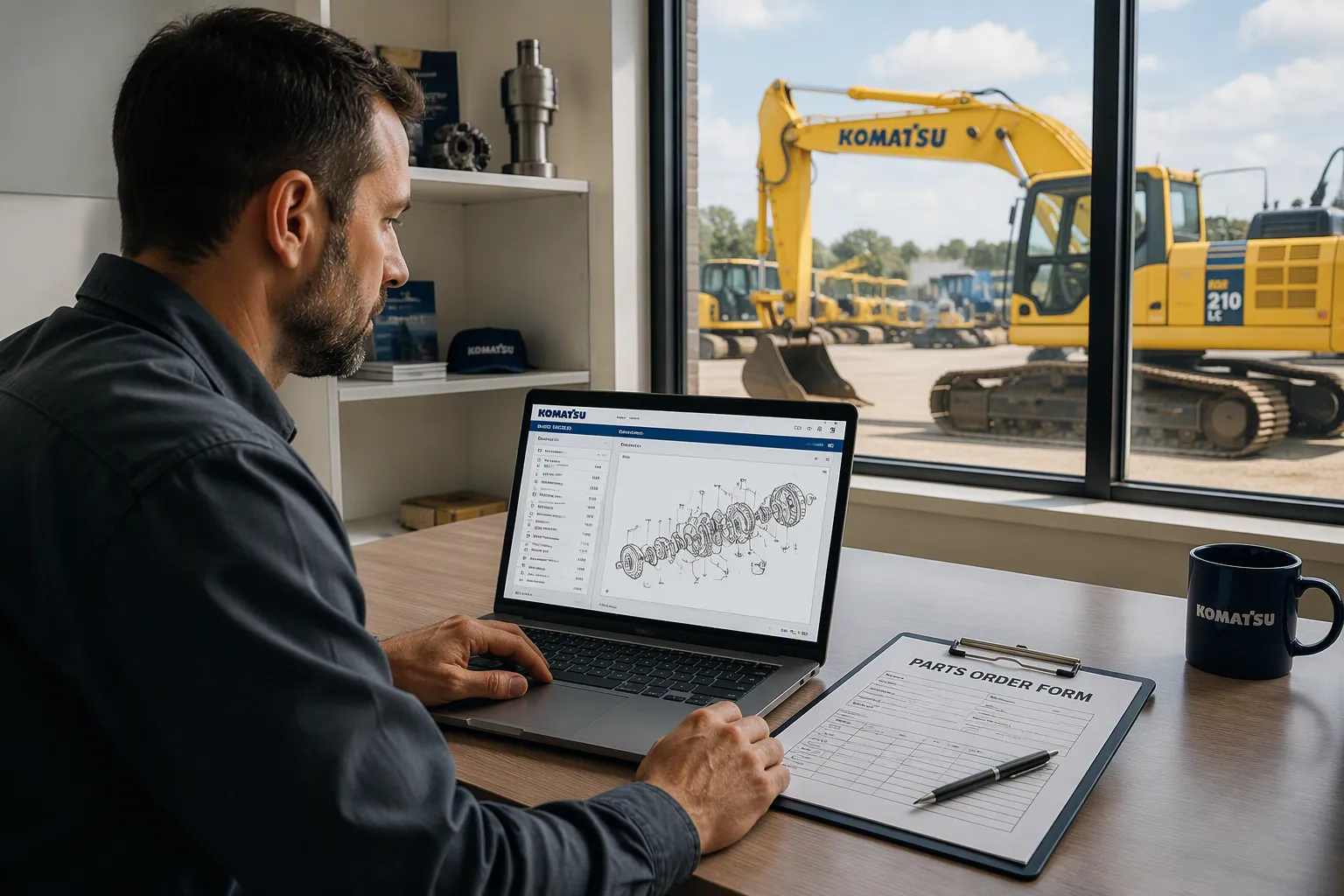
For a US buyer considering used Komatsu excavator parts from British Columbia, build an order record that connects the actual offered item to the machine and agreed transaction. Keep identification, applicable fitment evidence, condition findings, supply scope, quoted costs and delivery responsibilities together.
The process prevents two common failure modes. The first is invented specifications. The second is universal compatibility assumptions. A used komatsu excavator parts bc order deserves better than guesswork. You will learn to treat unconfirmed details as unverified and to keep every claim tied to documented evidence.
Key Takeaways
Write down your machine’s model and serial number exactly the way they show.
List every part with its part number and the serial numbers it works with.
Check each part against the official Komatsu manuals for your machine.
Mark any detail that is not yet confirmed as unverified. Do not pay until it is confirmed.
Keep all papers, photos, and cost details in one file package.
Gather Machine and Parts Identification
Record Machine Details from Your Records
Machine identification starts with the paperwork you already have. Find the model and serial number on your purchase documents, service records, or the machine’s ID plate. Write these details down exactly as they appear. Do not round numbers or fix what looks like a typo. One digit in the wrong place can send a seller to the wrong parts family.
Use applicable identification and parts documentation with a qualified specialist to establish the correct application. Identification alone does not establish machine age, attachment fitment or authenticity. Keep earlier invoices and service records as supporting evidence, noting any inconsistencies.
List Parts with Required Identifiers
List the required component position, quantity, proposed service part reference and applicable machine identification. Ask which configuration or serial-range restrictions are actually shown in the supporting reference; do not assume every part has its own serial number.
Never make up or assume an identifier. If a seller cannot confirm a part number, or if the serial range is unclear, mark that line unverified. An unverified entry is honest and useful. A guessed entry is a future dispute. Keep the list in one document, and update it each time the seller gives new information.
Verify Used Komatsu Excavator Parts BC Orders
Inspect Actual Components Before Ordering
Checking means more than just reading a listing. You confirm three things about every part: it exists, someone has identified it correctly, and it fits your machine. A qualified inspector or your own service provider can do this check on the real part. Ask for a written report of what was inspected and what was found. Do not open hydraulic parts yourself, run powered tests, or take inside measurements. Those jobs belong to qualified service workers, and their findings should go in your record.
Be suspicious of a seller who cannot show the physical part. Photos of a similar part prove nothing about the unit you will get. The same rule applies to used komatsu excavator parts bc listings that describe condition in vague terms. Ask for details tied to the actual unit.
Cross-Check Seller Documentation
Use the applicable Komatsu parts reference for the actual machine identification and configuration. A document may cover several variants or ranges, so check its stated scope rather than assuming it describes one individual machine.
Ask a qualified parts specialist to explain the reference used, any documented replacement number and the proposed match. Keep the reference details with the quotation.
Markings, packaging and paperwork can support an identity review but do not by themselves prove authenticity. Keep the following cross-checks separate:
Compare the part number stamped on the part with the number in the seller’s paperwork.
Check whether any supplied packaging and documentation are consistent with the claimed item, without treating packaging appearance as proof.
Match the paperwork against the official parts manual for your serial number.
A part with no markings you can verify, paperwork that does not match, or packaging that looks wrong is unverified. Do not pay for it until the seller fixes the gap.
Write down each check. Note the date, who did it, and what the comparison showed. This record turns a verbal promise into evidence you can use later. Buyers of used komatsu excavator parts bc orders often skip this step and regret it after delivery. A written cross-check protects you when a part arrives wrong.
Document Photos, Measurements, and Serial Numbers
Build a Photo and Serial Number Record
Request clear photographs of the actual offered part, including readable identification, accessible interfaces and condition details. Stock or illustrative workshop images do not establish the item identity or condition.
Tie the photographs to an item or quotation reference and record which machine the item is proposed for. A filename supports organization but does not prove the photograph or compatibility claim is accurate.
Record Measurements and Condition Findings
Record measurements and condition findings only as supplied documentation. A qualified inspector or the seller provides these details in writing. You do not run your own operating tests, open hydraulic components, or take internal measurements. Those actions belong to qualified service workers, and their written report is what enters your record.
Ask for the inspector’s findings in a clear format. Note who measured the part, when they did it, and what tools or references they used. Attach that report to the matching photos and the parts list line. If a seller gives a verbal condition claim with no document behind it, mark the item unverified. Every record must point back to the exact part and the machine serial number, so the full chain stays traceable from first inquiry to final delivery.
Avoid Invented Specs and Universal Fit Claims
Verify Against Official Komatsu Data
Use applicable manufacturer documentation and qualified application verification as the basis for the match. A cross-reference is a lead to investigate; ask which application restrictions or revisions it accounts for rather than assuming it is complete.
Check each part number against the model-specific Komatsu parts manual for your exact machine serial number. Open the manual for your model. Find the picture or listing for the assembly in question. Read the part number printed there. Compare it letter by letter with the number on the seller’s paperwork. Check the serial number range shown in the manual against your machine’s serial number. A part listed for an earlier serial range may not appear in the section for your machine. That difference matters.
Write the result into your record. Note the manual edition, the page or figure you used, and the date you checked. This entry shows a future reader exactly how you reached your conclusion. It also lets you repeat the check if a dispute comes up.
Treat Compatibility as Machine-Specific
Compatibility belongs to one machine, not a family of machines. A part that fits one model or serial range may not fit another. Two excavators can share a model name and still have different components. Mid-production changes, regional builds, and attachment options all change what fits. A seller who says a part “fits all Komatsu excavators” has told you nothing useful. That claim is a universal fit claim, and you should reject it.
Record the source and reasoning for the proposed match, including relevant configuration, documented replacement references and unresolved restrictions. A catalogue entry supports identification but does not by itself prove the offered item identity or condition.
Apply the same rule to specifications. Suppose a seller lists a hydraulic component with a flow rating and a pressure rating. Those numbers mean nothing to your order unless an official source ties them to your machine. If the exact specification cannot be confirmed from official documentation or from the part itself, treat it as unverified. Do not fill the gap with a plausible guess. Do not accept a seller’s assurance in place of a document.
This discipline protects you in both directions. It stops you from buying a part that will not fit. It also stops you from rejecting a correct part because a chart said otherwise. Keep every compatibility statement tied to a model, a serial number, and a cited source. That standard turns a vague promise into a checkable fact.
Confirm Delivery Documentation and Cost Terms
Agree Responsibility for Shipment Documentation
For the proposed shipment, have the seller and the appropriate carrier or qualified shipment adviser confirm the documents needed for the actual transaction. Agree in writing who prepares, reviews and retains each item. This purchasing checklist does not establish a complete legal or customs document list.
Check that item descriptions, quantities and transaction references agree across the documents that apply. Resolve discrepancies before shipment where possible and retain copies. Written responsibilities support follow-up but do not guarantee a remedy.
Itemize Cost and Payment Terms
Put every cost line in writing before you pay. A single total hides the details you need to check later. Itemize the order in a clear list:
Part price for each line on your parts list.
Freight and carrier charges.
Handling or crating fees.
Documentation preparation charges.
Any deposit, balance, and payment method.
State the quoted currency, payment schedule, triggers and exclusions. Negotiate terms appropriate to the transaction rather than assuming a universal payment arrangement. Record who is responsible for unquoted charges and obtain written confirmation before committing.
Finalize and Archive the Order Record
Write the Supply Scope and Terms
State the included components, quantities and supported application references, with exclusions such as mounting hardware, seals, hoses or core-return arrangements made explicit. Do not invent a serial range where the applicable reference uses another basis for fitment.
Attach or accurately reference the agreed condition report, preserving its findings and limitations. Record the accepted scope, delivery and payment terms, and document responsibilities; obtain written acknowledgement from the seller.
Assemble the Documentation Package
Build one package that holds every record from first inquiry to final payment. Store it where you can find it months later, and keep a backup copy. A complete package for a used komatsu excavator parts bc order should contain:
Your machine details: model and serial number, copied exactly.
The parts list with part numbers, serial applicability, and any unverified marks.
The inspection report and the seller’s documentation.
Photos named with the part number and machine serial number.
Manual citations: edition, figure, and check date.
The itemized cost sheet and the written responsibility split.
The signed supply scope and the seller’s acknowledgment.
Check the package against the agreed order before each transaction milestone. Preserve the original records and clearly record later changes, receiving discrepancies and follow-up. A complete file supports resolution but does not guarantee that a dispute will be avoided.
Use a repeatable sequence: actual machine and part identification, supported application match, qualified condition evidence, actual-item photographs, written supply scope, quoted costs and delivery responsibilities. Keep unresolved details visible instead of filling gaps with guesses.
The article photographs illustrate a purchasing workflow. They are not evidence of the identity, inventory or condition of any item offered for sale.
FAQ
What should you record before paying for a used Komatsu part?
Write down your machine model and serial number exactly as they appear. List each part with its part number and the serial numbers it fits. Add the seller’s paperwork, inspection findings, photos, and cost terms. Mark anything you cannot confirm as unverified.
How do you verify a used part fits your machine?
Check the part number in the Komatsu parts manual for your exact model and serial number. Compare the serial range in the manual with your machine. Ask a qualified inspector to confirm the actual component. Treat any claim you cannot trace to official paperwork as unverified.
What rules apply to photos in your order record?
Ask for actual-item photographs with readable relevant identification and condition details. Label files consistently with the item or quotation reference and keep them with the accepted order. Do not obscure information needed for verification.
What do you do when a seller cannot confirm a part number?
Mark that line unverified in your parts list. Do not fill the gap with a guess or accept a verbal promise. Ask the seller for written paperwork. Hold payment until the identifier is confirmed against official Komatsu references for your serial number.
Who handles paperwork for a cross-border order from British Columbia?
Confirm the requirements for the actual shipment with the appropriate carrier or qualified adviser, then agree the seller and buyer responsibilities in writing. Retain the applicable documents and acknowledgements; do not assume a generic checklist covers every transaction.
For excavator parts sourcing, consider YNF Machinery. Share full machine and component identification, applicable part references and quantities, and request supported compatibility information, an actual quotation, and written warranty and return terms before ordering.



