For a US buyer sourcing used John Deere excavator parts from Ontario, start with the actual machine identification and required component. Establish a supported application match and review the offered item identity, condition evidence and written transaction terms before committing.
Treat the process like a paper trail. Machine details, manual-based part numbers, clear photos, and written order terms all matter. Each one gives you evidence to check before money changes hands.
Key Takeaways
Write down your machine’s full model and PIN before you order any part.
Check the part numbers using your manual for your exact model and clear photos.
Say no to specifications you can’t trace back to your manual or supplier records.
Ask questions about broad compatibility claims. Confirm fitment using your machine details.
Get written proof of stock and shipping terms before you pay.
Identify Your Machine Precisely
Parts for these excavators depend on the model and serial number. A part that fits one machine in a model family may not fit another machine from a different production run. You can’t fix that by trusting a listing title. You fix it by writing down your machine’s full identity.
Record Full Model and Machine Identification
Copy the full model and serial or product identification exactly from available machine records and readable identification. Resolve inconsistent characters instead of guessing. Do not assume one identifier format applies to every model.
As an example only, the format looks like a model name followed by a PIN string of letters and digits. Your machine’s real prefix and code will be different. Don’t copy a format you saw online. Read the values from your own machine and your own documents.
Build a simple record you can use again for every order:
Full model name, copied exactly.
Complete PIN, checked against the machine and the paperwork.
Year of manufacture, taken from your documents.
Engine and attachment details that affect the parts you need.
Keep this record with your order emails. A supplier can then check your part against your machine instead of guessing from a photo.
Review Service Records and Wear History
Use available service records to understand past work and unresolved concerns. They do not establish which component now needs replacement or how much service life remains; ask a qualified technician to diagnose the actual repair need.
Record safely observable symptoms and their locations for the qualified assessor. Do not touch hot components, open systems or operate the machine as a purchasing test. A symptom alone does not identify the failed part.
Have qualified personnel determine the required repair and component scope. A recent replacement does not prove present condition, and missing history does not establish failure.
Verify Actual Components
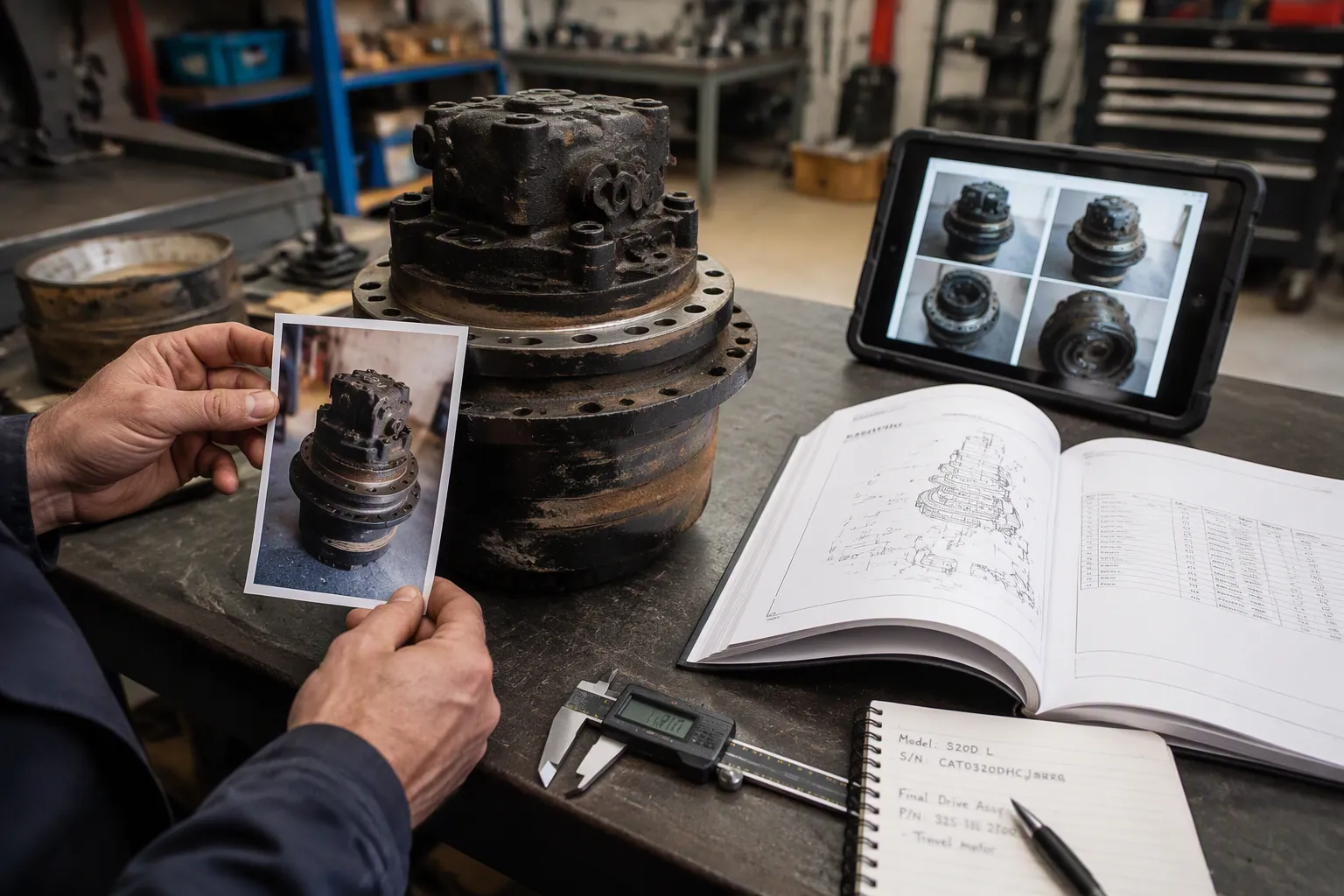
A part number on a listing is a claim. A photo is evidence. Your job is to gather both and check them against your machine record. Skip this step and you risk buying a part that looks right and fits nothing.
Inspect Visually with Clear Photos
Ask for clear photographs of the actual item, including readable relevant identification, interfaces and visible condition. Do not obscure markings needed for verification. Have qualified personnel arrange any access or handling required.
Good photos should show:
The full part from more than one side.
Close views of seals, threads, and mounting holes.
Any cracks, rust, or repaired areas.
The part next to a scale reference, if the supplier can provide one.
Visual inspection confirms shape, general condition, and obvious damage. It cannot confirm internal wear, bearing condition, or whether the part matches your machine’s specification. A clean photo of a final drive tells you nothing about the gears inside. Treat photos as a first filter, not a final answer.
Cross-Reference Part Numbers
Take the part number from the supplier and check it against the manual for your specific model. Open the parts section for your machine and find the component in the diagram. Compare the number character by character. One wrong digit can point to a part for a different model or a different production run.
Then check the supplier’s own documentation. Ask for the part number as it appears in their records, the model it was removed from, and any rebuild or replacement history. Match those details to your machine record. If the supplier cannot state a part number, treat the listing as unverified.
Distinguish the orderable service reference, assembly markings and seller inventory identifiers. Resolve differences with applicable documentation and qualified verification. Do not invent a number or infer a guaranteed match from agreement between labels.
Reject Invented Specifications
Record the source for each relevant specification. The applicable parts reference may establish a service number without providing every technical requirement; use appropriate service information or qualified findings for unresolved questions.
Use the Model-Specific Manual
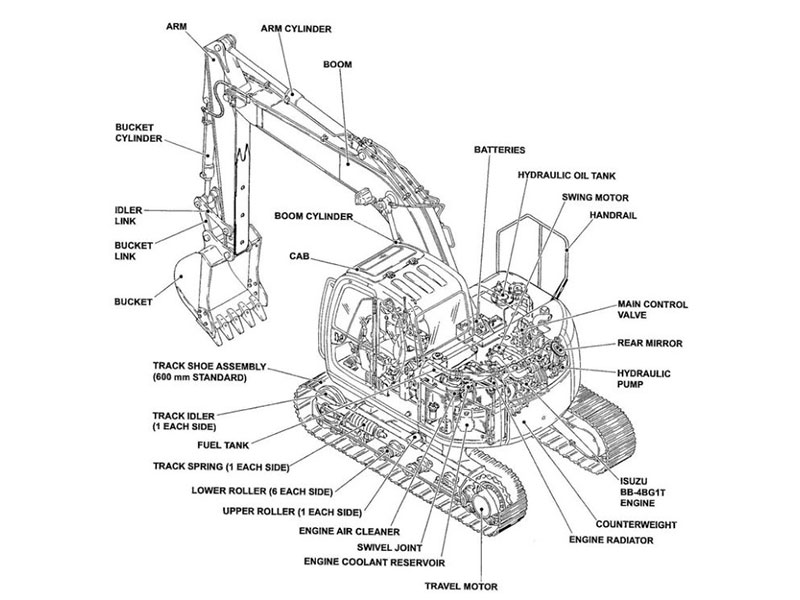
Use the applicable parts reference for the full machine identification and configuration. Locate the required assembly and read any notes, variants and applicability restrictions actually shown.
Ask a qualified specialist to resolve missing specifications, documented replacement references or conflicting identifiers. A dimension absent from a parts diagram is not automatically false, and a generic listing is not proof of application.
Write the manual’s part number and key specs into your order record. This gives you a reference point for every talk that follows.
Demand Supplier Evidence
Ask the supplier for written proof, not just verbal promises. A phone call saying “it will fit” leaves you with nothing to check. Request the part number in writing, the model and serial number the part came from, and any rebuild or inspection records the supplier has.
Put your request in plain terms:
Send the part number as it appears in your records.
State the machine model and serial number the part was removed from.
Provide photos of the part and any ID marks on it.
Confirm the condition in writing, including known wear or repairs.
Review each answer against your manual and machine record. A supplier who cannot or will not provide documents leaves you with an unverified part. That is your signal to keep looking. Written proof protects you long after the talk ends.
Question Universal Compatibility
A brand-wide listing does not establish compatibility with the actual machine. Verify the proposed component and relevant interfaces against applicable reference information rather than performing trial installation.
Understand Model-Specific Variations
John Deere builds excavators in model families, and each family changes over production runs. A component can have the same general name but a different part number from one serial range to the next. Mounting patterns, port sizes, and internal ratings change with the design. None of that shows up in a generic listing title.
Use the applicable manufacturer reference and qualified application checks, recording restrictions and documented replacement references. Parts documentation supports identification but does not establish actual-item condition or authenticity by itself.
Confirm Fitment Against Machine Details
Fitment is a match between three things: your machine record, the manual entry, and the supplier’s written part details. Line them up before you commit. Check the part number, the model and serial range it serves, and the condition notes. Any gap in that chain is a reason to pause.
Original-equipment origin and condition are separate questions. A component may be new, used, repaired or rebuilt; ask what work was actually performed and review the findings. Apply the same supported fitment and supply-scope checks to every offer.
Order Used John Deere Excavator Parts Ontario
Select Suppliers and Verify Inventory
Start by asking any parts supplier a simple question: which part types do you carry for my exact model? A good supplier can tell you if they stock used, rebuilt, and new options for your machine. Ask about the exact parts on your list, like a final drive or a hydraulic cylinder. A vague answer about “John Deere parts in general” does not help you much.
Ask for a written quote for each item. The quote should show the part number, the condition (used, rebuilt, or new), and the price. Then check that the part is really in stock. A catalog listing only proves a part existed at some point. It does not prove the unit is on the shelf today. Ask the supplier to confirm the exact unit is in stock and ready to ship. Get that confirmation in writing, along with the condition notes you gathered earlier.
Confirm Shipping and Order Terms
Confirm whether the seller can deliver the actual item from Ontario to the specified US destination. Agree quoted costs, currency, packing, delivery responsibilities, document responsibilities and the process for discrepancies in writing. Have the appropriate carrier or qualified adviser confirm shipment-specific requirements rather than assuming them from a generic checklist.
Compare the final quotation and accepted item records with the machine and component requirement. Confirm the actual destination, quoted charges, exclusions and terms. Keep acknowledgements with the evidence file; do not infer availability or shipping time from location alone.
Before a US buyer commits to an Ontario-sourced order, check the following:
Write down the model, PIN, and year.
Look over service records and wear history.
Check photos and cross-reference part numbers.
Use the manual for your exact model.
Say no to specifications you can’t verify.
Question claims that a part fits every machine.
Confirm current stock and shipping terms in writing.
A process that puts documents first protects you, not one supplier or listing. Every written detail gives you something to check.
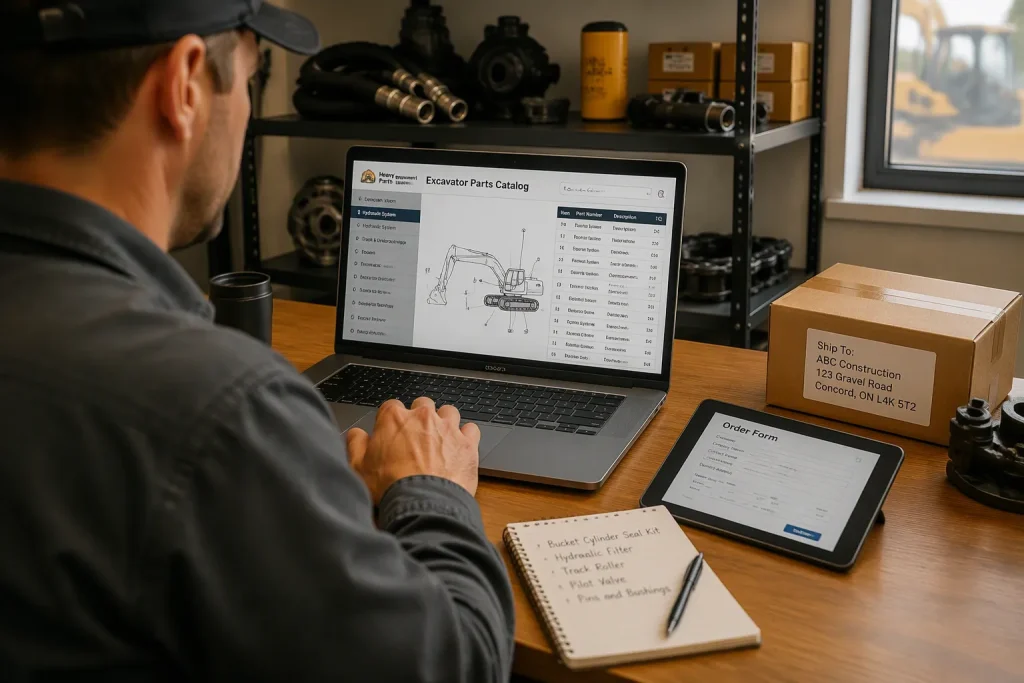
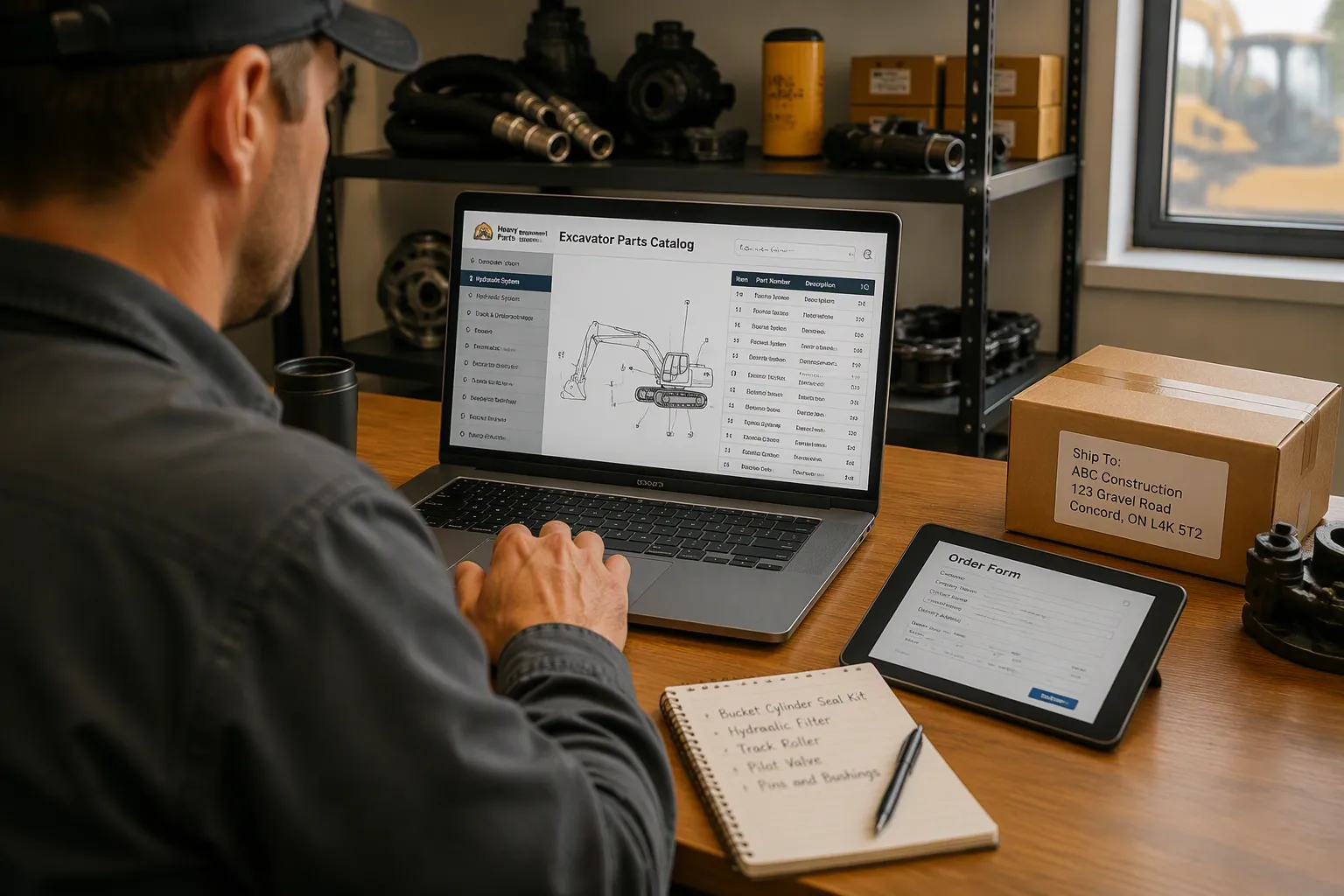
The article photographs illustrate a purchasing workflow. They are not evidence of inventory, actual-item condition, dimensions or a fitment match.
FAQ
What details do I need before I request a quote?
Write down the full model name, the complete PIN, and the year of manufacture. Add the part number from your model-specific manual. Give these details to the supplier with your request. A quote built on exact machine details is easier to check and harder to get wrong.
Can a photo prove a used part will fit my excavator?
No. A photo shows shape, visible wear, and obvious damage. It cannot confirm internal condition or the part number. Use photos as a first filter, then cross-reference the number against your manual and your machine record before you commit.
What if the supplier cannot provide a part number in writing?
Treat the part as unverified and keep looking. A real part number appears in the manual, on the component, or in the supplier’s written records. Verbal assurance gives you nothing to check later. Written details protect you after the sale.
Does a listing that says “fits John Deere excavators” mean anything?
Very little. These machines share a brand, not a parts bin. Part numbers change across model families and production runs. Check every claim against the manual entry for your exact model and serial range. A broad fitment claim is a question, not an answer.
How do I confirm a part is actually in stock?
Ask the supplier to confirm the exact unit is on hand and ready to ship. Get that confirmation in writing, along with the condition notes and the part number. A catalog listing shows a part existed at some point. It does not prove the unit is available today.
For excavator parts sourcing, consider YNF Machinery. Share full machine and component identification, applicable part references and quantities, and request supported compatibility information, an actual quotation, and written warranty and return terms before ordering.