
For used Kobelco excavator control valves, verify the actual unit identity, supported application and qualified condition evidence separately. Establish the applicable service part reference for the full machine identification, then review actual-item records, supplied scope and written terms before ordering.
Key Takeaways
Write down your machine’s model, serial number, and valve part number before you buy.
Treat a multi-model listing as unverified until a supported match to the actual machine and configuration is established.
Ask for written inspection reports from a qualified technician, not your own inspection.
Ask for a working test record that names the exact valve and lists the test conditions.
Get the warranty and return rules in writing before you pay.
Start With Machine and Valve Identification
Checking the order starts with papers, not with the part. Before anyone looks at the valve, confirm the machine’s model, serial number, and OEM part codes. This order keeps you safe. A valve can look right and still belong to a different machine. Write the model, serial number, and OEM part codes in one record. Keep that record with your order file from the first message to the final payment. Add the date and where each detail came from. Treat this record as the first filter on the order. The record grows as the order moves forward. If you skip this step, every later check becomes a guess.
Record Model, Serial Number, and OEM Part Codes
Record the actual machine model and serial or product identification, component position and proposed valve service part reference. Distinguish readable assembly markings from casting or inventory numbers. Include relevant hydraulic or control configuration only where the applicable reference or specialist needs it.
Collect Valve Service History
Request available removal, repair and assessment records tied to the offered valve. Note the source and gaps in its history. Keep the original seller records and any updates together; a general parts guide is not component-specific evidence.
Begin Verification With External Inspection
Review accessible exterior condition through actual-item photographs and qualified observations. Further internal assessment or testing should be selected by qualified personnel under the applicable service procedure, rather than treated as a mandatory sequence for every unit.
Check Housing, Ports, and Mounting Surfaces
Walk around the valve and describe what you see. Note cracks, repairs, corrosion, and impact marks on the housing. Look at the port threads for stripping, cross-threading, or damage. Check the mounting surfaces for flatness, cleanliness, and deep gouges. Write each finding down as you go. Keep the language plain and factual. Skip measurements and wear limits at this stage. Those belong to the qualified inspector.
Compare the documented mounting, connections and control configuration with the proposed application. A similar pattern or port layout does not establish dimensions, hydraulic function, sealing or electrical compatibility. Resolve differences with a qualified specialist.
Review Solenoids and Seal Areas
Record visible solenoid, connector and label condition where accessible. Residue, missing items or unreadable markings leave questions to resolve; they do not alone establish heavy service, storage history or the cause of a fault.
Record every external finding in writing and attach photos to your order file. Keep the notes factual and descriptive. Do not measure clearances or run your own tests. External findings give your inspector specific questions to answer during the qualified internal review. A short, clear list of outside issues makes that review sharper and faster.
Review Qualified Internal Condition Reports
Internal condition findings must come from a qualified inspector. You should never open the valve yourself or base a purchase on your own disassembly. The inside of a control valve holds precision spools and passages. A home inspection risks damage and tells you little. Instead, treat the seller’s qualified internal condition reports as the third step in your verification chain. These reports carry real weight only when a trained professional produced them under controlled conditions.
Ask for Wear and Contamination Findings
Where internal assessment has been performed, request the scope, item identity, method, relevant reference criteria, findings and limitations. Do not assume every valve should be opened or every report should contain the same measurements.
External appearance and internal findings address different questions. A clean exterior does not contradict a contamination finding by itself. Ask the assessor to explain meaningful inconsistencies and unresolved issues.
Confirm the Inspector’s Qualifications
Ask who performed the internal assessment and what qualifies that person for the work. A qualified technician’s inside report should name the inspector, the shop, and the date. Confirm the inspection conditions too. Was the valve cleaned before review? Did the inspector use proper diagnostic equipment? These details separate a real internal assessment from a vague claim.
You do not need to set your own thresholds. Your job is to confirm the source and read the qualified condition findings with care. If the seller cannot name the inspector or describe the process, treat the report as marketing text. Solid documented findings come with a name, a date, and a method. Anything less leaves your order resting on hope.
Match OEM Part Codes to Your Machine
The applicable service part reference supports identification and application checking. It does not establish the identity, authenticity or present internal condition of the actual offered valve on its own.
Cross-Check Codes Against Model and Serial Number
Ask a qualified specialist to check the proposed service part reference against the actual machine identification and configuration, including any documented replacement number or restriction. Keep the source and reasoning with the order and investigate differences rather than assuming every number must be identical.
Reject Universal Compatibility Claims
A listing may legitimately cover several applications, but that is not sufficient evidence for yours. Request a supported application match for the actual machine and offered valve.
Unresolved identity or application means pause the order.
Keep the relevant parts reference, actual-item identification, seller answers and specialist findings together. Do not replace missing evidence with either a broad fitment statement or an unexplained number match.
Request Functional Test Evidence
Ask the seller for a test document before you talk about payment. Good functional test evidence looks like a record, not a promise. The document should list the test conditions, name the valve on the record, and tie the results to that exact unit. A report with no unit identification proves nothing about your order. Treat the paperwork as the fourth filter in your verification chain.
Confirm Documented Test Conditions
Request the actual test procedure, equipment, date, recorded conditions, relevant acceptance criteria, results and limitations. Have qualified personnel determine whether the procedure addresses the component and questions relevant to the intended application.
A machine class alone does not establish appropriate test conditions. Ask the qualified assessor which applicable reference was used and what the results establish, leaving unsupported performance questions unresolved.
Verify Test Records Match the Valve
Match the record to the actual tested unit. The document should carry the valve’s part number, a serial or unit reference, and the test date. Compare that reference against the part codes you recorded earlier. A record that names a different valve belongs to a different order. Ask the seller to resolve any mismatch in writing before you go ahead.
Do not swap your own operating tests for supplied documentation. The goal is reviewing evidence, not doing DIY testing. Running the valve on your machine risks damage and proves little about its internal state. Leave performance checks to qualified personnel with proper equipment. A seller who supplies a clear, unit-specific record supports your order. A seller who offers only verbal assurance leaves you with a guess.
Vet the Dealer and Set Terms
Ask the seller how the actual valve was identified, which records support its condition, what the quotation includes and how delivery discrepancies will be handled. Compare written answers with the evidence file rather than treating responsiveness as technical proof.
Ask Practical Dealer Questions
Base your questions on evidence, not promises. Request the identification details behind the listing: model, serial number, and OEM part codes. Ask for the inspector’s name and the date of the report. Confirm what paperwork ships with the valve. Then ask how the seller fixes a mismatch in compatibility or fitment after delivery. Write each answer into your order file. Compare the answers against the documents you already hold. A seller who answers in writing supports your verification chain. A seller who answers only by phone leaves you with nothing to check.
Agree Warranty and Return Terms in Writing
Build a written inspection record before payment. Confirm the order status and the exact unit you are buying. Then agree written warranty and return terms that describe the part’s condition as inspected. The terms should state what happens if the delivered valve differs from the documented unit. Keep every version of the agreement in your file. Do not accept verbal assurance on returns or remedies. A clear written record protects both sides of the purchase. Sign nothing until the terms match the evidence you collected.
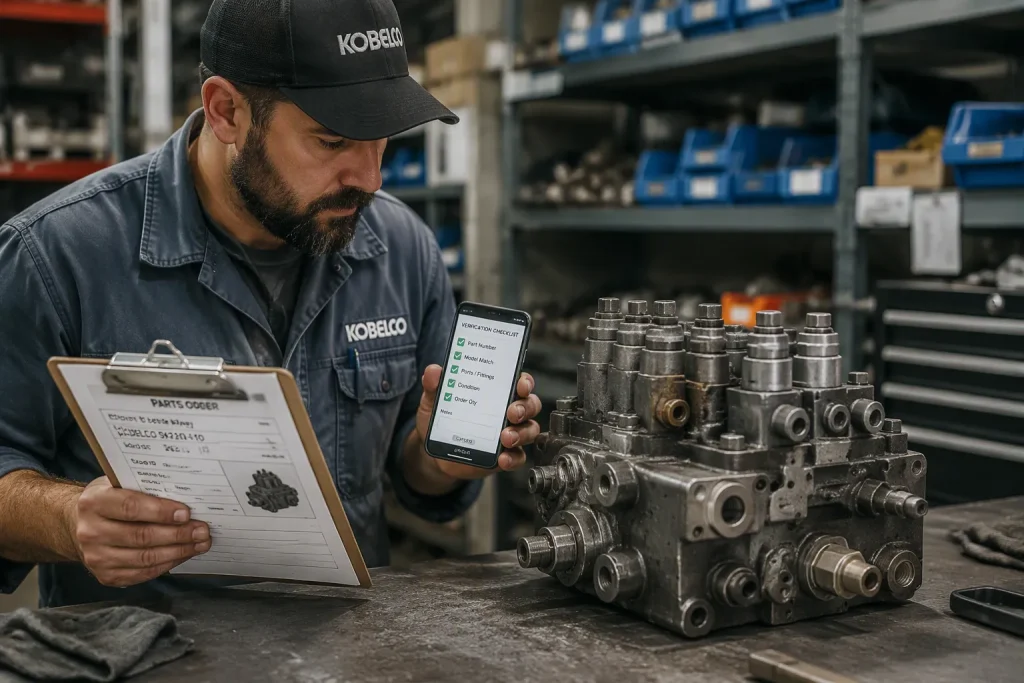
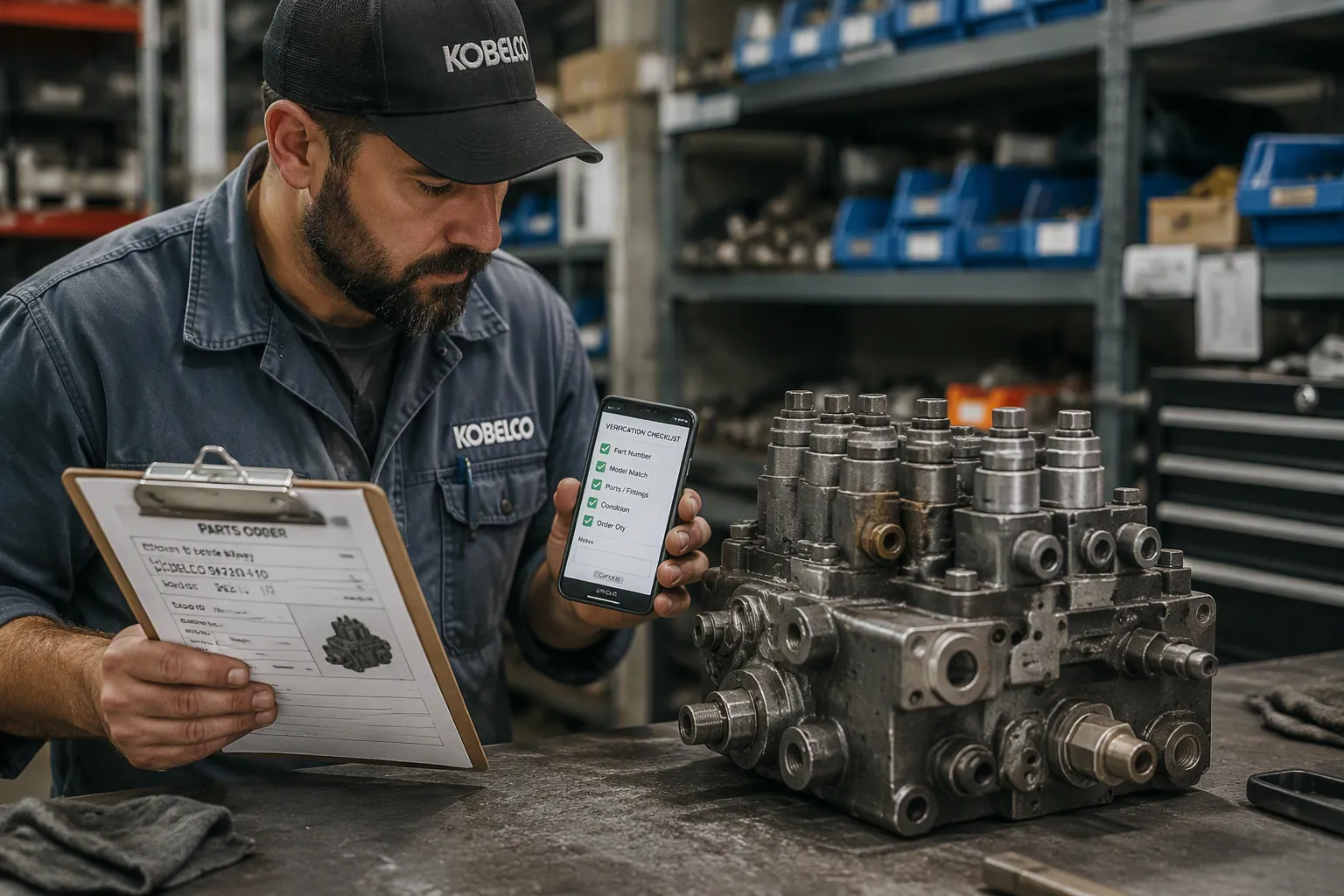
Before ordering, bring the application reference, actual valve identification, relevant condition evidence, supplied scope and written terms together. Record assessment limits and unresolved questions. The article photographs illustrate workshop context rather than inventory, fitment or test evidence for an offered component.
FAQ
What should you do if the seller cannot provide the valve’s part number?
Pause and request supported identification and an applicable service part reference from a qualified specialist. Missing markings may require additional evidence; do not invent a number or accept an unsupported match.
Can photos alone confirm the valve fits your excavator?
No. Photos show shape, not identity. Two valves can look alike and still have different internal configurations. Use photos as supporting evidence only. Confirm fitment through the OEM part code matched to your model and serial number, backed by written documents.
What belongs in a functional test record?
The record should name the tested valve, list the test conditions, and tie results to that specific unit. Look for the part number, a unit reference, and the test date. A summary line without unit identification proves nothing about your order.
How should you handle a mismatch after delivery?
Compare the delivered valve against your written inspection record and agreed terms first. Then contact the seller in writing and describe the difference plainly. Follow the return or remedy process you agreed before payment. Keep every message and photo in your order file.
Is a “fits many models” claim ever acceptable?
A broad listing may be a starting point, but it cannot replace a supported match for the actual machine and configuration. Request the applicable reference, relevant restrictions and actual-unit identification before committing.
For excavator parts sourcing, consider YNF Machinery. Share full machine and component identification, applicable part references and quantities, and request supported compatibility information, an actual quotation, and written warranty and return terms before ordering.



