
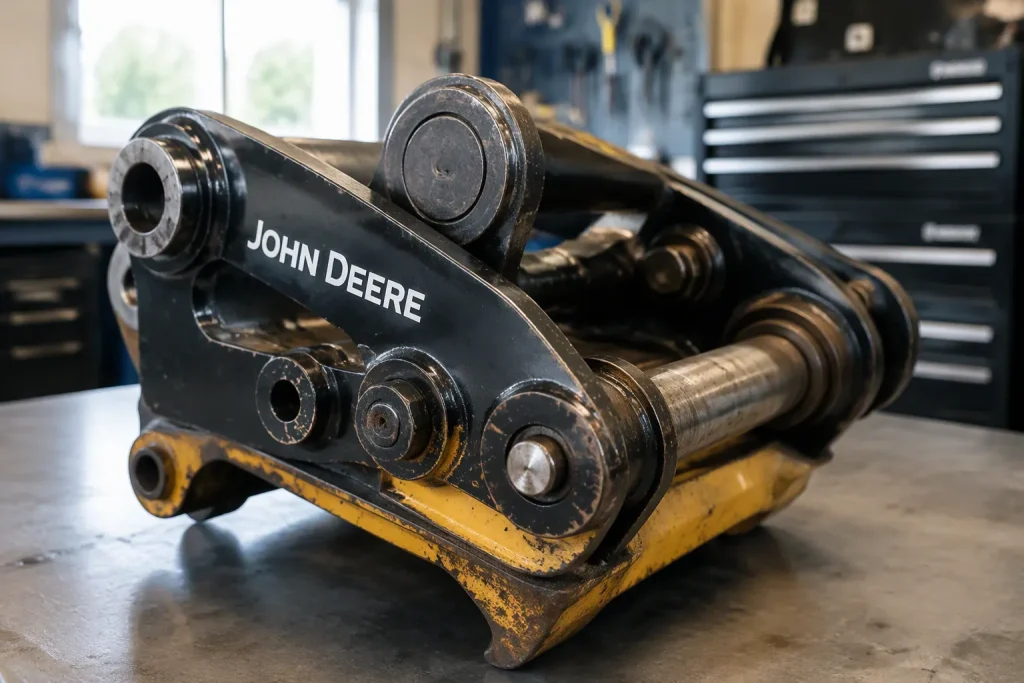
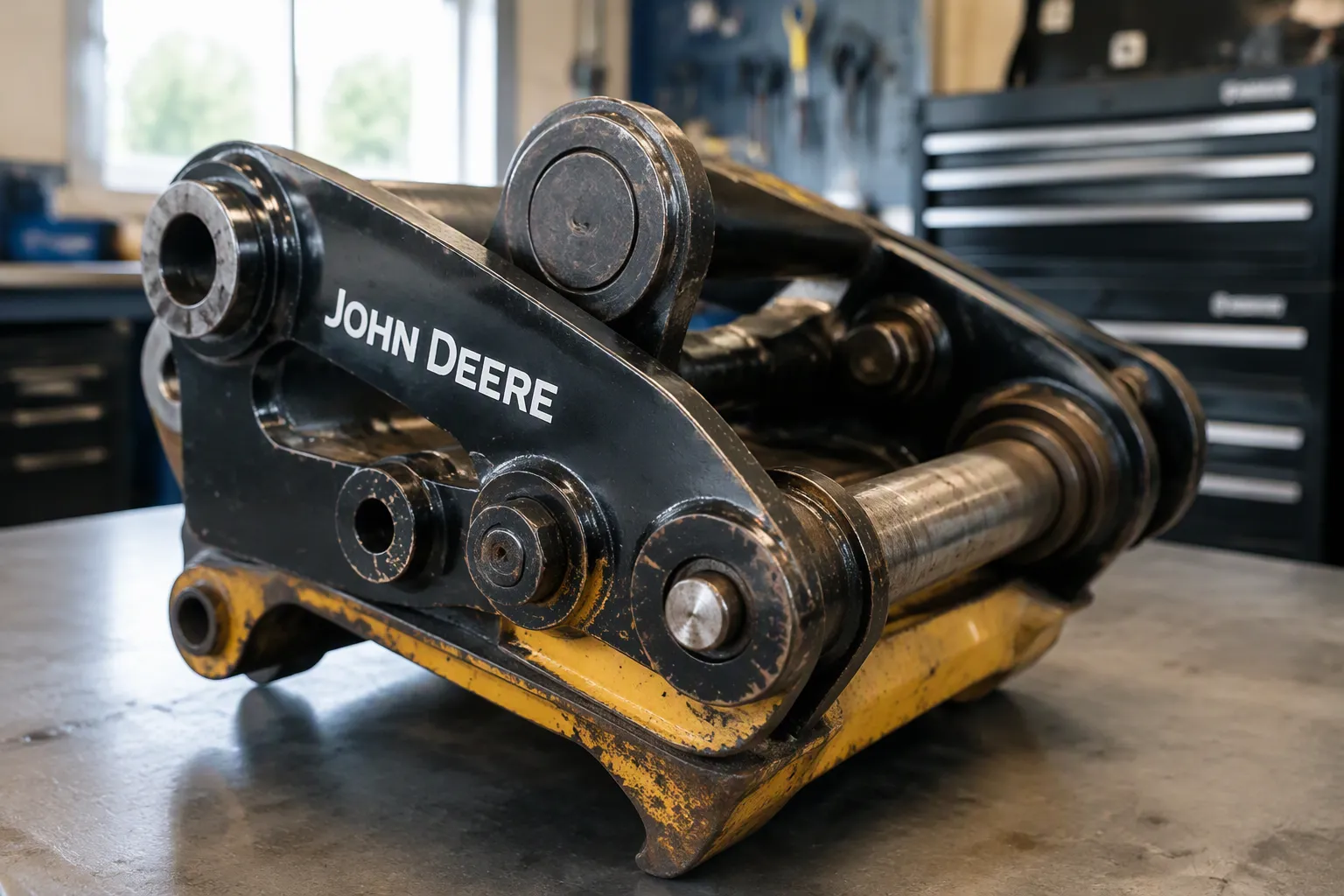
Identify used John Deere mini excavator bucket linkage parts using the applicable parts reference for the actual machine and attachment configuration. Locate the required links, pins, bushings and retaining items, then compare actual-item identification, qualified condition findings and supplied scope. Shape alone cannot establish a part number or fitment.
Key Takeaways
Use the parts diagram to match each linkage part with the right part number for your machine.
Take pictures of each part from different angles. Write down the wear details to show its condition.
Ask for written proof from a qualified inspector. It should cover part numbers, fitment, and condition.
Have qualified personnel verify relevant interface dimensions and condition against applicable information.
Compare the total cost with how good the paperwork and checks are before you buy.
Linkage System and Part Numbers
Linkage Components and Roles
Linkage names and arrangements vary by model and configuration. Use the applicable diagram to identify the links, pins, bushings, retainers and their assembly positions rather than assuming a universal H-link or I-link layout.
The linkage transmits bucket-cylinder movement through pivoting components. Have qualified personnel assess relevant wear and damage against the applicable service criteria; visible looseness alone does not quantify wear or acceptance.
Part Numbers and Parts Diagrams
Use the applicable diagram and its associated part list to connect an illustrated position with an orderable reference. Drawings may be schematic and several variants may be shown, so check notes and applicability restrictions.
Record the complete machine identification, installed bucket or coupler and any relevant attachment configuration. Ask a qualified specialist to establish the correct service part references and explain any documented replacement numbers or restrictions.
Visual Identification of Used John Deere Mini Excavator Parts
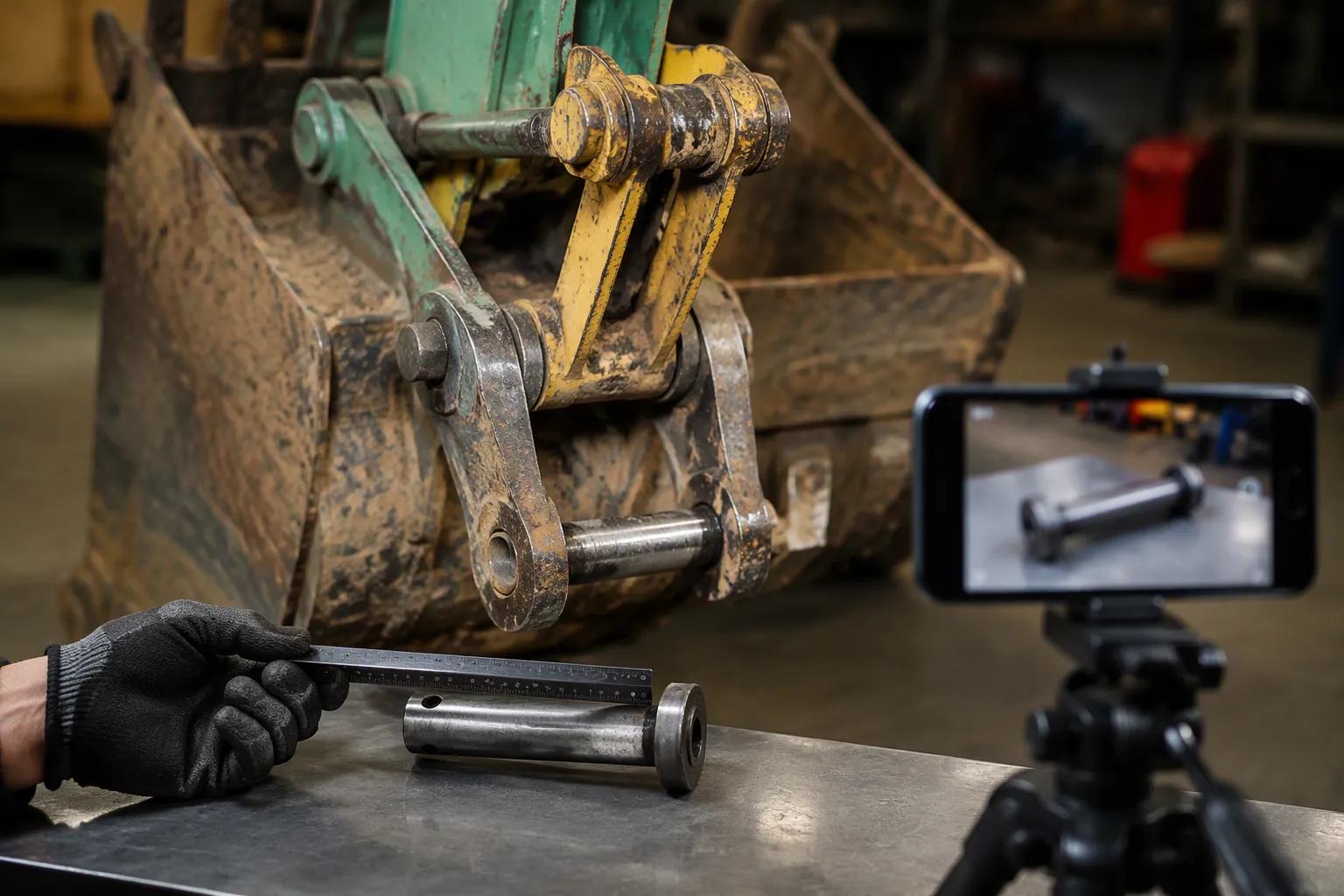
Recognizing Linkage Parts by Shape
Use safely obtained photographs and the applicable diagram to locate the required assembly positions. Do not reach into pinch points, move suspended parts or remove pins for identification. Have qualified personnel obtain any additional access under the applicable procedure.
Record available condition observations for the actual offered components. Bucket wear elsewhere on a donor machine does not establish linkage wear or service history by itself.
Use shape as a preliminary cross-check with the applicable reference, not as a universal naming or fitment rule. Similar-looking links may differ in required interfaces or configuration.
Documenting Candidates With Photos
Request actual-item photographs from safely accessible positions. Qualified personnel should arrange any movement or handling required. A useful image set includes the following:
Photograph each part from the front, the side, and the top.
Include supported dimensional information or qualified measurement findings where needed, with the method and item identified.
Capture close-ups of pin bores, weld seams, and bushing seats.
Label each photo with the part name and the machine model in your notes, not on the image.
Include readable identification where available rather than obscuring it. Ask a qualified specialist to compare the proposed references and actual item with the machine and attachment configuration. Photographs alone do not prove the match.
Record the condition of each candidate in the same notes. Note cracks, bent arms, oval pin bores, and worn bushing seats. A photo set plus written findings gives you a record you can review before you commit to used parts. Repeat this process for every used john deere mini excavator parts candidate, including any thumb attachment bracket near the linkage. A consistent photo record makes the final comparison simple.
Verifying Authenticity and Condition
Genuine Components and Documentation
Ask which records support the claimed identity and origin of the offered item. Matching a service part reference does not establish authenticity by itself; distinguish casting marks and assembly references from orderable numbers and resolve inconsistencies.
Request the service history and ownership records for the machine. These records show whether the linkage pins and bushings were maintained or replaced. They also reveal past repairs that may affect fitment. Treat this paperwork as inspection information you can review later, not as a verbal promise. Keep copies of every document with your photos.
Written verification should also state the supplied scope. Ask exactly which linkage components, pins, and bushings come with the sale. A clear scope prevents surprises after delivery. For any used john deere mini excavator parts purchase, the same rule applies: get the part number and fitment in writing before you pay.
Qualified Condition Findings
A qualified condition finding records what a trained inspector actually measured and saw. It should document wear on pins, bushings, links, and welds in specific terms. A seller’s general description such as “good shape” is not condition evidence. Ask for a written finding that names each part and describes its wear.
The finding should cover the full linkage. Pins show scoring or step wear. Bushings show oval bores or loose fit. Links show cracks, bends, or stretched pin eyes. Welds show undercut, porosity, or repair marks. Each item gets its own note. This level of detail gives you a real basis for your decision.
Where related cylinder or attachment condition affects the proposed repair, ask qualified personnel to define an appropriate assessment scope. Do not infer a hydraulic fault or its cause from movement observations alone.
Ask for a test report from a qualified service provider when the seller claims the assembly was tested. Read the test results carefully. Confirm the report names the machine model and the parts tested. Do not accept a report that lacks these details. A thumb attachment adds another interface to check, so include its bracket and pin fit in the same finding. Review the internal condition of pin bores through qualified inspection only, never by opening hydraulic components yourself. Solid condition evidence protects your purchase, and it turns a used parts deal into a documented one.
Compatibility and Fit Checks
Matching Parts to the Machine
Have qualified personnel verify required interface dimensions and condition using the applicable method and reference criteria. A few matching dimensions or an approximate photograph cannot establish full compatibility. Do not perform trial installation or handle unsupported linkage yourself.
Use the actual machine identification, configuration and applicable reference to check the proposed application. Where a serial-range restriction is specified, record it; matching dimensions and a range alone do not establish complete interchangeability.
Request the relevant supported dimensions or qualified findings in the quotation evidence file. Note the actual item, method, source and unresolved limits rather than assuming a dimensional difference proves a different machine origin.
Interfaces and Thumb Attachment Fit
If a thumb, coupler or other attachment is installed or proposed, have a qualified specialist verify the relevant interfaces and clearance requirements using applicable documentation and service procedures. Do not check full travel yourself as a purchasing experiment.
Ask qualified personnel to assess the relevant pivot, bushing and retention interfaces against the applicable criteria. Avoid universal rules about allowable play or a tight fit.
State the thumb attachment type in your quotation request. Some assemblies suit a specific thumb attachment design, and the seller should confirm it in writing. Review the condition of the thumb attachment bracket welds in the same inspection. Record each interface result in your notes, then compare the full set before you buy. A second condition note on the pin bores rounds out the record.
Cost Considerations for Used Parts
Total Cost and Verification Quality
Compare actual quotations for new, used or other offered condition categories. Include supported application, qualified condition findings, included items, availability and terms; neither price order nor suitability follows automatically from the label.
Include quoted inspection, freight, required accompanying parts and any agreed repair work. Documentation may reduce some uncertainty but does not establish a price premium or guarantee avoided rework.
Balancing Price and Risk
A fuller record can reduce uncertainty but does not automatically transfer risk to the seller. Assess the findings and agreed remedies alongside the actual quotation.
Ask what the price covers. Confirm whether pins, bushings, and any thumb attachment bracket are included. Check the condition notes for each item in the scope. A quote that lists these details lets you compare offers fairly. A quote that skips them hides cost you may pay later.
Proceed only when the evidence and agreed terms support the repair decision. A low price does not resolve identification, condition or compatibility gaps, and a higher price does not guarantee quality.
Buyer’s Verification Checklist
Documentation and Supply Scope
Go through the paperwork before you talk about payment. Follow these steps in order:
Confirm the parts diagram for your machine model and write down the diagram reference.
Write down each part number and check it against the machine’s build records.
Have qualified personnel check the relevant interfaces and supported application using applicable reference information.
Ask for a written inclusion list that names every linkage component, pin, and bushing in the sale.
That fourth step matters most. A clear scope tells you exactly what the actual assembly supplied contains. Ask whether the thumb attachment bracket and its pin come with the parts. Ask the same about every bushing in the set.
Review the machine’s service history and ownership records next. These records show whether linkage pins and bushings were maintained or previously replaced. They also reveal past repairs that may affect fitment. Keep copies with your photos and notes.
Written Terms and Final Confirmation
Get the terms in writing before you commit. The document should state the part numbers, the serial applicability range, and the application match for your machine. Ask the seller to confirm the condition of each item in the scope. A written finding gives you condition evidence you can review later.
Confirm the inspection record covers the linkage, the pins, the bushings, and any thumb attachment interface. Ask for test results when the seller claims the assembly was tested. Read them against the machine model and the parts listed.
Check the return policy and the delivery responsibilities in the same document. Confirm who pays for shipping and who handles a return. Review every term one final time against your checklist. When the record is complete and the fit is confirmed, you can buy used john deere mini excavator parts with confidence.
Use the applicable parts reference, actual-item identification and qualified condition evidence together. Record fitment and attachment restrictions, compare the quoted supply scope and preserve unresolved questions.
A written supply scope and written terms keep you protected. They confirm the actual parts you will receive. Use the checklist every time, before you commit to any purchase.
The article photographs illustrate linkage and workshop context. They are not evidence of dimensions, condition or inventory for an offered item.
FAQ
How do I confirm a used linkage part fits my machine?
Use the applicable parts reference for the complete machine and attachment configuration, supported item identification and qualified interface checks. Do not rely on a few dimensions, a photograph or a seller statement alone.
What should a condition report include?
Request actual-item identification, assessment scope, method, applicable criteria, findings and limitations. Where related attachments or hydraulics matter, ask qualified personnel to define the relevant additional scope.
Can I add a thumb attachment to a used linkage assembly?
Have a qualified specialist determine whether the proposed attachment is compatible with the machine, linkage and control configuration using applicable documentation. Do not assume compatibility from pivot dimensions or perform an improvised travel check.
Does a thumb attachment change which linkage parts I need?
It may, depending on the actual design and installation. Confirm the applicable linkage and attachment configuration with a qualified specialist rather than assuming every thumb adds the same interface.
How do I weigh price against paperwork?
Compare actual quotations, supported application, qualified condition evidence, included items and agreed terms. Neither fuller paperwork nor a lower price alone determines whether the part is suitable.
For excavator parts sourcing, consider YNF Machinery. Share full machine and component identification, applicable part references and quantities, and request supported compatibility information, an actual quotation, and written warranty and return terms before ordering.



