Use this quick checklist before you pay for any used part:
Identity: confirm the actual machine, installed component and supported ordering reference; donor and recipient serial numbers are different identifiers.
Cracks, leaks, and wear: look closely at castings, welds, seals, and hoses.
Condition: obtain qualified inspection findings and applicable acceptance criteria for pins, bushings and other wear-sensitive components.
Compatibility: confirm the quantity basis and what a kit really contains.
Seller paperwork: ask about the source, return terms, and receipts.
A used part can be a smart saving or a costly repeat repair. Careful inspection decides which one you get. This guide follows the order you should work in, from preparation to final paperwork. That way you can use the same checklist for every used Yanmar excavator parts purchase and finish with a full inspection you trust.
Key Takeaways
Confirm actual machine and component identification and supported application information.
Look closely for cracks, leaks, and wear on every component.
Use qualified inspection reports for wear measurements and joint-condition assessments.
Confirm the selling unit and kit contents to avoid returns.
Ask for the part’s source, return terms, and a bill of sale.
Why Inspect Used Yanmar Excavator Parts
Savings Versus the Cost of a Bad Part
Compare actual quotations, condition evidence, order scope, freight, installation and written terms. Used status does not establish savings, fast delivery or acceptable remaining life. An unsuitable or defective component may add repair and downtime costs, so resolve identification and condition questions before purchase.
Red Flags Buyers Overlook
Some warning signs are easy to miss during a quick look. Watch for these during any inspection of excavator used parts:
Fresh paint sprayed over a weld or a repair area, which can hide cracks and poor work.
Mismatched fasteners, such as bolts of different grades or lengths on the same joint.
Oil residue that someone cleaned off the surface but never fixed at the source.
Missing or unclear identification that needs supported clarification before an ordering reference can be confirmed.
Each flag deserves a question, not a shrug. A seller who cannot explain fresh paint or a missing plate gives you a reason to walk away. Buyers who rush into buying a used excavator often learn this lesson the hard way, and the same discipline applies to a single component. Ask for the service history of the donor machine when the seller has it. A documented past supports a confident decision on condition. Treat every red flag as a prompt for a closer look, and let the evidence decide.
Build Your Excavator Inspection Checklist
Tools and Lighting to Bring
Arrange a safe, well-lit viewing area and ask for clear photographs and identification records. Do not reach into machinery, move attachments, open compartments requiring service access or clean parts in hazardous locations for this buying guide. Refer such work to qualified personnel following applicable instructions.
Request qualified measurements and the applicable specifications when wear or dimensions require assessment. A caliper reading at a supposedly unworn area does not establish original dimensions or acceptable remaining condition. Keep photographs and reports tied to the actual offered unit.
Documents and Questions to Prepare
Record the full recipient machine and installed component identities and known modifications. Treat visible numbers as clues until applicable documentation establishes their meaning and the supported service reference. A conditional replacement need not carry the same number as the old part.
Ask whether safely obtained actual-unit photos, donor details and relevant service or inspection records are available. Installed appearance and off-machine access can assist identification, but neither proves fitment or condition. Any service access or testing belongs to qualified personnel.
Start With a Visual Inspection
Engine, Seals, and Cooling
For an offered engine or related component, request actual-unit identification, relevant photographs and qualified condition findings. A clean, dry exterior does not prove internal condition; oil residue does not by itself diagnose a particular failed seal. Record observations and have uncertain findings assessed.
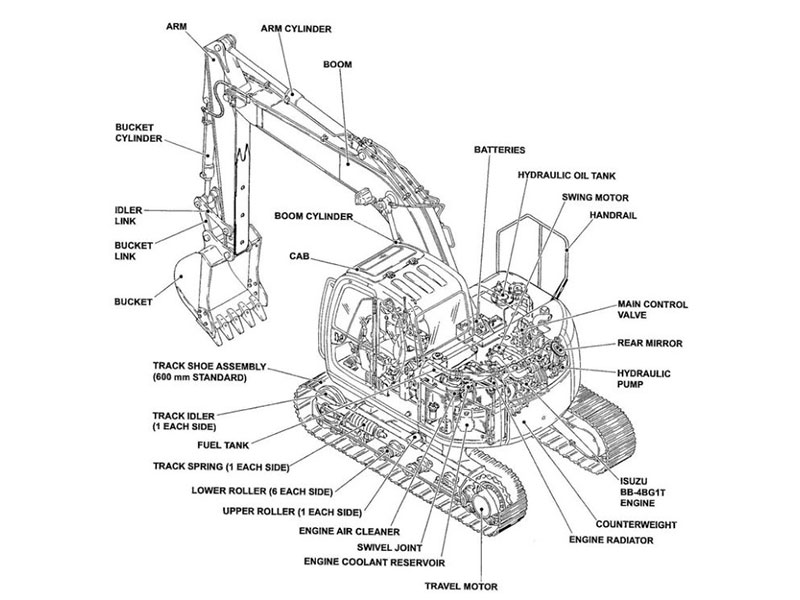
Move to the cooling components next. Look for bent fins, cracked housings, and loose mounts. These parts protect the engine, so damage here deserves attention. Record what you find on your camera. Photos keep your notes honest when you compare parts later.
Hydraulic Compartment and Slew Ring
For hydraulic components, request safely obtained actual-unit photographs and relevant qualified inspection or test reports. Do not open compartments, lines or pressure systems or perform energized checks for this guide. Record visible concerns without inferring an internal fault from dampness alone.
Leaks, damage and repair signs around a swing system, cab or canopy require appropriate assessment of the actual component and function. Visual inspection cannot detect every fault or establish structural integrity or fitment. Do not treat this component-purchase guide as a whole-machine evaluation procedure.
Structure, Undercarriage, and Pins
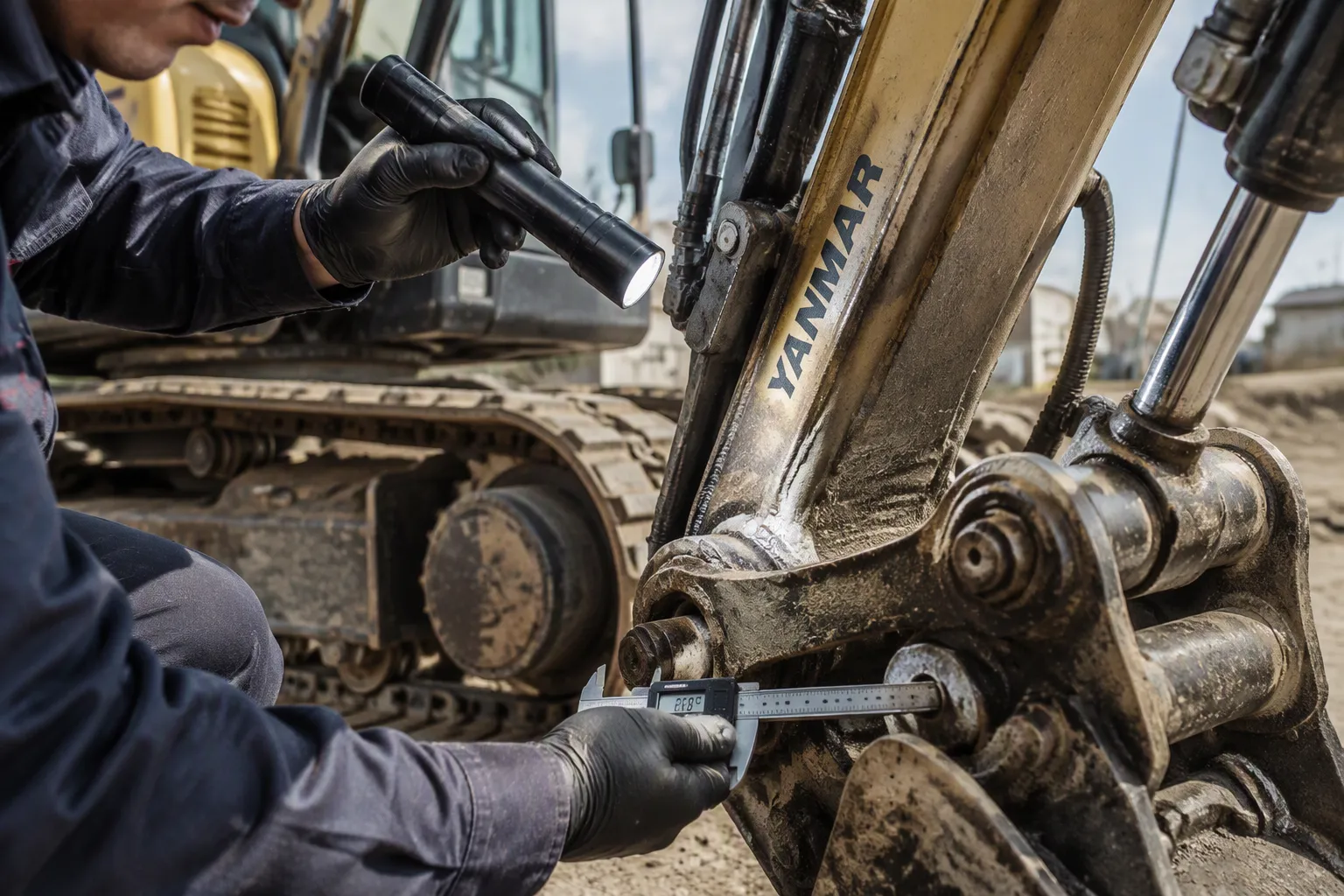
Boom, Stick, and Main Structure
Structural components require a qualified assessment under applicable acceptance and repair criteria. Request identification, repair history, actual-unit photographs and relevant inspection evidence. A visible weld or fresh paint is a question to investigate, not proof of either acceptable repair or hidden damage.
Have questionable mounting areas, pin bores, welds or distortion assessed by qualified personnel using the relevant procedure. Comparison with the opposite side is not a substitute for supported specifications and acceptance criteria.
Undercarriage, Pins, and Bushings
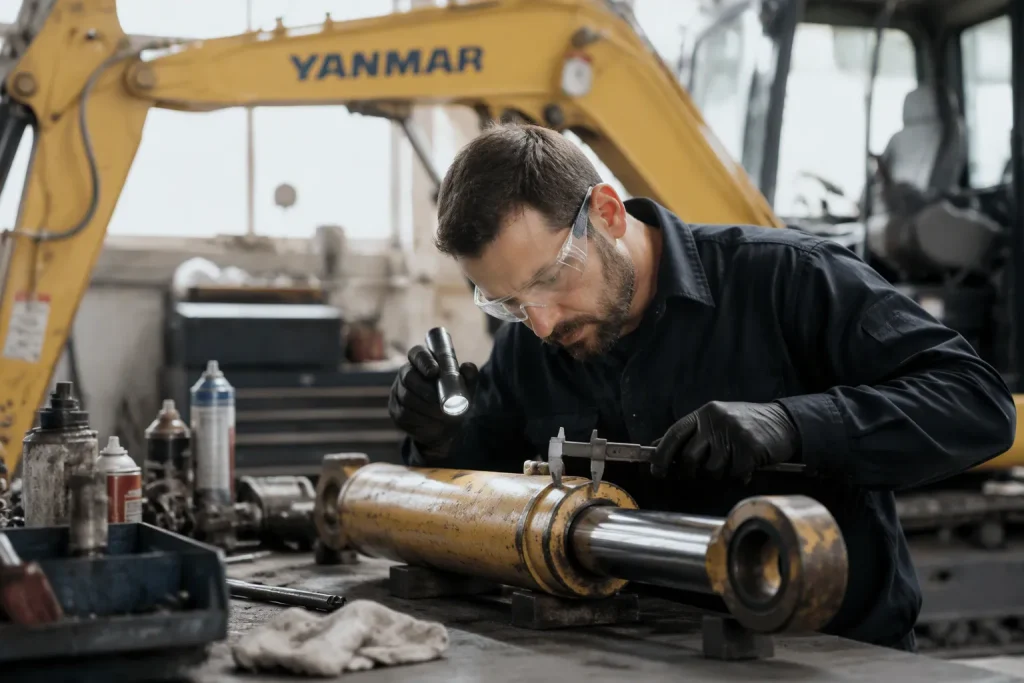
Use a qualified report for pin dimensions, wear, bore condition and retention details where relevant. The report should identify the actual unit, method and applicable criteria. Do not infer nominal diameter or acceptable wear from one external reading.
Do not move joints, test play by hand or access the undercarriage to assess a used component yourself. A qualified technician must determine the required inspection, safe setup and acceptance criteria. An apparent wear pattern alone does not establish which items need replacement.
A qualified technician should assess wear limits and confirm the condition of these components under the applicable service instructions. That includes testing the excavator performance where needed. Your job is to gather evidence, not to open hydraulic circuits or run energized checks. A careful inspection of pins and bushings here saves you from a loose, noisy joint later. Treat every measurement as one entry in a full inspection of the used yanmar excavator parts on your list. The same discipline applies to any set of excavator used parts you evaluate, and it keeps your buying decision grounded in evidence rather than hope.
Run Compatibility Checks
Part Numbers and Serial Numbers
Confirm the candidate service reference against applicable documentation for the actual machine and installed assembly. Donor and recipient serial identifiers do not need to be identical. A visible marking may be a casting or production code, and a supported conditional replacement may use a different ordering number.
Identification methods and marking locations vary. If a marking is missing or unclear, hold the purchase until adequate supported identification is available. Do not assume every component has an individual serial plate, or that a particular number format proves application.
Quantity Basis and Kit Contents
Confirm whether the actual offer covers one item, a pack, kit or assembly, then obtain the itemized contents and required repair quantity. Separately check any conditional supersession, including application conditions and additional required parts; it is not merely a borderline wear decision.
Check | What to Confirm |
|---|---|
Selling unit | One piece, a pair, or a set |
Kit contents | Every item listed and counted |
Conditional parts | Applicability conditions and additional required items for a proposed replacement |
For any deeper evaluation, rely on qualified service procedures. A technician can confirm fitment and condition under the applicable service instructions. This step protects your compatibility work. Buyers who skip it during buying a used excavator often order twice. The same care applies to any excavator used parts order, and it keeps your compatibility checks honest. A correct part number and a correct serial number mean little if the quantity basis is wrong. Close the loop before you pay.
Used Component Purchase: Seller and Paperwork
Source Coverage and Return Terms
Start by asking the seller a simple question: where did this part come from? A part taken from a known donor machine has a clearer story than one with no known origin. Then ask a second question about coverage. Does the seller offer a warranty, an exchange window, or return terms? Get the answer in writing before you pay. Return terms matter most when a hidden fault shows up after delivery.
People buying used excavators often focus on the machine and forget the parts behind it. The same care applies here. A seller who answers source questions with vague phrases gives you little to work with. A seller who names the donor machine and explains how it was removed gives you a trail you can check. Treat unclear answers as a reason to slow down, not a reason to bargain harder.
Records and Bill of Sale
Request available component and donor records and verify that they relate to the offered unit. Service history can support an assessment but does not prove proper care, current condition or remaining life. Missing records leave uncertainty that requires appropriate resolution.
A bill of sale closes the deal on paper. It should list the part number, the model it fits, the price, and the date. Keep your receipts with your inspection notes. Make sure your installer will follow the manufacturer’s torque specifications and safety steps during installation. That step protects your investment and keeps the work sound.
Good records turn a hopeful purchase into a verified one. They also give you a paper trail if a problem appears later. Buyers of used yanmar excavator parts and any other excavator used parts should treat paperwork as part of the deal, not an afterthought. A careful review of the seller and the documents completes your inspection and protects the money you spend.
Keep this order with you on site:
Confirm identity: model, serial number, part number.
Check cracks, leaks, and wear.
Obtain qualified findings for pin, bushing and other relevant wear assessments.
Verify compatibility and quantity basis.
Collect records and a bill of sale.
Feeling rushed makes buyers skip the compatibility and paperwork steps. Don’t do that. A wrong part number or a missing receipt costs more than the minutes you save. Qualified service procedures control any deeper evaluation, so let a technician handle wear limits and internal checks.
Retain the supported application information, qualified findings, confirmed contents and written terms. Resolve open identification or condition questions before committing to the purchase.
FAQ
What should I check first on a used part?
Start with full machine and actual component identification and supported application information. Hold the order if adequate identification is unavailable. Do not assume every component has a readable individual plate or that donor and recipient serial numbers must match.
How do I judge pin and bushing wear?
Ask for a qualified assessment using the applicable measurement and acceptance procedure. Do not determine wear from a presumed unworn diameter or by moving a joint by hand. The findings must relate to the actual unit.
Can I test a used hydraulic part myself?
No. Do not open lines or run energized checks on your own. A qualified technician handles flow testing and internal evaluation under the applicable service instructions. Your job is visual: look for leaks, drips, and damp fittings around the pump, hoses, and cylinders.
What paperwork should come with the part?
Ask for the donor machine’s service history, receipts, and a bill of sale. The bill should list the part number, the model it fits, the price, and the date. Clear records support your inspection and give you a trail if a problem appears later.
Does a low price justify skipping checks?
Use the same application and condition checks regardless of price. A low price or a responsive seller does not establish acceptable condition, remaining life or future resale value.
For excavator parts sourcing, consider YNF Machinery. Share full machine and component identification, applicable part references and quantities, and request supported compatibility information, an actual quotation, and written warranty and return terms before ordering.