
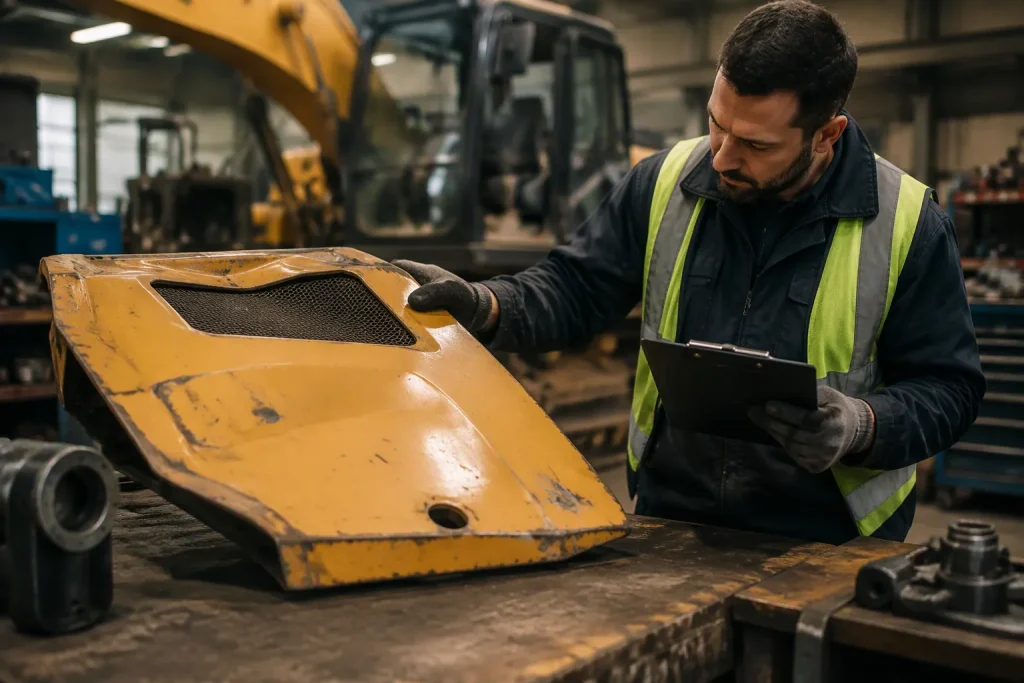
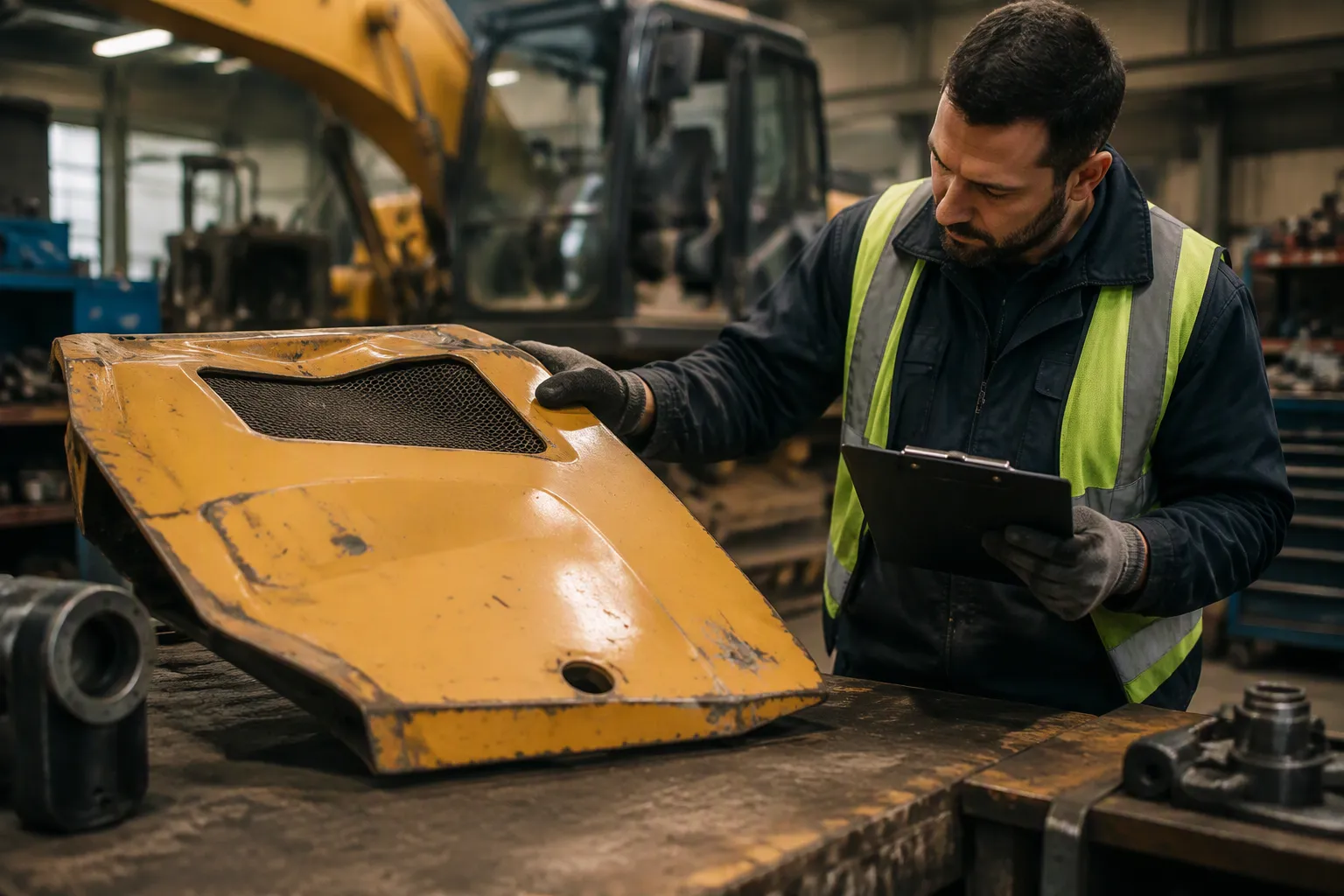
Evaluate a used Takeuchi body panel through documented condition, supported application, mounting details and total purchase cost. Ask qualified personnel to assess damage and any handling or installation requirements.
A clean appearance does not establish fit or reveal every defect. Photographs and records support an assessment but cannot exclude hidden corrosion, distortion or previous repairs.
This routine works for equipment owners, mechanics, and buying specialists alike. Use it every time you shop for used Takeuchi excavator parts. Compare panels for excavators of the same model before you buy.
Key Takeaways
Look closely at the panel for dents, cracks, bends, and rust, especially along the edges and seams.
Check the part number and model to make sure the panel fits your exact Takeuchi excavator.
Look at all mounting points, brackets, and hardware for damage or wear that could affect installation.
Have qualified personnel assess dimensions and fit using the applicable documentation and safe handling procedures.
Compare the total cost of used, rebuilt, and new panels. Include any extra hardware or preparation you may need.
Begin With a Visual Inspection
Request clear views of the panel, edges, seams and mounting details. Ask qualified personnel to assess any areas that are obscured or require handling; viewing a panel on or off the machine does not by itself establish its condition.
Dents, Cracks, and Bends
Use photographs to identify visible dents, deformation and previous repairs for further assessment. Do not press, probe or load a damaged panel to test its strength.
Look closely at stress areas. Cracks often start at bolt holes, tight corners, and the edges of the operator cab opening. A short crack can grow under vibration. Treat any crack as a sign of reduced structural integrity until a technician confirms otherwise.
Check the panel edges and seams for bends. A bent edge may not seal against the machine. Compare the panel against photos of the same part. Ask for close-up photos of every damaged area. Listings often grade condition loosely, so verify the grade in person or with detailed photos before you commit.
Rust and Corrosion Patterns
Corrosion appearance alone does not establish remaining thickness or whether a repair is acceptable. Ask qualified personnel to assess affected areas against the requirements for the actual panel and its function.
Do not probe corroded material with a screwdriver as a purchase test. Request a qualified condition assessment, particularly where corrosion affects seams, mounting areas or protective functions.
Request relevant donor and repair records where available. Records may clarify history but do not establish the present condition of the offered panel. Use a qualified independent assessment when essential questions remain unresolved.
Verify Used Takeuchi Excavator Parts Compatibility
Confirm the proposed panel against applicable parts information for the actual machine configuration. Model name and appearance alone do not prove compatibility.
Read the Part Number
Ask for clear photographs of any available markings and the offered panel as a whole. Marking type and location vary, and a visible casting or production number may not be the ordering reference.
Record markings exactly and compare them with applicable parts documentation. Ask an authorized dealer or parts supplier to explain supported references and any supersession. A mismatch needs investigation; it does not by itself establish that a replacement is unsuitable.
Watch for superseded numbers. A manufacturer may replace an old number with a new one. Ask the seller for the number on the panel, not just the number in the listing. Listings copy numbers by hand, and typos happen. Compare the two before you pay.
Verify the Actual Model and Machine Identity
Record the actual machine model and serial number without trying to decode a TB designation into fitment. Use documentation applicable to that configuration to identify the required panel.
Find the machine’s model and serial number on its identification plate. Record both. Then ask the seller for the same details on the donor machine. Match the model first. Then check the serial range. Early and late builds of one model can carry different panels.
Configuration matters too. Machines ship with different options, and those options change the body layout. A machine with a different cab or attachment setup may use a different panel. Do not assume a panel fits just because the model matches. Confirm the configuration with the seller before you commit.
Obtain current quotations for the identified panel and actual condition. Do not infer availability or price from how common a model appears to be.
Keep the relevant identification references, condition findings and written scope together for comparison.
Examine Mounting Points and Hardware
Holes, Brackets, and Captive Nuts
Ask qualified personnel to assess holes, brackets, captive nuts and other mounting features. Damage or looseness may affect installation, but a visual observation alone does not establish torque capacity or repair acceptability.
Compare the hole pattern with your original panel. Spacing and count should match. A panel with extra holes or filled holes has a history you cannot see. Ask the seller about it. Brackets deserve the same attention. A bent bracket pulls the panel out of alignment and stresses the frame around it. Confirm the bracket shape against your machine before you buy.
Wear, Distortion, and Missing Fasteners
Document elongated holes, rub marks and distorted areas for qualified assessment. These observations may have several causes and do not establish the complete damage history or remaining strength.
Count the fasteners that come with the panel. Missing clips, bolts, and spacers add to your total cost. Ask whether the seller includes the hardware shown in the photos. Then check the body panels on your own machine. Note the condition of each mounting surface. A clean, flat surface gives the replacement panel a fair start. A rusted or bent surface needs repair first.
Record your findings with photos and notes. Measure hole spacing only if a qualified technician confirms the method. Leave any installation work to qualified service procedures. A careful inspection here protects both your budget and your machine’s frame condition.
Confirm Fitment on Used Mini Excavators
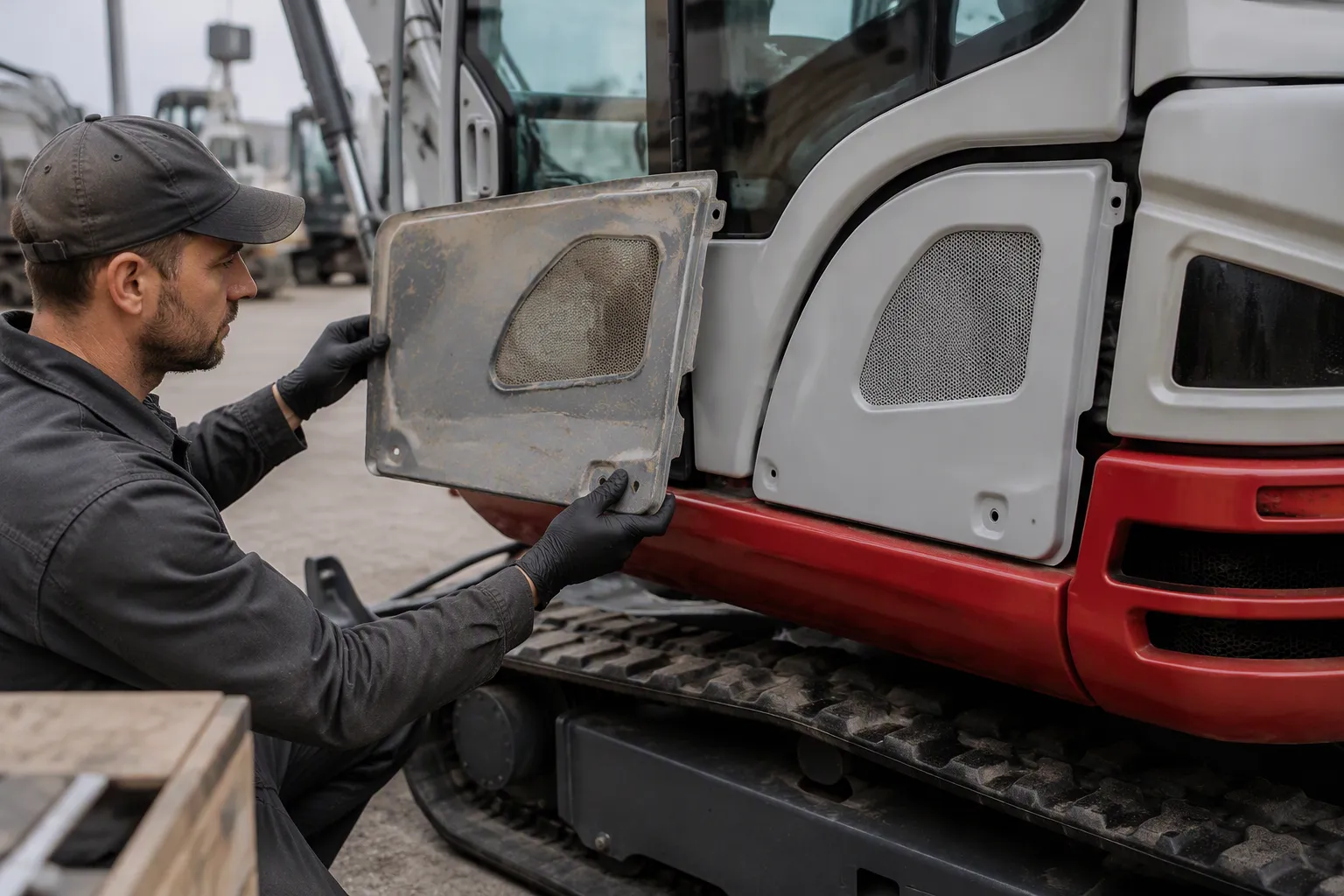
Treat physical verification as a qualified assessment supported by identification and applicable installation information. A visual comparison or trial fit alone cannot prove suitability for service.
Test-Fit or Compare Against the Original
Ask qualified personnel to compare relevant shape and mounting details using appropriate support and handling methods. Do not move or position a heavy or damaged panel simply to compare it with an installed component.
Where a trial fit is appropriate, qualified personnel should follow the applicable handling and installation procedures. Do not force the panel into position, modify holes or treat a successful trial fit as proof of protective performance.
Think about configuration differences before you buy. Machines of one model can carry different cabs, guards, and attachment setups. Confirm the donor machine matches your build. Then check what comes in the kit. Ask whether the sale includes the brackets, fasteners, and spacers shown in the photos. A bare panel with missing hardware rarely fits right without extra spending.
Buyers of used mini excavators face the same logic when they shop for a whole machine. A panel that fits one unit may not suit the next. Compare against your own equipment every time.
Check Attachment and Cross-Brand Fitment
If an offer bundles unrelated attachments, evaluate them separately. A body-panel purchase does not establish attachment compatibility. Obtain supported application information and qualified assessment for each included item.
Cross-brand fitment deserves caution. Do not assume a panel or attachment built for another brand will suit your Takeuchi. Verify any cross-brand claim with the manufacturer or a qualified technician. The same rule applies to used excavators of any make. Confirm the specification match in writing before money changes hands.
Leave all installation work and pressure-system checks to qualified service procedures. A technician can confirm torque values, alignment, and hydraulic settings that a visual check cannot settle.
Document the panel scope and any separate items clearly so that the quotation and installation plan refer to the same supplied parts.
Weigh Cost Against New and Rebuilt
Compare the actual offered new, used or repaired panels. Ask for condition details, documented repair scope and written coverage. These labels do not guarantee quality, service life, price order or warranty protection.
Total Cost Including Preparation and Hardware
Add up everything the panel needs before it goes on the machine. Preparation, hardware, and any parts you may need to replace all count in the total. A cheap panel with missing brackets and worn fasteners often ends up near the price of a better one once you buy the extras. Check the quantity basis too. Make sure whether the seller prices one panel or a set, and confirm what the kit contains. A listing that shows hardware in the photos may not include it in the sale.
Use current quotations and confirmed availability in the comparison. Donor records can inform history but do not independently prove the present condition grade.
When Used Makes Sense
A used panel may be worth considering when supported application, qualified condition findings and total cost suit the intended use. Compare the actual alternatives and their written terms; do not assume repaired panels occupy a middle price or that a genuine label guarantees longer life.
Shoppers comparing used mini excavators and pre-owned mini excavators use the same logic for whole machines. Weigh the full cost, not the sticker. A careful comparison of excavator parts protects your budget and your uptime. Buyers who plan a replacement should also confirm parts availability for their model before they set a spending limit.
You now have a set of steps you can repeat. Start by looking the panel over. Check the part number and model. Look at the mounting points. Confirm the fit. Compare the total cost. A panel that passes all five checks is a safer buy. Skip one check, and you may make a costly mistake.
Write down what you find before you pay. Take photos. Record part numbers and mounting spacing. Ask for maintenance records and maintenance history on the donor machine. These details help you when you compare parts for used excavators.
Have qualified personnel resolve installation and protective-function questions before purchase.
FAQ
What should you check first on a used Takeuchi body panel?
Start with a visual inspection. Look for dents, cracks, and bends across the outer skin, edges, and seams. Check for rust along edges and mounting flanges. Ask for close-up photos of any damage. Verify the listed condition in person before you buy.
How do you confirm a panel fits your machine?
Match the part number on the panel to your machine’s parts list. Confirm the TB model and serial range with the seller. Compare the hole pattern and brackets against your original panel. Ask a qualified technician to confirm fitment before you commit.
Which mounting problems should concern you most?
Document distorted holes, damaged nuts, bent brackets and missing hardware for qualified assessment. Confirm acceptable repair methods and actual replacement scope before relying on a cost comparison.
When does a used panel make better sense than new or rebuilt?
Compare supported application, qualified condition findings, total cost and written terms for the actual alternatives. A used, repaired or new label alone does not establish which choice offers the best value.
How do you document your findings before purchase?
Take photos of every damaged area. Record the part number, model, serial number, and mounting spacing. Ask for maintenance records on the donor machine. Keep these notes for your own records and for any questions you raise with a qualified technician.
For excavator parts sourcing, consider YNF Machinery. Share full machine and component identification, applicable part references and quantities, and request supported compatibility information, an actual quotation, and written warranty and return terms before ordering.



