A used travel assembly can save you real money. It can also cost you far more than you saved. The difference comes down to one thing: a disciplined inspection before money changes hands.
Organize the purchase review around identification, supplied scope, qualified condition findings and any appropriate test reports. Leave machine preparation, component handling and operational checks to qualified personnel using the applicable procedures.
Use these questions to request evidence and identify unresolved issues. This guide is a purchasing checklist, not an inspection or diagnostic procedure.
Key Takeaways
Record donor and receiving machine identities separately, and verify the proposed component against applicable parts information.
Make sure you know what the price covers: just a motor, a motor with a gearbox, or the whole assembly. Get the list of kit contents in writing.
Request qualified findings for the offered travel assembly. Assess other machine components separately when diagnosing the receiving excavator.
Where appropriate, request qualified test reports for the actual offered unit with applicable conditions, specifications and limitations.
If the records are missing or the scope is unclear, walk away. A unit with questions is not a good deal.
Travel Assembly Components
Core Parts Explained
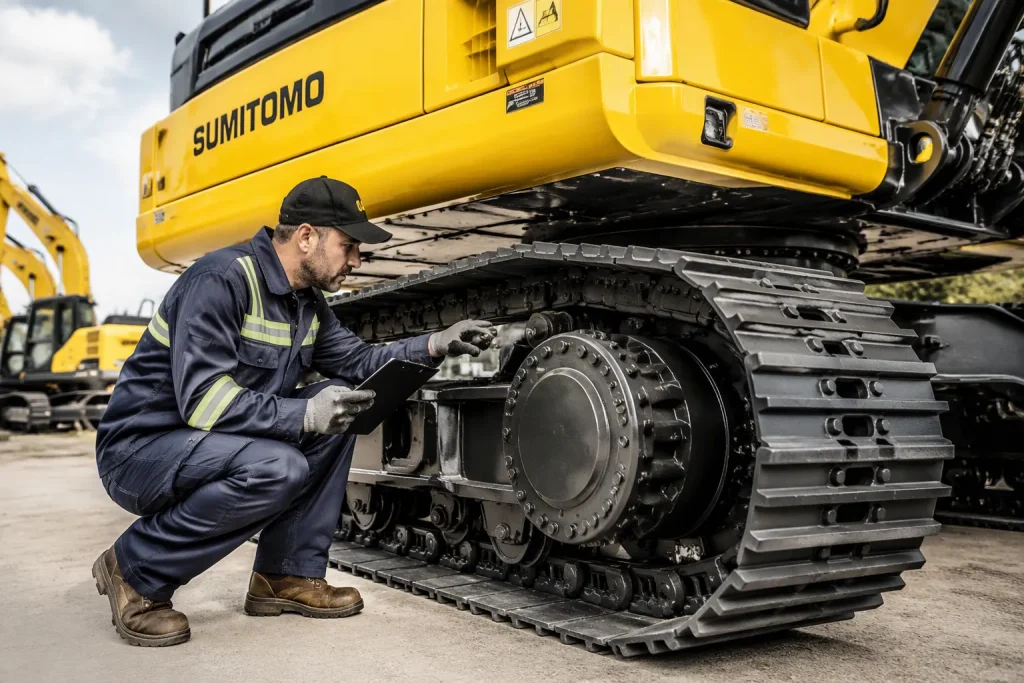
A travel assembly is found at the end of each track frame. It changes hydraulic flow into movement. The unit usually has a travel motor and a reduction gearbox. Some sellers pair these parts in different ways, so think of the assembly as a set, not a single item.
The travel motor is the hydraulic heart of the unit. It turns pressure and flow into rotation. The reduction gearbox then increases torque and slows the output to the track sprocket. You may also hear the whole unit called a final drive motor. That name is common, but it can hide which pieces the seller really includes.
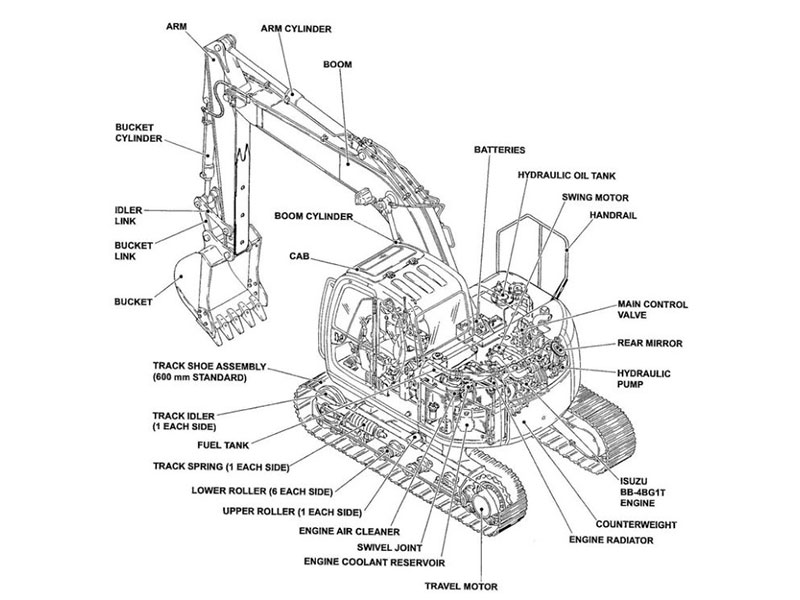
Two related parts often come up in the conversation. The swivel joint sends oil between the upper structure and the undercarriage, and a worn swivel joint can act like a travel motor problem. Keep that in mind, but remember the swivel joint is not part of the travel drive assembly itself.
Why Identity Matters
Used final drive hydraulic motors come in many setups. Output shaft splines, mounting bolt patterns, gear ratios, and brake arrangements can all be different. Two units that look alike on a pallet may not swap.
Record the receiving machine identity, donor information where available and all markings on the offered unit. Ask which markings are ordering references and which identify a casting or production batch.
Identification and the written supply scope answer different questions. Neither a matching reference nor a photograph proves condition or service life. Confirm the actual items supplied and supported application independently.
Preparing for Inspection
Documents and Identification
Paperwork tells you a lot before you even touch the machine. Ask the seller for service records, repair history, and any past inspection reports for the actual unit. Look for gaps in the record. A long gap in maintenance history deserves a direct question. You want to know how the machine worked and how often it got service.
Record full identities and ask for clear photographs of the actual offered unit. Compare supported references and any supersession against documentation applicable to the receiving machine. Donor and receiving serial numbers need not be identical.
Request Qualified Inspection and Test Evidence
Ask qualified personnel to determine which condition checks and reports are appropriate for the actual unit. Fluid findings, where relevant, need documented context and do not alone prove a maintenance history or component fault.
Record donor-machine repair history and qualified findings where available. A walkaround cannot reveal all fatigue or establish the internal condition of a detached travel assembly.
Any operational testing must be planned and conducted by qualified personnel under applicable safety and service procedures. Request the test conditions, results and limitations instead of preparing or running the machine yourself.
Scope Check for Used Sumitomo Excavator Parts
Fit and Configuration
Use the receiving machine identity and applicable documentation to confirm the proposed travel assembly reference and configuration. Check the actual offered unit against that supported identification and the written scope.
Configuration means more than the model name. Output shaft splines, mounting bolt patterns, gear ratios, and brake arrangements can differ between units. Ask the seller to describe the exact setup of the unit you will receive. Request photos of the actual assembly, not a catalog image. A qualified technician or your local supplier can confirm fitment through proper identification steps. Do not assume plate locations or catalog layouts carry across models. Do not guess compatibility from a similar-looking photo.
Treat apparent similarity and matching model names as leads for verification rather than proof of interchangeability.
Quantity Basis and Kit Contents
Ask one direct question: what exactly does the price cover? Sellers list travel assemblies in different ways. One listing may be a single travel motor. Another may be a motor plus reduction gearbox. A third may be a complete assembly. The selling unit and the quantity basis must be clear before you compare prices.
Confirm whether mounting hardware, hoses, fittings and other pictured items are included. Distinguish included items from parts that qualified service procedures require replacing only when specified conditions are met. Record the actual scope in writing.
Watch for scope confusion around related components. Some buyers ask whether a swivel joint comes with the travel assembly. It does not. A center swivel joint is a separate component, and it is not part of a travel drive assembly. If a listing bundles it, confirm that in writing. The same rule applies to any other parts a seller mentions in the same conversation.
Ask where the unit came from and request qualified findings tied to that offered assembly. Note any limitations or records that cannot be linked to it.
A tight scope check protects your budget. It also protects your schedule. A unit that arrives with the wrong setup or missing pieces costs you downtime you did not plan for.
Condition Check: Travel Motor and Swivel Joint Problems
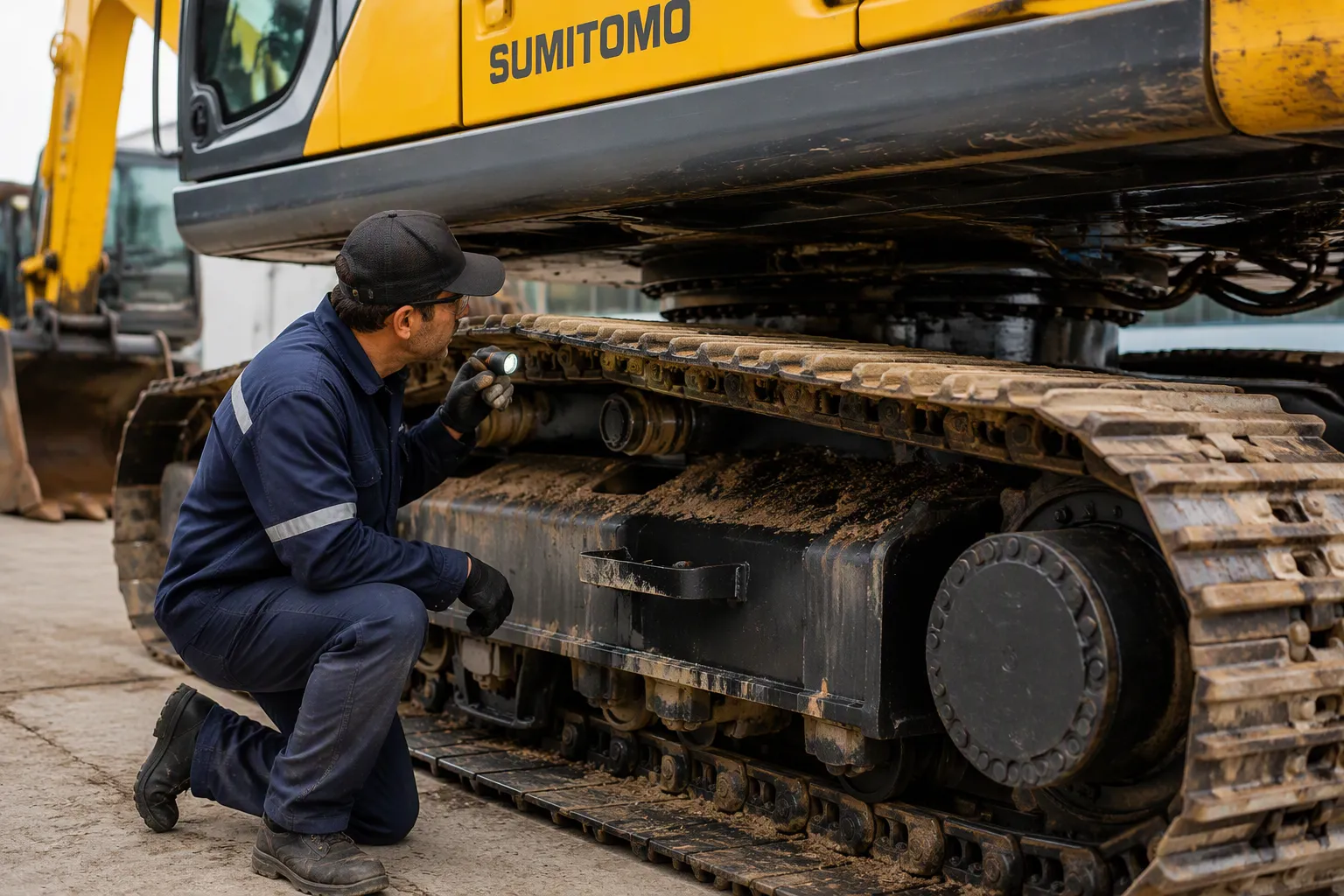
Undercarriage and External Checks
Ask qualified personnel to assess relevant undercarriage condition using the applicable methods and limits. Photographs or informal measurements do not establish remaining life, adjustment requirements or the cause of wear.
Do not apply a generic half-life replacement rule. Base the repair scope on applicable limits, qualified findings and the actual intended service. Undercarriage appearance alone does not prove the condition of internal hydraulic components.
Request clear views and qualified observations of accessible mounting areas, housings and connections. Leaks, corrosion or apparent repairs need investigation; their source and significance cannot be established from an oil trail or fresh paint alone.
Travel Motor Inspection
Request qualified findings on the motor housing, connections and mounting condition. Do not check bolt tightness by hand or disturb hydraulic connections as a purchase test.
Travel symptoms can have several causes within the machine. If a fault exists, have qualified personnel diagnose the actual system before ordering a travel assembly. Assess the center swivel separately; visible oil does not by itself identify its source or prove an internal leak.
Do not open pressure systems or take apart components yourself. Leave that work to qualified service procedures. Ask the seller for an inspection report tied to the actual unit. A report from another machine proves nothing about this one. The same discipline applies to durability questions. Ask for service history, and treat verbal claims as unverified until paperwork backs them up.
External observations help identify questions for further assessment. They cannot exclude hidden defects or replace appropriate qualified checks.
Performance and Travel Motor Problems
Pressure and Flow Checks
Where testing is appropriate, request a report conducted by qualified personnel under the applicable procedures. The report should identify the actual tested unit, relevant conditions, results and limitations.
Pressure, flow and case-drain readings require comparison with the applicable specifications under documented conditions. No isolated reading proves a particular fault or remaining service life. Ask the qualified assessor to explain the results and unresolved findings.
Keep every pressure test with qualified service procedures. Do not open pressure systems or take internal measurements yourself.
Symptom Evaluation
Review the documented operating conditions in any performance report. Only qualified personnel should decide how to conduct and interpret operational tests for the actual machine or assembly.
Document whether symptoms occur on one or both sides and under which conditions. These observations do not isolate a travel motor or swivel fault. Request a qualified diagnosis of the actual machine before selecting replacement parts.
Keep diagnosis of the receiving machine separate from condition evidence for the offered assembly. A report should state what was assessed and what remains unresolved.
Making the Buying Decision
Weighing Risk and Budget
Compare identification, condition evidence, supplied scope, actual quotations and written terms. A clean report reduces uncertainty only within its scope and does not make a used unit risk-free.
Evaluate any required repair or further assessment before committing. Occasional use does not make an unresolved safety or compatibility issue acceptable.
Use actual quotations to estimate purchase, assessed preparation, shipping and installation costs. Set a budget for known work and unresolved costs without assuming used-part prices follow a standard pattern.
Pass or Proceed
Proceed only when supported application, written supply scope, qualified condition findings and the agreed terms support the intended use. Any required testing must follow the applicable procedures. A separate swivel joint is not part of the offered travel assembly unless explicitly bundled.
Walk away when any one of these items is missing. A questionable unit is not a bargain.
Let the qualified diagnosis and applicable service requirements determine whether and what to replace. Do not assume both travel motors need replacement or buy an assembly on an unsupported no-rework claim.
Record machine and component identities, confirm the supplied scope, review qualified condition and test evidence, and compare the actual quotation and written terms. Resolve essential application or condition questions before buying.
Walking away is a real result. A unit with missing records or unclear scope is not a bargain. Passing on it protects your budget and your schedule.
Retain the identification references and qualified reports with the quotation and purchase record.
FAQ
What should I check first on a used travel assembly?
Start with the receiving machine identity and available markings on the offered unit. Verify the proposed reference and any supersession using applicable documentation. This supports application review but does not independently prove fit or condition.
Does a travel assembly include the swivel joint?
No. A center swivel joint is a separate component and not part of a travel drive assembly. A worn swivel joint can mimic a weak travel motor, so check its condition and service history separately before you blame the drive unit.
Can I test the travel motor myself?
Leave operational, pressure, flow and case-drain testing to qualified personnel using applicable procedures. Request a report tied to the actual unit, with conditions, limits and a qualified interpretation. An isolated reading is not a diagnosis.
What paperwork should come with the unit?
Ask for service records, an inspection report tied to the actual assembly, and an invoice that states the selling unit and kit contents in writing. Missing records or unclear scope are valid reasons to walk away.
Is a cheaper used assembly worth the risk?
Compare the actual alternatives using supported application, qualified condition evidence, total expected cost and written terms. Occasional use does not justify unresolved safety or compatibility questions.
For excavator parts sourcing, consider YNF Machinery. Share full machine and component identification, applicable part references and quantities, and request supported compatibility information, an actual quotation, and written warranty and return terms before ordering.