Evaluate used Cat E120B undercarriage parts through supported application, qualified condition findings, applicable wear criteria and written supply scope. Ask qualified personnel to perform any handling, cleaning or measurements using the appropriate procedures.
A used component may reduce purchase cost, but inspection cannot remove every uncertainty. Compare the actual offered parts with supported alternatives and resolve essential condition or application questions before committing.
Key Takeaways
Request clear condition photographs and qualified findings; do not assume cleaning exposes all defects.
Request measurements made under applicable procedures and compare them with the correct criteria; a wear reading alone does not predict remaining service life.
Postpone purchase where significant damage or unresolved condition questions prevent a supported decision.
Key Undercarriage Components to Inspect
Tracks, Pads, and Shoes
The track chain carries the machine’s weight and transmits travel force. Each link, pin, and bushing wears as it rolls. Look at the chain as a system, not as a pile of parts. A chain that ran on one machine wears as a matched set. Mixing links from different chains can create uneven pitch and poor meshing with the sprocket.
Pads and shoes bolt to the chain and contact the ground. Check the grouser height, the tread pattern, and the mounting hardware. Confirm the pad style suits your E120B’s configuration and your working conditions. A pad that fits the chain bolt pattern may still be wrong for your application.
Rollers, Idlers, and Sprockets
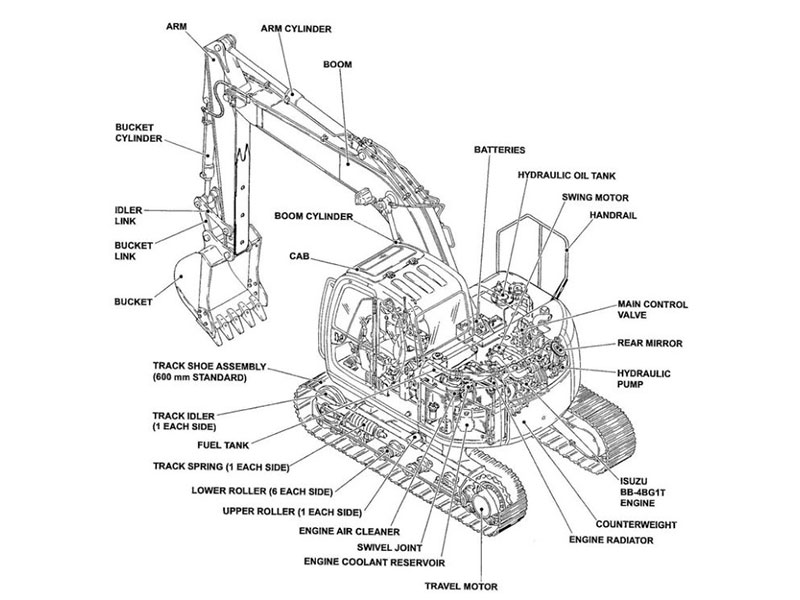
Rollers support or guide the track-chain runs, idlers guide the chain, and sprockets transmit travel drive to the chain. Confirm the actual arrangement and component references for the machine rather than assuming one layout applies to every excavator.
Ask qualified personnel to assess relevant shells, rims, teeth, mounting features and lubricant retention. Record storage history where available, but do not infer a specific failure time from appearance.
General Inspection Principles
Record the actual machine identity and configuration, then verify the proposed ordering reference using applicable documentation. Do not assume a generic serial-prefix list applies to the E120B or require the component marking to equal a machine serial prefix.
Clean Before You Judge
Dirt and grease can obscure visible condition. Ask qualified personnel to determine appropriate preparation and inspection methods for the actual parts; a cleaned surface does not exclude hidden defects.
Do not scrape seal areas or handle heavy undercarriage parts as an informal purchase test. Request prepared photographs and qualified findings obtained with appropriate handling and safety controls.
Read the Wear Pattern
Wear patterns can prompt questions but do not uniquely identify their cause. Ask qualified personnel to assess the actual parts and related assembly using applicable procedures.
Request documented observations across the offered set. Uneven appearance or an apparently different link requires investigation; it does not by itself prove the chain history or cause of wear.
Use both qualified measurements and condition findings. Neither an even pattern nor a single low wear reading establishes suitability or remaining life.
Inspecting Used Parts for E120B Cat Excavator
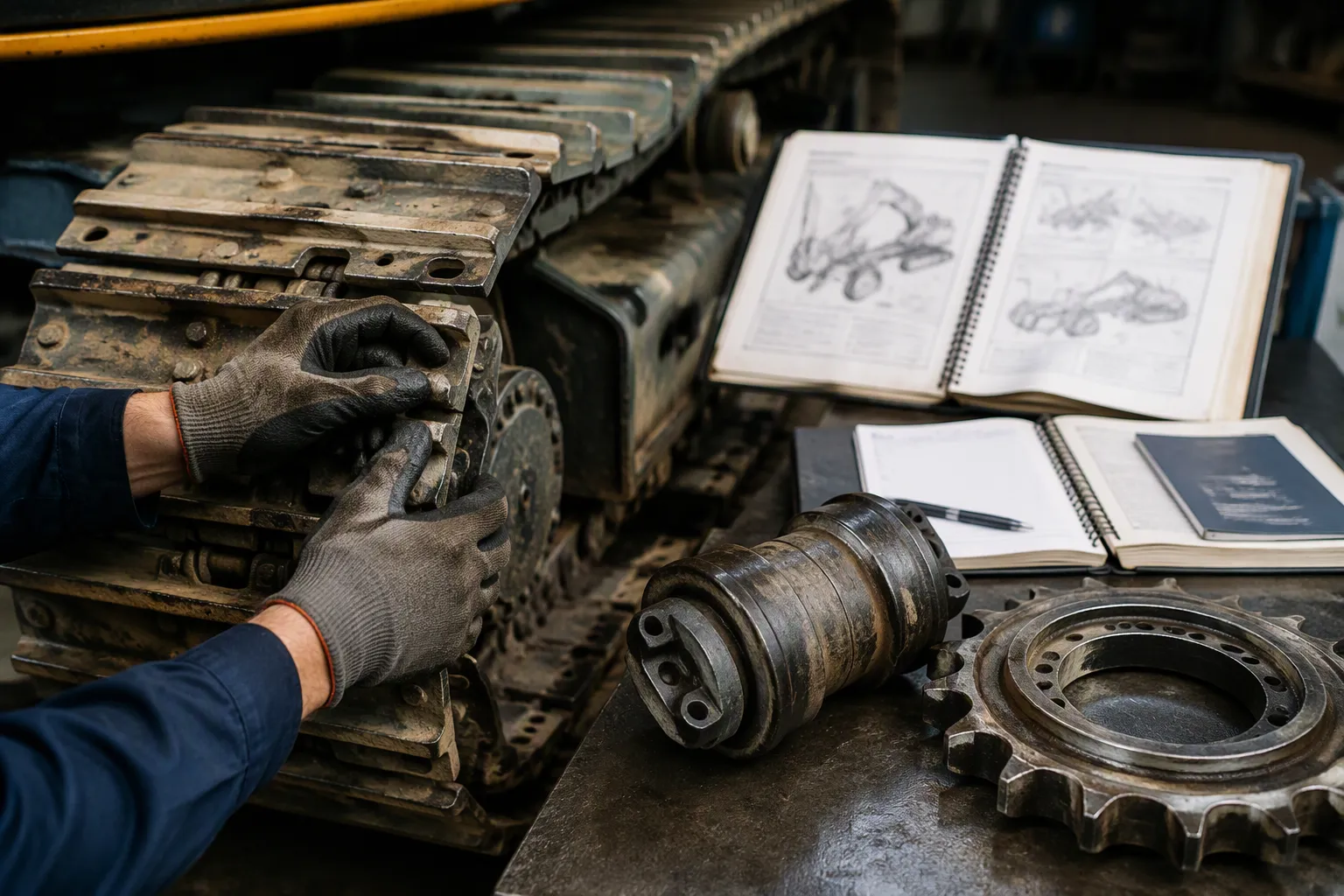
Use service and parts information applicable to the actual machine and undercarriage configuration. Ask qualified personnel to identify the correct inspection methods, references and acceptance criteria rather than relying on a generic manual title or serial-prefix claim.
Track Chain and Pad Checks
Confirm the actual track type, shoe or pad configuration and supplied scope. Request qualified findings for the relevant links, shoes and mounting features. Avoid applying rubber-track tread or sidewall criteria to an unrelated steel undercarriage component.
Record visible corrosion, damage and repair history for qualified assessment. Appearance does not establish exposure duration, internal pin condition or whether components previously ran together.
If donor travel symptoms are reported, retain them as history rather than a diagnosis. Have qualified personnel determine whether any findings affect the offered components; slow travel alone does not identify an undercarriage or final-drive fault.
Roller, Idler, and Sprocket Checks
Assess the offered rollers, idlers, sprockets and chain as relevant to the actual replacement scope. Qualified personnel should determine compatibility and condition requirements; a photograph alone cannot predict how quickly a combination will wear.
Request qualified assessment of corrosion, mounting features and evidence of lubricant leakage. Wetness or dirt alone does not prove the source, severity or future failure time.
Verify each proposed ordering reference against applicable parts information. Keep qualified measurements, condition findings and the actual supplied quantities together to support a consistent comparison.
Qualified Assessment Records
Information to Request
Request clear photographs, identification references and qualified findings for the actual offered components. Note which areas could not be assessed and what further work is required.
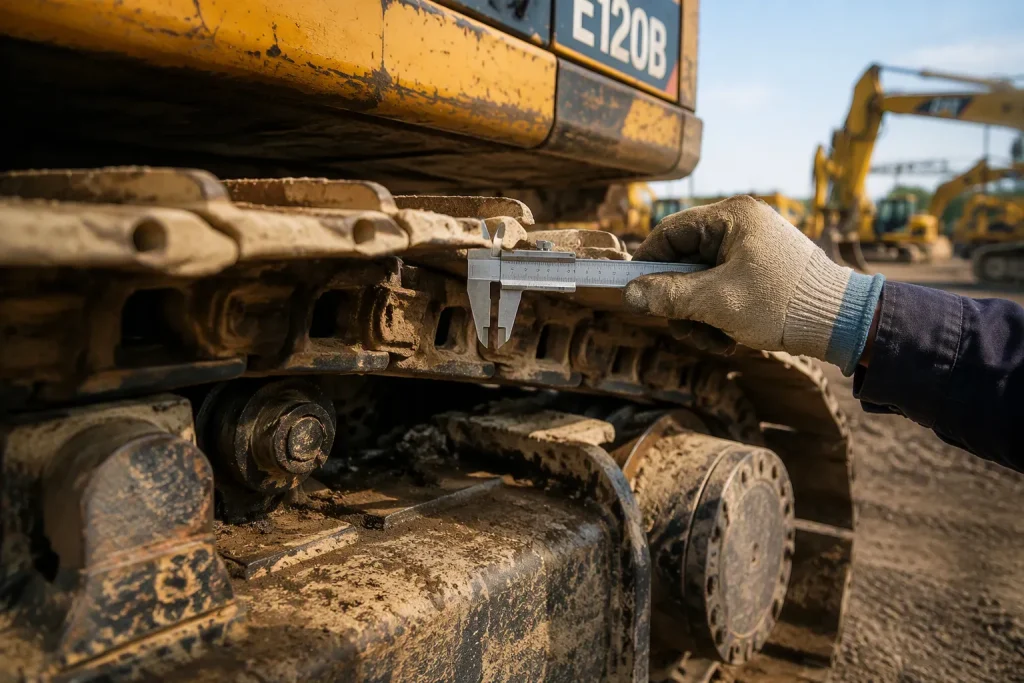
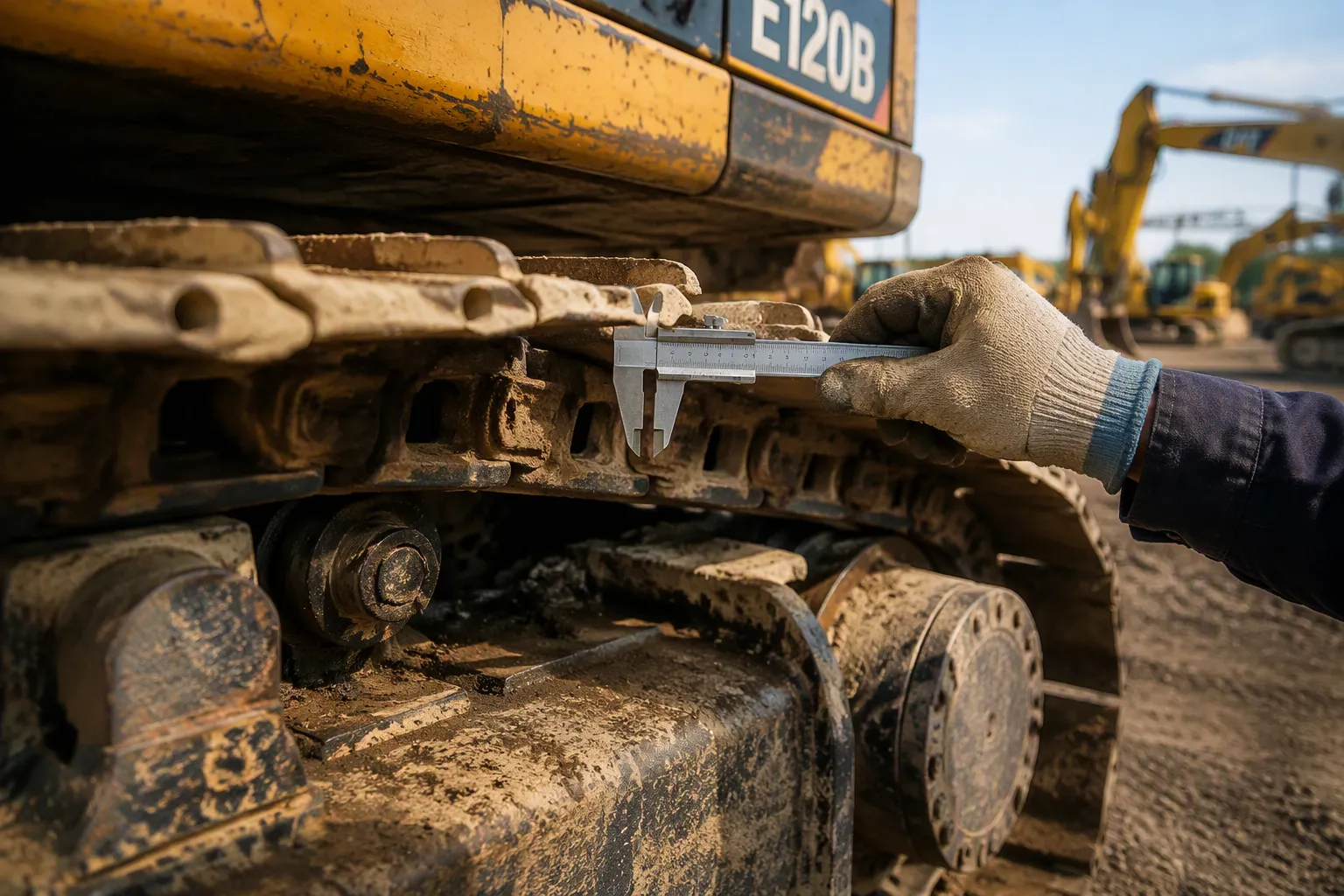
Any dimensional or wear measurements should be made by qualified personnel using applicable methods, equipment and limits. A magnet, straightedge or informal caliper reading does not prove material quality, fit or acceptable wear.
Leave the pressure gauges and wrenches at home. Do not open hydraulic circuits, take internal measurements, or disassemble components in the field. Those tasks belong to qualified service procedures with the right equipment and safety controls. Your job at the inspection is to observe, record, and decide.
What to Measure and Record
Ask the assessor to identify the applicable measurement procedure and acceptance criteria for the actual component. Record results, units, method and relevant limitations. Do not infer remaining hours or service life from a measurement alone.
Record the part number, the serial prefix it came from, and the quantity offered. Photograph each component before and after cleaning. Note wear pattern, corrosion, pitting, and any cuts or flat spots you find. Capture seal condition and storage history in your notes.
Keep the record simple and consistent. A short table or a numbered list works well. When you compare price against condition later, that record carries the weight. It also gives a qualified technician a clear starting point for any verification you request.
Red Flags and Walk-Away Signs
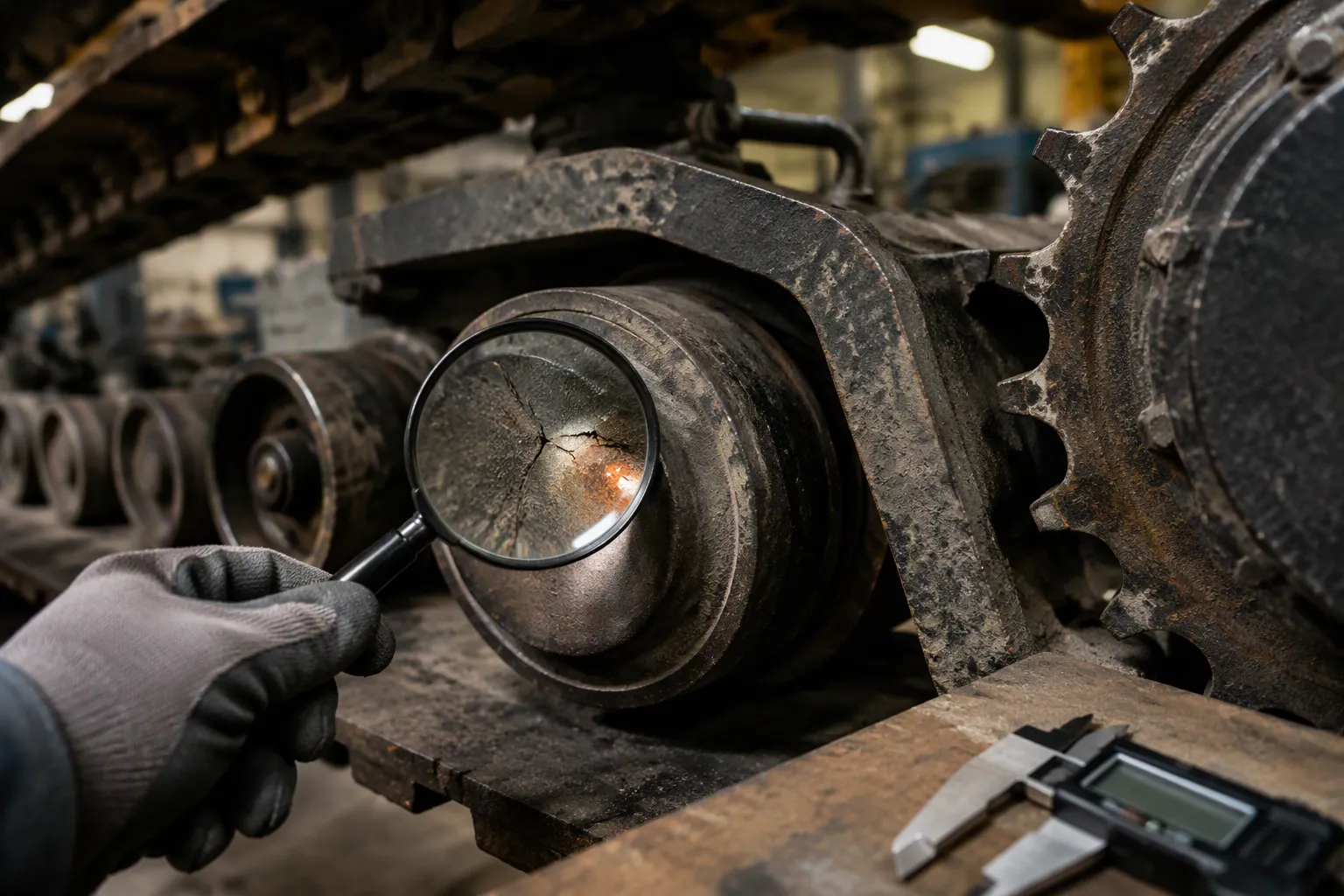
Significant damage or an unresolved inspection finding can prevent a supported purchase decision. Qualified personnel should determine whether repair or further assessment is appropriate under the applicable requirements.
Damage No Measurement Fixes
Visible lines, staining or corrosion warrant investigation but cannot alone establish the presence, depth or extent of a crack. Request qualified findings and any appropriate further examination.
Have qualified personnel assess cuts, flat spots, deformation and lubricant-retention concerns using criteria relevant to the actual component. Avoid universal claims that every surface defect is unrepairable or predicts early failure.
Watch for signs of a hard life. Fresh weld beads on a frame, mismatched paint on one component, or filler hiding a gouge all deserve suspicion. Ask the seller directly about repairs. A vague answer tells you as much as the damage itself.
Identity and Quantity Checks
Verify the proposed reference using parts information applicable to the actual machine and configuration. Marking location and catalog layout vary. Clarify ambiguous references before relying on them.
Verify the quantity basis against the selling unit. A listing may price one roller while the photo shows four. Ask whether the price covers a single link, a chain section, or a full set. Confirm kit contents item by item. A kit that should include mounting hardware may arrive without it.
Distinguish actual items included in the sale from components that service procedures require replacing only if specified conditions are met. Any substitution should have supported application and agreed scope in writing.
Compare condition findings, supported application, actual scope and written terms with the total expected cost. Postpone the purchase when essential questions remain unresolved rather than assuming a cheaper item or a cleaner appearance offers better value.
Keep the evaluation record together: actual machine identity, supported component references, qualified condition findings, applicable measurements and agreed quantities. Use this evidence to compare alternatives and resolve important gaps before buying.
FAQ
How do I confirm a used part fits my E120B?
Use the actual machine identity, configuration and applicable parts information to verify the proposed reference. Do not rely on a generic E120B serial-prefix list, similar appearance or bolt pattern alone.
Where do I find the wear limits for these components?
Ask qualified personnel to identify service information and inspection criteria applicable to the actual machine and component. Request documented measurements and limitations rather than assuming a generic manual covers every configuration.
Does wear amount matter more than wear pattern?
Both matter, but neither independently establishes suitability or cause. Review qualified measurements together with condition findings, the relevant component requirements and any unresolved limitations.
Should I worry about how the parts were stored?
Storage history can inform questions about contamination or corrosion. Request qualified assessment of the present condition rather than inferring a specific failure time from where the part was stored.
How do I check quantity and kit contents before buying?
Confirm the selling unit, actual quantities and every included item in writing. Distinguish optional or conditional service replacements from supplied components, and document any agreed substitution.
For excavator parts sourcing, consider YNF Machinery. Share full machine and component identification, applicable part references and quantities, and request supported compatibility information, an actual quotation, and written warranty and return terms before ordering.