Safe identification starts with four checks. Confirm the machine identity, inspect the part condition, verify part numbers and compatibility, then review documentation. Do this before you buy or install anything.
Guessing carries real risk. A mismatched or worn cylinder part can cause poor function and create safety hazards on the job.
The identification plate and serial number give you a reliable starting point. Read the serial number, record the model, and photograph the identification plate. These details drive every later check, including part identification for used parts for ihi mini excavator listings.
This guide gives you a checklist-driven process. You can follow it at the machine and at the point of sale. Each identification step builds on the serial number you recorded first.
Key Takeaways
First, write down the machine serial number from the identification plate.
Check used parts for rust, harm to the rod, seal leaks, and wear on the mounts.
Check the part numbers and type stamps against the parts manual for your model.
Ask the seller for clear pictures of the ID plate and the part label.
Have a trained technician put in and test the part; never open pressurized systems on your own.
Hydraulic Cylinder Parts and Functions
Key Parts of a Hydraulic Cylinder
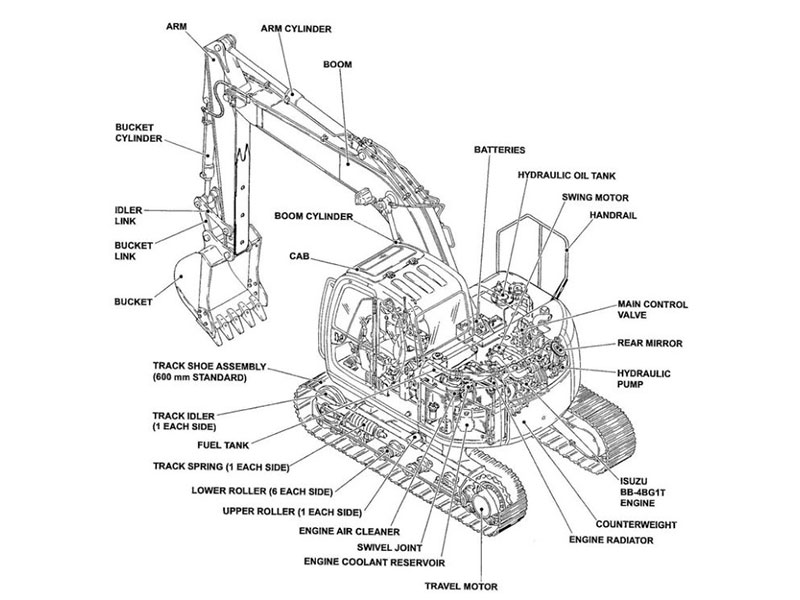
Hydraulic cylinders convert hydraulic energy into linear movement. The actual circuit and cylinder arrangement depend on the machine configuration. Use the applicable service and parts information to identify the assembly concerned.
Cylinder assemblies commonly include a barrel, piston, rod, sealing elements and end components. The actual replacement scope varies. A seal kit may contain several items and must be identified for the specific cylinder; qualified personnel should perform any disassembly or repair.
Why Function Matters for Used Parts
Leaks or slow movement are symptoms with several possible causes. Ask qualified personnel to diagnose the actual machine and document the relevant component identity. Do not infer internal bypass or wear from appearance alone. Keep donor, receiving-machine and component identifiers distinct.
Request qualified condition findings for the offered cylinder and any appropriate report of previous work. Photographs cannot establish internal condition, remaining life or the suitability of a particular rod or seal kit.
Confirm Model and Serial Number
Reading the Excavator Serial Number
Record the model and all available machine identification exactly as shown on the actual plate or supported records. The fields and plate location can vary; do not assume a standard format.
The excavator serial number is your anchor for every later check. Write down the machine serial number exactly as stamped. Take a photo of the serial plate and keep the image with your notes. A clear photo of the serial number plate protects you if a listing and the machine disagree later.
Check that the manuals and other records apply to the actual machine configuration and identification range. A manual may cover several machines and need not reproduce an individual serial number. Investigate inconsistencies before relying on it.
Matching Configuration and Selling Unit
Record the actual boom, arm, bucket and other relevant configuration details. Use applicable parts documentation to identify the cylinder and replacement scope. The identification plate alone may not describe every option or later change.
Pay close attention to the selling unit. A parts manual may list a quantity basis of one seal, while the seller offers a full kit. Confirm kit contents before you commit. Ask whether the price covers one cylinder, one rod, or a complete assembly.
Confirm the proposed component application against the receiving machine information. Donor and receiving serial numbers need not be identical, and component serial numbers are a separate kind of identifier.
Inspect Used Parts for IHI Mini Excavator
Visual and Physical Inspection Checklist
Start your inspection at the machine identification plate. Take a photo of the plate before you touch the part. The serial number on that plate links every photo to one machine. Write the serial number on your inspection sheet first.
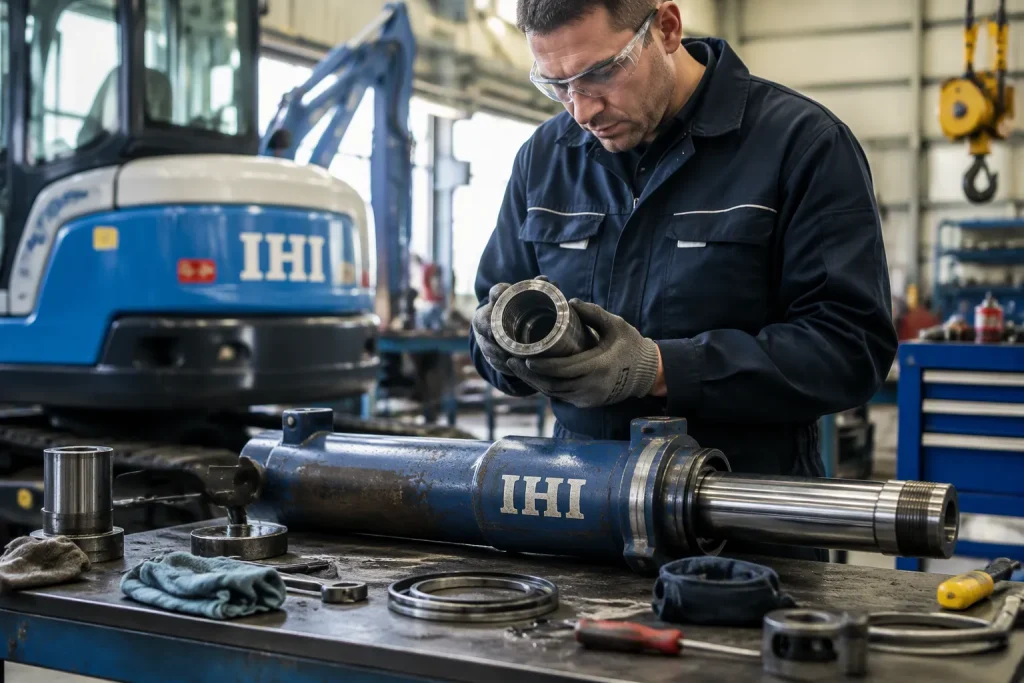
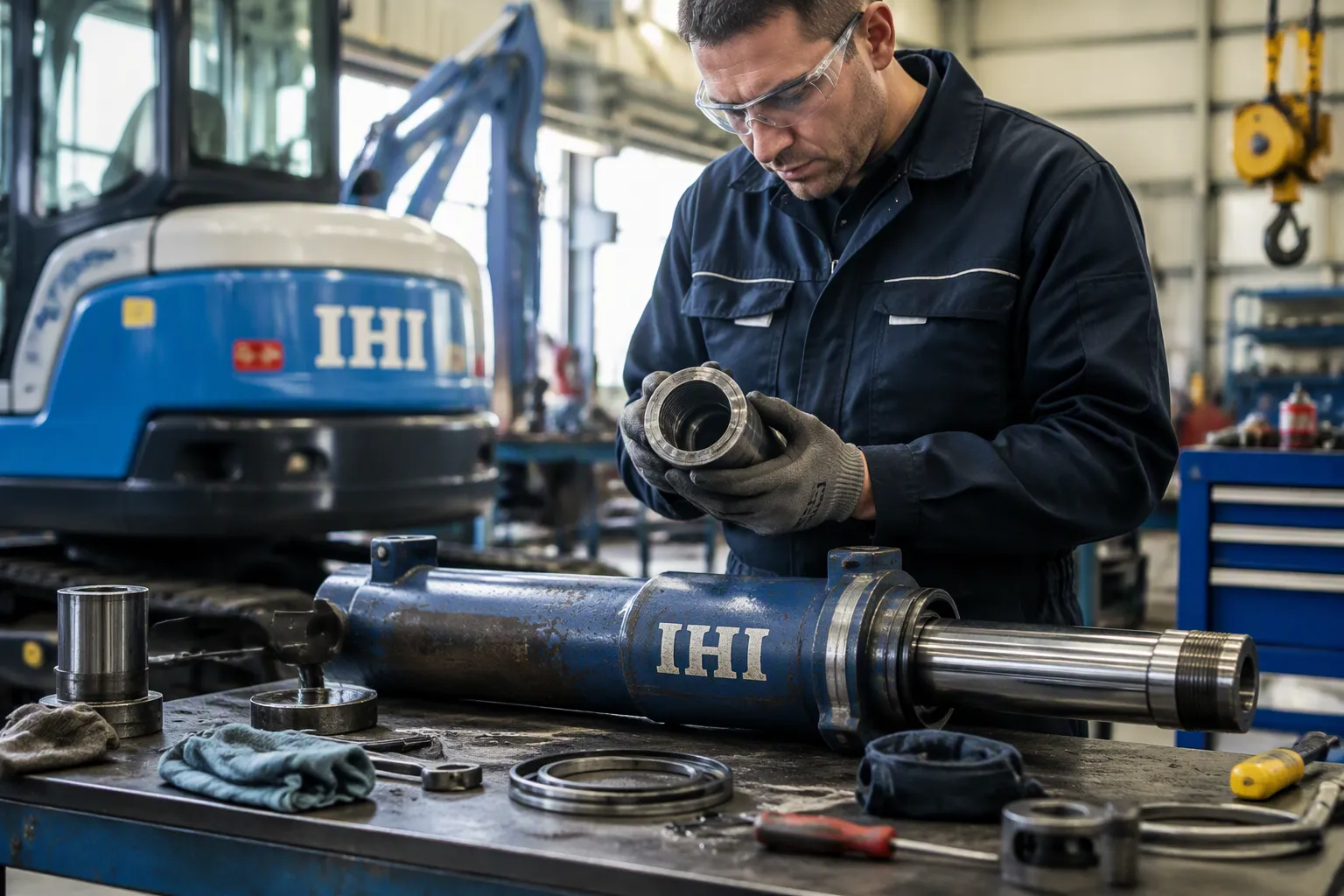
Now check the part itself. Use this checklist for every used parts for ihi mini excavator purchase:
Corrosion: request clear views of affected areas and a qualified assessment of their significance. Appearance alone cannot predict leakage or repair suitability.
Rod condition: document visible scoring, dents or surface damage for qualified assessment. Do not assume photographs establish the required finish or acceptable condition.
Seal area: record visible fluid for qualified investigation. A wet surface alone does not identify the source or establish an active cylinder-seal fault.
Mounting points: request qualified findings on bores, eyes, welds and other relevant features. Do not apply generic wear limits from an unrelated cylinder.
Hose fitting type: confirm the thread style on any cylinder-related line.
Have qualified personnel verify the actual connection specification using applicable documentation. Do not assume a particular thread standard applies to most IHI cylinders or hoses, or infer it from the machine plate.
Review Origin and Rebuild Documentation
Appearance and markings can support an identification review but do not independently prove origin, authenticity or rebuild quality. Ask for traceable records and clarify any inconsistent information.
Markings vary and may describe a casting, production batch or component rather than the ordering reference. Missing or inconsistent markings require investigation; a stamp or plate alone does not prove authenticity.
Ask whether the offered unit is used or repaired and request the actual work scope and records. Link the report to the offered component using appropriate identifiers, without assuming its serial number should equal the machine serial number.
Keep photographs, identification references and written scope together. They support later review, but do not guarantee a remedy in a dispute.
Verify Hydraulic Cylinder Part Numbers
Cross-Checking Numbers and Supersessions
Ask for documented support for any claimed supersession. Confirm its applicability to the actual cylinder and machine configuration; catalog coverage and supersession presentation vary.
Record any type marks exactly and ask for documentation explaining their meaning for that specific component. Do not infer a universal IHI cylinder type or compatibility from a Y, T or other letter alone.
Confirming Fitment Before Buying
Verify the proposed part reference and supported application for the actual machine and cylinder. Record donor identity separately. Confirm the offered condition, included items and written return terms before purchase.
Source coverage matters too. A supplier may cover only certain models or serial ranges. Ask directly which machines the part fits. Compare the answer against your excavator serial number record. A vague answer deserves a pause.
Combine machine and cylinder identification with applicable documentation, written scope and qualified condition findings. A single serial-number check cannot establish compatibility or condition.
Machine identifiers and part references serve different purposes and are not expected to be equal. Keep them distinct and investigate inconsistencies within each record before relying on the identification chain.
Check Documentation and Safe Testing
Paperwork and Markings to Request
Request clear identification photographs and relevant donor records where available. Compare records for consistency while keeping donor, receiving machine and component identifiers separate. If essential identity remains unresolved, postpone the purchase.
Request available labels, markings, repair scope and qualified findings tied to the actual offered unit. Retain the applicable quotation and written terms with these records.
Qualified Service Procedures
Do not open pressure systems yourself. Do not take internal measurements. Do not take a cylinder apart on your own bench. Send all isolation, disassembly, repair, and functional testing to qualified personnel who use the right service procedures.
A used cylinder that has not passed a qualified inspection is an unknown part. Treat it that way until a technician signs off.
Ask for qualified test records linked to the actual offered component by suitable identifiers. Review the procedure, conditions, applicable limits and report limitations. A machine serial number match alone does not validate a cylinder test.
Install and Function-Check the Part
Pre-Installation Verification Steps
Before qualified installation, reconcile the supplied component and scope with the verified references and applicable procedures. Do not require a cylinder serial number to equal the machine serial number. Resolve identification inconsistencies before work starts.
Give qualified personnel the applicable documentation and purchase records. They should determine required seals, fluids, connections, handling equipment and replacement items under the actual service procedures. Do not assume a generic hose-thread standard.
Keep your identification chain complete at this stage. Take photos of the part label, the serial number plate, and the fittings together. Give the photos and paperwork to the technician. This record helps with any warranty question later.
Post-Installation Leak and Function Checks
Qualified personnel should carry out any post-installation leak or functional checks under the applicable procedures. Review their documented findings and report later symptoms without approaching moving equipment or inspecting pressurized leaks yourself.
Leave fluid checks, connection work and replacement decisions to qualified personnel following the applicable safety and service procedures.
Write the result on your identification sheet. Record the date, the serial number, and the technician’s findings. A steady identification habit protects every future purchase.
For an IHI cylinder purchase, record the machine and component identities, verify the proposed reference and supplied scope, and review qualified condition findings. Keep installation and testing with qualified personnel.
Keep one safety rule in mind. If you are unsure, stop and check again. Never install a part just hoping it fits.
Retain a clear identification file for each purchase. Record unresolved questions and the evidence used to resolve them rather than treating a single marking or photograph as proof.
FAQ
Where do I find the serial number on an IHI mini excavator?
Use the actual machine identification plate and applicable documentation. Plate location and fields vary. Record available identifiers exactly and confirm that the records cover the actual machine.
Can a clean-looking part prove it is genuine?
No. Appearance and markings alone cannot establish authenticity or rebuild quality. Request traceable records, document inconsistencies and obtain qualified assessment where needed.
Can I determine compatibility from a letter stamp?
No. Record the marking and request documentation explaining its meaning for the actual component. Do not infer a universal IHI cylinder type or fitment from Y, T or another letter alone.
What paperwork should I request from a seller?
Request available donor and component identification, the proposed ordering reference, repair records and qualified condition findings. Keep donor and receiving machine identities separate and confirm the written supply scope.
Can I test a used cylinder myself?
Leave isolation, disassembly, internal measurements, repair and functional testing to qualified personnel using applicable procedures. Ask for a report tied to the actual offered component with documented conditions and limitations.
For excavator parts sourcing, consider YNF Machinery. Share full machine and component identification, applicable part references and quantities, and request supported compatibility information, an actual quotation, and written warranty and return terms before ordering.