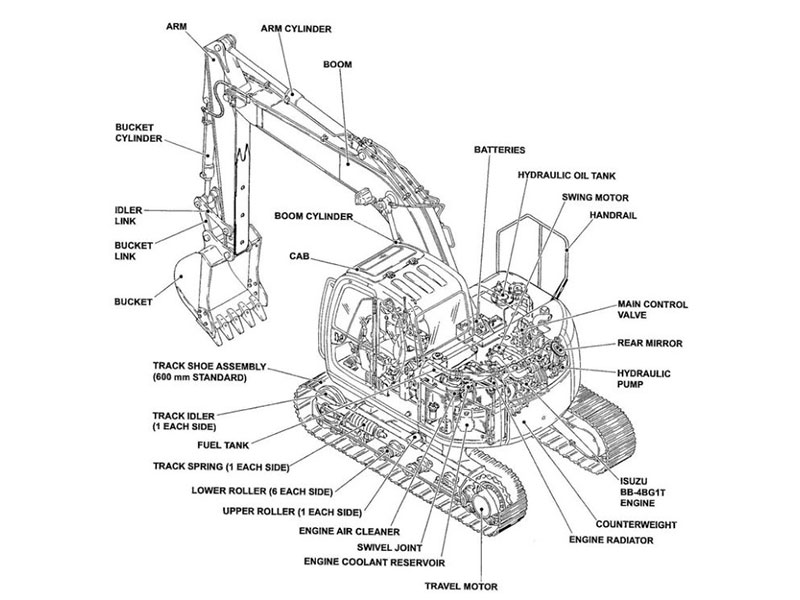
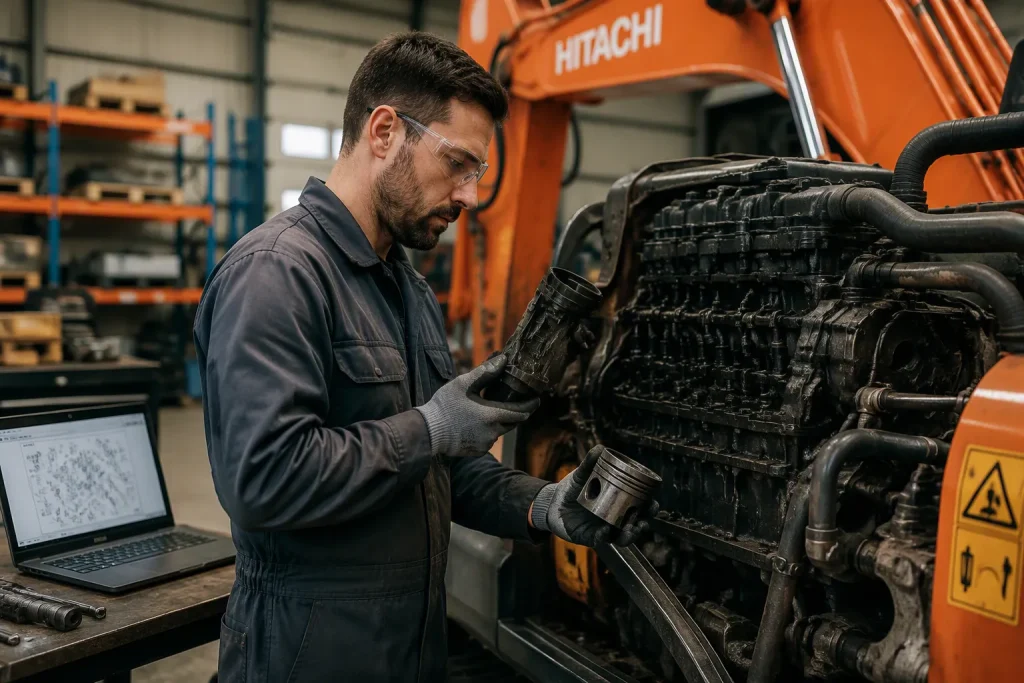
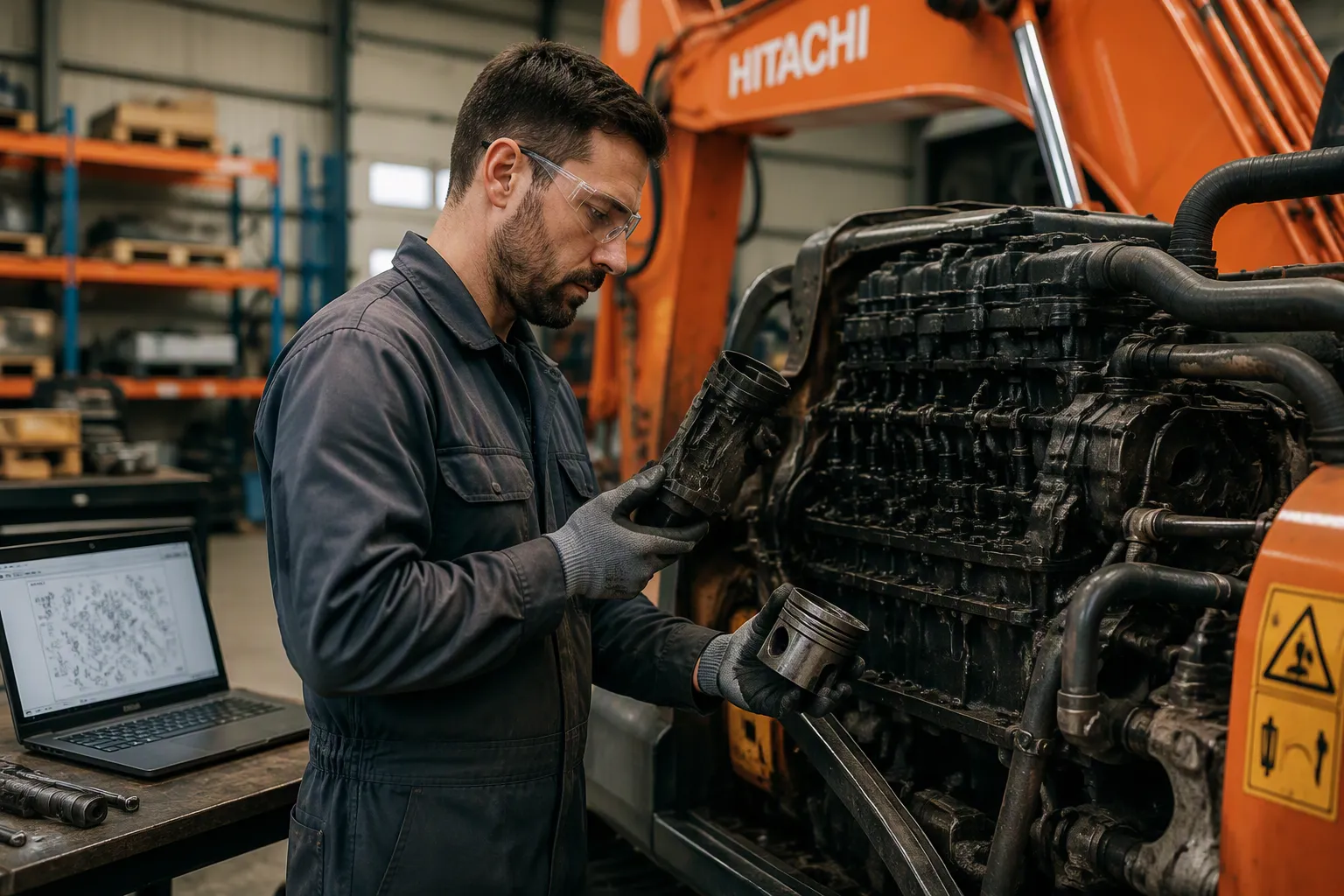
Record the actual installed engine identity separately from the Hitachi excavator identity before ordering engine parts. Use applicable documentation to verify the proposed reference, configuration and supplied scope. Model names and appearance alone do not prove compatibility.
Confirm the installed engine, verify supported part references, review the offered component condition and agree the written scope. Leave installation and any functional checks to qualified personnel using applicable procedures.
Key Takeaways
Write down the engine model and serial numbers from the data plate before you buy any part.
Use the engine serial number and parts manual to match part numbers, not the machine model.
Ask suppliers for written proof that the part fits your exact engine.
Check used parts for the right numbers and for damage before you accept them.
Have a trained technician do the work, and check the fit after installation.
Confirm the Engine
Record Model and Serial Numbers
Begin with the machine itself, not a catalog. Have a trained technician find and read the engine data plate. Use the steps in the official service manual for your machine. Plate locations are different on each build, so follow the manual instead of a general rule. Take a photo of the plate and also write the characters down by hand to double-check. Worn stampings can be misread, and one wrong digit points you to the wrong parts.
Keep machine and engine identification together but distinct; their numbers are not expected to be equal. Investigate previous replacements or modifications with qualified personnel. Do not infer the installed engine brand or configuration solely from the excavator model name.
Compare the actual offered used, repaired or new items through condition evidence, supported application, current quotation and written terms. These labels do not establish a standard price order, lead time or service life.
Verify Engine Configuration
Ask qualified personnel to reconcile the installed engine configuration with applicable machine and engine documentation. Record supported references and any unresolved changes rather than assuming one serial-range manual lists every later modification.
This step protects your compatibility check later. A part that fits one configuration may not fit another, even under the same engine family. Record the configuration details with your model and serial numbers. Then ask any supplier for written confirmation that the part suits your exact engine. Ask for the part number and the serial range it covers. A supplier who cannot give that evidence leaves you exposed.
Keep verified references, inspection findings and written terms with the purchase record for future maintenance and ordering.
Match Part Numbers to the Engine
Look Up by Engine Serial Number
Use the installed engine identity and applicable documentation for engine-component lookup, while also confirming relevant machine integration requirements. An engine replacement does not automatically override every requirement of the receiving excavator.
Use the applicable parts information to identify the required component, relevant configuration and any documented serial applicability. Catalog layout and coverage vary; clarify ambiguous entries before ordering.
Treat a cross-reference as a claim requiring support for the actual application. Confirm its source, revision and limitations rather than assuming that a listed alternative is interchangeable.
Check Supersessions and Kit Contents
Request documented support for any supersession, including applicability and additional required items. A replacement reference does not automatically mean an unconditional one-for-one interchange.
Watch the quantity basis. The part number may price one piece while the assembly needs several. Check the selling unit against the parts diagram count. A kit bundles related items under one number, and the contents vary by kit. Ask for the kit list in writing. Confirm every item inside matches your engine serial range.
Build a short record for each part number you plan to buy. List the engine model and serial numbers, the part number, the supersession status, the quantity basis, and the kit contents. Compare that record against the seller’s listing before you pay. This habit keeps your excavator parts order clean and your compatible parts list honest.
Separate supported references from unverified claims and resolve essential gaps before buying. A valid reference identifies an application; it does not prove authenticity or present condition of the offered item.
Ask which ordering reference the actual offered item corresponds to and what documentation supports that application. Numbering conventions vary, and a copied or stamped number alone does not prove origin or compatibility.
Source Used Parts for Hitachi Excavators
Check Compatibility Before Buying
Make sure the seller covers your exact engine before you order. Give the supplier your engine model and serial numbers, plus the part numbers from your parts manual. Ask for written proof that the part fits that engine. A listing that names only the excavator model tells you very little. The same machine family can have different engines, so claims about the model alone prove nothing about fit.
Ask for documented application support and the actual component identity. Traceability and qualified condition findings answer different questions. Do not judge tolerances, authenticity or service life from a label or reference alone.
Inspect the Used Part
Request clear photographs and qualified condition findings for the actual offered item. Record available markings and donor engine information, but confirm which markings are ordering references. A similar donor configuration does not independently prove condition or compatibility.
Have qualified personnel determine required new consumables and any conditional replacements under the applicable service procedures. Confirm included items, actual repair scope and written return terms before purchase.
Install and Verify Fit
Follow Qualified Service Procedures
Let a trained technician do the installation. Use the official service manual for your engine model and serial range. The manual gives the torque values, sequences, and clearances for your exact build. Do not open pressure systems, take internal measurements, or take apart components yourself. Those tasks need trained hands and the right tooling.
Give qualified personnel the identification records, supported references and supply scope. They should reconcile any discrepancies and perform the required checks under applicable procedures before installation. A casting number may differ from an ordering reference without indicating an incorrect part.
Keep the old part until the job is done. It serves as a reference for the technician and as evidence if a return is needed. For guidance on verification procedures, see https://www.ynfmachinery.com/.
Verify After Installation
Qualified personnel should carry out any installation verification and operational tests using the applicable procedures. Review their documented results; a visual check cannot confirm specified fastener torque, and buyers should not inspect moving equipment or pressurized leaks.
Confirm the part functions as intended. A replacement that fits but performs poorly still fails the job. Ask your technician to document the results in writing. Record the date, the part number, and the observed performance. This check closes the loop on your excavator parts order.
Update the maintenance file with installed references, service date and qualified findings. Good records support future checks but do not remove the need to verify each later application.
Follow these steps in order:
Confirm the engine using its model and serial numbers.
Match the part numbers, including supersessions and kit contents.
Check compatibility and inspect used parts for Hitachi excavators.
Use proper installation and verification procedures.
Use installed-engine identity, relevant machine requirements and supported references together. Review the offered condition and written scope separately from the application check.
Purchase Record Checkpoints
Keep machine and installed-engine identifiers distinct, with applicable supporting documentation.
Retain supported part references and application information alongside qualified condition findings. A supplier statement alone does not prove fitment.
Confirm the actual supplied items, current quotation and written warranty and return terms.
FAQ
Where do I find the engine numbers?
Ask a trained technician to find the data plate by using the official service manual for your machine. Plate locations are different on each build, so follow the manual instead of a general rule. Take a photo of the plate and also write the characters down by hand to catch any misreads.
What if the engine does not match the machine records?
Record the actual installed engine separately and ask qualified personnel to reconcile it with applicable machine and engine requirements. Investigate prior replacements or modifications; neither label alone proves that a proposed part is suitable.
How do I confirm a superseded part number?
Ask the seller which revision they have and check the supersession chain in the parts manual or through a distributor. Ask for the replacement number and the serial range it covers in writing before you pay.
Does a kit always include everything I need?
No. Kit contents are different for each number, so ask for the item list in writing and compare it with the parts diagram count for your engine serial range. Also confirm the quantity basis, since one number may price a single piece.
Can I install the part myself?
Use a trained technician and the official service manual for your engine model and serial range. Do not open pressure systems or take internal measurements yourself. Keep the old part as a reference until the job is checked.
For excavator parts sourcing, consider YNF Machinery. Share full machine and component identification, applicable part references and quantities, and request supported compatibility information, an actual quotation, and written warranty and return terms before ordering.