
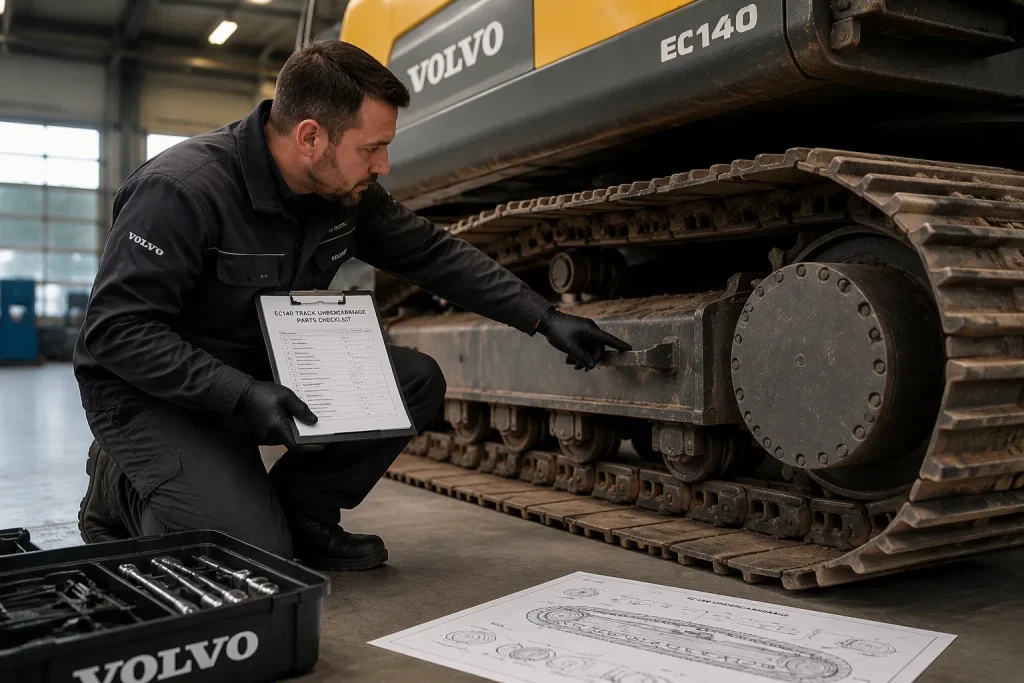
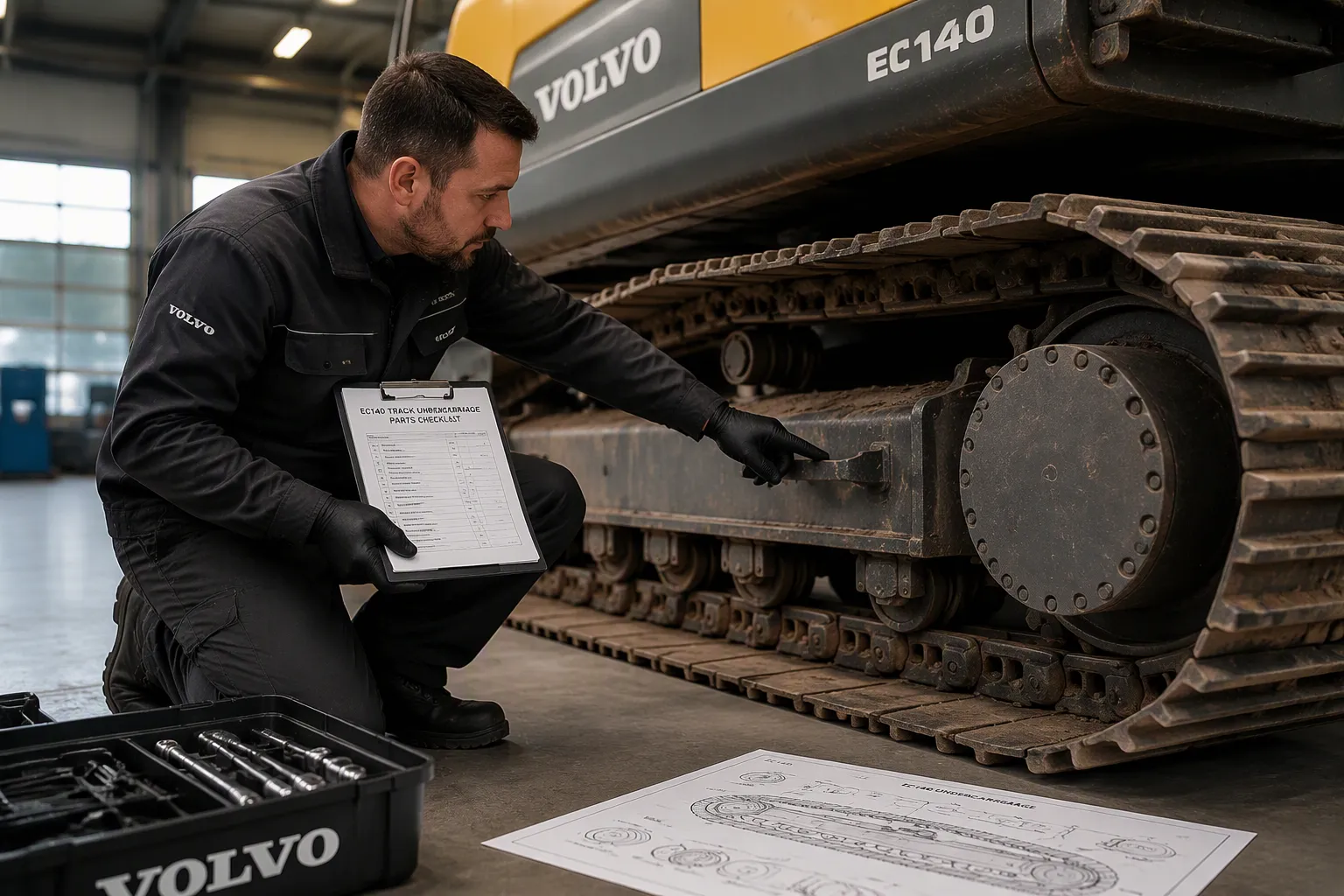
Correct undercarriage ordering starts with checking, not a parts list. A list tells you what you want. Checking tells you what your machine really needs.
Work through the chain in order. Confirm the machine identity first. Next, check the parts manual for the serial range. Inspect the undercarriage, then list every component with quantities. Finish by confirming compatibility and order scope for your volvo 140 excavator parts.
Documented checks can reduce missing items and ordering errors. They do not guarantee fitment, prevent every return or establish that continued operation is acceptable.
Key Takeaways
-
Record full machine and actual undercarriage identities, configuration and known modifications before selecting a reference.
-
Use the parts manual to find the right serial number break. This step keeps you from ordering parts for the wrong production range.
-
Have a qualified technician assess wear and condition against applicable service criteria.
-
List every part by its position, and check the quantities and selling units. This prevents short shipments and double charges.
-
Use a pre-order checklist to check compatibility. This protects your budget and keeps your machine working.
Confirm Machine Identity
Record Model and Serial Number
The model and serial number are where you start. Every part you order must trace back to these two facts. Write them down exactly as they show on the machine’s ID plate. Do not trust your memory or what the last owner told you.
A photo of the plate gives you a backup copy. Keep it with your order notes. You will need it again when you check the parts manual and when you confirm compatibility later in the process.
The serial number matters more than most buyers think. Volvo built the EC140 across several production ranges. Each range can have different undercarriage parts. A part that fits one serial break may not fit another. Think of the serial number as the key that opens the correct parts listing.
Note Configuration Variants
Configuration variants can change how the undercarriage fits. Write them down next to the serial number. Track shoe width, track guard style, and roller type are common examples. Two machines with close serial numbers can still leave the factory with different undercarriage setups.
Check the machine itself, not just the paperwork. Aftermarket changes happen over a machine’s working life. A previous owner may have swapped track shoes or added guards. Your order must match what is actually bolted to the machine today.
Keep one written record. List the model, the serial number, and each configuration detail you see. Add the date and the source of each detail. This record becomes the reference point for every later step. When a parts listing shows more than one option, you can check your record and settle the question fast.
Check the Parts Manual for Volvo 140 Excavator Parts
Match the Serial Number Break
Use the actual publication coverage statement and relevant entry notes to confirm application. Serial applicability may appear in headings, entries or separate notes; do not assume a universal range table or catalog layout.
Use parts and service information that explicitly covers the actual machine and installed undercarriage. Do not substitute documentation for another EC140 variant based on a similar name. Parts diagrams support identification; applicable service information governs inspection, acceptance and repair.
Write the serial break on your order record. Add the manual page or figure number next to it. This small habit saves time later when you confirm compatibility.
Read Scope and Quantity Rules
Manuals list parts in two different ways. Some entries cover a single piece. Others cover a set, a kit, or a complete assembly. Read the description line and the quantity column together. The quantity column often states how many pieces the machine uses, not how many you receive per order.
Confirm the actual required quantity, the catalog quantity basis and the selling unit separately. Do not infer a roller count or package quantity from a generic example or product photograph. Obtain actual kit contents before ordering.
Keep your notes simple. Record the item, the quantity the machine needs, and the selling unit for each line. This record becomes your working list of volvo 140 excavator parts. It also gives you a clean reference when you verify compatibility and finalize the order scope for your volvo 140 excavator parts.
Inspect the Undercarriage
Document Wear and Condition
Request a qualified inspection report identifying the actual components, measurement basis, relevant service criteria and findings. Do not attempt hazardous access or measurements yourself. Record the report date and relevant operating information.
Compare qualified inspection records over time when the methods and criteria are comparable. A limited measurement history does not establish a fixed remaining service life or predict every failure.
Do not move or swap components based on a general inventory guide. Any repositioning, service access or repair must be determined by qualified personnel following the applicable procedure and compatibility requirements.
During the same walkaround, check the hydraulic and engine areas for wear and leaks. Look for damp hoses, weeping seals, and loose fittings. This confirms the overall scope of your order. Keep all checks at a qualified-service level. Do not disassemble components or open pressure systems yourself.
Sort Replace Versus Reuse
Use the qualified findings to classify items as replace, retain or unresolved under the applicable criteria. Measurements alone may not establish acceptable condition; damage, configuration and mating compatibility can also matter.
Some parts sit on the border. A roller may still turn but show uneven surface wear. A sprocket may hold its shape but wear faster with a new chain. Flag these conditional items on your list. A qualified parts professional can help you settle them before you order.
Write a short reason next to each replace decision. “Bushing wear past limit” or “cracked track guard” gives you a clear audit trail. This record also protects your budget. You buy what the machine needs and skip what it does not.
List All Components
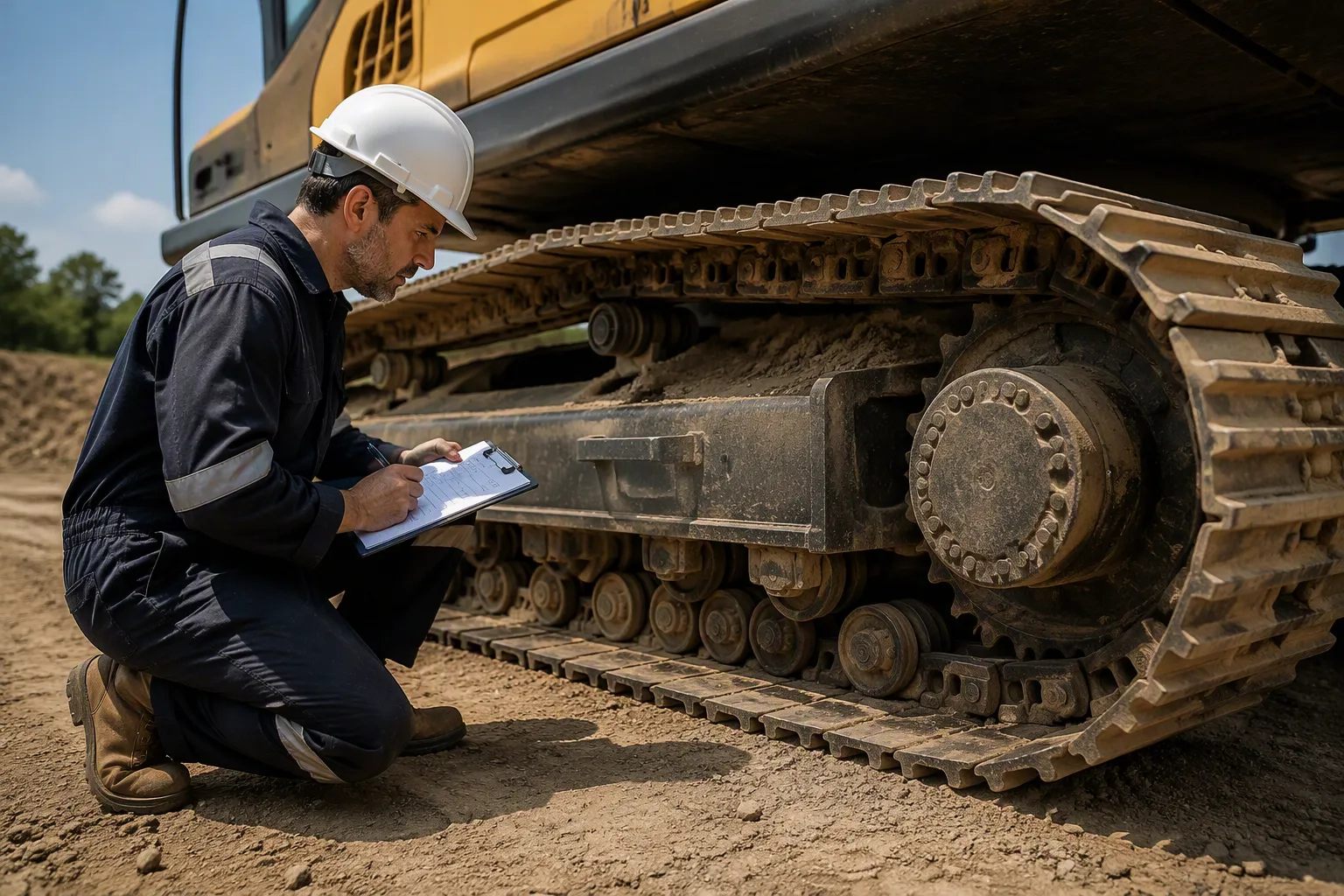
List Components by Position
A complete list covers every undercarriage component on the machine. Walk the machine and account for each item by position. Start at the front and work back on both sides.
Account for the actual components and positions covered by the intended repair. Depending on the installed configuration, relevant items may include chains, shoes, rollers, idlers, sprockets, guards and associated hardware. Do not assume every machine has one of each item per side or requires a complete undercarriage replacement.
Complete undercarriage assemblies may also be an option. A full assembly can replace several worn parts in one step. Compare the assembly scope against your individual list. Check what the assembly includes and what it leaves out. A reference page on undercarriage parts for Volvo EC140 excavators can help you see how these components are grouped and sold.
Keep the list in the same order as the parts manual figures. This makes the next step faster. You can move line by line from your notes to the manual without hunting for each item.
Confirm Quantity Basis and Kit Contents
Distinguish quantity used per illustrated assembly from the number of assemblies included in the repair and the quantity sold. Apply the documented basis for each item rather than automatically doubling every catalog quantity.
Obtain written selling-unit information for each actual offer. A description or photograph does not establish whether a chain, sprocket or associated component is sold individually, as a pair or as a larger assembly.
Kit contents need the same review. A kit may bundle pins, bushings, seals, or mounting bolts. List those bundled items separately on your record. Mark them as included so you do not order them twice. Then confirm the kit fits your serial range and configuration.
Finish with a total count for each component. Compare the total against the machine. This final pass catches a missed side, a doubled line, or a kit item counted twice. A clean list of volvo 140 excavator parts at this stage makes the compatibility check straightforward. You order exactly what the machine needs, and you can defend every line on the list.
Verify Volvo 140 Excavator Parts Compatibility
Cross-Check Specs and Replacements
Your list is complete. Now check every line against two sources: the manual and your recorded machine identity. Start with the specifications. Compare each part’s listed dimensions and fitment notes to the serial range you wrote down earlier. A roller that matches your measurements but sits outside your serial break still does not belong on the order.
Separate a conditional supersession from an unresolved wear decision. A replacement reference may apply only to stated configurations or require additional parts. Confirm all conditions against the actual assembly and supported documentation before ordering.
Watch for parts that only work as a set. A new sprocket may wear faster against an old chain. The manual’s component specifications help you judge these pairings. When a question stays open, mark the line as unresolved and hold it. A compatibility resource on undercarriage verification for Volvo excavators can help you review how these components relate before you commit.
Run a Pre-Order Checklist
Finish with one pass through a short checklist. Read each line against your order record and confirm it in writing.
-
Identity: model and serial number copied exactly from the ID plate, with a photo on file.
-
Serial range: the manual’s break noted on the record, with the page or figure number beside it.
-
Component list: every item listed by position, both sides accounted for.
-
Quantities: required repair quantity, catalog quantity basis and actual selling unit recorded separately.
-
Kit contents: bundled pins, seals, and hardware marked as included so nothing is ordered twice.
-
Unresolved items: wear decisions, application conditions and proposed replacements clarified with qualified support.
Hold any unresolved order line until its application, condition and scope are supported. Retain the source references and written confirmation; a completed checklist does not guarantee that every supplier will deliver the same result.
You now have the whole chain. First, confirm the machine identity. Next, check the manual and serial range. Inspect the undercarriage, then build a full component list with quantities. Finish by confirming compatibility.
Complete the pre-order checklist before you place any order. Settle open questions with a qualified parts professional. A verified order scope protects your budget and your uptime.
Retain the machine and component identification, applicable source references, qualified inspection findings and the confirmed quantities and scope with the order record.
FAQ
How do model and serial information support identification?
Use the full model and serial identification with the actual installed undercarriage configuration and relevant source coverage. Neither a model nor a serial match alone proves fitment or accounts for later modifications.
Can I order from a parts list without inspecting the machine first?
No. A parts list shows what the machine was built with. An inspection shows what it needs now. Previous owners may have swapped track shoes or added guards. Wear also changes the replace-versus-reuse decision. Inspect first, then build your list from what you actually find.
What is the difference between quantity needed and selling unit?
The catalog may state quantity per illustrated assembly, while an offer describes the quantity sold. Confirm the basis, number of assemblies included in the repair and package contents separately. Do not automatically multiply every quantity by two.
How do I handle a part that sits on the wear limit?
Flag it as a conditional item. Write down the measurement and the reason it is borderline. Check it against the manual’s wear limits and your recorded configuration. A qualified parts professional can help you settle the question before you commit to the order.
Do I need the service manual or the parts manual?
Use parts information for supported item identification and applicable service information for inspection, acceptance and repair. Verify that each source covers the actual machine and installed assembly; documentation for a similarly named variant is not automatically suitable.
For excavator parts sourcing, consider YNF Machinery. Share full machine and component identification, applicable part references and quantities, and request supported compatibility information, an actual quotation, and written warranty and return terms before ordering.



