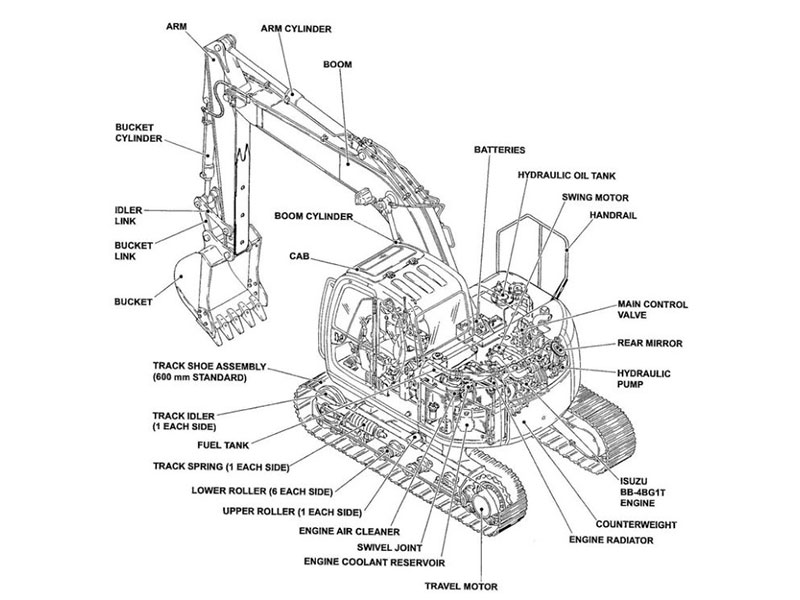
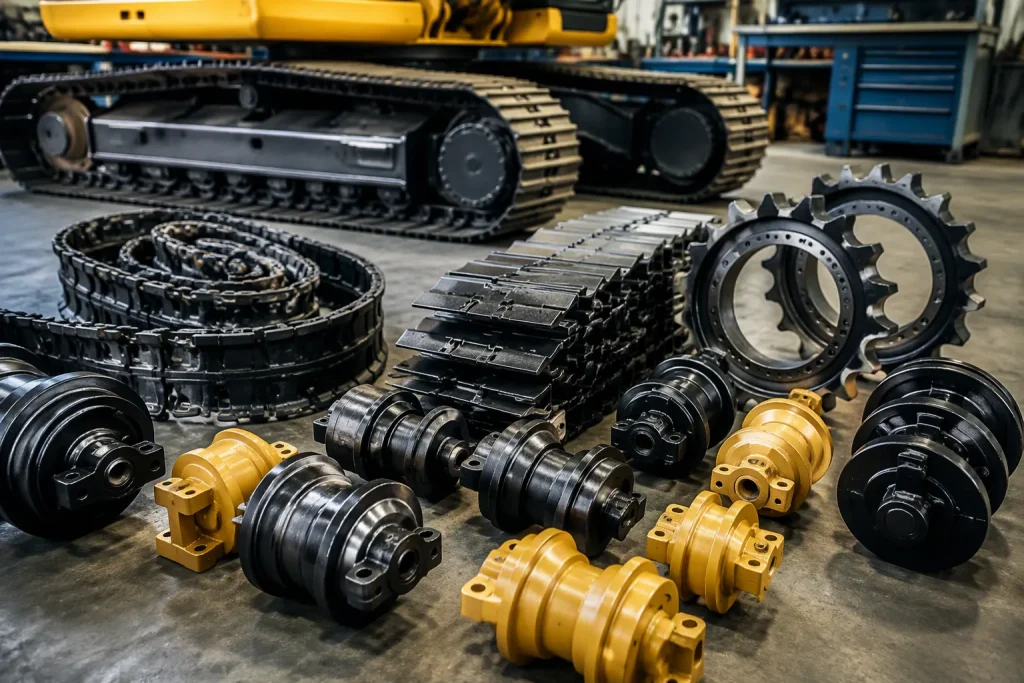
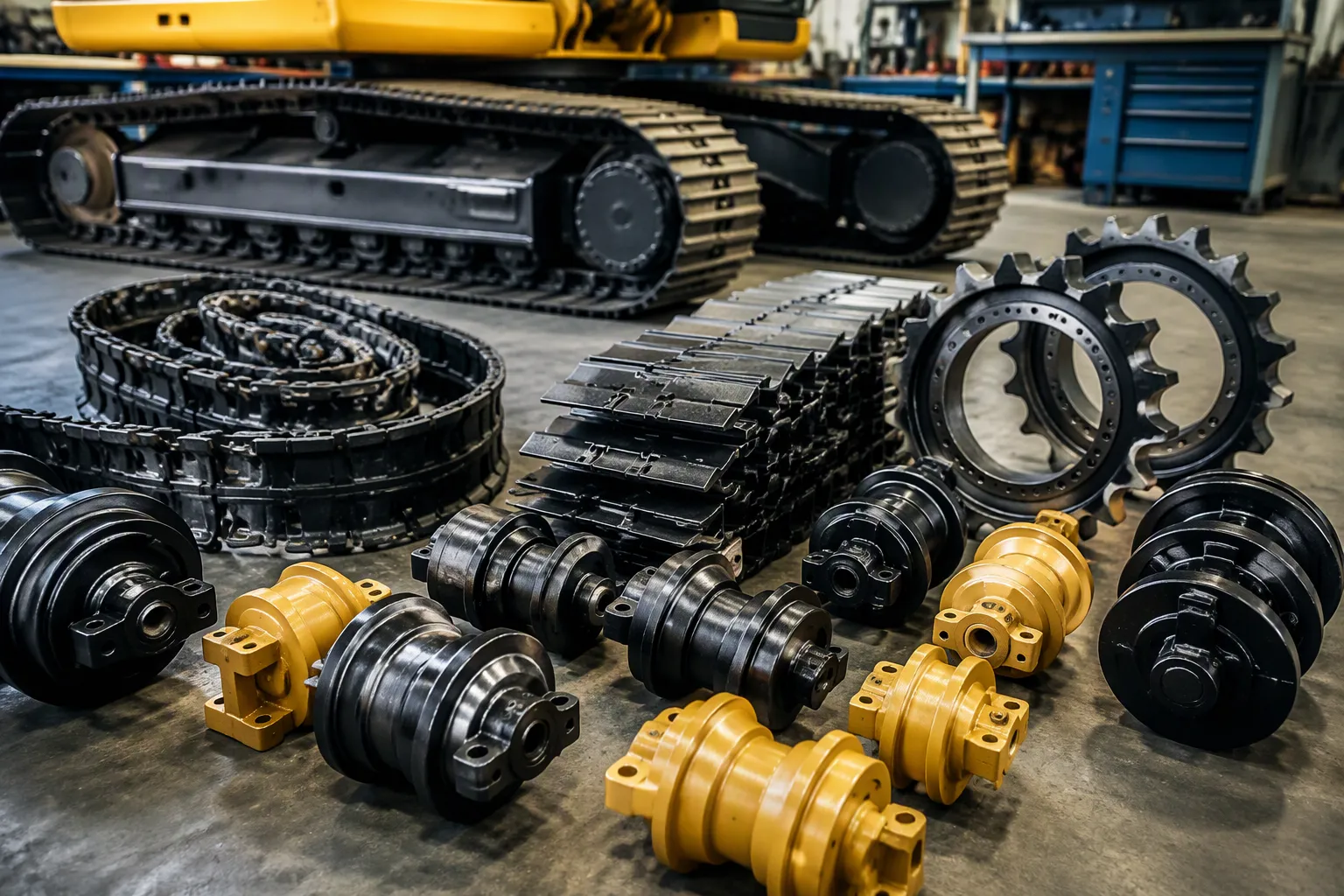
Excavator undercarriage parts work together to support the machine and move it across the ground. Key components include track chains, shoes, rollers, carrier rollers, idlers, sprockets, track frames, recoil springs, tensioners, pins, bushings, and final drives. Their service life varies with machine size, terrain, maintenance, and operating conditions. Understanding each component helps you identify wear and purchase compatible wholesale undercarriage excavator parts.
Key Takeaways
- Track chains, rollers, idlers, sprockets, and final drives form a connected travel system.
- Use the manufacturer’s measurement method and service limits to assess wear.
- Confirm the machine model, serial number, part number, track pitch, and mounting dimensions before ordering.
- Inspect for leaks, cracks, loose hardware, abnormal noise, and uneven wear.
- Compare the full delivered and installed cost of a wholesale order, not only its unit price.
Excavator Undercarriage Overview
Support, Mobility, and Stability
The undercarriage supports the machine and provides traction for travel. Track width, ground contact area, machine configuration, attachment weight, and surface conditions all affect ground pressure and stability. Wider shoes may reduce ground pressure on soft terrain, but the appropriate shoe width depends on the machine and application.
Wet clay, loose gravel, and slopes can reduce traction or change the risk of sliding and tipping. Follow the machine manufacturer’s operating limits for the specific terrain and configuration. Undercarriage selection alone cannot make an unsafe operating condition safe.
How the Components Work Together
The travel motor supplies rotation to the final drive. The final drive reduces speed and increases torque at the sprocket. Sprocket teeth engage the track chain bushings, moving the track around the rollers and idler. The track frame holds these components in alignment.
Wear in one component can affect the others. For example, a worn chain and sprocket may mesh poorly and accelerate further wear. An idler or roller that no longer runs correctly may cause abnormal track movement. Inspect the travel system as a whole before replacing a single component.
Key Excavator Undercarriage Parts
Track Chains, Shoes, and Bolts
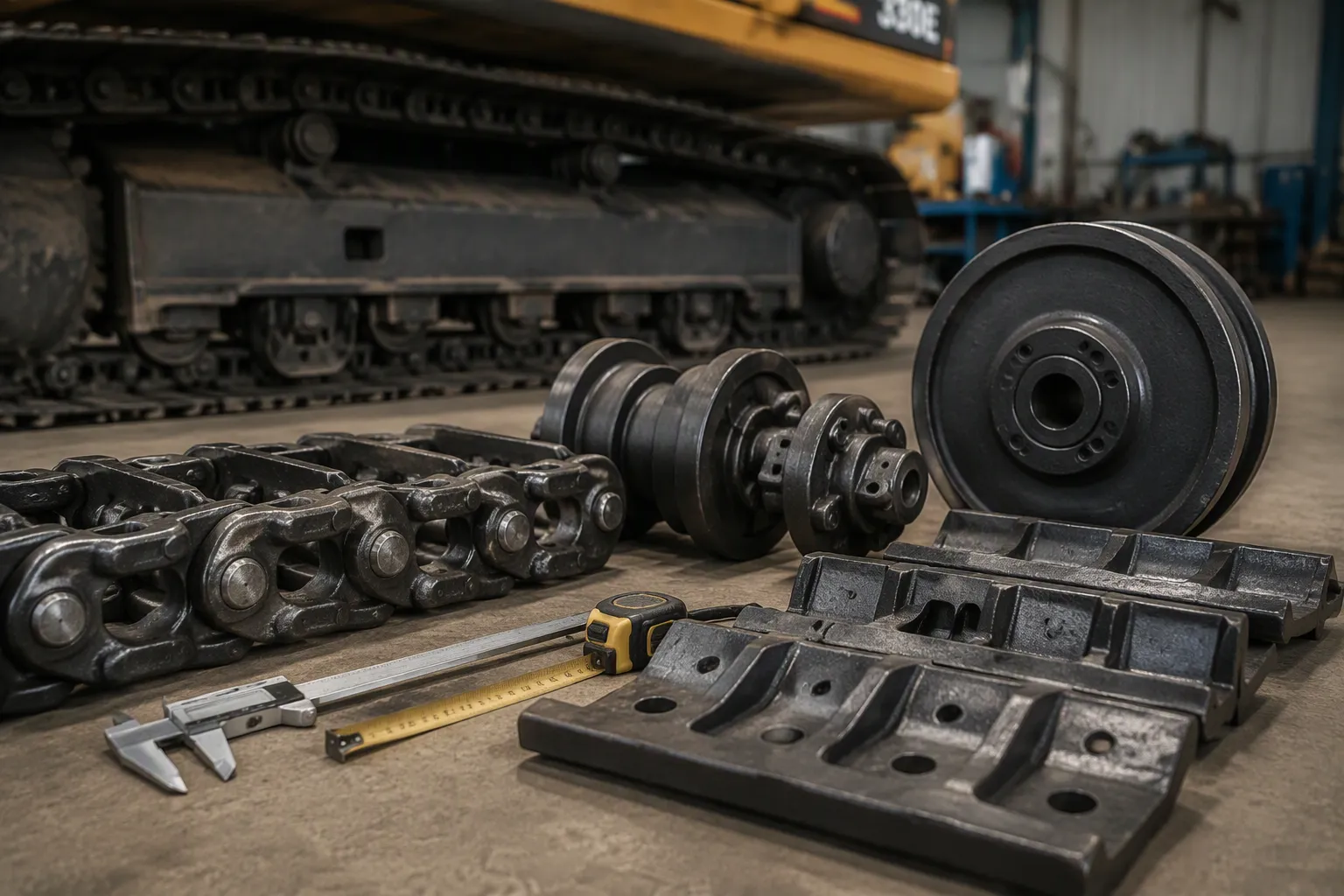
Track chains consist of links joined by pins and bushings. Wear at these joints can increase the measured pitch over several links. Measure according to the manufacturer’s procedure and compare the result with the applicable service limit. There is no single elongation percentage that applies to every excavator chain.
Track shoes bolt to the chain and provide contact with the ground. Shoe width, grouser design, bolt pattern, and material specification must suit the machine and working surface. Heat treatment and material vary by product; request the relevant specifications for the particular shoe being offered rather than assuming every shoe uses the same steel or process.
When ordering in bulk, confirm chain pitch, link count, shoe width, bolt spacing, and the required number of sets. Include compatible bolts and nuts in the quotation if needed.
Track Rollers, Carrier Rollers, and Idlers
Bottom rollers carry the machine along the lower track run. Carrier rollers support the upper run where the machine design uses them. The front idler guides the track and works with the tensioning assembly. Their arrangement varies by excavator model.
Inspect rollers and idlers for oil leakage, flat spots, uneven wear, excessive play, noise, and damage to mounting surfaces. A seized or misaligned roller may cause the chain to rub against other components. Compare the part number and dimensions before ordering a replacement.
Sprockets, Track Frame, and Recoil Assembly
Sprockets and Final Drives
The sprocket engages the track chain bushings to move the machine. Inspect its teeth for hooking, thinning, cracks, breakage, or uneven wear. Also check the chain condition: fitting a new sprocket to a heavily worn chain, or the reverse, may shorten the life of the new component. Follow the manufacturer’s wear limits when deciding whether to replace one part or a matched group.
The final drive provides gear reduction between the travel motor and sprocket. Check its oil level and service interval according to the machine manual. Leakage, abnormal noise, overheating, or travel problems require diagnosis; these symptoms do not by themselves identify a specific failed seal or gear.
Track Frame, Recoil Spring, and Tensioner
The track frame supports and aligns the rollers, idler, and related components. Inspect it for cracks, damage, and distorted mounting points. Misalignment can contribute to uneven track wear.
The recoil spring and idler assembly respond to impact loads, while the track adjuster is used to set tension. These parts may be sold individually or as assemblies, depending on the machine. Confirm the exact required component, dimensions, and included items before placing a wholesale order.
Maintenance and Replacement
Inspection Tips and Common Issues
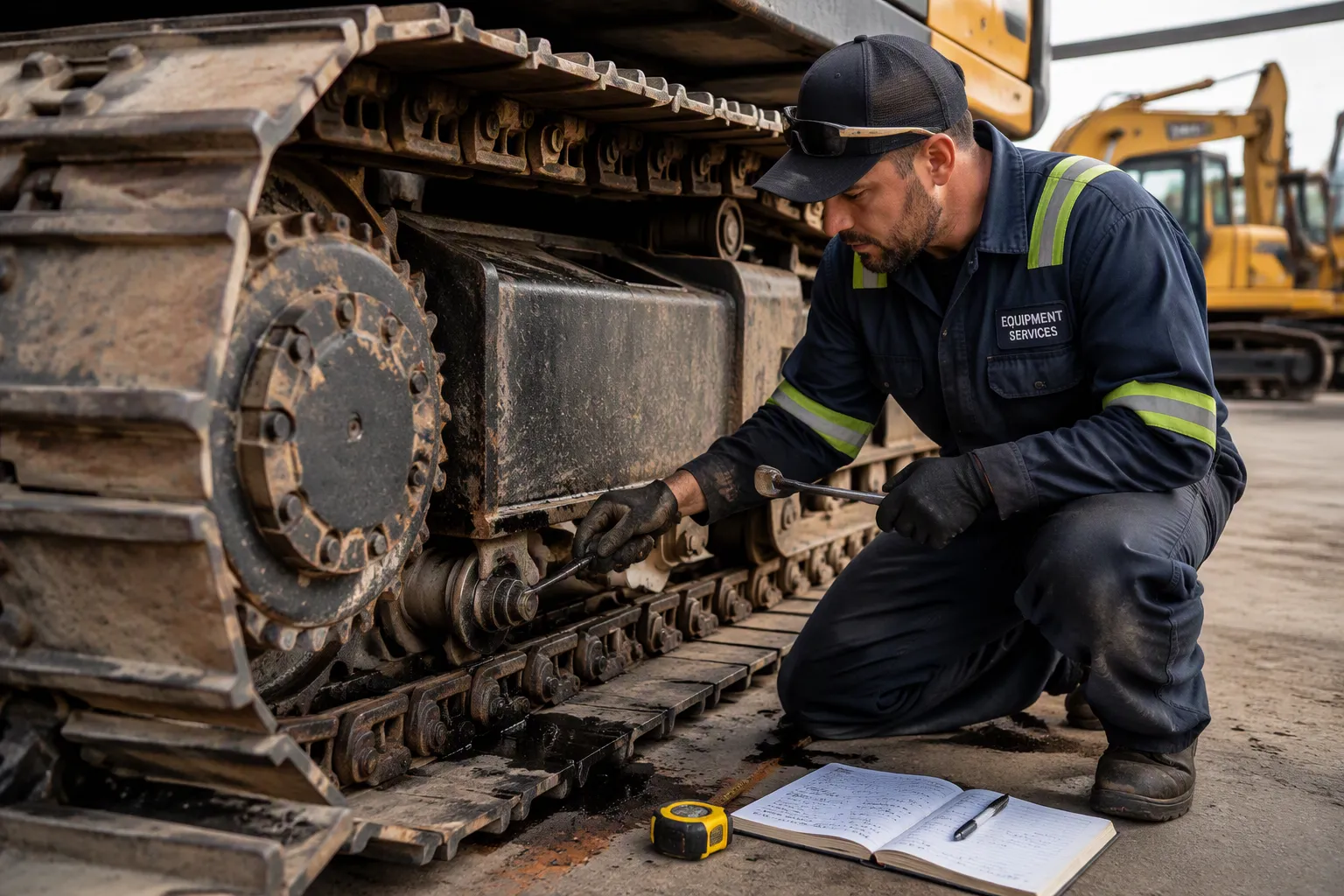
Before operation, look for loose shoe bolts, damaged grousers, visible leaks, trapped debris, and unusual track alignment. Clean packed material from the undercarriage as appropriate for the work site. Check track sag and wear at the intervals and by the method specified in the machine manual.
Periodic measurements may include chain pitch, sprocket teeth, idlers, roller surfaces, and shoe grousers. Record the measurements so you can follow wear over time. Uneven wear may have several causes, including operating conditions, track tension, damaged components, or alignment. Diagnose the cause before replacing parts.
Oil around a roller or final drive needs inspection. Identify the fluid and source rather than assuming every leak comes from the same seal or filter. Follow the manufacturer’s service procedure before opening or repairing a final drive.
When to Replace Parts
Replace a component when it reaches the manufacturer’s service limit, has structural damage, leaks beyond the acceptable limit, or no longer operates correctly. Inspect related parts at the same time. Whether rollers, chains, and sprockets need to be replaced together depends on their measured condition and the machine manufacturer’s guidance.
Use the machine model, serial number, and parts information to identify the correct replacement. If the original number is unavailable, provide photos and measurements of the removed part. Never rely on a similar appearance alone.
How to Buy Wholesale Undercarriage Excavator Parts
Bulk purchasing may reduce the unit price, but the actual saving depends on product specifications, quantity, freight, and destination. Compare quotations for the same part numbers and quality requirements. Include shipping, installation, expected wear life, and warranty terms in the decision.
- Confirm machine models, serial ranges, and required part numbers.
- List the quantity needed for each machine and each side.
- Check track pitch, link count, shoe width, bolt pattern, and mounting dimensions where relevant.
- Request applicable material, hardness, or inspection information for the specific components.
- Confirm packaging, weight, lead time, shipping terms, and warranty coverage.
For a quotation on wholesale undercarriage excavator parts, send YNF Machinery your machine models, serial numbers, part numbers, quantities, and photos. We can review the information and check the available options.
FAQ
How do I know when my track chain needs replacing?
Measure chain pitch across the specified number of links using the manufacturer’s procedure. Compare the result and other wear signs with the service limits for that machine and chain. Do not use a universal elongation percentage.
Can I use a new sprocket with an older track chain?
It depends on the measured condition of the chain and sprocket and the manufacturer’s guidance. A heavily worn chain may mesh poorly with a new sprocket. Inspect both components before deciding what to replace.
What causes track rollers to fail?
Possible causes include wear, seal leakage, bearing damage, impact, contamination, and alignment problems. Inspect the roller and surrounding track components to determine the cause.
How much can I save by buying undercarriage parts wholesale?
There is no fixed saving percentage. Compare quotations for the same specification and quantity, then include freight, installation, warranty, and expected replacement frequency in the total cost.
When should I replace a carrier roller?
Inspect it when you notice leakage, abnormal noise, excessive play, deep wear, or poor rotation. Compare its condition with the applicable service limits and check whether it has affected the track chain or frame.