

A practical inventory plan for your Volvo EC210 comes down to a few clear steps. First, confirm the exact machine and its setup. Next, find the critical parts and sort them by importance and usage. Then set stock amounts, compare part options, and manage and review the stock on a regular schedule.
Confirm full machine and component identities, configuration and applicable parts information before ordering. A model label or a familiar photograph cannot establish fitment, and later modifications may change what the machine needs.
Key Takeaways
Look at your machine’s model and serial number before you order any part.
Prioritize stock using actual repair needs, demand, lead time, storage requirements and failure consequences.
Set stock amounts by comparing lead time and downtime cost for each part.
Pick new, aftermarket, or used parts based on what the part does and how important it is.
Check your stock plan often and update it after big repairs.
Confirm Your Machine First
Check Model and Serial Number
A part made for a Volvo EC210 will not always fit an EC220 or another model in the line. Machines that look alike can use different parts, so you must check fit before you order anything. Treat every listing as a starting point, not a promise.
Compare your parts list with the catalog for your exact model and serial number. Check each part number and make sure the catalog says it fits your machine. Serial number breaks within a model can change which part the factory installed, so the number on your machine matters as much as the model name. When you check model, serial number, and part numbers together, you can check Volvo excavator parts against your own machine’s identity rather than a generic listing.
Match Parts to Your Configuration
Configuration differences change which parts fit. Attachments, optional equipment, and running changes during production can all affect the parts your machine accepts. Two EC210 units built to different specifications may not share every part.
Record the actual machine and component identities and known modifications. Verify candidate service references, applicable coverage and any replacement conditions before adding them to the stock plan. The time required varies, and these checks reduce rather than eliminate ordering risk.
Identify Critical Parts
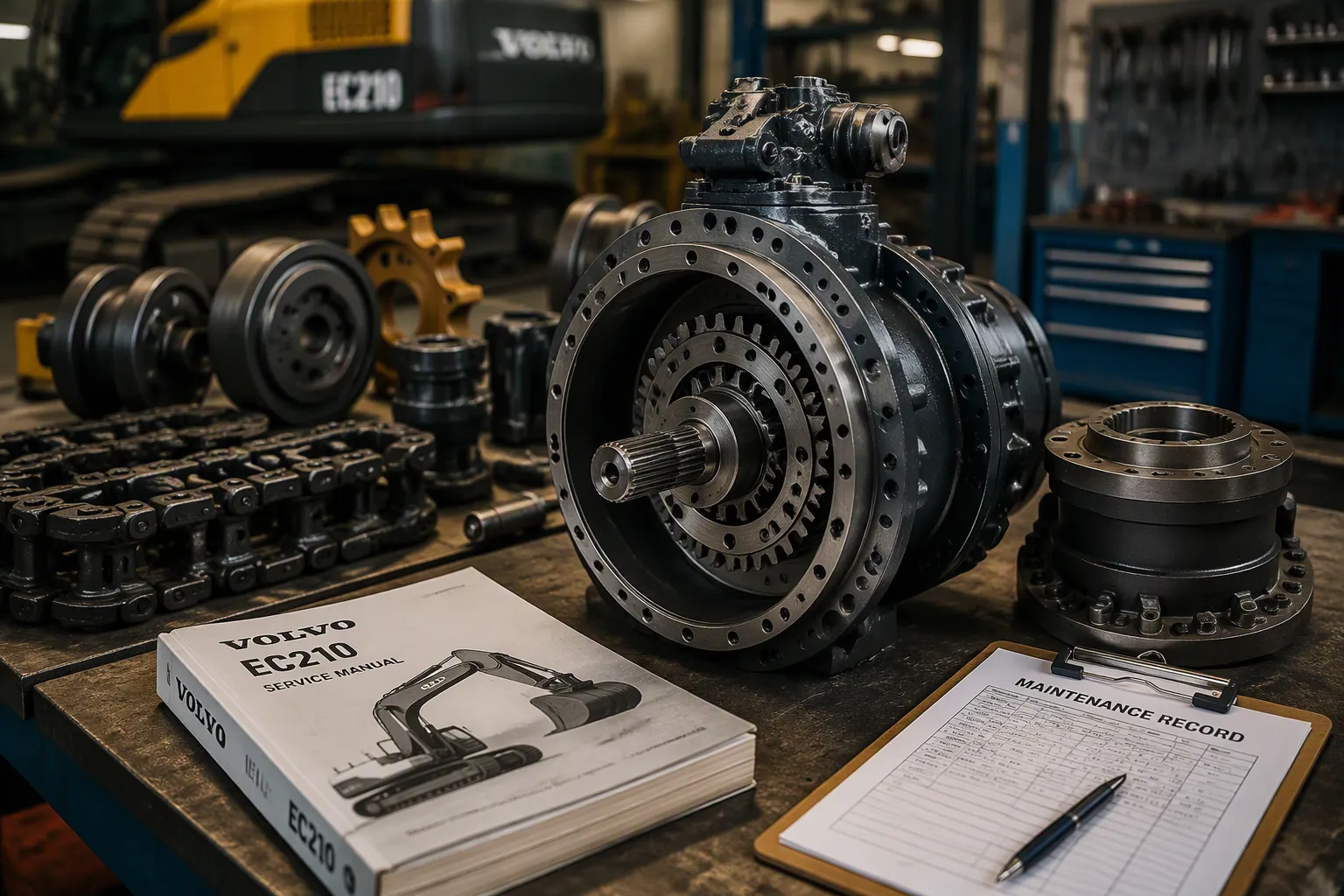
Start With Drivetrain and Undercarriage
Assess drivetrain and undercarriage items as part of the complete machine plan. A component with serious downtime consequences may deserve a sourcing contingency without necessarily being stocked. Compare expected demand, confirmed lead time, cost, storage and access to alternatives before deciding.
Include relevant track chains, rollers, idlers and sprockets in the planning review. Base replacement needs on applicable maintenance information and qualified condition assessment rather than assuming predictable wear or a universal replacement schedule.
Review seals, hardware and other small items alongside assemblies. A small part can matter to a repair, but its cost, required quantity and stocking priority must be established for the actual application.
Use Maintenance and Failure Records
Your machine’s own maintenance schedule and failure history are the main basis for the plan. Generic lists describe what a typical EC210 might need. Your records show what your machine actually needs. Pull the service log and note every repair from the past few seasons. Look for parts that failed more than once. Look for parts that came due on the schedule and got replaced.
Separate planned maintenance demand, unplanned repairs and condition-based replacements. Classify each item using the actual service requirements and repair history; do not assume every seal kit or undercarriage component has a routine replacement interval.
Investigate repeat failures before increasing stock. Qualified diagnosis may identify a repair or operating issue that extra parts will not resolve. Where records are limited, start with documented maintenance demand and confirm critical sourcing needs with the service team.
Sort Parts by Criticality and Usage
Build Criticality Tiers
Define criticality using actual function, safety consequences, downtime and recovery options. A tier is an inventory priority, not permission to keep operating a worn or defective component. Follow applicable service limits and qualified advice for operation and repair decisions.
Choose between holding stock, arranging confirmed supply or another supported contingency for each item. Consider demand, cost, storage and failure consequences together. Repeat failures or long storage periods should trigger review rather than an automatic tier change.
Separate Consumables From Slow Movers
Distinguish recurring maintenance demand from intermittent repair needs using actual records. Filters or specified fluids may have planned demand; seal kits, valves and assemblies require their own application and repair assessment. Do not assign a stocking rule from the item name alone.
Track each part’s usage over time and let the pattern set the rule. A sealing kit that goes out every few months earns a standing stock level. A control valve that never moves may belong on a call-when-needed list instead of your shelf. Keep the two groups on separate records so you can see which parts earn their space and which ones just sit.
Set Stock Quantities
Weigh Lead Time and Downtime Cost
Stock quantity is a balance between two costs. One cost is the money tied up in parts on the shelf. The other cost is the money lost while the machine sits idle waiting for a part. Neither cost wins by default. You set the quantity by comparing them for each part.
Use confirmed supply lead times and observed demand, then consider the consequences of delay for each actual repair. A worn roller or any other component must be assessed against service requirements; an inventory tier does not establish when continued operation is acceptable.
Estimate the cost and benefit of holding stock or arranging another supply plan. Long lead time alone does not justify stocking an expensive assembly. Record assumptions, demand evidence and storage limitations with each decision.
Confirm Quantity Basis and Kit Contents
Check the selling unit before you set any reorder point. Suppliers sell some parts as single pieces, some as sets, and some as kits. A quantity of one may mean one seal or one full sealing kit. If you plan for one seal and receive a kit, your count is wrong from the first order. If you plan for a set and receive a single piece, you come up short.
Read the listing and confirm the unit: each, set, or kit. Then confirm what the kit contains. A sealing kit may cover one component or several. A repair kit may include bearings, seals, and hardware in one package. List the contents on your stock record so the shelf count matches what you actually receive. You can review Volvo excavator parts grouped by system to see how kits and assemblies are listed before you commit to a quantity.
Watch for conditional replacements as well. Some kits include extra parts for certain serial number ranges or configurations. Some listings note that a component changes depending on the machine’s build. Confirm those conditions against your machine before you set the reorder point. A kit that fits one configuration may leave you with unused parts or missing ones for another.
Set the reorder point after both checks are done. The point should reflect the selling unit, the kit contents, and the lead time you measured. Review it whenever a supplier changes the packaging or the kit makeup. A small change in the unit can throw off the whole count, and a wrong count defeats the purpose of the plan.
Compare Volvo 210 Excavator Parts Options
Match the Option to the Part’s Role
For most volvo 210 excavator parts, you have three choices: new OEM, aftermarket, and used. No single choice is best every time. The right pick depends on what the part does and how critical it is.
OEM and aftermarket describe sourcing, while new and used describe condition; these categories overlap. Compare each actual offer using supported compatibility, documented condition, relevant product information, actual price and written terms. Do not assume any category is automatically cheaper, safer or suitable for a particular inventory tier.
Compare purchase and holding costs with realistic repair and downtime scenarios. Mark uncertain demand and service-life assumptions. A lower unit price does not establish better inventory value.
Source Volvo 210 Excavator Parts
Use the actual catalog index and coverage notes to locate the relevant assembly. Catalog structures vary. Retain the applicable publication reference and verify the service reference rather than assuming a particular set of system sections.
Treat cross-model listings as leads. Confirm the actual component and supported application information, including any replacement conditions or additional parts. A shared listing does not prove interchangeability or authorize a conversion.
Manage the Inventory
Label, Store, and Record Parts
A part on the shelf is only useful when you can find it fast. Label every part with its part number, the machine it fits, and the date it arrived. Write the label in large print and place it where you can read it without moving the box. Store heavy items such as final drives and rollers low and on stable racks. Keep sealing kits and small hardware in closed bins so dust and moisture stay out.
Record each part in one stock sheet or system. Note the part number, quantity, location, and supplier. Update the record the moment a part leaves the shelf. A record you update later will drift from the real count. You can review excavator parts guides to see how parts are grouped by system, which helps you assign shelf locations that match the catalog.
Set Reorder Points and Stock Checks
A reorder point tells you when to order before the shelf runs empty. Set it from the lead time you measured and the usage you recorded. A part that takes weeks to arrive needs a higher point than one that arrives in days. Write the point on the stock record next to the part.
Check stock on a fixed schedule. Count the tier-one parts first, since a missing final drive or travel motor stops the machine. Compare the count with the record and note any gap. Order when the count reaches the reorder point, not after the shelf is bare. Review the points after each major repair, because usage patterns shift over time.
Review Stock Regularly
Use Usage Data to Adjust
Your stock plan is a starting point, not a fixed rule. Check the stock sheet on a regular schedule. Compare the recorded usage with the quantities you set. Look for parts that leave the shelf faster than you planned. Look for parts that sit untouched season after season. Each pattern tells you something the original plan could not know.
Raise the reorder point for a part that keeps running out before the next delivery. Lower it for a slow mover that ties up money without moving. Keep the reasoning next to each change, so you can see why a level shifted. A plan that adjusts with real usage stays useful. A plan you never touch slowly drifts away from what your machine actually uses.
Update the Plan After Major Repairs
Every major repair teaches you something about your machine. After a final drive replacement or a hydraulic repair, sit down with the service record and update the stock plan. Note which parts the repair used up. Note which parts the technician expected to replace but did not. Add any part that failed early to your criticality tiers.
Check the part numbers on the repair invoice against your stock sheet. A replaced number or a changed kit means your record is out of date. Confirm the new number against your model, serial number, and configuration before you reorder. Then revise the reorder point and the quantity basis to match. This habit keeps the plan accurate as the machine ages and as supplier listings change.
A good plan follows a clear path. Confirm your machine, find the critical parts, and sort them into tiers. Set quantities by thinking about lead time and downtime cost, then compare part options by the role each part plays. Manage the stock with labels and reorder points, and review the plan on a regular schedule.
Review full machine and component identification, configuration and applicable references before replenishment. Refine the plan using observed demand, service findings, verified supply information and storage constraints.
FAQ
How do I know a part will fit my EC210?
Check the part number against the catalog for your exact model and serial number. Confirm your machine’s configuration as well. A listing for an EC210 does not prove fit for every unit, so verify before you order.
Which parts should I stock first?
Start with documented maintenance demand and a review of actual failure consequences, lead times and alternatives. A critical assembly may require a supply contingency rather than ownership of a spare. There is no universal EC210 stock list.
How many of each part should I keep on hand?
Compare lead time with downtime cost for each part. Long lead times and high downtime cost justify more stock. Short lead times and low downtime cost justify less. Confirm the selling unit, whether each, set, or kit, before you set the count.
Is a used part a reasonable choice?
Only if its actual application, documented condition and acceptance requirements support the intended use. Obtain qualified assessment and written terms. Used status does not establish a lower price or make an unverified component acceptable as a backup.
How often should I review my stock plan?
Review it on a fixed schedule and after every major repair. Compare recorded usage with the quantities you set. Raise reorder points for parts that keep running out, and lower them for parts that sit unused.
For excavator parts sourcing, consider YNF Machinery. Share full machine and component identification, applicable part references and quantities, and request supported compatibility information, an actual quotation, and written warranty and return terms before ordering.