
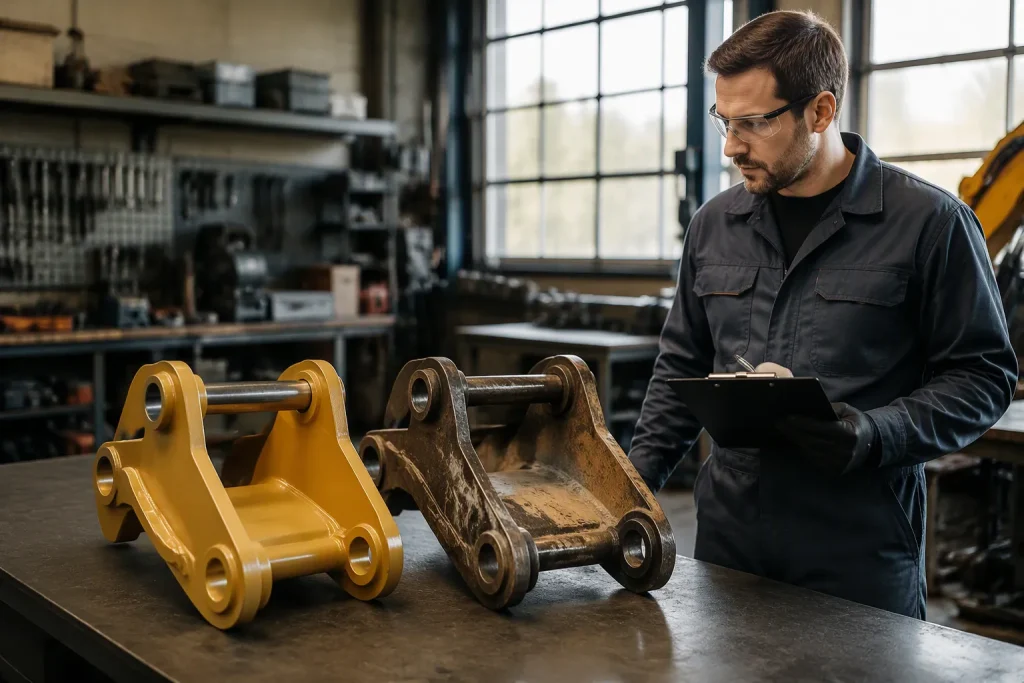
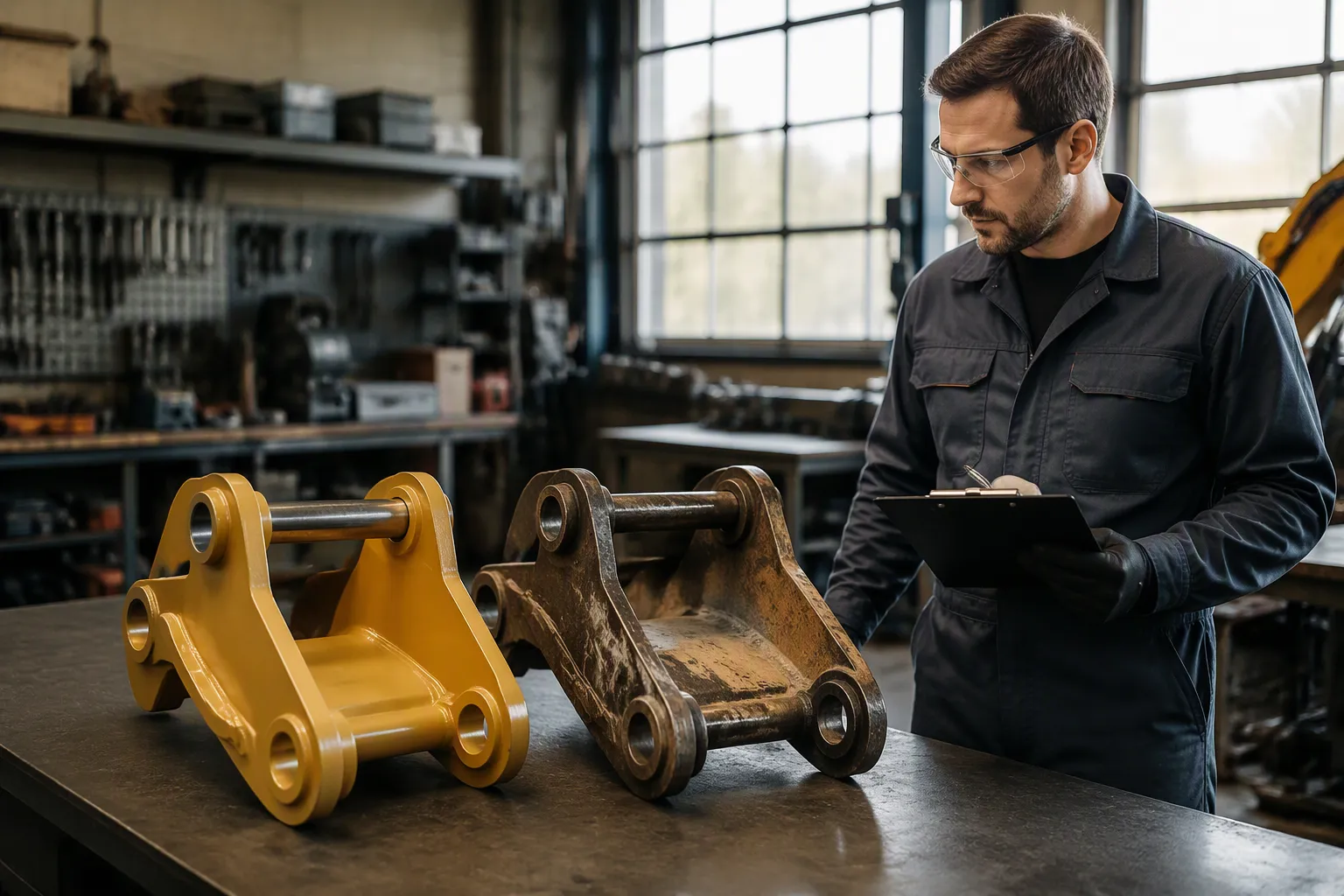
Essential Volvo excavator spare parts serve the undercarriage, upper structure, powertrain, hydraulic system and working equipment. Understanding each function helps describe a problem accurately. The applicable parts catalog and service documentation, together with inspection, determine the correct component and repair scope.
Each system does a different job. The tracks move the machine, while the hydraulic system powers digging, lifting, and swinging. Knowing the different parts of an excavator helps you find the key parts of an excavator during inspections. These main excavator parts are the base of your maintenance plan.
Key Takeaways
Learn the four main excavator systems: undercarriage, house and powertrain, hydraulics, and attachments. This map eases maintenance planning.
Choose an approved track configuration for the machine and its application; steel, rubber and rubber-pad options are not interchangeable on every model.
Inspect the undercarriage and follow the cleaning, adjustment and maintenance instructions for the specific machine.
Report leaks, abnormal movement and unusual noises promptly. These observations need diagnosis before parts are ordered.
Assess repair, replacement and remanufactured options against documented compatibility, condition, scope of work and written terms.
Essential Volvo Excavator Spare Parts in the Undercarriage
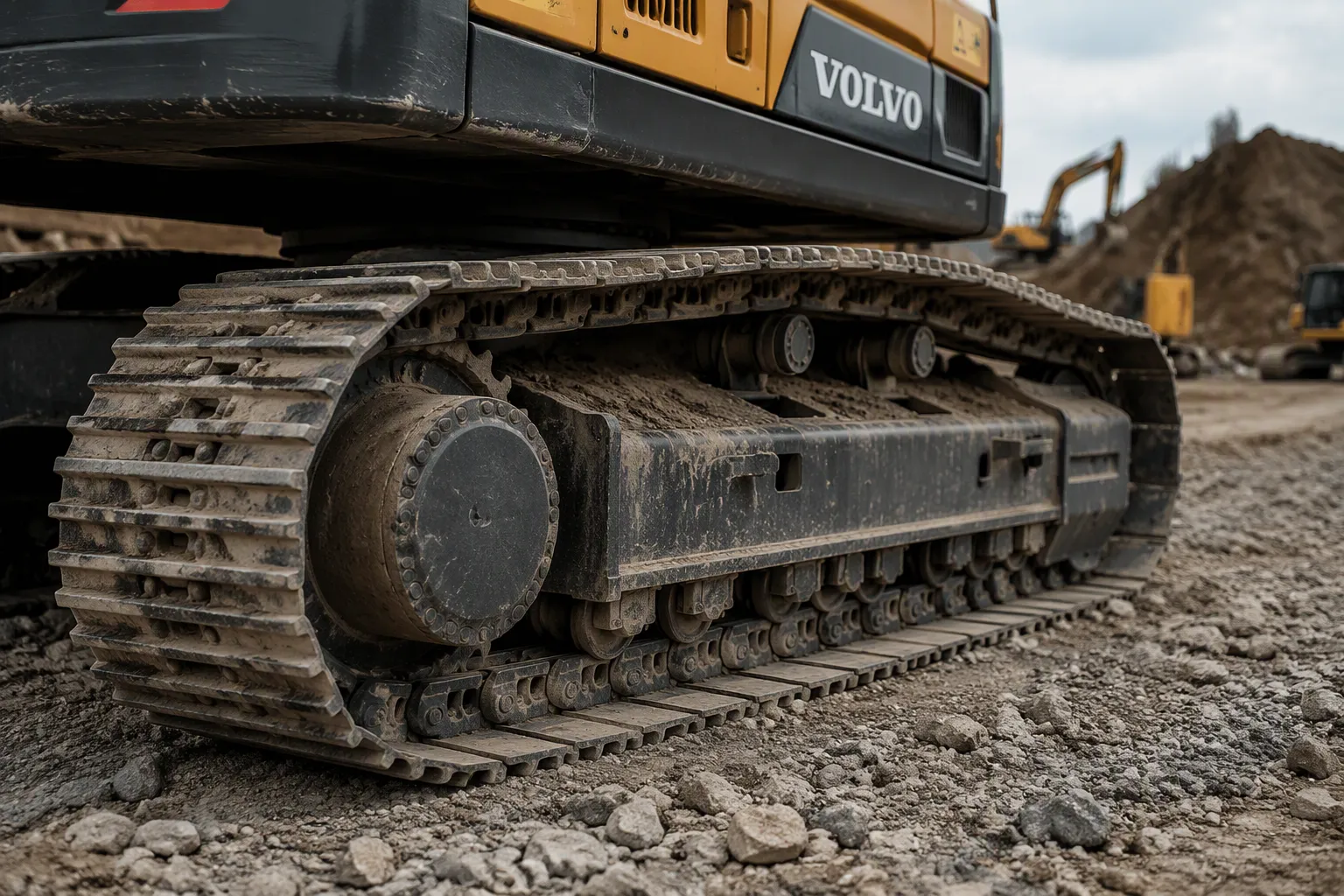
The undercarriage supports and moves a tracked excavator. Its components must work as a compatible system, so identification and wear assessment matter when selecting replacements.
Excavator Tracks: Chains, Shoes, and Rubber Tracks
Track configuration affects traction, ground contact and component compatibility. The examples below describe broad considerations, not approvals for a particular machine or guarantees about surface damage.
Track type | Typical consideration | Compatibility and surface check |
|---|---|---|
Steel track chains/shoes | Traction and wear requirements for the application | Confirm approved configuration; may mark or damage sensitive surfaces |
Continuous rubber tracks | Applications requiring an approved rubber-track configuration | Check load, terrain and surface requirements; damage is still possible |
Rubber pads on steel chains | Applications using an approved pad and steel-chain combination | Check pad mounting and clearances; surface protection is not guaranteed |
Confirm the machine configuration, shoe or track dimensions and application limits in the applicable documentation. Ground pressure, traction and surface damage also depend on machine weight, conditions and operating practices.
Sprockets, Idlers, and Rollers Guide the Track Chain
The track frame supports the undercarriage. Drive sprockets engage the track chain; idlers guide the track; and rollers support its upper and lower runs. Component design and replacement scope vary by model.
Part | What it does |
|---|---|
Drive sprocket | Turns final-drive rotation into track motion |
Front idler | Guides the track around the front frame |
Top roller | Supports the upper return run and reduces sag |
Bottom roller | Supports machine load through the track and guides the lower run |
Assess sprockets, rollers, idlers and track components together. Uneven wear or abnormal tracking can have several causes and requires inspection against the applicable limits.
Follow the machine instructions for safe isolation, cleaning and track-tension checks. Tensioning systems can store hazardous energy; adjustment and repair should be performed by personnel qualified for that machine.
Use the model-specific parts catalog to identify assemblies and individual service items. A catalog illustration explains location and identity but does not, by itself, diagnose a fault.
Understanding the Parts of an Excavator: House and Powertrain
The upper structure carries the cab and major operating systems. Engine, cooling and hydraulic component locations vary with the machine design.
Cab Controls, Gauges, and Electronic Control Modules
The cab contains operator controls and instruments. Joystick type, displays, cameras and comfort features vary by model and installed options; confirm the actual configuration before selecting replacement components.
Electronic control modules receive sensor inputs and control supported machine functions. A fault indication does not automatically mean a module needs replacement. Check diagnostic procedures, wiring, connectors and required programming for the specific machine.
Engine Filters, Cooling Parts, and Swing Gear Sets
Engine oil, fuel and air filters serve different circuits and cannot be selected by appearance alone. Use the applicable part identification, fluid requirements and service schedule; there is no single replacement interval for every Volvo excavator.
The cooling system transfers heat through its specified coolant, airflow and heat exchangers. The swing drive and bearing support upper-structure rotation. Diagnose cooling or swing problems before deciding which component requires service.
Excavator Parts and Their Functions: Hydraulic System
The hydraulic system powers all digging, lifting, and swinging motions. Pressurized fluid enters hydraulic cylinders and pushes pistons. This turns hydraulic energy into controlled straight-line motion. That motion drives the boom, stick, and bucket.
Hydraulic Pumps, Motors, and Main Control Valve
The hydraulic pump makes fluid flow for the whole system. Flow rates vary from compact machines up to large excavator classes. The pump supplies track drive, swing, and auxiliary circuits.
Motors turn hydraulic flow into rotation. Track drive motors drive the tracks, and swing motors rotate the upper structure.
The main control valve directs hydraulic flow to supported functions. Valve arrangement, settings and component identification vary by model and hydraulic configuration.
Cylinders, Hoses, Seals, and Hydraulic Fluid Tank
Hydraulic cylinders convert fluid pressure into linear movement. Their rods, barrels, pistons and seals must match the specified assembly and application; bore or rod diameter alone does not establish interchangeability.
Hoses carry fluid between components, and seals contain fluid at joints and moving interfaces. Wet fittings, damaged covers or leakage require inspection. A visible leak alone cannot identify an internal cylinder fault. Never check a pressurized leak with your hand.
The hydraulic tank stores fluid for the circuit, while filtration, cooling and breather arrangements vary by machine. Use the specified fluid and contamination-control procedures when servicing hydraulic components.
Parts of an Excavator: Boom, Arm, and Attachments
The boom, arm, linkage and attachment transfer working loads. Bucket, breaker and coupler compatibility must be checked against the machine and attachment documentation.
Buckets, Quick Couplers, and Hydraulic Breakers
Bucket designs address different material-handling and grading tasks. Select an approved configuration using the attachment identification, mounting dimensions, capacity, machine limits and intended work rather than a general bucket label alone.
A quick coupler changes the attachment interface and must match the machine and tool. Hydraulic attachments also require compatible pressure, flow, return arrangements and controls. Follow the applicable locking and connection checks before use.
Pins, Bushings, and Grease Lines
Pins and bushings form the pivots between working-equipment components. Confirm dimensions, materials, lubrication features and allowable clearances from the applicable specifications. Similar appearance does not establish a safe replacement.
Grease fittings, lines and centralized lubrication arrangements depend on the machine configuration. Follow the actual lubrication chart and inspect for damaged or blocked lines using the specified safe procedure.
Lubrication and wear checks help assess joint condition, but they do not repair excessive clearance or structural damage.
Use the prescribed lubrication schedule and inspection limits. Measure wear where required and assess connected components before deciding whether a pin, bushing or larger assembly needs replacement.
Abnormal movement, cracks or damaged joints need qualified inspection before further operation. Do not assume that adding grease or replacing a single wear component resolves a structural problem.
You now know the essential volvo excavator spare parts by system. The undercarriage carries tracks, sprockets, idlers, and rollers. The house and powertrain holds cab controls, filters, and swing gear. The hydraulic system powers cylinders, motors, and the main control valve. Boom-arm-bucket attachments complete the machine.
Record the machine identification, affected function, observed symptoms and applicable component markings. These details support diagnosis and parts identification without assuming that a symptom proves a particular component has failed.
Confirm the repair scope and documented compatibility before ordering any replacement.
FAQ
How often should you check undercarriage parts?
Follow the specific machine inspection and maintenance schedule, adjusting inspection attention for operating conditions as directed. Use its safe parking, isolation, cleaning and track-tension procedures.
How do you choose between steel and rubber tracks?
Use a track configuration approved for the machine and application. Steel, rubber and rubber-pad arrangements have different compatibility and operating limits; none guarantees that a surface will remain undamaged.
What are the first signs of hydraulic hose failure?
Leakage, exposed reinforcement, damaged covers or fittings and abnormal hose movement warrant inspection. These observations do not identify every cause. Isolate the machine safely and have qualified personnel assess the circuit; never search for a pressurized leak by hand.
Do remanufactured hydraulic parts work as well as new ones?
Condition and performance depend on the specific remanufacturing process, testing, compatibility and written terms. Request the actual scope of work and acceptance criteria; do not assume every remanufactured unit equals a new one or costs less.
How do maintenance, repair, and wear parts differ?
Maintenance items support scheduled service; wear parts are assessed against operating condition and limits; repair parts address a diagnosed repair scope. These categories can overlap and do not replace model-specific identification or inspection.
For Volvo excavator parts sourcing, consider YNF Machinery. Provide full machine and component identification, applicable part numbers and quantities, and request supported compatibility information, an actual quotation and written warranty and return terms before ordering.



