
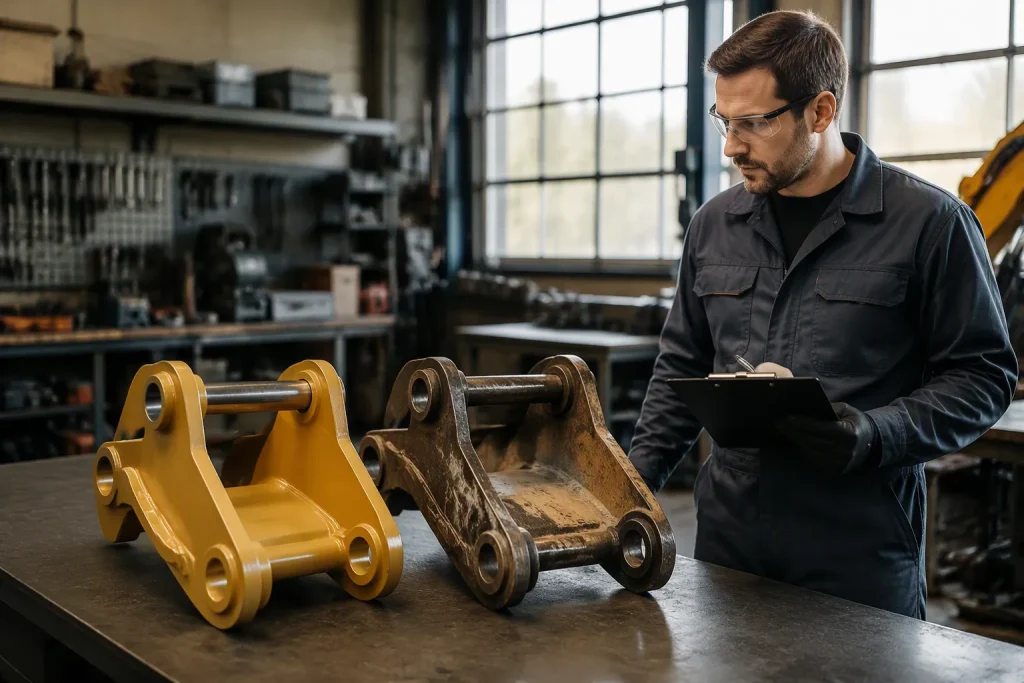
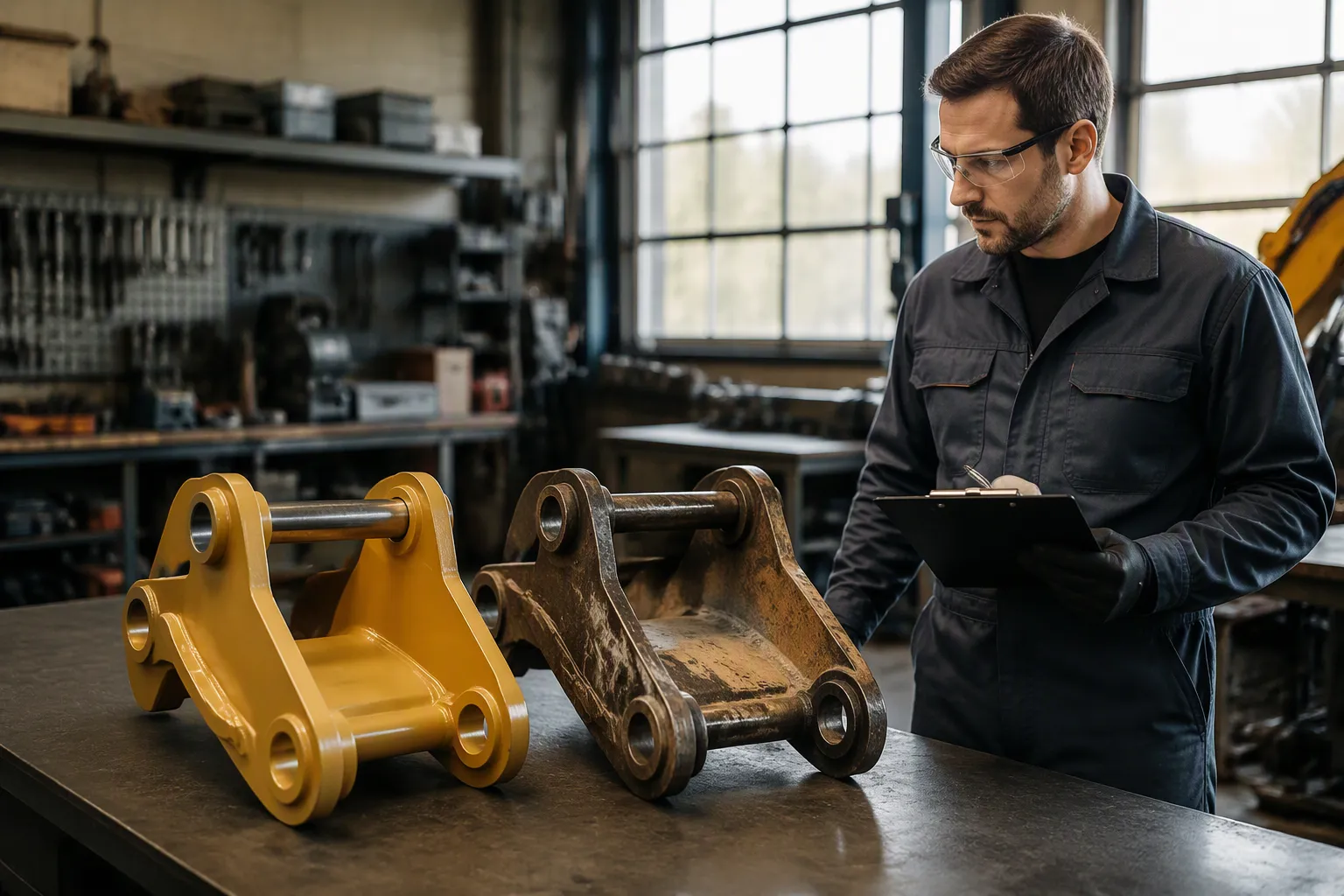
When sourcing Volvo excavator spare parts in India, verify the seller, documented origin and exact application before installation. Packaging, logos, part numbers and price can prompt questions, but none independently proves authenticity. U.S. buyers sourcing from India should also confirm delivery, documentation and written commercial terms for their order.
Key Takeaways
Look at the packaging for sharp logos, correct barcodes, and clean labels, but keep in mind that packaging by itself is not proof.
Check that the part numbers on the new part match the official Volvo records and your machine’s model and serial number.
Inspect identification and security features only against guidance applicable to the exact item; their appearance is not proof.
Compare written quotations and obtain an itemized invoice, warranty terms and return conditions.
Volvo Excavator Spare Parts India: Verify the Supply Source
Identify the legal seller and ask how the item was sourced. When OEM origin or authorized status is claimed, request supporting records and verify the claim independently. Generic labels such as distributor or manufacturer do not establish authorization.
Locate the Model and Serial Number
Before you call any dealer, you need your machine’s identity. Find the metal ID plate on your excavator. This plate shows the model number and serial number. You need both numbers to order the right part.
Identification plate locations vary by model and configuration. Use the applicable operator documentation to locate the machine identification; do not assume a universal plate location.
Record the complete model and serial number, relevant attachment or component identification and any existing part markings. Use the applicable parts catalog for the serial range rather than relying on appearance or a broad model family.
Check Volvo CE India Official Sources
Use independently obtained manufacturer contact information to check a claimed dealer relationship. Do not rely only on a directory screenshot, logo or contact details supplied by the seller.
Ask whether the claimed authorization covers the relevant product line and location. Confirm the identity of the company issuing the quotation and invoice.
A verified business relationship is one part of due diligence. It does not replace checking the exact delivered item, order details or compatibility.
Request the stated item condition, origin, part identification and any supporting inspection or test documentation. Confirm what warranty actually applies; do not assume that every order includes the same coverage or support.
OEM and aftermarket descriptions identify different product claims. An aftermarket item is not automatically counterfeit, but it must not be misrepresented as an OEM product. Assess origin claims separately from suitability and condition.
Match the quotation, packing list and delivered item. Resolve discrepancies before installation rather than treating a seller category as a guarantee.
Check Packaging for Genuine Excavator Parts
Inspect Branding, Barcodes, and Labels
Check labels for the stated item identification, description and supplier details. Blurry printing or inconsistencies deserve questions, but packaging formats vary and visual quality alone cannot identify a counterfeit.
A readable barcode can encode a valid number without authenticating the physical item. Compare the decoded information with the label and order, then request item-specific guidance if the information conflicts.
Do not assume every genuine package has identical colors, fonts or logos on every side. Compare only with documentation appropriate to the item and packaging version.
Remember Packaging Alone Is Not Proof
Attractive packaging does not guarantee a genuine part. Counterfeiters copy boxes and bags with surprising skill. They study the original design and reproduce it closely. A convincing box can still hold counterfeit components inside. You cannot judge a part by its wrapper alone.
Inspect condition and visible finish for damage or inconsistencies. Surface appearance alone cannot establish material specification, internal condition or manufacturing origin.
Treat authenticity and fitment as separate checks. Traceable records support an origin claim, while the applicable catalog and specifications establish the intended application; neither is replaced by attractive packaging.
Match Part Numbers With Official Volvo Documents
Part identification helps locate the intended item in the applicable catalog. A stamped, printed or cast number may identify a component, casting or assembly rather than the orderable service part. Clarify its meaning before ordering.
Compare Old Part and New Part Numbers
Record accessible markings from the existing part and available repair records. Remove a component only under an appropriate safe service procedure; do not dismantle equipment solely to follow a shopping checklist.
Compare the old and proposed part identification. A difference requires investigation but does not, by itself, prove counterfeiting or incompatibility.
A documented supersession may replace an earlier number, sometimes with additional components or conditions. Confirm its applicability to the exact machine and configuration rather than assuming identical fit and function.
Confirm Through Official Volvo Parts Records
Use the parts documentation applicable to the full machine serial number and relevant assembly. Obtain clarification where a catalog illustration or number is ambiguous.
Check the orderable number, serial-range applicability and any configuration notes. Catalog agreement supports identification; it does not authenticate the specific physical item.
Check mounting interfaces, connectors, dimensions and other relevant specifications. Similar-looking items can have different requirements, and one model name may cover several configurations.
Ask for the basis of a compatibility claim and retain written confirmation. A broad model-family statement is less useful than a documented match to the actual configuration.
Copied part numbers can appear on misrepresented items. Combine identification with traceability and appropriate inspection, keeping any unresolved origin claim separate from a fitment assessment.
Assess Security Features Without Assuming They Prove Authenticity
Look for Holograms, QR Codes, and Etched Logos
Security features vary by item and packaging version. Do not assume every Volvo part has a hologram, serial number or etched logo. Obtain guidance applicable to the specific product claim.
A QR code may lead to product information or another destination rather than an authentication service. Confirm any verification method independently; a convincing page or copied code does not authenticate the item.
A security feature is useful only when its purpose and verification method are established for that specific item.
Check the Part’s Serial Number and Logo
Record available identification marks and their condition. Missing or inconsistent markings require clarification, but not every component has an individual serial number or the same marking method.
Ask what verification can actually be performed for the particular item. Do not assume a universal database can authenticate every component by its serial number.
Logos and serial numbers can be copied. Evaluate them alongside documented origin and the limits of any available verification method.
Marking styles may vary with production and packaging changes. Avoid declaring an item genuine or counterfeit solely because its font, stamp depth or finish differs from a sample.
No visual checklist guarantees authenticity, safe operation or predictable repair costs. If uncertainty remains, obtain appropriate confirmation before installation.
Review Price, Invoice and Warranty Terms
Beware of Prices Far Below Market Level
Compare quotations for the same item, condition, quantity and delivery scope. An unusually low price is a reason to ask questions; neither a low nor a high price proves origin.
Account for differences in freight, currency, taxes, availability and included services when comparing offers. Request clarification of unexplained differences rather than applying an assumed universal market price.
Do not infer a seller evades taxes or supplies counterfeit goods from price alone. Assess the actual records, product claims and written terms.
Demand a Proper Invoice and Warranty
Request an itemized invoice identifying the legal seller, date, item description, part identification, quantity and price. Retain the compatibility information separately where needed. A receipt format alone does not determine authenticity.
Resolve unclear product claims, seller details and terms before paying. An invoice and warranty help document the transaction but cannot independently authenticate a component.
Ask a Technician to Spot Counterfeit Excavator Parts
Get a Volvo-Trained Technician’s Opinion
Ask a qualified technician to assess the checks appropriate to the component. Relevant experience helps identify discrepancies, but a visual inspection alone cannot prove manufacturing origin or internal serviceability.
Provide machine identification, part markings, order documents and relevant specifications. Request an assessment of compatibility and condition, including any tests needed beyond visual inspection.
Pause the Purchase if Doubt Remains
Pause installation when origin, fitment or condition remains unresolved. Ask for item-specific clarification and appropriate inspection rather than relying on an assumed universal authentication system.
Retain available records and the existing component where practical. Do not accept purchasing pressure as a substitute for evidence; decide whether the remaining uncertainty is acceptable before proceeding.
Use a documented process: identify the machine and item, verify seller claims, review traceability, confirm application and resolve discrepancies. Completing these steps supports due diligence but does not create an authenticity guarantee.
FAQs
Q: Can visual checks alone confirm authenticity? A: No. Appearance and markings can be copied; seek item-specific evidence and understand its limits.
Q: What if the price seems unusually low? A: Compare equivalent offers and request clarification. Price alone cannot establish origin.
Q: Should I consult a technician? A: Use qualified help for compatibility and condition checks that exceed your expertise.
Q: Does a warranty prove OEM origin? A: No. Review warranty terms separately from the evidence supporting an origin claim.
Complete all applicable checks before accepting and installing the item.
FAQ
How Do You Verify a Part Number Against Official Records?
Compare available markings with the model- and serial-specific parts documentation. Investigate supersessions and configuration notes. A valid catalog number identifies an application but does not authenticate the physical item.
What Security Features Should You Inspect on the Part Itself?
Inspect only the features specified for the particular item. Do not assume a universal hologram, QR-code destination, etched logo or serial-number system exists. Obtain independent confirmation of any proposed verification method.
Can Used Parts Ever Be Genuine Volvo Components?
A used component can have an OEM origin, but that claim and its present condition require separate assessment. Request traceability and service records where available, then confirm compatibility and inspection requirements.
What Should You Do If a Seller Refuses to Provide Paperwork?
Pause the transaction if necessary documentation or product claims cannot be clarified. Missing paperwork increases uncertainty but is not, by itself, proof of counterfeit activity.
How Often Should You Run This Verification Checklist?
Apply the relevant identification, traceability and compatibility checks to each order. The necessary depth depends on the component and available evidence; do not assume a fixed time or guaranteed outcome.
For Volvo excavator parts sourcing, consider YNF Machinery. Provide full machine and component identification, applicable part numbers and quantities, and request supported compatibility information, an actual quotation and written warranty and return terms before ordering.



