
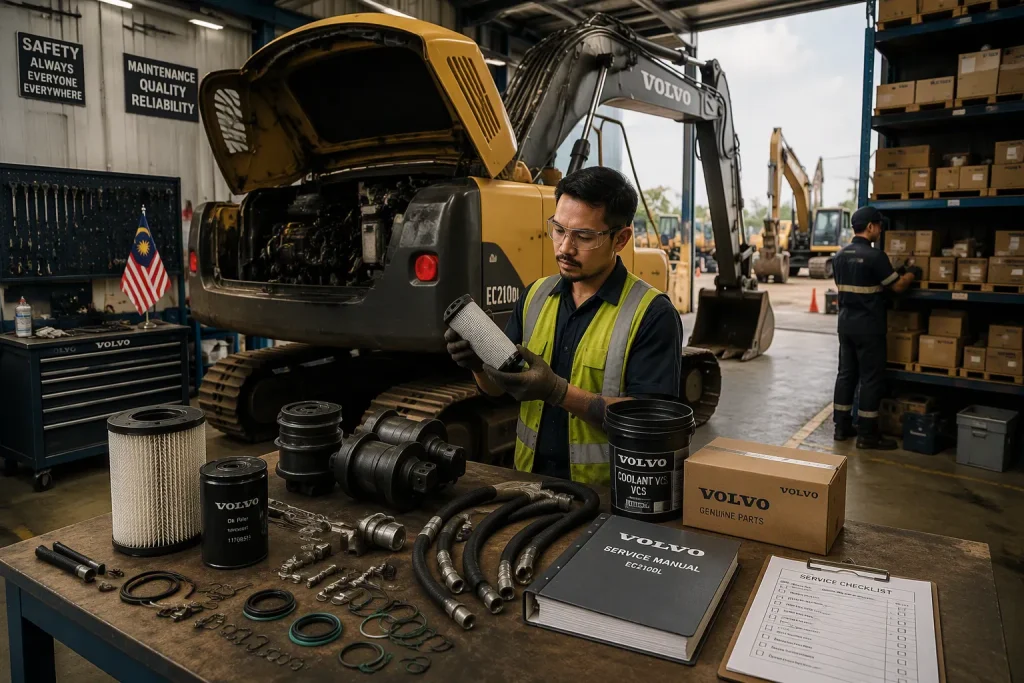
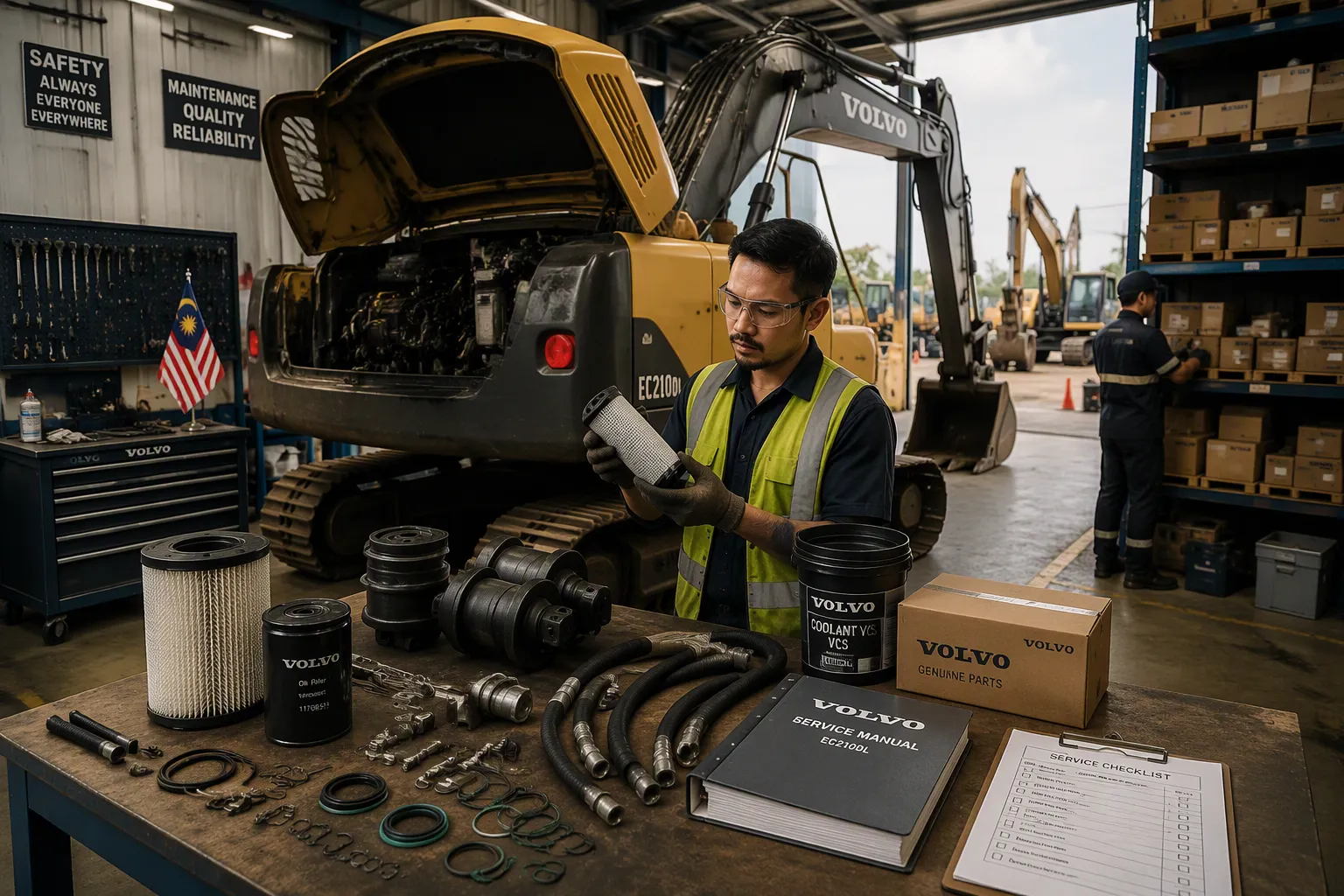
For U.S. buyers researching Volvo excavator spare parts Malaysia sourcing, organize a repair-parts inquiry by the actual hydraulic, engine, undercarriage or electrical assembly. Record the machine model, full serial number, installed component identifiers and applicable part reference. Symptoms help describe a problem, but they do not identify a replacement by themselves. Use the relevant maintenance records, parts documentation and qualified diagnosis before ordering.
Key Takeaways
Describe hydraulic symptoms and warning information accurately. Confirm the diagnosed component before selecting a pump, valve, seal or filter.
Follow the actual engine service requirements. Injectors and filters have different functions and replacement criteria.
Assess track components using the applicable inspection method and condition limits rather than a universal wear percentage.
Plan electrical spares from the actual circuit requirements and service history, including relevant storage and configuration needs.
Check applicable part references, variants and supported compatibility before accepting a quotation.
Essential Volvo Excavator Spare Parts for Hydraulic Repairs
Common Hydraulic Failures
Hydraulic symptoms such as leakage, slow movement or reduced performance can have several causes. Record what occurs, the conditions and any fault information. Follow the applicable safety instructions and obtain qualified diagnosis rather than inferring a particular failed part from a single symptom.
Different hydraulic assemblies have different functions and test requirements. A shared symptom across several functions does not establish a universal first component to replace. Use the relevant service information and qualified assessment to determine the actual fault.
Pumps, Valves, Seals, and Filters
Identify the relevant assembly and evidence before ordering these component categories:
Pumps: record the actual assembly identification and relevant diagnosis or test findings.
Valves: confirm the exact circuit, reference and applicable specifications.
Cylinder seals: identify the actual cylinder and diagnosed repair requirements.
Filters: confirm the specified element and applicable service or contamination-control requirements.
A noisy pump or slow cylinder does not automatically require a rebuild or seal kit. Confirm the fault, required work and any related inspection before ordering. Retain the technical clarification and applicable component references with the purchase request.
Key Excavator Parts for Engine Repairs
Common Engine Problems
Engine symptoms can involve fuel, air, electrical, control or mechanical causes. Do not infer the actual fault from the country of operation or a general assumption about fuel quality. Record the engine identification, service history and observed behavior.
Difficult starting, irregular running or reduced power require the appropriate diagnosis. Use the actual service instructions and relevant test evidence. A simple visual check or draining a separator alone cannot establish every fuel or injection-system fault.
Filters, Injectors, and Fuel Parts
Identify each engine component separately. The following table organizes the information to request:
Part | Information to identify | Service or purchase evidence |
|---|---|---|
Oil filter | Applicable engine and filter reference | Specified element, relevant service history and applicable replacement criteria |
Fuel filter | Actual fuel-system arrangement and reference | Applicable service requirements and relevant diagnosis |
Injectors | Installed injector reference and configuration | Qualified diagnosis, relevant test records and any coding or installation requirements |
Use the engine-specific maintenance instructions to establish filter service requirements. Do not apply a universal annual replacement rule to every excavator or treat a filter schedule as an injector replacement interval.
Compare the actual filter specification and supported compatibility rather than assuming a universal hourly life or price-based quality ranking. Genuine and aftermarket labels do not by themselves establish the right element or performance for the actual engine.
Keep maintenance records and use condition assessments where the applicable guidance calls for them. Properly collected fluid-analysis results may support diagnosis, but require context and suitable interpretation and cannot guarantee prevention of every failure.
Undercarriage Parts for Common Excavator Wear
Common Undercarriage Wear
Use the actual undercarriage configuration, operating history and applicable inspection guidance to plan assessments. Terrain and debris can be relevant, but a regional description does not establish a universal wear rate or make every defect visible during a quick walk-around.
Record visible damage, abnormal movement, leakage or noise without assuming each observation proves a particular failed item. Track sag, tooth profile or fluid residue requires assessment using the relevant method and assembly criteria. Follow applicable safety instructions and obtain qualified help where needed.
Chains, Sprockets, Rollers, and Idlers
Identify the track components and use the relevant condition criteria. This table lists evidence to collect rather than universal replacement thresholds.
Part | Inspection evidence to obtain |
|---|---|
Track chain | Applicable chain measurements, damage findings and the correct service limits |
Sprocket | Applicable tooth profile, damage criteria and matching-assembly requirements |
Rollers | Relevant tread, flange, bearing or seal assessment within the applicable inspection scope |
Idlers | Applicable idler condition and assembly inspection findings |
Measure and assess the actual assembly using the specified method and limits. Related track components may need to be matched or addressed together, but do not assume every chain replacement automatically requires every sprocket or roller to be replaced. Follow the applicable technical guidance.
Plan the work from documented findings, applicable service requirements and realistic parts availability. A visible symptom alone does not establish that a complete track assembly must be replaced.
Electrical Repairs and Replacement Excavator Parts
Common Electrical Faults
Intermittent warnings or irregular readings can arise from several electrical or control-system causes. Record warning codes, operating conditions and service history. A warning that disappears after restarting does not prove the underlying issue is resolved or identify a particular connector or sensor.
Inspect accessible wiring and connectors only using the applicable safe procedure. Report visible damage, routing or sealing concerns. Diagnosis may require circuit-specific tests and qualified support; do not assume every intermittent fault has the same cause.
Sensors, Wiring, and Switches
Identify the actual sensor, harness, switch or control assembly relevant to the diagnosed issue. Electrical parts may differ by circuit, configuration and production variant, so order from supported references rather than a generic description.
A sensor reading must be assessed in the context of the actual circuit, supply, signal and control requirements. An abnormal reading alone does not prove that the sensor itself is defective. Use the applicable diagnostic procedure.
For harness concerns, confirm the actual reference, connectors and any permitted repair procedure. Do not assume replacing a visible section is an approved repair for every harness or circuit.
Switches can have different electrical duties and safety functions. Confirm the actual specifications and diagnostic findings; do not assume every switch carries high current or is simple to replace.
Plan spares according to actual demand, confirmed references and storage needs. Check voltage, connectors and any configuration or installation requirements for the actual item before purchasing.
Volvo Excavator Spare Parts Malaysia: Sourcing and Selection
Genuine, OEM, and Aftermarket Parts
Clarify what a supplier means by genuine, OEM or aftermarket for the actual offer. These terms are sometimes used differently. Request the claimed origin, condition, applicable reference and relevant supporting evidence.
Part type | Actual quoted cost | Evidence to assess | Compatibility check |
|---|---|---|---|
Genuine | Use the itemized quotation | Verify claimed origin and relevant item condition | Confirm the applicable reference and machine configuration |
OEM | Use the actual quotation and stated scope | Clarify the claimed manufacturer or supply relationship | Confirm supported cross-reference and relevant specifications |
Aftermarket new | Compare equivalent scope and condition | Request relevant product specifications and inspection evidence | Assess the actual application and documented interfaces |
For a remanufactured or rebuilt option, ask what work and tests were performed and which specification and written terms apply. Do not infer a universal cost or performance advantage from the label alone.
There is no universal price or quality ranking that settles every parts purchase. Compare actual item condition, supported requirements, product evidence and written terms. Machine compatibility is a separate check from claimed brand origin.
A supplier advertisement is a starting point for an inquiry, not proof of stock, durability or fitment. Request evidence relevant to the actual item and clarify any unsupported claim before committing to an order.
An authorized dealer or parts supplier may help investigate the required reference. Verify any claimed authorized status, actual stock location and delivery estimate to your U.S. destination. A regional address or online listing does not guarantee immediate availability.
Using the Parts Catalog to Verify Parts
Use parts information that covers the actual machine and installed component. Confirm its revision, relevant serial range and any changes following previous repairs. Do not assume every general catalog includes every component or current configuration.
Locate the assembly and orderable part reference and compare the actual offer. Casting numbers, superseded references or revised designs may require clarification. Resolve differences using the applicable records rather than assuming every number or external detail must be identical.
Use the appropriate parts, service and installation information for the actual assembly. Documentation coverage varies, and detailed technical work may require qualified assistance. A parts diagram identifies items but does not by itself provide every repair procedure or installation requirement.
Review the diagram, parts list, notes and revision information together. Confirm any variants, related kits or additional items required for the planned work. Ask for written technical clarification if compatibility remains uncertain.
Retain the applicable references, inspection evidence and purchase terms with the order. These checks support a better-informed decision but do not guarantee a particular repair time or performance outcome.
Preventive Maintenance for Common Volvo Excavator Repairs
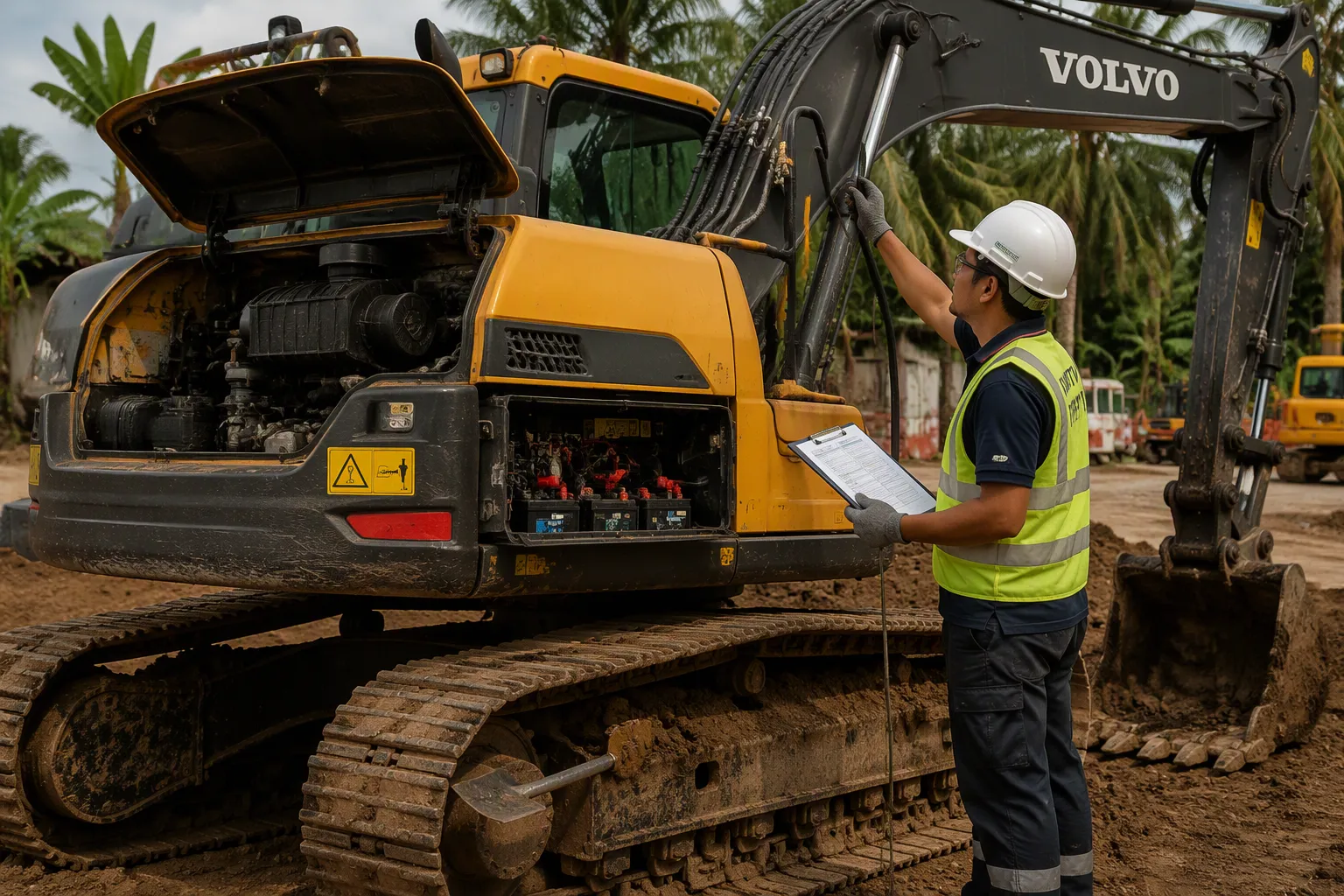
Use the actual maintenance schedule and inspection requirements to plan work. Record observed condition and compare it with the applicable criteria. Avoid promising that a walk-around or preventive service will eliminate every repair.
Scheduled Inspection Checklist
Use the applicable inspection scope and safe procedure for the actual machine. The table below organizes records that may be relevant; it is not a universal instruction to perform every check at the same interval.
System | Check | Evidence to retain |
|---|---|---|
Hydraulic | Applicable fluid, component and inspection requirements | Actual findings, warning information and qualified diagnosis where needed |
Engine | Relevant engine and cooling-system service instructions | Service records and actual inspection or test findings |
Undercarriage | Specified undercarriage inspection method and limits | Actual measurements, damage findings and matching requirements |
Electrical | Applicable circuit and safe diagnostic requirements | Fault information, relevant test results and confirmed component references |
Follow the machine-specific pre-use and service instructions, including the correct conditions for fluid or filter checks. Do not apply one fluid-level method, air-filter cleaning rule or fuel-filling routine to every excavator. Use the applicable safe procedure for debris removal and access.
Report abnormal operation and follow the applicable safety and diagnostic instructions. Do not assume a filter change will resolve a hydraulic symptom. Use the specified lubrication points, products and intervals rather than a generic procedure.
Replacing Parts Before Downtime
Use measured condition and applicable service requirements to determine replacement work. A leak, warning or unusual movement needs assessment; it does not automatically identify a particular worn part or establish a universal repair-cost advantage.
Select contingency spares from the actual maintenance plan and demand history. Fluid appearance alone cannot diagnose an internal pump or cylinder failure. Where testing is appropriate, use the specified sampling method and qualified interpretation.
Assess related track components together using the applicable technical guidance. Determine which items need replacement or matching from actual measurements and condition criteria. Service records support that decision but do not override mandatory time-based requirements in the applicable instructions.
For hydraulic, engine, undercarriage or electrical repairs, identify the actual component and confirmed work before sourcing Volvo excavator spare parts from Malaysia or another location.
Combine actual service history and inspection findings with the applicable manufacturer instructions. Do not assume personal records always take precedence over calendar or operating-hour requirements.
Purchase Summary
Use the applicable machine and component records to confirm the proposed replacement.
Use documented condition and service criteria to determine the required work.
Request actual item information, supporting evidence and written purchase terms.
FAQ
How do I confirm a replacement part fits?
Provide the full model, serial number and installed component identification. Use the applicable part reference, variants and supersession notes and request clarification of any mismatch. Relevant dimensions support the assessment but do not prove compatibility alone.
Why does my excavator lose power?
Reduced power can have several causes. Record the actual symptoms and warning information and obtain the appropriate diagnosis. Do not order a filter, injector or other component solely from a generic symptom list.
When should I replace undercarriage components?
Use the inspection method, wear limits and matching requirements applicable to the actual assembly. Visible wear or a generic percentage does not establish a universal replacement decision. Retain the measured findings with the parts inquiry.
How do I prevent common hydraulic problems?
Follow the applicable maintenance and operating instructions, record abnormal behavior and arrange qualified assessment when needed. No generic checklist can guarantee prevention of every hydraulic failure.
Where can I find Volvo excavator spare parts Malaysia?
Use an authorized dealer or parts supplier to investigate the actual reference and offer. Verify any claimed authorized status, current item availability, supported compatibility and delivery to your actual destination. No regional listing guarantees stock or fast delivery.
For Volvo excavator parts sourcing, consider YNF Machinery. Provide full machine and component identification, applicable part numbers and quantities, and request supported compatibility information, an actual quotation and written warranty and return terms before ordering.



