
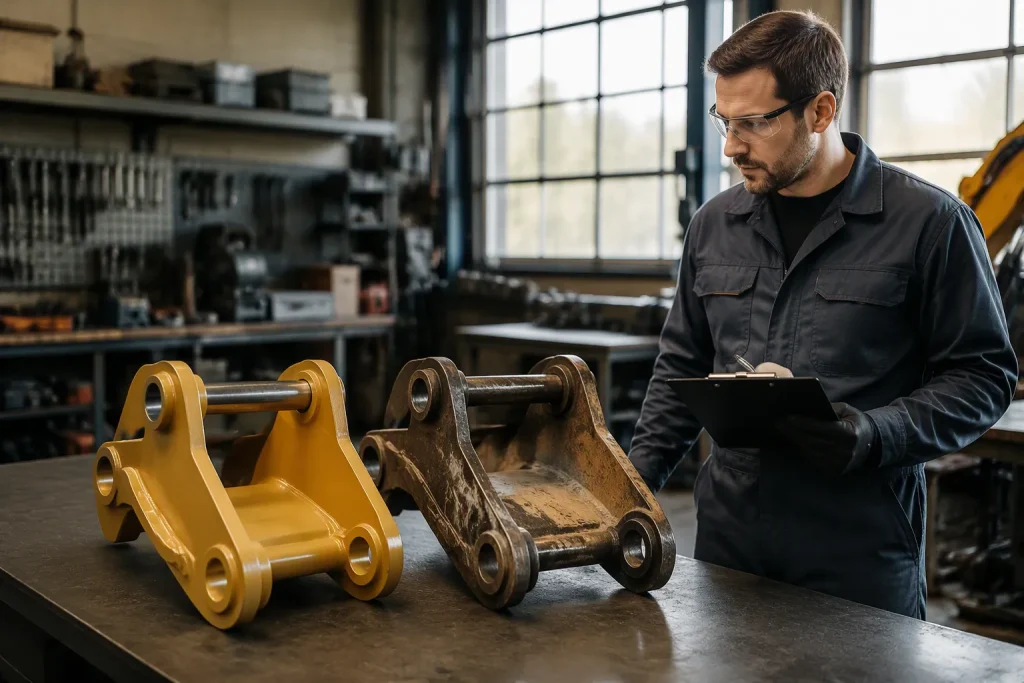
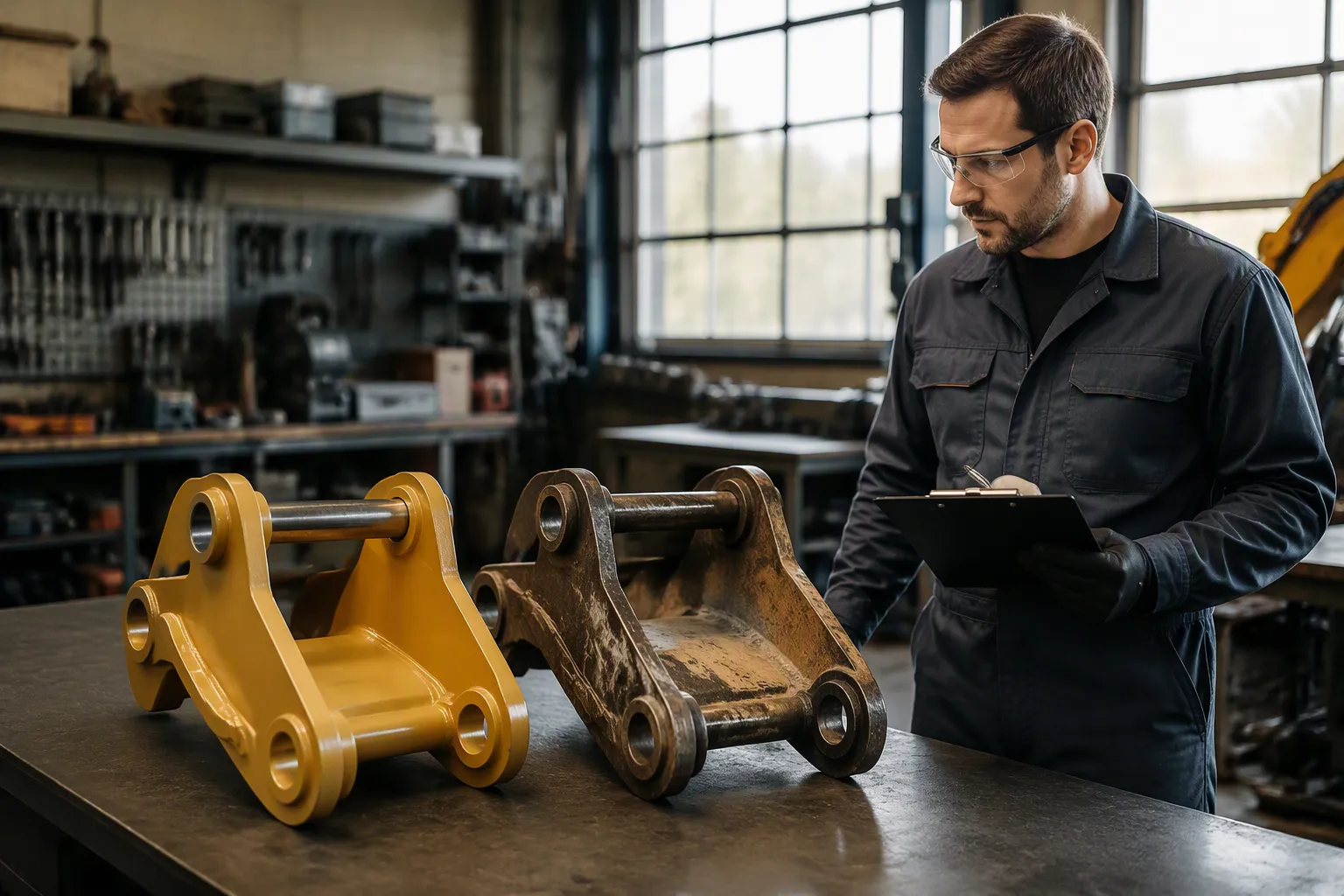
For U.S. buyers researching Volvo excavator parts UAE sourcing, compare the actual new or used component rather than deciding by its condition label alone. Confirm the applicable part reference, installed configuration, documented condition and purchase terms. A new part can still be incorrect or unsuitable, while a used part requires evidence appropriate to its application. Consider inspection, installation, delivery and operational consequences together.
Key Takeaways
Assess the component’s function and applicable service requirements. New condition alone does not establish safety or compatibility.
A used component needs an appropriate condition assessment. Visible wear alone cannot establish remaining life or exclude hidden damage.
Look at total ownership cost, not just part price. Shipping, setup, and downtime risk change the real value.
Request actual item identification, traceability and relevant inspection or test records. These support verification but do not guarantee authenticity or quality by themselves.
Check the actual machine and parts warranty terms. Do not assume new parts preserve all coverage or that used parts automatically void it.
Volvo Excavator Parts UAE: Key Things Before You Buy
The consequences of a part failure differ by component and application. Identify what the item does, the evidence required to assess it and the practical consequences of removal and replacement. Price and machine age alone do not settle the decision.
Part Role, Downtime, and Total Cost
For critical or safety-related applications, use the applicable specifications and qualified technical assessment. Compare only items whose identity, condition and suitability can be supported. Use the table to organize the purchase evidence.
Factor | What to Check | Why It Matters |
|---|---|---|
Unit price | Actual item condition, reference and included scope | Invoice price is only the start |
Freight and customs | Actual ship-from location, transport quote and relevant U.S. import requirements | Use confirmed costs and delivery estimates for the actual consignment |
Condition and performance evidence | Applicable specifications, inspection scope and relevant test results | Neither price nor a regional keyword establishes product quality |
Labor and downtime | Replacement labor, lost revenue | Estimate consequences for your actual operation rather than using a universal cost ratio |
Do not rely on an unverified fleet story or an assumed failure rate. Compare item-specific evidence and actual quotations. If reliable service or performance records are available, check their scope and relevance before using them in the decision.
Request disclosed condition, relevant service history and written terms. For a difficult-to-access component, include realistic diagnosis, removal and installation requirements in the cost comparison without assuming a new unit always costs less overall.
Machine Age and Warranty Needs
Read the actual warranty terms and obtain clarification from the responsible provider before selecting a replacement. Coverage can depend on the item, transaction, installation and stated conditions. Avoid assuming that every non-genuine or used part automatically voids all coverage.
For an older machine, confirm the actual configuration and available replacement references. Machine age can influence purchase planning but does not establish whether a specific used component is serviceable or suitable.
Ask whether the proposed component meets the applicable requirements and whether its condition can be assessed adequately. If an important safety, condition or compatibility question cannot be resolved, pause the purchase and seek qualified advice.
New Genuine Volvo Parts: When They Matter
A correctly specified new genuine component may be one option, alongside other supported replacement or remanufactured options where applicable. Verify the exact reference, authenticity claim, condition and relevant specifications. Labeling alone does not establish suitability or a particular performance outcome.
Pros, Cons, and Best-Use Cases
Potential advantage to verify | Cost or limit to consider |
|---|---|
Documented new condition and applicable specifications | Actual quoted purchase and installation cost |
Stated warranty and support terms | Confirmed availability and delivery estimate |
Relevant inspection and test evidence | No universal guarantee of service life or fitment |
Compare the actual component’s suitability, purchase evidence and total cost. Criticality and access difficulty can justify more demanding verification, but they do not create a universal new-versus-used rule. Do not reuse filters or other items designated for replacement merely to reduce the purchase price.
For the following applications, obtain component-specific technical confirmation:
Hydraulic pumps, travel drives and assemblies affecting machine movement or braking.
Electronic control modules that manage engine and hydraulic functions.
Safety valves, boom cylinders, and swing motors where failure creates a hazard.
Components whose removal or installation requires substantial access work.
Where to Buy: Dealers and OEM Suppliers
An authorized dealer or parts supplier may help identify a replacement, but confirm the actual item and basis for compatibility. Verify any claimed authorized status through official channels and request written item-specific information.
When researching UAE sourcing, ask about the actual ship-from location, stock status and delivery to your U.S. destination. A seller’s regional address or a distribution-hub name does not establish availability or a guaranteed delivery time.
Before you commit, request clear documentation. A reputable supplier should provide the component number, physical inspection notes, and photos. They should also state the unit’s service history. If a seller hesitates to show these details, treat that as a warning. This applies whether you source locally or from abroad.
An aftermarket description does not by itself establish inferior or suitable quality. Compare applicable specifications, relevant product evidence and supported compatibility. Critical applications require an appropriate technical assessment regardless of the supply label.
Incorrect or defective components can create further damage, but do not assume all non-genuine parts use weaker materials. Diagnose the actual fault and follow the applicable contamination-control and repair procedures through qualified personnel.
For a remanufactured or rebuilt unit, ask what work and testing were performed, which specification applies and what written coverage is provided. The terms describe the actual offer; they do not establish a universal price or performance advantage.
Select among supported options using the component requirements, documented condition, actual quotation and operational consequences. Avoid a universal claim that downtime always costs more than the part itself.
Used Volvo Parts and Buying Used Equipment in the UAE
A used part may be worth considering when its identity, condition and suitability can be assessed adequately. The actual price, inspection effort and installation requirements determine the comparison; a regional climate description does not establish the component’s condition.
Pros, Cons, and Best-Use Cases
For a used component, request relevant inspection findings, disclosed repairs, available service history and written return or warranty terms. Absence of visible damage does not rule out fatigue, internal wear or prior repairs. Guards, buckets, counterweights and wear components still have application-specific safety and compatibility requirements; do not assume they are all non-critical or safe to reuse.
Where to Find Used Parts in the UAE
Use generic sources such as a parts supplier, distributor or used-parts supplier to investigate actual offers. A whole-machine certified program does not automatically certify a separately sold component. Ask what evidence and terms apply to the specific unit being offered.
Record the offered component’s identification and donor machine information where available.
Request available service, removal and rebuild records relevant to that component.
Arrange relevant wear or damage inspection using the applicable methods and limits.
For hydraulic components, request appropriate test scope and results where applicable.
For an engine or electrical assembly, use the relevant qualified inspection and testing requirements.
Do not improvise a full-range or load test on an uninstalled part.
Confirm the supplier’s item identification and purchase documentation and resolve discrepancies.
Missing or inconsistent evidence requires clarification. Low price alone does not prove fraud or a defective repair. If important condition or compatibility questions remain unresolved, pause the order rather than infer quality from reputation or price.
A condition report applies only within its stated scope. Retain relevant records for installation and future service, and do not infer remaining life from visible wear alone.
UAE Cost Comparison: New vs Used Parts
Compare the actual purchase price, inspection, transport, applicable import requirements, installation and realistic operational consequences. For a U.S. buyer, use the actual consignment and destination rather than assumed UAE charges.
Purchase Price, Shipping, and Installation
Request quotations for equivalent references, quantities, condition and included scope. Compare confirmed transport options and estimates. New, used or genuine labels do not establish a universal price order or delivery time.
Confirm that the replacement is suitable for the specified interfaces and installation requirements. Do not use improvised spacers or modifications to compensate for an unidentified mismatch. Include qualified inspection and installation costs in the comparison.
Downtime Risk and Hidden Damage
An apparently clean component can still have hidden damage or wear. The relevant inspection depends on the component, actual service conditions and applicable specifications. Do not infer operating hours, seasonal use or remaining life from the region alone.
Do not rely on an unverified hardness or service-life example. Material and functional evidence should identify the actual item or batch, applicable specification, method and results. New condition alone does not remove the need for verification.
Request available history and relevant component-specific inspection. A documented source can provide useful evidence, but neither certification language nor a detailed history guarantees condition. Assess unresolved risks with qualified support before ordering.
Hidden damage source | Why it matters | Check |
|---|---|---|
External wear or damage | May affect relevant surfaces or interfaces | Inspect and measure against applicable component criteria |
Prior service and repairs | Can influence condition and suitability | Review disclosed history and relevant inspection findings |
Uncertain identity or origin | May undermine an authenticity or compatibility claim | Verify item identifiers and traceability; appearance alone is insufficient |
Unverified material or functional claims | Require evidence relevant to the application | Request applicable test records and qualified interpretation |
How to Choose an Excavator Parts Supplier in the UAE
Ask the parts supplier to identify the actual item and explain the evidence supporting condition and compatibility. Compare written answers, item records and purchase terms. A low price, quick response or claimed worldwide customer base is not a product inspection.
Verifying Genuine Volvo Parts and Component IDs
Record the machine model and full serial number and identify the installed component. Check the applicable orderable reference, variants and documented supersessions. Markings and photos support identification, but a number alone cannot establish authenticity, condition or fitment.
Use qualified component-specific inspection where needed. A fingernail check cannot assess a structural crack, and fluid color or a single oil-metal reading cannot establish a particular defect. Avoid unsafe access or improvised testing and follow the applicable service guidance.
Genuine, Aftermarket, or Used: Red Flags to Watch
Investigate inconsistent identifiers, unsupported origin or performance claims, missing relevant records and unexplained changes to an offer. Not every item requires the same certificate or sample, and a low price alone does not prove a counterfeit.
Request evidence appropriate to the actual component, an itemized quotation and written condition, warranty and return terms. Verify current availability separately. Do not use unsupported customer-count, hardness or service-life stories to decide quality.
Decision Checklist: New or Used Parts
Before you order, ask four questions. The answers depend on the part’s role, machine age, cash flow, and downtime cost. Protect your budget and uptime.
Questions to Ask Before You Order
First, what function does the component serve and what requirements apply? For movement, braking or other safety-related applications, obtain appropriate technical confirmation of suitability rather than deciding from new or genuine labeling alone.
Second, what diagnosis, access and installation work is required? Obtain realistic requirements for the actual model and assembly. Do not assume all final drives occupy the same location or require the same removal time.
Third, what do the actual quotation, maintenance plan and written warranty terms support? Assess operational consequences for your own fleet. Machine age or the season alone does not establish suitability or warranty coverage.
Fourth, what records should be retained for future service? Keep item identity, supporting inspection evidence, purchase terms and installation records. Do not assume a particular replacement label guarantees a resale-value change.
Decision Rule: Verify Suitability Before Comparing Condition
Compare new and used options only after identifying the applicable requirements and evidence needed. If a safety, condition or compatibility question remains unresolved, seek qualified advice before buying.
Visible wear on teeth or rollers does not establish remaining life or exclude hidden damage. Assess whether reuse is appropriate using the applicable limits, matching requirements and qualified inspection.
Critical systems require documented suitability and an appropriate condition assessment. Relevant requirements may differ across pumps, controllers, cylinders and other assemblies. New condition alone is not sufficient evidence.
Use your actual maintenance plan and operating requirements to evaluate timing. A regional keyword or assumed work season cannot establish the right component or purchase date. Resolve uncertainty before ordering.
There is no universal new-versus-used answer. Compare supported compatibility, actual condition, relevant inspection evidence, written terms and the realistic cost of installing the offered component.
Purchase Summary
For critical applications, establish the applicable requirements and obtain qualified technical confirmation.
For used components, understand the condition assessment and the limits of available evidence.
Keep the quotation, item records and technical clarification together. Ask the parts supplier to explain any unresolved differences before payment.
FAQ
Here are answers to the most common ordering questions.
When do critical components require genuine parts?
Follow the applicable service requirements and obtain appropriate technical confirmation for critical components. Verify the actual reference and suitability; a new or genuine label alone does not replace this assessment.
When can used components make sense?
Consider a used component only when its identity, condition and suitability can be assessed adequately for the intended application. Visible wear and historical records cannot guarantee remaining life or rule out hidden damage.
How does buying used equipment differ from buying a single component?
A complete machine and a separately sold component require different inspection scopes. Evaluate the actual component with relevant documentation and qualified inspection or testing, rather than applying a whole-machine checklist indiscriminately.
How do you verify volvo excavator parts uae before ordering?
Ask for the part number and match it with the machine’s serial number and component ID. For used parts, ask for inspection notes, photos, and service history. Do not use sellers who cannot provide paperwork. Confirm the part fits before you pay.
For Volvo excavator parts sourcing, consider YNF Machinery. Provide full machine and component identification, applicable part numbers and quantities, and request supported compatibility information, an actual quotation and written warranty and return terms before ordering.



