
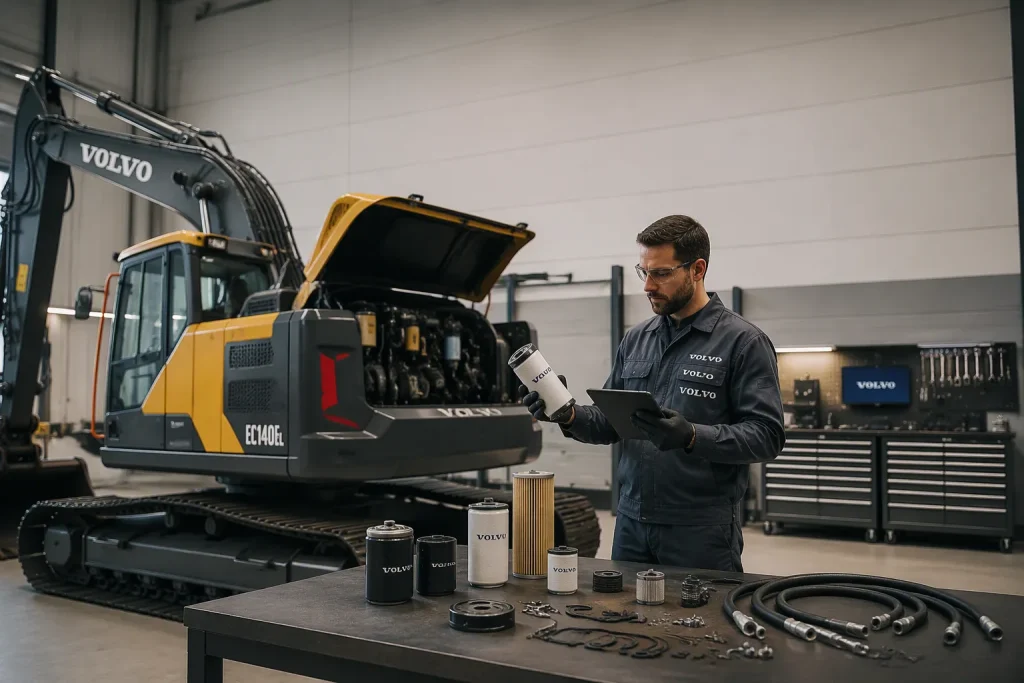
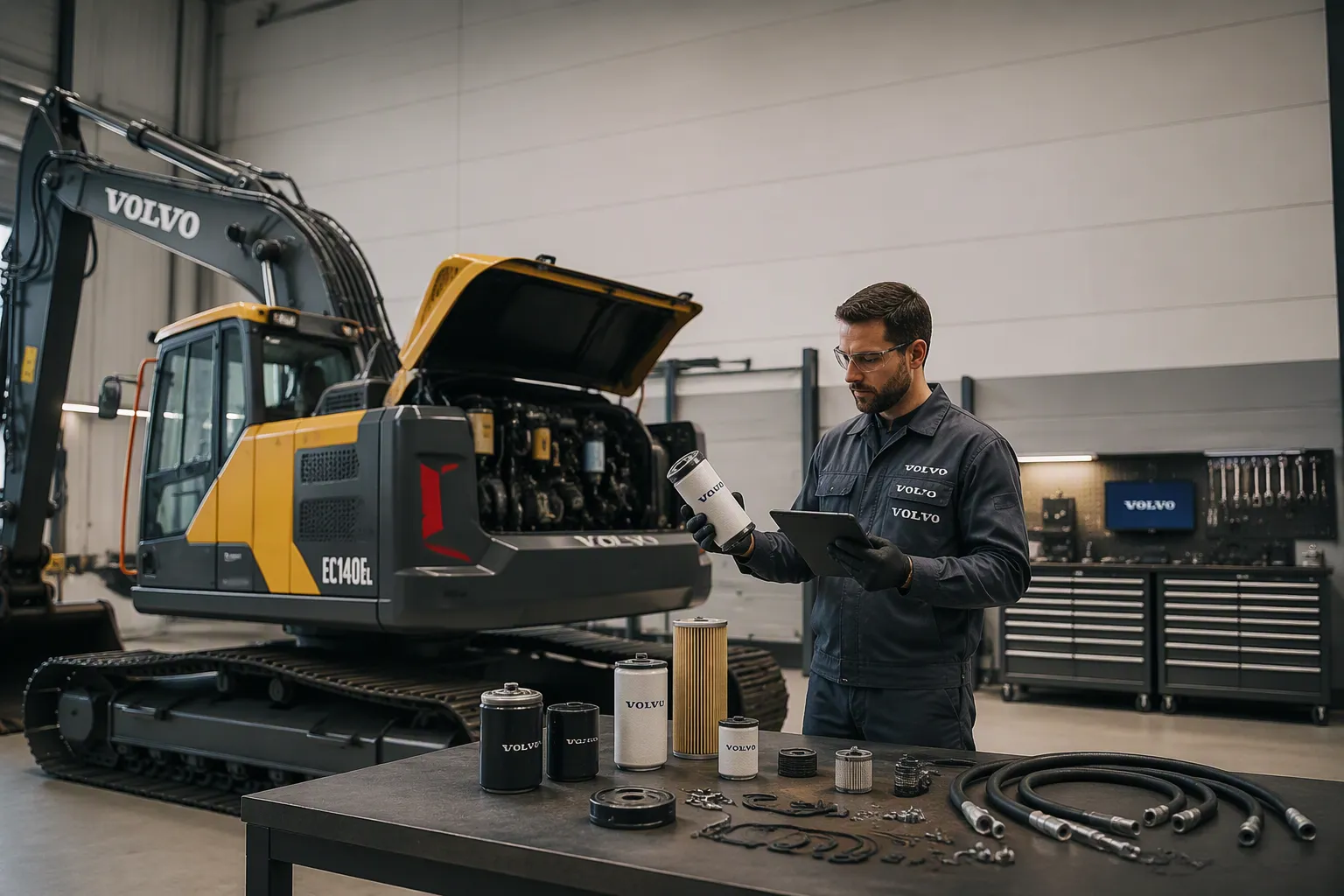
To find the right replacement part, you must start with your exact Volvo excavator model and serial number. Do not rely on how the part looks. Use this checklist when ordering: machine ID, part markings, OEM part number, variant check, measurements, and a verified supplier.
Use the machine identification to select the applicable records, then identify the installed component and relevant part reference. Markings support identification but do not diagnose a failed part or establish fitment by themselves. Check variants, documented supersessions and relevant interfaces together.
Verification can reduce ordering uncertainty, but its time and outcome depend on the actual assembly and available records. Similar appearance does not establish compatibility, and a discrepancy should be resolved before ordering.
Key Takeaways
Record the full model and serial number and any additional configuration identifiers actually present.
Photograph relevant component tags, stamped codes and casting marks. A casting number is not necessarily an orderable part number.
Check part variants and supersessions. Match your machine’s serial range. Similar-looking parts do not guarantee a correct fit.
Use relevant dimensions and interfaces to support the documentation check. Confirm the actual return terms before payment.
Start With Your Volvo Excavator Replacement Parts ID
Start with the full machine model and serial number and identify any modifications or component replacements. Machine identification narrows the search but does not necessarily describe the current installed assembly in full.
Find the Model and Serial Number Plate
Use the operator documentation for the exact model to locate identification information. Plate locations and recorded fields vary. Copy the full identifiers that are actually present using the applicable safe inspection and cleaning method.
Record the full model and serial number, plus any relevant configuration or component identifiers. Machines sharing a model name may have different production variants or later modifications. Do not invent a configuration code if none is present.
Use the Operator’s Manual to Confirm Configuration Details
Use the appropriate operator, service and parts information for the machine and installed component. An operator manual may help locate identifiers, while detailed parts or service records may be needed to resolve assembly variants. Keep the relevant document revision with the order records.
Options, production changes and previous repairs can affect the installed assembly. Confirm the actual engine, hydraulic or attachment configuration relevant to the requested part rather than assuming every option changes the same interfaces.
Additional configuration information can be relevant even when the model name is the same.
Compare available identification records with the actual machine and component. Ask for technical clarification if a code is unclear, the assembly has changed or records conflict. Then identify the applicable parts information.
Find the Broken Part Before You Order New Parts
Collect relevant markings and photographs from safely accessible areas. Also record the component location and function. Missing or unreadable markings require further investigation rather than a guess based on appearance.
Check for Stamped Codes and Raised Numbers
Different components may carry tags, stamped codes or cast identifiers in different locations. Use the applicable guidance to locate and interpret them, and distinguish casting marks from orderable part references.
Write down these details before you remove the part:
Full Volvo excavator model and machine serial number
Part description and mounting location
Original OEM part number, if available
ID tags held by clips or rivets
Stamped numbers and casting numbers
Size and mounting details
Clear photos of the old part
Use the specified safe method to inspect identifiers without damaging them or nearby components. Avoid applying a universal chemical or abrasive-cleaning procedure. Retain clear photographs and ask for assistance if identifiers remain unreadable.
Match the Part to Its Position and Purpose
Record where the component is installed and what connections or interfaces apply. For a hose, relevant requirements may include the specified fittings, construction, routing and ratings. Appearance or an approximate length alone cannot establish suitability.
Hose construction and performance requirements depend on the actual circuit and specification. Do not assume every genuine hose has the same reinforcement or that reinforcement alone determines load-sensing behavior. Use supported component data and applicable service guidance.
For rollers, sprockets and other assemblies, confirm the exact location, configuration and applicable reference. A part listed for the same model family may still require further variant or serial-range checks.
Use the Official Spare Parts Network for Diagrams
Use the applicable official parts information or request authorized parts support to resolve the reference. Access arrangements and document coverage vary; do not assume that one online tool provides every model, current revision or installed modification.
Search by Model, Serial Number, and Configuration Code
Provide the full machine identifiers and ask how to locate the applicable catalog or assembly information. Check the available record fields relevant to the actual search, which may include:
Model name and serial number
Build date
Machine specs
Relevant configuration or component identifiers where available
Compare the available record with the actual machine and installed assembly. A search result or machine card does not automatically establish that every displayed item fits the current configuration. Resolve conflicting identifiers and document revisions before selecting a part.
Confirm the OEM Part Number on the Exploded View
An applicable exploded diagram helps identify the assembly, item location and associated parts. Read it alongside its parts list, notes and revision information. A general diagram or a similar assembly view may not cover the actual variant.
Locate the item reference in the applicable diagram and match it to the corresponding parts-list entry. Compare the orderable number with the component records, noting that casting or stamped identifiers may use a different numbering system. Investigate discrepancies rather than assuming all numbers must be identical.
Review associated seals, fasteners or kits and determine which are required for the planned work under the applicable instructions. Do not assume every item shown nearby must be replaced or that a kit contains everything needed.
For an older or uncommon component, ask a parts supplier to investigate the applicable reference, current availability and any supported alternative. Do not assume every discontinued item remains available or that every supplier has access to official records.
Obtain written return and warranty terms, including relevant fees, exclusions and reporting requirements. Confirm supported compatibility separately; packaging or genuine labeling alone does not establish the correct variant.
Keep the applicable diagram, part reference and technical clarification with the quotation. If the record is incomplete or the proposed replacement differs, ask an authorized dealer or qualified parts specialist to explain the basis for the offer.
Verify Part-Number Variants and Supersessions
A variant is a version relevant to an application or configuration. A supersession is a documented change from one part reference to another. Confirm how either applies to the actual machine rather than assuming a similarly named item is interchangeable.
Check Variants for Engine, Hydraulic, and Production-Range Differences
Volvo excavator parts change with model, build setup, serial number range, and production year. In the same model series, the hydraulic pump, engine, or related systems may be built in different ways depending on the production range. Those differences change what parts fit your machine.
External dimensions and fittings alone may not capture relevant hydraulic, engine or electrical differences. Check the applicable specifications and variant information. Avoid a universal prediction that every mismatch causes immediate failure; resolve the technical question before installation.
Confirm the applicable serial range and installed component variant through the relevant records. A build date or component date code can support identification but does not replace the applicable cross-reference or technical clarification.
When you call a supplier, give complete details. Share the full serial number, the OEM part number or cross-reference, a part description, photos, sizes, and mounting or connection details. Send this info so a parts specialist can confirm fit before shipping. Incomplete details force the specialist to guess. Guesses cause wrong spare parts.
Verify the relevant variant and functional requirements, not only external appearance.
Confirm the Superseded Part Number Fits Your Serial Range
Part references may change for several reasons. Request the documented relationship between the old and proposed numbers and confirm any applicable serial ranges, additional items or installation conditions. A supersession does not always mean a redesign.
Read the applicable supersession notes and any conditional requirements. Do not assume that every catalog uses a single starting serial number or that a difference necessarily means the proposed replacement cannot be used. Obtain clarification for the actual assembly.
Keep both old and proposed references with the applicable documentation. Confirm that the notes cover the installed assembly and identify any required kit, paired component or installation change.
Request written confirmation of the applicable supersession and any conditions before ordering. Keep the clarification with the accepted quotation and purchase terms.
Run Quick Physical Checks Before You Order Parts
Use physical checks where they are relevant and can be performed safely. They support the documentation review but do not replace it. Worn dimensions on the removed part may differ from the specified new-part dimensions.
Trust Fitment Data, Not Packaging or Appearance
A logo or correct-looking box cannot prove authenticity, condition or compatibility. Assess the actual item, traceability and applicable part information separately. Genuine labeling does not eliminate serial-range or variant checks.
For an aftermarket replacement, request the applicable cross-reference, relevant specifications and supporting compatibility information. Dimensions such as mounting spacing are useful where relevant, but a dimensional match alone does not establish functional fitment.
Material or functional test reports can support specified product claims within their stated scope. Check the item or batch identified, test method, relevant specification and results. No single measurement report establishes every quality or fitment requirement.
A quality-management certificate concerns the named organization’s management system and stated scope. It does not by itself establish product condition, authenticity or compatibility with a particular machine.
Confirm the Return Policy and Supplier Support
Read the actual return terms before payment, including deadlines, fees, evidence and exclusions. Do not assume installation or testing is permitted before return; clarify the procedure for a suspected mismatch.
Request the basis for compatibility and provide the machine and component identifiers needed to assess it. Clear technical clarification is more useful than a generic promise that every order is checked.
Ask about actual item identity, condition and relevant product evidence. Resolve uncertain references and unsupported claims before committing to the order.
A clear return policy and a helpful supplier lower risk. Your own checks are still needed. You must still compare measurements and part numbers. But they add a second safety check.
Choose OEM or Aftermarket Parts With Verified Fitment
Compare supported genuine, aftermarket or remanufactured options against the actual component requirements and purchase evidence. These labels describe supply or product conditions; they do not replace verification of the applicable reference and installed configuration.
Keep Product Identity and Compatibility Checks Separate
Use traceability and relevant product evidence to assess any claimed origin, and separately use applicable part and machine information to assess compatibility. A logo, serial label or convincing packaging alone cannot settle either question.
Check relevant dimensions against the applicable specification rather than only the worn part. Account for functional requirements, variants and documented revisions. If a proposed replacement differs, request supported technical clarification instead of assuming an automatic fit or mismatch.
Retain the Accepted Purchase Terms
Keep the quotation, technical clarification and actual return policy together. Ask who is responsible for an incorrect shipment, what evidence is required and which transport or other charges apply under the accepted terms.
Request appropriate technical help to resolve an uncertain reference or variant. Do not treat a supplier’s location or reputation as a fitment guarantee. Confirm the offered item and relevant specifications before payment.
Choose the supported option that meets the actual machine and component requirements. Keep unresolved condition, compatibility and purchase-term questions separate so none is hidden by a general quality claim.
Follow this checklist: machine model and serial number, OEM part number, variant check, exact measurements, and a verified supplier.
Allow enough time to resolve discrepancies before ordering. Verification and delivery times vary, so avoid relying on a universal promise that a few minutes of checking prevents days of delay.
Read the FAQs before ordering to resolve fitment questions quickly.
Provide the full machine and component identification and ask for the evidence supporting the proposed replacement. Keep the written answers and applicable documentation with the order.
FAQ
These answers explain common identification and compatibility questions.
How Do I Find My Model and Serial Number?
Use the operator documentation for the exact model to locate the identification information. Record the full model and serial number and any relevant additional identifiers actually present. Plate locations and fields vary.
What Is a Part Variant?
A variant is another version of the same part; Volvo made variants for different production ranges. Match your serial number to the variant’s serial range, and ask the supplier to confirm the right variant for your serial number.
What Does a Superseded Part Number Mean?
Supersession means a new part number takes the place of an old one. The new part may not fit every machine that used the old number. Compare the new part’s serial range with your machine’s build, and check both numbers on the official diagram.
How Do I Verify a Part Is Authentic?
Assess claimed origin with relevant traceability and product evidence. Markings and packaging can support identification but may be copied or incomplete. Authenticity and machine compatibility are separate checks, so obtain clarification of both where needed.
Do I Need to Measure the Old Part Before Ordering?
Use relevant measurements when they are specified and can be obtained safely. Compare them with the applicable component data, accounting for wear and valid design revisions. Matching dimensions alone cannot prove compatibility, and an apparent difference requires investigation rather than an automatic conclusion.
For Volvo excavator parts sourcing, consider YNF Machinery. Provide full machine and component identification, applicable part numbers and quantities, and request supported compatibility information, an actual quotation and written warranty and return terms before ordering.



