Wear in one component can affect neighboring parts, so inspect the undercarriage as a system.
Key Takeaways
A mini excavator undercarriage has six main parts: the track frame, rollers, idlers, sprockets, track chains, and track shoes.
These parts work together as a system, so a problem in one part often affects the others.
Follow the inspection schedule in your machine manual; check track tension, bolts, shoes, and guards at the intervals it specifies.
Before you buy parts, check the machine’s make, model, serial number, and part number.
Select shoe width and track type from configurations approved for your machine, taking ground conditions into account.
Undercarriage Parts for Mini Excavators
What the Undercarriage Includes
Tracked mini excavators share some component categories, but their designs and configurations vary by make, model, and setup.
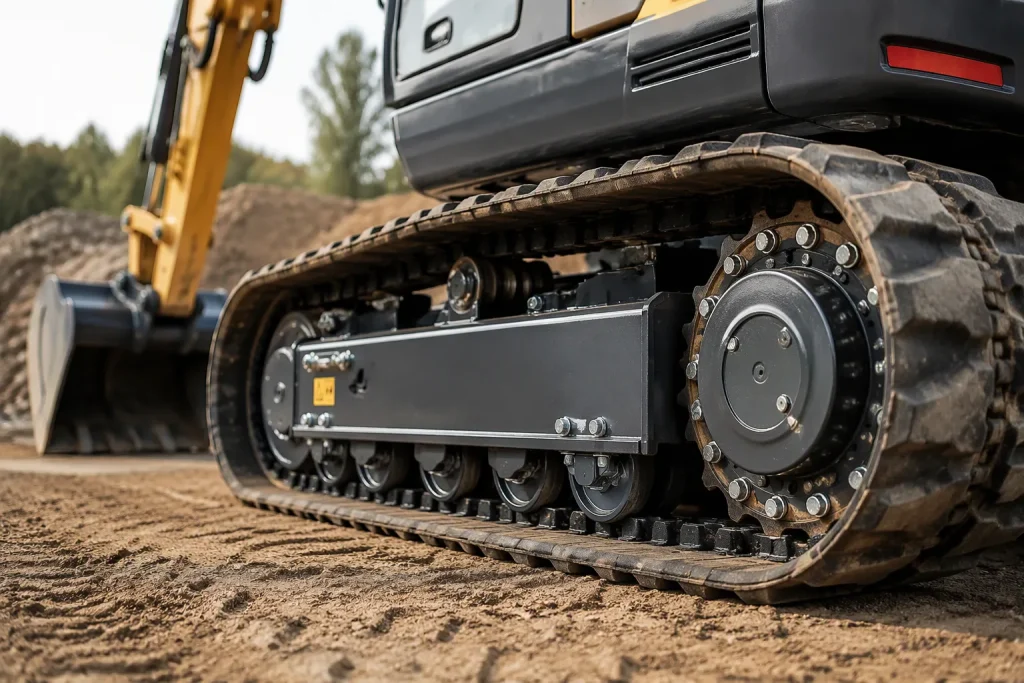
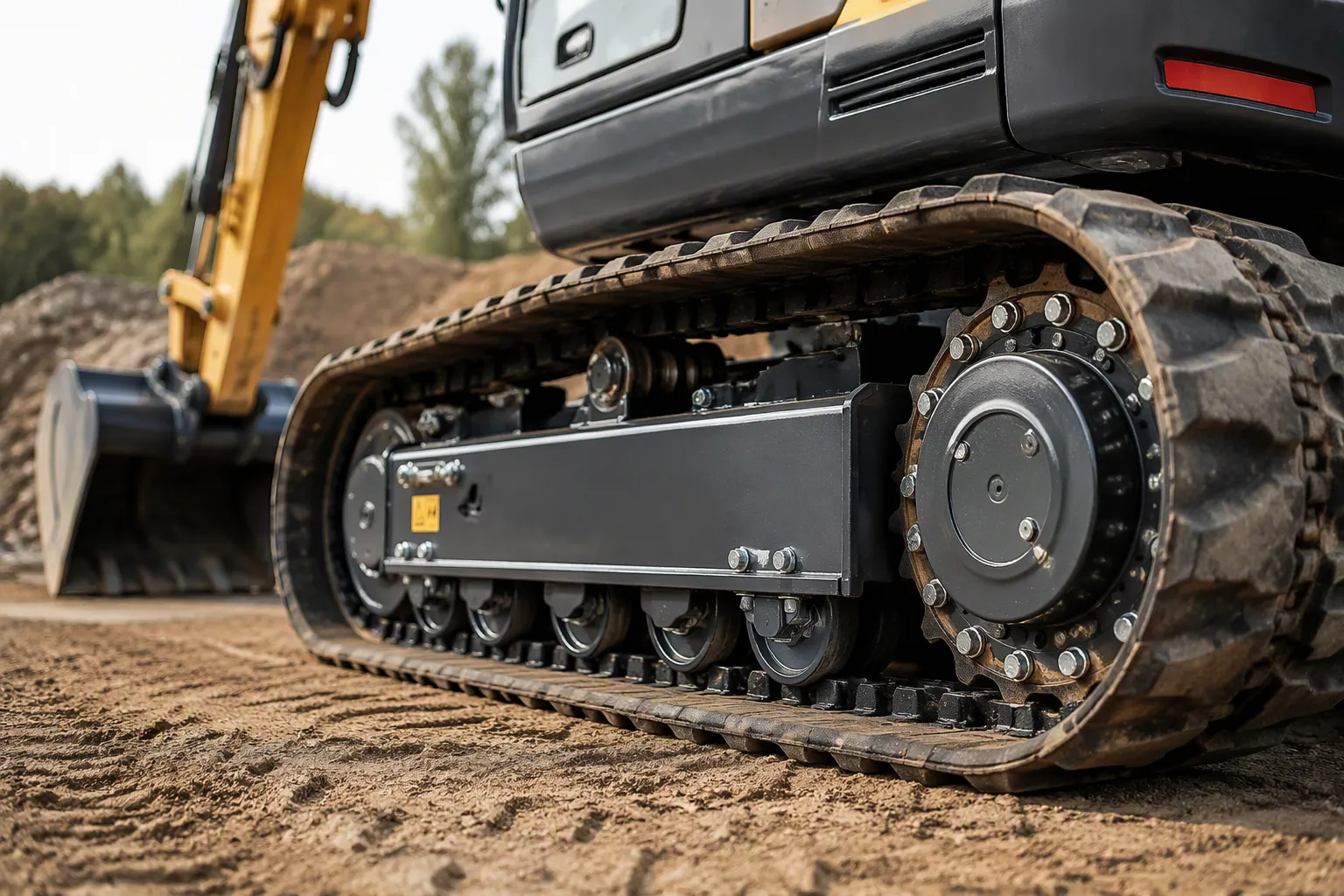
You can sort the key undercarriage parts into a few groups. The track frame is the main structure. Track chains make the loop. Track pads, also called shoes, bolt onto the chains and touch the ground. Track bolts hold each shoe in place. Rollers support the machine and guide the chain. Idlers guide the chain at the front and rear. Sprockets and sprocket segments drive the chain. Rock guards protect the frame from debris.
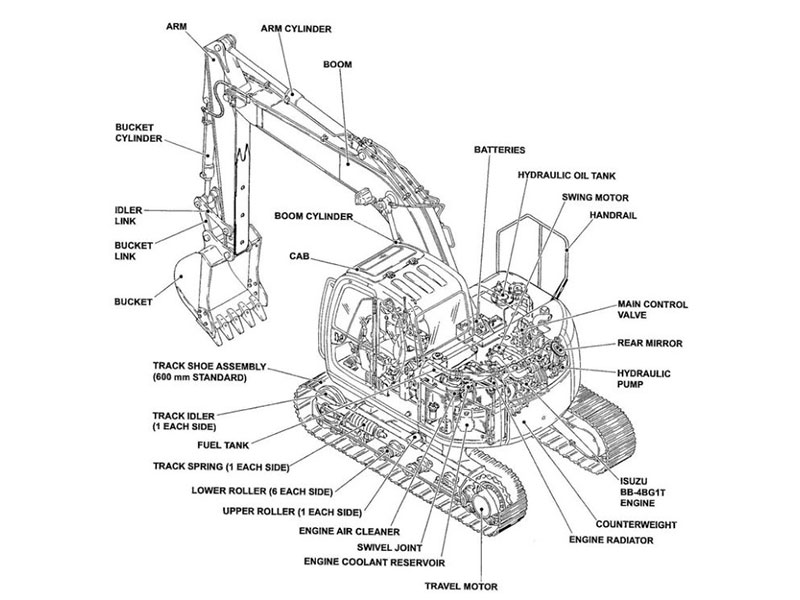
A good undercarriage parts diagram helps you see how these pieces fit together. Many owners keep an excavator undercarriage parts diagram nearby during inspection. The diagram shows the main parts of an excavator undercarriage in their positions. You can then match each part of an excavator undercarriage to the right name.
Tracked vs. Wheeled Undercarriages
Mini excavator undercarriages come in two layouts: tracked and wheeled. Each one fits different job needs, and neither is better in every situation.
Tracked machines may use rubber or steel tracks, depending on the manufacturer-approved configuration and application. Rubber tracks can be suitable where limiting surface marking is a priority, while steel tracks may suit rougher work. Verify the permitted track type for your model and consider the surfaces and conditions where it will operate.
Wheeled undercarriages roll on tires. They move fast on roads and hard surfaces. They also steer with less scuffing of the surface. Tracked units offer more flotation on soft ground. Wheeled units favor speed and road travel. Match the layout to your work, and you get better results from your undercarriage parts for excavators.
Before ordering, confirm whether your machine uses a tracked or wheeled configuration. The components and fitment details depend on the specific design, so use the parts catalog for the complete model and serial range.
Understanding these undercarriage parts for mini excavators gives you a solid base. You can now look at each part in detail. The next sections cover the frame, rollers, idlers, and the drive and grip parts. Each one plays its own role in the system.
Track Frame, Track Rollers and Idlers
Track Frame Basics
The track frame is the main structure of the undercarriage. It hosts the other undercarriage components and ties them into one unit. The frame carries the machine’s weight down to the rollers and the ground. It also holds the sprocket, the idler, and the track tensioner in their working positions.
Frame designs vary by make, model, and configuration. Some frames are welded into a fixed shape. Others adjust in length or width to suit different jobs. You should check your machine’s frame layout before you order undercarriage parts. A frame built for one model may not accept the rollers or idlers from another.
Rollers and Idlers
Track rollers and idlers do two jobs: they support and guide the tracks. Track rollers sit along the bottom of the frame. They carry the machine’s weight and keep the chain running in line. A typical machine uses several track rollers on each side. Worn track rollers let the chain ride low and rub the frame.
Idlers guide the chain at the front and rear of the frame. The front idler often works with the track tensioner to set chain slack. The rear idler turns the chain back toward the sprocket. Together, track rollers and idlers keep the loop steady as the machine moves.
These parts wear as a set. A bad idler can wear the track rollers and idlers near it faster. Inspect track rollers and idlers together during your walkaround. Look for flat spots, leaks, and loose mounting bolts. Your machine manual gives the inspection points for your model. Treat this guidance as general and follow the manual for your excavator undercarriage.
Excavator Undercarriage Parts That Drive and Grip
Sprockets and Segments
The drive sprocket is the toothed wheel at the rear of the track frame. Its teeth engage the chain and pull it around the loop. Power from the final drive turns the sprocket, and the sprocket moves the machine. Stop the sprocket, and the machine stops. That is why the drive sprocket sits at the center of the sprockets and drive system.
Some machines use sprocket segments instead of a one-piece sprocket. A segment is a curved toothed piece that bolts to a hub. Whether segments are separately replaceable depends on the machine design; check the parts catalog and service guidance for your model. Segment count, bolt pattern, and tooth profile vary, so verify them before ordering.
Chains, Shoes, Bolts, and Rock Guards
The track chain is a continuous loop of links. Each link joins the next with pins and bushings. The pins and bushings form the joints that let the chain bend around the sprocket and idler. They wear as the chain flexes, and worn joints let the chain ride unevenly.
Shoe width and tread pattern affect ground contact and traction. Select only from options approved for your machine and application.
Rock guards shield the frame and the inner undercarriage components from rocks and debris. They bolt to the frame near the rollers and idlers. A bent guard can rub the chain, so inspect guards along with the rest of the undercarriage.
How the Mini Excavator Undercarriage Works Together
Stability, Traction, and Maneuverability
The parts of a mini excavator undercarriage do not work alone. The frame spreads the machine’s weight onto the track rollers and idlers. The rollers pass that load to the chain and shoes. The shoes press against the ground and create grip. The sprocket pulls the chain, and the machine moves. Each link in this chain of load matters. A weak point anywhere in the system shows up as poor stability, slipping, or uneven travel.
Think about a dig on soft ground. Wide shoes spread the load and keep the machine from sinking. The track rollers and idlers keep the chain seated while the arm swings and shifts weight. The sprocket delivers drive force to the chain. A matched excavator undercarriage keeps the machine level and steady through the whole cycle. A mismatched one fights itself, and you feel it in the cab.
Wear Patterns and Alignment
A chain that rides unusually on sprocket teeth, uneven shoe wear, or flat spots on rollers can indicate wear, alignment, or component issues. These signs are not a diagnosis by themselves; compare them with your machine manual and inspect related parts.
Uneven wear across the two sides can have several causes, including operating conditions, alignment, or mismatched components. Compare left and right and check that parts on each side match the machine specification. Use the manual for inspection points and adjustment steps; a wear pattern alone does not identify a single failed part.
Mini Excavator Undercarriage Components: Care and Selection
Inspection and Common Issues
Inspect the undercarriage at the intervals and by the method specified in your machine manual. Check track chain tension, rollers, sprockets, shoes, bolts, and guards. The manual sets the inspection points and adjustment procedure for your model.
Loose or missing track bolts, worn shoes, damaged guards, and changes in chain behavior are issues to record and investigate. Worn pins or bushings may affect how the chain engages with other components. Follow the machine manual for inspection and adjustment, and keep maintenance records at a cadence suited to the machine and working conditions.
Fitment and Application Checks
Fitment comes before price. Confirm these details before you order any undercarriage parts:
Machine make and complete model
Serial number or PIN
Exact part number and catalog notes
Track configuration and mounting details
Key dimensions such as shoe width and roller size
Designs vary by make, model, and configuration, so verify each part against the catalog for your machine.
Every part of the mini excavator undercarriage has its own job. The frame carries the weight, the rollers support it, the idlers guide it, the sprockets drive it, and the shoes grip the ground. They work best as a matched system, so one weak part holds back all the others.
Use the inspection schedule in the machine manual to check tension, bolts, shoes, and guards.
Knowing these excavator undercarriage parts helps you catch problems early, make parts last longer, and match parts to your work and budget.
FAQ
What does the undercarriage do on a mini excavator?
The undercarriage holds up the machine’s weight and gives it traction and stability. It contains the frame, rollers, idlers, sprockets, chains, and shoes. A tracked undercarriage and a wheeled undercarriage are built in different ways. Each part helps the others, so the undercarriage works as one system.
How often should you inspect the undercarriage?
Inspection frequency depends on the machine manual and operating conditions. Check track tension, bolts, shoes, and guards at the intervals specified for your model, and keep a maintenance log to record changes.
Why do track shoes wear unevenly?
Uneven shoe wear can have several causes, including operating conditions, alignment, or mismatched components. Compare both sides and inspect related parts before deciding what needs replacement.
Can you replace sprocket segments alone?
Some machines use replaceable sprocket segments, while others use a different design. Check the parts catalog and service guidance for your make, model, and serial range to confirm which components are separately serviceable. Verify segment count, bolt pattern, and tooth profile before ordering.
What details do you need before ordering undercarriage parts?
Confirm the machine make, complete model, serial or PIN, exact part number, and catalog notes. Add the track configuration, mounting details, and key dimensions. Designs vary by make, model, and configuration, so verify fitment before ordering. For help confirming undercarriage fitment, contact YNF Machinery with these details so compatibility can be checked before ordering.