
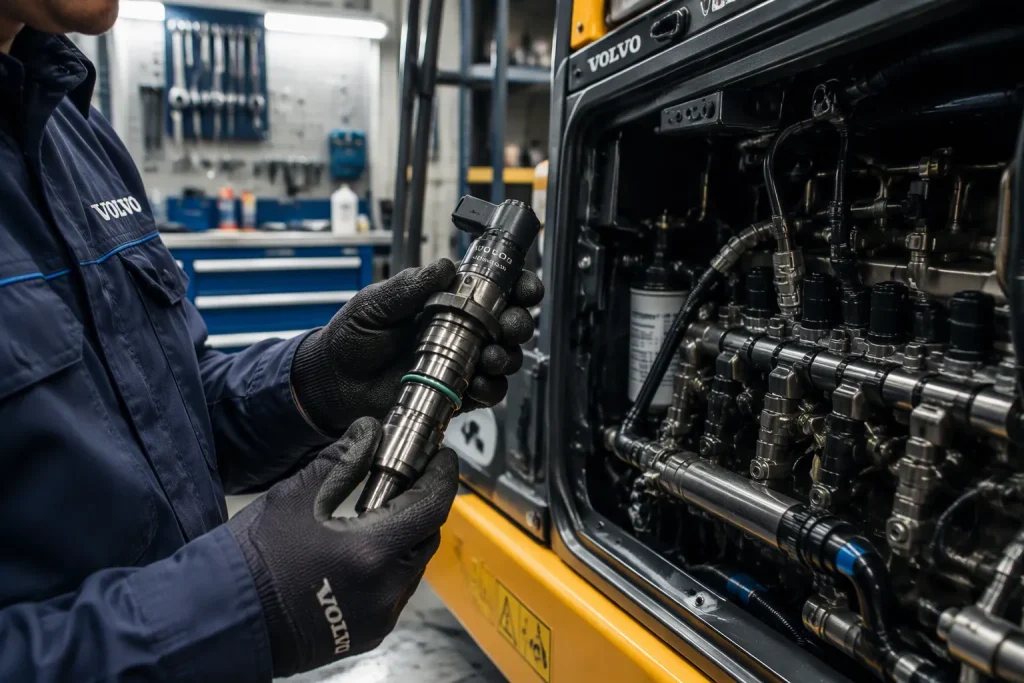
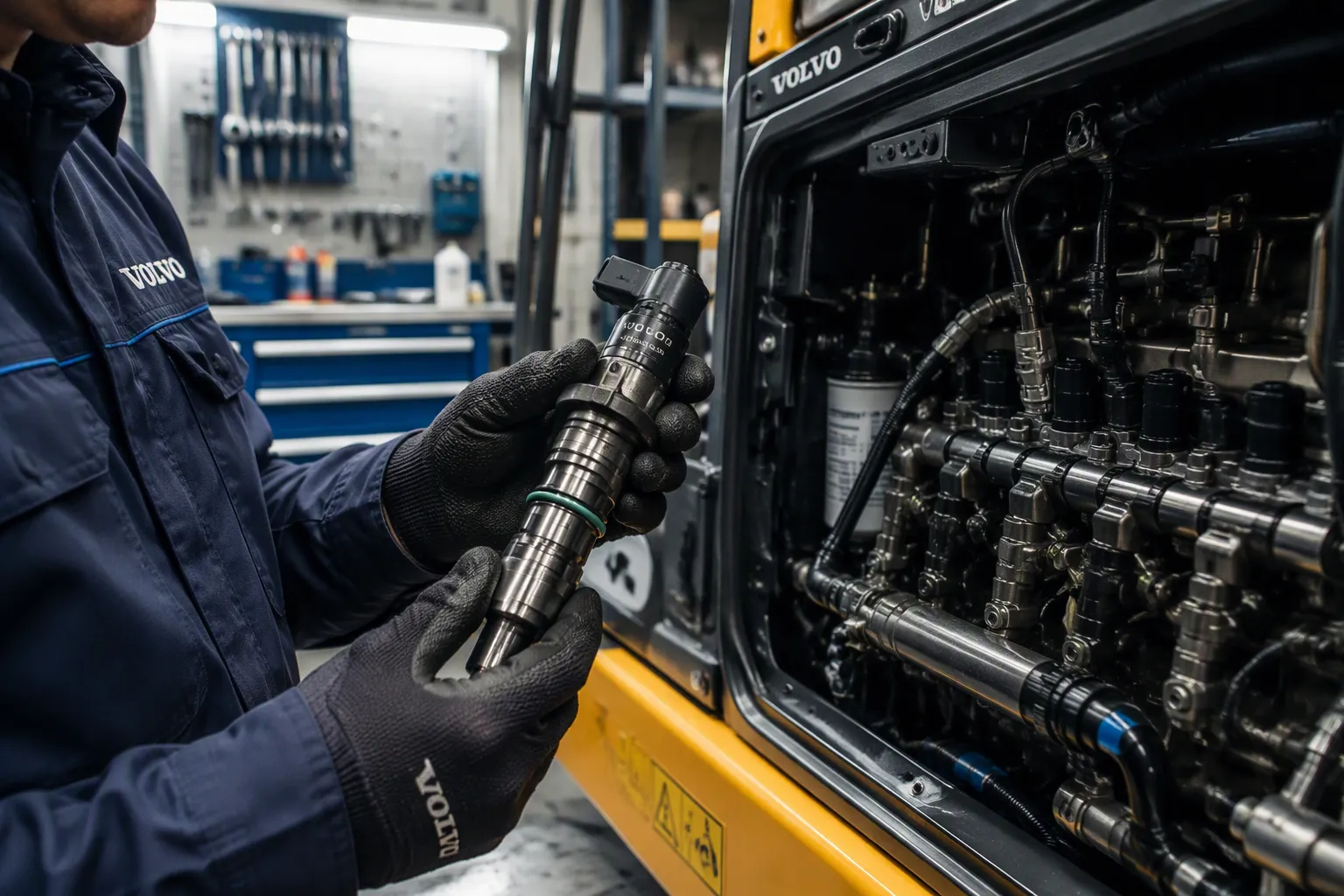
To identify Volvo excavator engine parts, record the actual installed engine’s identification and configuration as well as the machine details. Use applicable engine and machine documentation to verify the selected service reference, interfaces and current replacement requirements. Resolve uncertainty with a qualified parts contact before ordering.
A mismatched part can damage nearby systems and take your machine out of service for a long time. Owners, mechanics, and procurement staff all face this risk. The steps ahead show you how to read the engine plate and decode part numbers. They also show how to source parts and verify compatibility before you order. Each step builds on the one before it.
Key Takeaways
Record engine identification and relevant configuration from applicable labels and documentation.
Use the engine serial number to find parts in the catalog, not just the machine model.
Check with your dealer to make sure of the part number and any updates before you order.
Make sure the part works with your engine’s emissions setup and hooks up to the systems around it.
Always check the engine in your machine, because a swap can change the right parts.
Record the Installed Engine Identification
Separate Machine, Engine, and Component IDs
Keep machine and engine identification separate. Machine records can support the lookup, but may not reflect an engine swap or modification. Engine labels and applicable records help identify the installed unit; a plate alone is not a complete fitment confirmation.
Keep relevant component identification as another layer. A starter, cooling assembly or pump-drive component may need its own identifier and interface checks. Such information can support the relevant lookup but does not replace engine or machine identification.
Read Plate Data and Emissions Configuration
Record the fields actually present on the engine labels and supported records, such as model, serial or specification information where supplied. Emissions information may be on a separate label or document. Its presence or format varies and it does not by itself establish every component reference.
Plate location varies by engine installation, so check the engine itself rather than assuming a fixed spot. A previous engine swap is the bigger risk. The installed engine may not match the machine’s original build record. Always verify the engine that is actually in the machine before you order anything.
Understand Volvo Part Numbers and Supersessions
Break Down the Part Number Structure
A Volvo part number is a catalog key, not a code you can crack by counting digits. The number links a part to a certain engine variant and serial range. The same job — a fuel filter housing, an injector, a water pump — can have different numbers across engine variants. Emissions setup, mounting points, and internal clearances all change between variants. That is why one number rarely covers every engine in a family.
Treat the service number as an identifier to verify against the applicable entry. Do not decode fitment from a prefix, digit count or a similar engine name. Check configuration, installed component and current replacement conditions alongside serial applicability.
Track Service References and Supersessions
An older reference may remain valid, be discontinued or have a replacement under stated conditions. Check current applicable information rather than assuming age alone makes it incorrect.
Use the exact service reference tied to your engine serial number. Numbers copied from a similar engine, a forum post, or an old work order may point to a superseded or wrong item. Ask your dealer to confirm the current reference against your engine serial range. Record the supersession in your maintenance file, so the next order starts from the right number.
Source Volvo Excavator Engine Parts Correctly
Cross-Reference the Catalog by Engine Serial
Check which publication covers the actual installed engine and relevant component, and how it relates to the machine installation. An engine-specific reference may use different coverage criteria from a complete-machine catalog. Read the stated scope before selecting an entry.
Use full engine identification and applicable configuration records to establish coverage. The engine serial is important, but does not alone account for later component changes or every installation interface.
Engine filters, starters, alternators, seals and other items may differ across variants. A hydraulic-system filter may require machine or hydraulic-system information rather than engine identity alone. Verify each item using the relevant documentation and installed component information.
Compare Genuine, Aftermarket, and Used Options
Genuine, aftermarket and condition labels do not by themselves establish applicability, quality or performance for the installed engine. Assess the actual proposed item and its supporting technical information. New, used and remanufactured options may require different condition evidence.
Ask a suitable parts supplier or authorized dealer for supported applicability, actual availability and an itemized quotation. Confirm supplied scope, written warranty and return terms. A supplier’s general model coverage does not prove a specific item fits.
Kit scope deserves its own check. A kit may include gaskets, bolts, and seals, or sell them separately. Confirm quantities and contents before ordering. Ask the supplier to list every item in the box. This step prevents a second order and a stalled repair.
Retain applicable source information and a written response to any uncertain reference or configuration. Do not assume a particular supplier can confirm every component immediately or without charge.
Verify Parts Compatibility Before You Buy
Run a Pre-Purchase Compatibility Checklist
You have the engine plate data and a part number to consider. Now prove the match on paper before you spend money. Work through these checks in order:
The engine model and serial number match the catalog entry for the engine in your machine.
The part number is current, and the dealer has confirmed any supersession.
Relevant engine configuration and installation requirements match the applicable entry.
You have verified kit scope and quantity, including items that ship separately.
You have checked the points where the part meets other systems.
That last point needs extra care. Say you order a hydraulic pump drive coupling. Check the mounting pattern and drive fit against your hydraulic pump before you order. The same idea applies to cooling system work. A water pump or fan hub must line up with the cooling parts around it, and a radiator swap needs hose and mounting checks. These interface checks catch mismatches that a part number alone will not show.
Confirm Fitment With a Dealer
A dealer confirmation turns your checklist into a documented match. Follow these steps:
Gather the engine identifiers and relevant configuration information actually present in the labels and supported records.
Add your machine model and serial number.
Write down the exact part number you plan to order.
Ask the dealer to confirm that number against the catalog for your engine serial range.
Give the dealer all four items at once. A complete request gets a faster, more accurate answer than a machine model alone. Ask specifically about supersessions and kit contents. Then save the confirmation with your maintenance records.
This is a procurement identification check, not a diagnosis or permission to dismantle an engine. Keep the supporting entry and agreed order details. Written confirmation supports later review but does not guarantee correct supply.
One more habit pays off here. Recheck the installed engine before every major order. A previous swap or a rebuilt unit can change the identity you recorded months ago. Confirm the plate again, then confirm the part. That sequence keeps every volvo excavator engine parts purchase tied to the engine actually in your machine.
Avoid Common Excavator Parts Matching Mistakes
Don’t Assume the Engine From the Machine Model
The machine model and an abbreviated serial prefix do not establish the currently installed engine or its parts. Record the complete identifiers and check actual configuration and relevant changes against applicable records. Do not infer a prefix’s meaning without documentation.
If you assume the power unit from the machine model, you risk ordering the wrong replacement parts. A filter that fits one variant may not seal on another. A hydraulic pump that fits one variant may not match the pump drive on your unit. Always identify the installed unit directly from its plate. Write the plate data down before you call any supplier. Then order parts against that identity.
Watch for Engine Swaps and Similar Variants
A previous owner may have swapped the power unit. A rebuilt unit may carry a different serial than the build record shows. In either case, the machine’s paperwork points to a unit that is no longer installed. The build record describes the factory build, not the current state of the machine. Similar variants create a second trap. Two units may share a family name but differ in mounting points, cooling passages, and pump interfaces.
A universal-fit claim, displacement or output figure does not establish applicability. Check the relevant engine and component references, interfaces, configuration and current replacement guidance. Cooling and hydraulic-system items may require their own identification. Resolve uncertain changes through applicable documentation and qualified verification.
Record the actual engine and machine identification, check the applicable entry and current replacement conditions, and verify relevant interfaces and kit scope. Compare proposed items using supported applicability, condition and written terms. Do not decode service numbers from their format.
Every step depends on one thing: the engine actually installed in your machine. Confirm that identity before you buy any volvo excavator engine parts. A few minutes with the plate protects your repair budget and your uptime. Make the plate check your first move on every parts order.
FAQ
Where do I find the engine identification plate?
Consult the applicable engine and machine documentation for identification locations. Record the fields actually present on safely accessible labels and supported records. Do not assume every plate carries emissions or specification information. Have inaccessible or unclear identification handled by a qualified person.
Can I order parts using only my excavator model and serial number?
Machine records can be a starting point, but may not reflect engine swaps or later changes. Provide the actual engine and relevant component identification with the complete machine details, then verify the selected entry and current applicability.
What is a supersession, and why does it matter?
A supersession replaces a service reference under stated conditions. Confirm applicability and any additional-item requirements for the installed engine and component; a newer number is not automatically a direct interchange.
Are genuine and aftermarket parts both acceptable?
Assess the actual proposed item using supported applicability, relevant technical evidence and supplied condition. A genuine or aftermarket label alone does not decide suitability. Confirm kit contents, quantities, replacement conditions and written terms for any supply option.
How do I confirm fitment before I buy?
Collect the engine plate data, your machine model and serial number, and the exact part number. Ask the dealer to confirm that number against the catalog for your engine serial range. Keep the written confirmation with your records. This step is about paperwork, not diagnosis.
For Volvo excavator parts sourcing, consider YNF Machinery. Provide full machine and component identification, applicable part numbers and quantities, and request supported compatibility information, an actual quotation and written warranty and return terms before ordering.



