Verify a used pump through supported identification, the written supplied scope, qualified condition findings and relevant test evidence. Photos and records contribute to the review, but no single item guarantees compatibility or service life.
Your verification steps start with the model, serial number, and OEM part codes. Next, you check the outside, then the inside with qualified help. Match part numbers to official Kobelco resources, ask for proof of functional tests, and write down your findings. This guide stays practical and step-by-step. It covers what you can see and confirm, with no made-up specs and no claims that used parts for 220 Kobelco excavator fit every machine.
Key Takeaways
Make sure the pump’s model, serial number, and OEM part code match what your machine needs.
Look at the outside of the pump for damage and leaks. Then have a trained technician check the inside.
Check the part number stamped on the pump. Make sure it matches the number for your SK220’s serial number range.
Before you buy, ask for written pressure test results and a detailed inspection report.
Write down everything you find, and agree on clear terms with the seller before you order.
Confirm Machine and Pump Identification
Model, Serial Number, and OEM Part Codes
Fitment begins with solid facts about your machine. Write down the model, the serial number, and the OEM part codes for the hydraulic pump. Check these details on the machine itself, not on a listing photo. A seller may say a pump fits every SK220, but that claim means little without a matching code. Kobelco made different setups during the model’s production life, so the serial number helps narrow down which pump your machine really has.
Use parts information applicable to the actual machine and pump configuration to verify the proposed ordering reference and any supersession. A model name, visible code or matching mounting pattern alone does not prove suitability.
Service History and Supported Documentation
Treat the pump like any major used excavator purchase. General buying guides tell you to check service history and performance records, and those habits apply here too. Ask for the pump’s past service records, any repair invoices, and the hours logged on the unit. A pump with a documented rebuild or a known service interval gives you something to verify. A pump with no paperwork gives you nothing to check.
Match every document to the pump in front of you. The serial number on the paperwork should match the unit, and the part number should match your machine’s requirement. Ask the seller to explain any gap in the records. Missing history is not proof of a bad pump, but it does mean you carry more risk. Decide whether that risk is acceptable before you move to the next inspection step.
Inspect External Components
Housing, Ports, and Mounting Surfaces
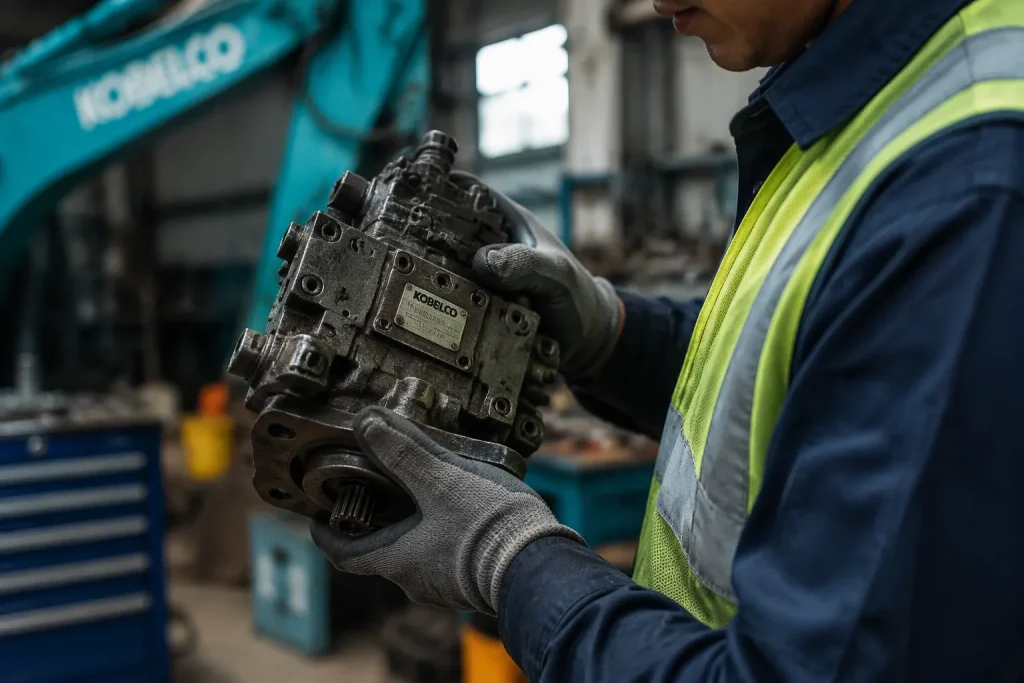
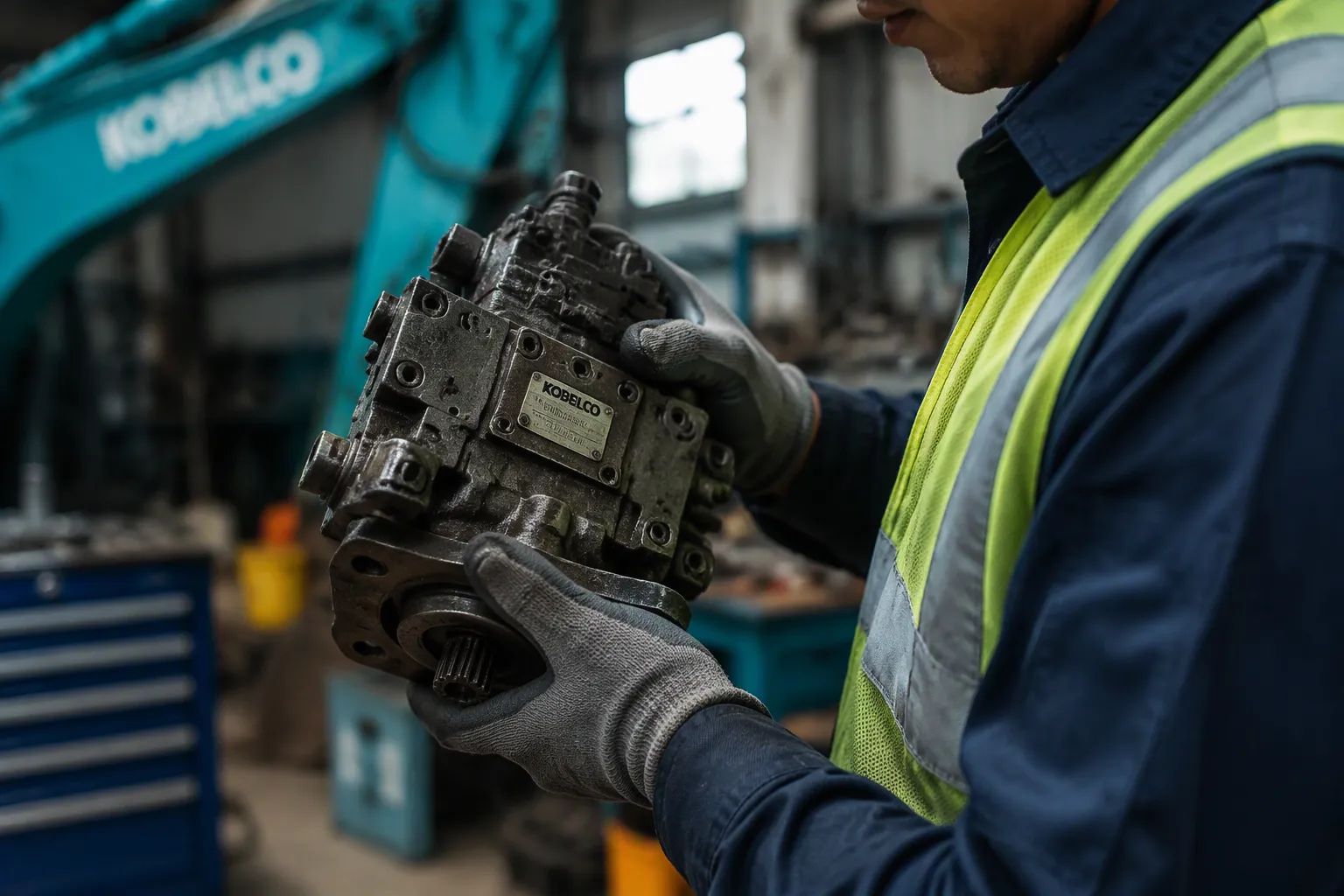
Request clear photographs and qualified findings for the housing, mounting features and accessible connections. Visible damage or apparent repair requires investigation; its cause and internal effect cannot be established from appearance alone.
Inspect every port for thread damage, cross-threading, and crushed sealing faces. A stripped port thread may not hold a fitting under pressure. Check the mating surface where the pump meets the machine. Rust pitting, deep scratches, or leftover gasket material on that face can cause leaks after installation. Photograph each area as you go. These photos become part of your written record, and they let a qualified technician review the condition remotely.
Shaft, Seals, and Oil-Leak Damage
Check the drive shaft for scoring, rust, and spline wear. A worn spline can slip or hammer under load. Inspect the seal lip area for grooves cut by a hardened seal. Keep this inspection observational only. Do not run the pump, take it apart, or measure clearances yourself. Internal work belongs to qualified personnel. Your job at this stage is to see, record, and ask questions.
Review Qualified Internal Condition Reports
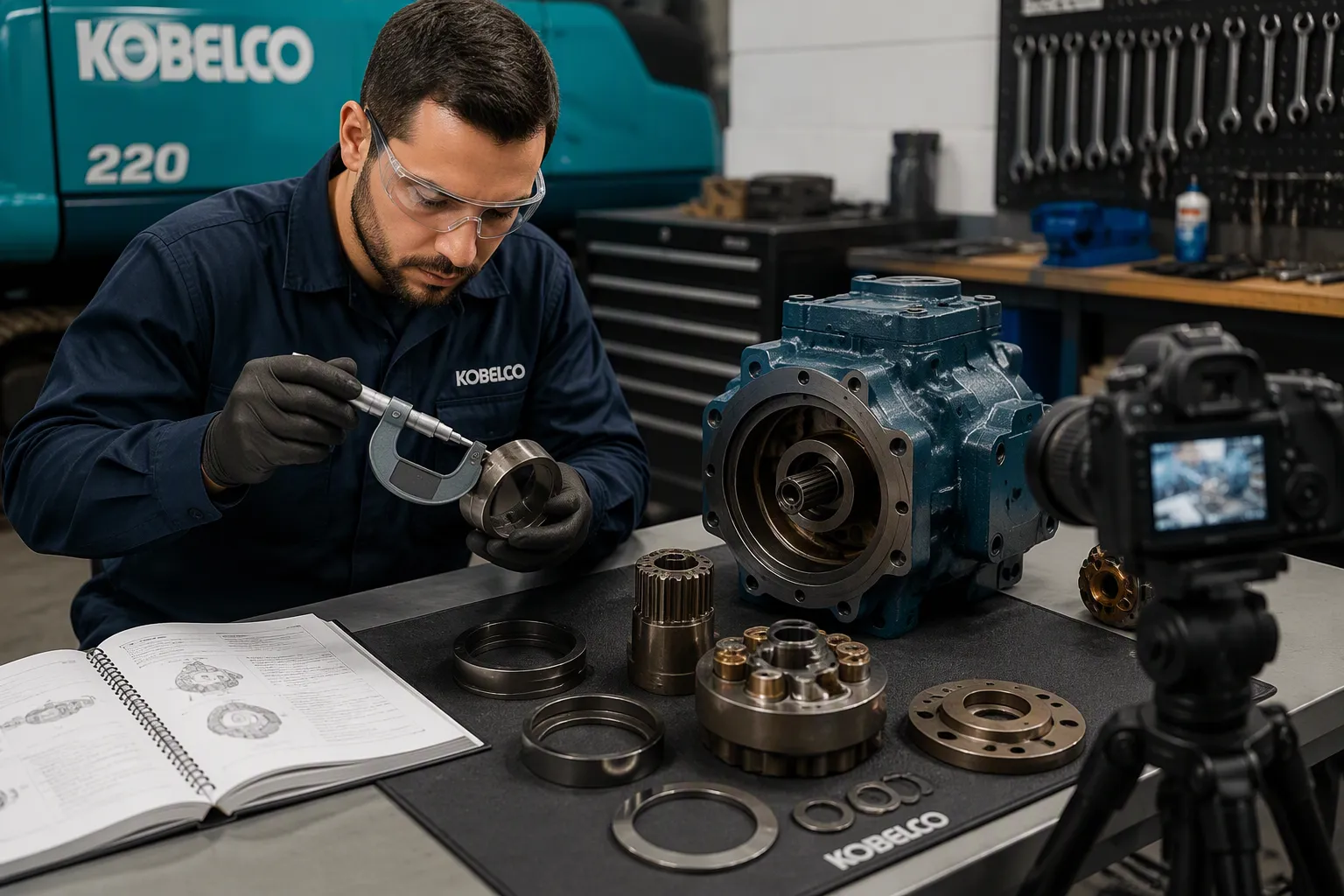
Ask qualified personnel to determine the appropriate assessment scope for the actual offered pump. Do not arrange unnecessary disassembly as a routine buying check. Any internal work requires applicable procedures and suitable facilities.
Wear Patterns and Contamination Checks
Where an internal assessment is appropriate, request the qualified findings and relevant photographs. Wear appearance, discoloration or damage does not alone establish its cause, acceptable condition or remaining life.
Ask qualified personnel to interpret any contamination findings in their documented context. Debris appearance alone does not establish a filtration failure, maintenance history or the extent of internal damage.
Request documented findings and photographs taken at appropriate stages of assessment. The report should explain preparation, limitations and any areas not assessed.
Clearance and Component Condition Findings
Any internal measurements must be obtained by qualified personnel using the applicable procedure and criteria for the actual pump. Request results with units, relevant limits and a qualified interpretation; one reading does not establish overall condition.
Request a clear account of assessed condition and previous repair scope. A mixture of replaced and retained parts does not by itself prove poor rebuild quality.
Clarify gaps in the report and unresolved findings before relying on it. An internal assessment is evidence within its scope, not a guarantee of future performance.
Verify Part Numbers
Match Used Parts for 220 Kobelco Excavator to the Machine
Record the available pump markings and confirm which identify the ordering reference. Use supported application information and any documented supersession rather than requiring every visible code to equal the catalog reference.
Kobelco builds genuine parts to exact factory specifications. That gives you a baseline. A used pump should match that baseline in setup: the same port layout, the same mounting pattern, the same drive shaft type, and the same internal arrangement for your model. You do not need to measure anything yourself. Ask the seller to show the part number on the unit and to explain how it matches your machine’s requirement. Then check that explanation against official Kobelco parts and service resources.
Keep the machine identity, supported references, offered component photographs and written supply scope together. Resolve discrepancies before ordering.
Reject Universal Compatibility Claims
Do not accept universal compatibility statements without application support. Confirm the actual proposed unit against documentation applicable to the receiving machine and configuration.
Secondhand parts should never be trusted without verification against factory specifications and official Kobelco parts and service resources. Ask three questions of any universal claim. Which part number does the pump carry? Which serial number range does that number serve? Which Kobelco document supports the match? A seller with real answers will point to a catalogue entry or a service reference. A seller without answers is guessing, and you carry the risk.
A broad fitment promise cannot replace supported application information and qualified condition findings. Resolve essential questions before buying.
Request Functional Test Evidence
Applicable Test Conditions and Report Limits
Ask qualified personnel to select any appropriate tests under the applicable procedures for the actual pump. A general machine manual or pressure reading alone does not establish detached-pump condition or compatibility.
Treat testing as evidence you ask for, not a job you do yourself. Ask the seller for test results from the actual pump, or arrange for qualified personnel to run the test before you commit. Do not hook up gauges, loosen fittings, or run the machine yourself. A pressure test involves live hydraulic systems under high load. Mistakes can hurt people and damage the pump or the machine.
What Test Documentation Should Show
A useful test report identifies the actual tested unit and procedure, records relevant conditions and results, and states applicable criteria and limitations. Ask the qualified assessor to explain unresolved findings.
Retain the report date, assessor identity and interpretation. Passing the recorded tests does not exclude every defect or guarantee future service life.
Document and Decide
Build a Written Inspection Record
Put all your evidence in one file before you decide. The file should include the machine’s model and serial number, the pump’s stamped part number, and the catalogue page that matches them. Add your outside photos, the technician’s inside report, and any test paperwork. Write a short summary at the top. Say what you confirmed, what you could not confirm, and what is still open.
A written record does two jobs. It makes you keep facts separate from claims, and it shows the seller exactly what you expect. Date each entry and note who gave it to you. If a seller sends new photos or a revised report, add them instead of throwing out the old ones. A record that grows over time shows you the full history of the deal.
Confirm Rebuilt or Used Status and Set Terms
Ask the seller one direct question: is this pump rebuilt or used as-is? Then ask for paperwork on any rebuild work. A rebuild record should name the shop, list the parts replaced, and describe the work done. Without that paperwork, treat the pump as used and price your risk accordingly.
Request an actual quotation naming the offered unit, supplied scope, recorded condition and relevant documents. Agree warranty and return terms in writing before purchase.
Qualified personnel should determine installation and receiving-machine service requirements using applicable procedures. Do not perform hydraulic checks or run the equipment yourself as a purchase test.
Your verification chain has clear links: a confirmed model, serial number, and OEM part codes; written external and internal condition findings; part numbers matched to official Kobelco resources; and functional test evidence where available. A go decision should rest on written findings and written terms. Photos, verbal claims, and universal fitment statements do not carry that weight.
Keep unresolved findings visible in the purchase file and postpone the decision if essential application or condition questions remain unanswered.
FAQ
What counts as real verification of a used hydraulic pump?
Real verification means you look at the actual unit and check official documents. You confirm the model, serial number, and OEM part code against Kobelco resources. You review outside photos, a qualified technician’s inside report, and test evidence. Listings and verbal promises do not count as verification.
How do I know a used pump fits my SK220?
Verify the proposed ordering reference and any supported supersession using documentation applicable to the actual machine and pump. Similar appearance or a matching model name alone is insufficient.
Are seller photos enough to judge pump condition?
No. Photos show the outside only. They cannot reveal internal wear, contamination, or clearance problems. Use photos as one part of your record, then add a qualified technician’s inside findings and any test documentation before you decide.
What should I ask the seller before ordering?
Ask for the pump’s stamped part number, its service history, and paperwork on any rebuild work. Request live inventory details, a quote naming the exact unit, and written terms covering condition as inspected and return options. Missing answers are a reason to walk away.
What if the seller cannot provide test or inspection records?
Treat missing records as added risk, not proof of a bad pump. Decide whether you accept that risk. When documentation is absent or findings are unclear, walking away is the safer choice. Written evidence should carry your decision, not hope.
For excavator parts sourcing, consider YNF Machinery. Share full machine and component identification, applicable part references and quantities, and request supported compatibility information, an actual quotation, and written warranty and return terms before ordering.