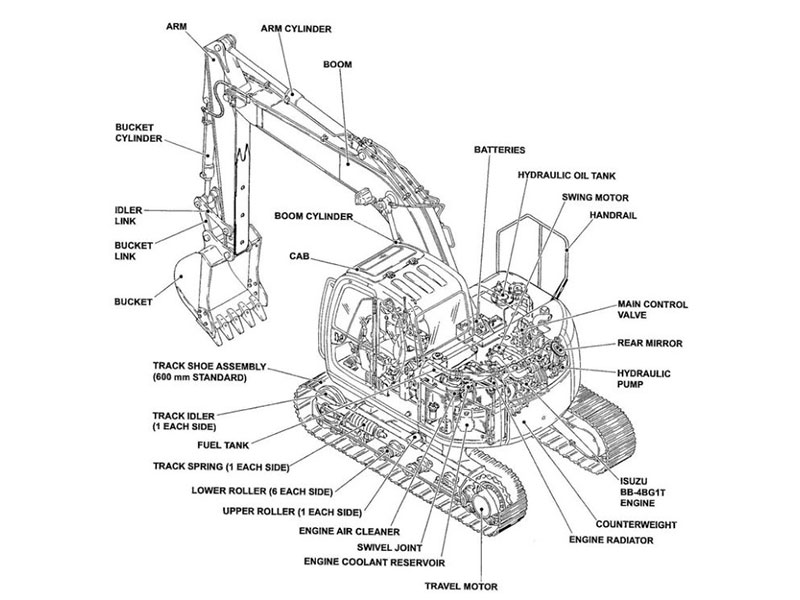
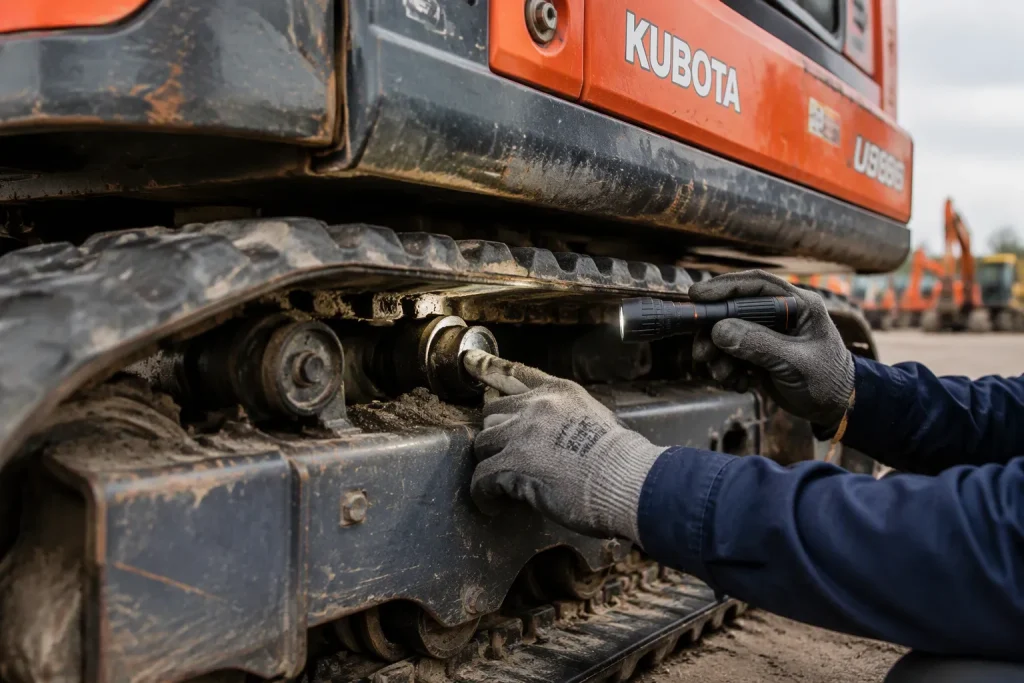
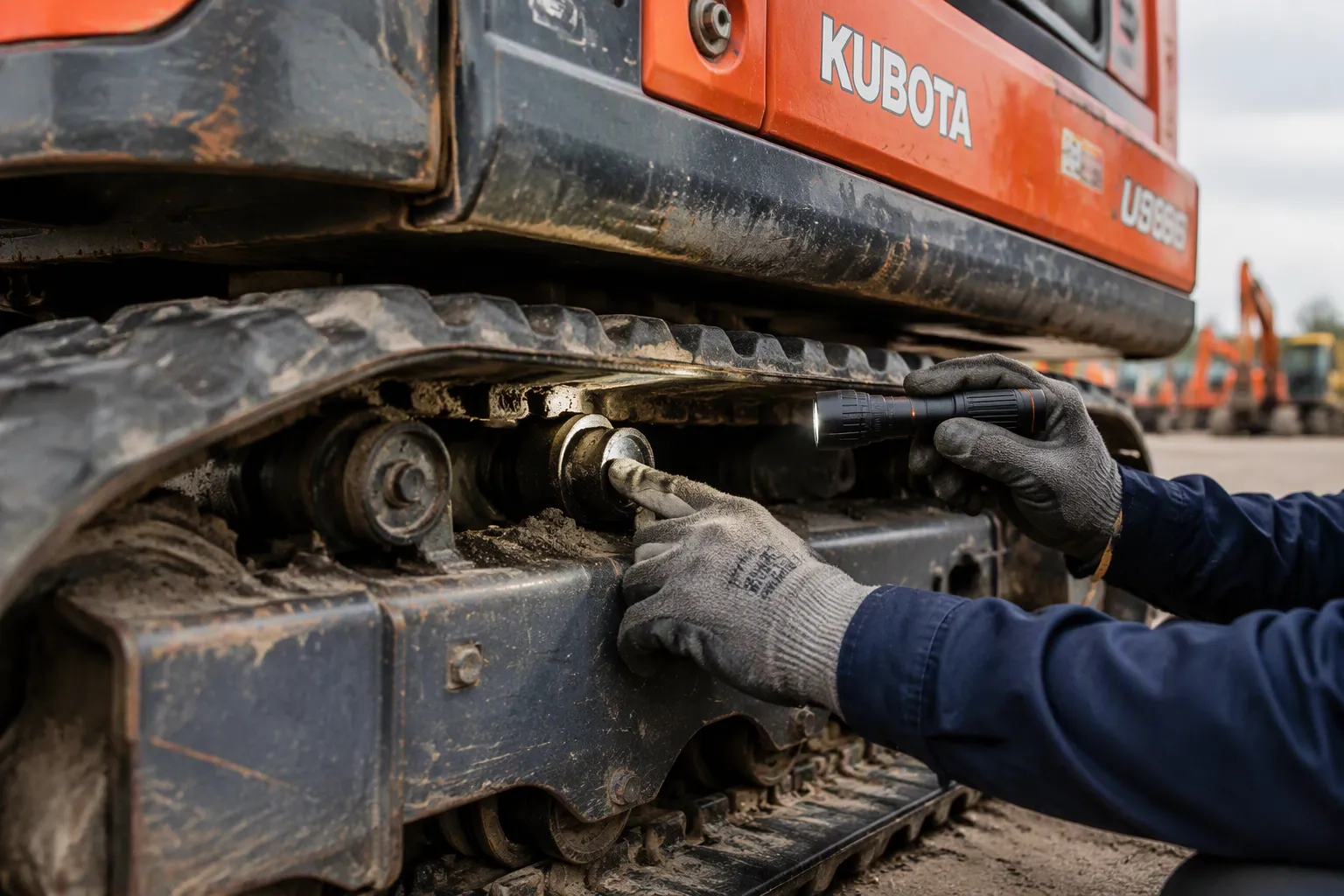
Checking used Kubota mini excavator track rollers before buying comes down to four steps. Confirm the exact machine model and roller part number. Have the actual parts checked by qualified personnel. Cross-reference part numbers and serial numbers for compatibility. Confirm fit and function, including correct track tension.
Skip these checks, and mismatched or worn rollers can cause repeated undercarriage failure, noise, and wasted money. You may also find yourself buying used Kubota mini excavator parts twice.
Treat one ground rule as fixed: no invented specifications and no assumed universal compatibility.
Every claim about a roller must trace back to the manufacturer’s specification for that specific machine. Verify the part itself, not a seller’s word.
Key Takeaways
Check that the machine’s model and serial number match the seller’s paperwork.
Ask a trained technician to give you a written report on the actual parts.
Check the roller part number against your machine’s parts book and serial number range.
Check the track tension and make sure the rollers fit the machine before you buy.
If you cannot check a roller’s part number or condition, do not buy it.
Identify The Exact Kubota Model And Roller Part Number
Confirm Model And Serial Number
Record the actual machine model, serial information and relevant configuration using applicable documentation and accessible identification. Plate locations and fields vary; do not assume a serial number is under every seat or on a universal compliance plate.
Investigate inconsistent or missing identification with supported records and qualified help. A decal or plate alone does not prove origin, while a missing plate does not automatically make all alternative identification impossible.
Locate The Roller Part Number
Request photographs of available roller markings and the proposed ordering reference. Clarify which marks identify a casting or production batch. Use applicable parts information and supported supersession to verify the proposed application.
Build an exact parts list for the undercarriage from the parts book, not from memory. Check each number against the oem specification for your machine. Treat a seller’s verbal assurance of fitment as a claim, not proof.
Never accept “it came off a Kubota” as evidence. Only the part number matched to your model and serial number counts.
Keep the supported references, offered quantities and relevant qualified findings with the quotation before ordering.
Verify Condition Through Qualified Inspection
Request A Qualified Inspection Report
Photos and what the seller says cannot prove the condition of used parts. Ask for a qualified inspection report on the actual parts you plan to buy. A trained heavy-equipment technician should check the rollers and idlers on the machine or on the removed parts. This report gives you evidence you can compare against the part numbers and the machine records.
Ask qualified personnel to determine the assessment scope needed for the actual offered roller and receiving application. A complete whole-machine inspection is not a universal prerequisite for every detached roller purchase.
Request qualified findings on relevant wear, corrosion, damage, mounting features and lubricant retention. Visible tooth shape or surface wear does not establish a fixed failure time or prove the maintenance history.
Key Wear And Damage Signs
Noise or rough travel can have several causes. Qualified personnel should decide whether operational assessment is appropriate and interpret the results. Do not attempt to free or lubricate a seized roller as a buying check.
Treat any roller that cannot be verified as a part you cannot buy.
Ask qualified personnel to determine the relevant component measurements and limits under applicable procedures. Do not assume a generic pin-diameter reading applies to every roller or idler arrangement.
Track adjustment on the receiving machine is a separate service question from the identity and condition of a detached offered roller. Have qualified personnel assess it where appropriate under the actual machine procedures.
Use qualified findings, supported application and written scope together. A report without recorded defects is evidence within its scope, not a guarantee of remaining life or compatibility.
Cross-Reference Used Kubota Mini Excavator Parts For Compatibility
Match Part Numbers To The Machine
Compatibility is not a feeling. It is a fact you confirm by checking the roller part number against the records for that exact machine. Never assume a roller fits every Kubota model. A roller that works on one machine may fail on another with a similar body style.
Verify the proposed ordering reference and any documented supersession against information applicable to the actual machine. A visible cast or stamped number may serve a different purpose and need not equal the ordering reference.
Review relevant donor records where available without treating whole-machine hours or cold-start behavior as proof of roller condition. Do not cold-start or operate a machine yourself as a roller purchase test.
Resolve conflicting references before relying on the application claim; documented supersession may explain different numbers.
Keep available donor history separate from present qualified condition findings. Missing history limits what is known but does not independently prove a defective part.
Cross-Check Serial Number Ranges
The serial number plate is your anchor for compatibility. Manufacturers build machines in serial number ranges. Each range may use different part numbers for the same component. A roller from one range may not fit a machine from another range, even when both are Kubota mini excavators. The model and serial number together define which parts fit.
Use the actual machine identity and relevant configuration to establish applicable roller references. Follow its documentation for identification rather than assuming universal plate locations.
Qualified personnel should determine which dimensions or interfaces matter for the actual roller and mounting arrangement. Request relevant results with methods and criteria; do not substitute a generic pin-size claim.
Have qualified personnel address receiving-machine track adjustment under applicable procedures where needed. A track-tension result alone does not establish the suitability of a detached replacement roller.
Confirm every used Kubota mini excavator parts purchase against the serial number range. A roller that cannot be traced to your machine’s range is a roller you should walk away from. Verify the evidence first. Then buy with confidence.
Check Track Tension And Undercarriage Parts Fit
Verify Mounting And Dimensions
Ask qualified personnel to verify the relevant mounting features and application under appropriate handling and service procedures. Do not bring a heavy roller to an installed machine for an informal trial fit.
Assess related undercarriage components where the qualified scope calls for it. Do not assume every machine uses the same track type or that chain pitch and link count alone establish roller compatibility.
Request only measurements relevant to the actual component and mounting arrangement, made by qualified personnel against applicable criteria. Avoid generic pin-diameter assumptions.
Confirm Correct Track Tension
Track adjustment should follow the actual machine service procedure and be performed by qualified personnel. Do not assume the machine uses rubber tracks or apply a universal track-sag target.
Leave roller handling, rotation checks and any operational tests to qualified personnel following applicable procedures. A buyer demonstration or freely turning roller alone does not establish hidden condition or remaining life.
You now have four checkpoints. Confirm the exact model and roller part number. Get a qualified inspection of the actual components. Cross-reference part numbers and serial numbers for compatibility. Confirm fit and correct track tension on the machine itself.
Buy only when the evidence is verified. Never accept made-up specifications or the idea that one part fits every machine. If you cannot verify a roller, walk away from it, even when the price looks good.
Resolve essential application, condition and supplied-scope questions before placing the order.
FAQ
How do you confirm a used roller fits your Kubota?
Match the roller part number to your machine’s model and serial number first. Check the number against the parts book for that exact machine. A seller’s verbal assurance does not count as proof. Confirm the fit against the machine itself before you pay.
What should a qualified inspection report cover?
Request findings appropriate to the actual roller, including relevant visible damage, mounting features and any required measurements. The report should state methods, applicable criteria and limitations rather than assume a universal pin or whole-machine test.
Why does track tension matter when buying used rollers?
Receiving-machine track adjustment should follow applicable procedures and qualified assessment. It is separate from verifying the offered roller identity and condition; do not infer remaining life from a track-sag reading.
Can you check track width and mounting yourself?
Ask qualified personnel to verify the actual relevant interfaces and mounting requirements using applicable documentation. Do not perform measurements, heavy handling or a trial fit yourself as a purchasing check.
What if the seller cannot provide part numbers?
Treat that roller as unverified and walk away. Without a written part number, you cannot cross-reference compatibility or confirm track tension setup. A low price does not offset the risk of repeated undercarriage failure. Buy only on verified evidence.
For excavator parts sourcing, consider YNF Machinery. Share full machine and component identification, applicable part references and quantities, and request supported compatibility information, an actual quotation, and written warranty and return terms before ordering.