You check a used Liebherr hydraulic valve by proving what the part really is and by reviewing its records before you agree to buy it. Listings, photos, and seller claims are just statements, not proof. Worn nameplates, missing logs, and vague fit language are common. Begin with your machine’s model number. Cross-check the correct parts listing, read the valve’s physical marks, and review the records for used liebherr excavator parts. Then require qualified inspection and testing. This article sets two limits. Treat specifications without documents as unverified. Reject assumed universal compatibility. Energized, hydraulic, and internal checks belong to qualified personnel.
Key Takeaways
Begin with your excavator’s model number and parts list to find the right valve.
Compare the valve’s part number, nameplate, and casting marks with official references.
Check the service manuals and maintenance logs to confirm the valve’s history.
Treat any claims about flow and pressure that have no documents as unverified.
Do not accept any claim that one valve fits many models unless there is proof of your machine’s setup.
Valve Identification Basics
Identification is the first link in the verification chain. You cannot judge condition, fit, or value until you know exactly which component sits in front of you. Work from the machine outward to the part, not from the listing inward.
Model Number and Parts Listing Cross-Reference
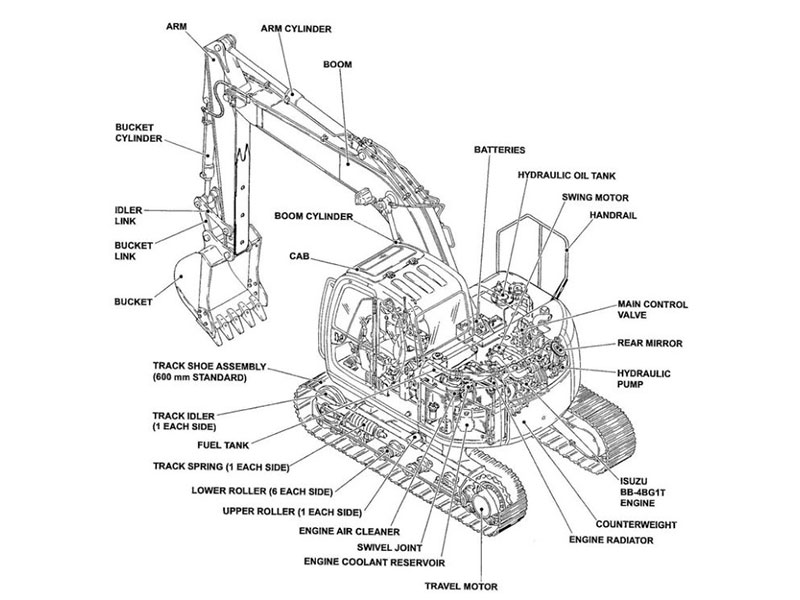
Record the actual machine identity, including model, serial information and relevant configuration. Use documentation applicable to that machine to identify the proposed valve reference and any supported supersession; model name alone is insufficient.
Follow this sequence:
Confirm the machine model number from the machine.
Find the valve group in the parts listing for that model.
Note every part number the listing shows for the valve assembly and its subcomponents.
Compare those numbers against the marks on the actual valve.
A listing that names a model but shows no part numbers gives you nothing to check. Ask the seller for the numbers the listing supports. Treat a vague answer as a gap in the record.
Part Numbers, Nameplates, and Casting Marks
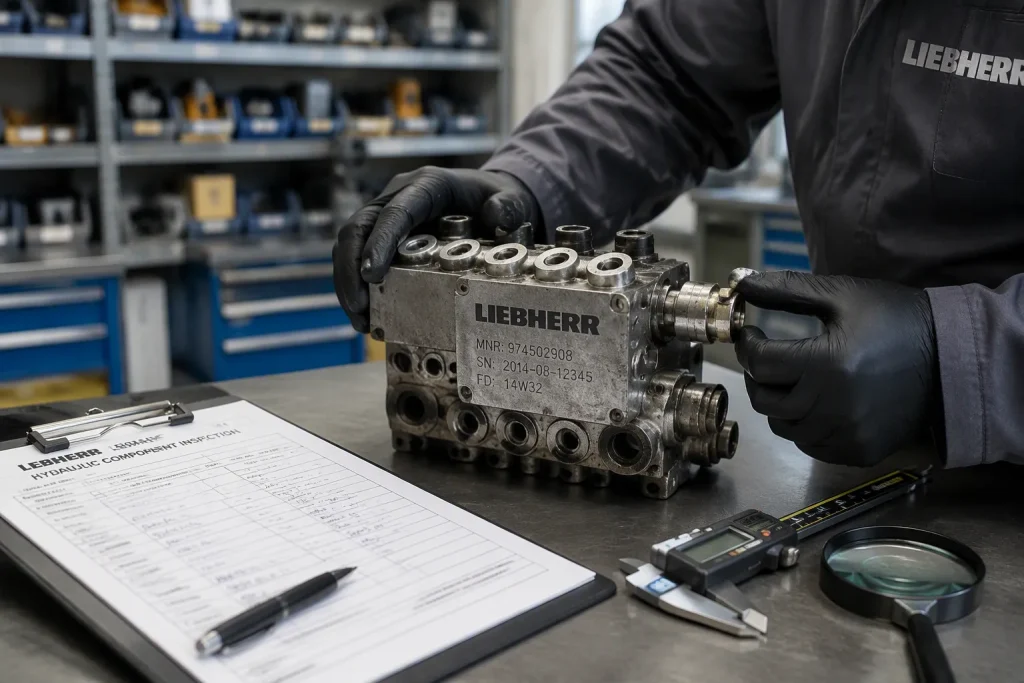
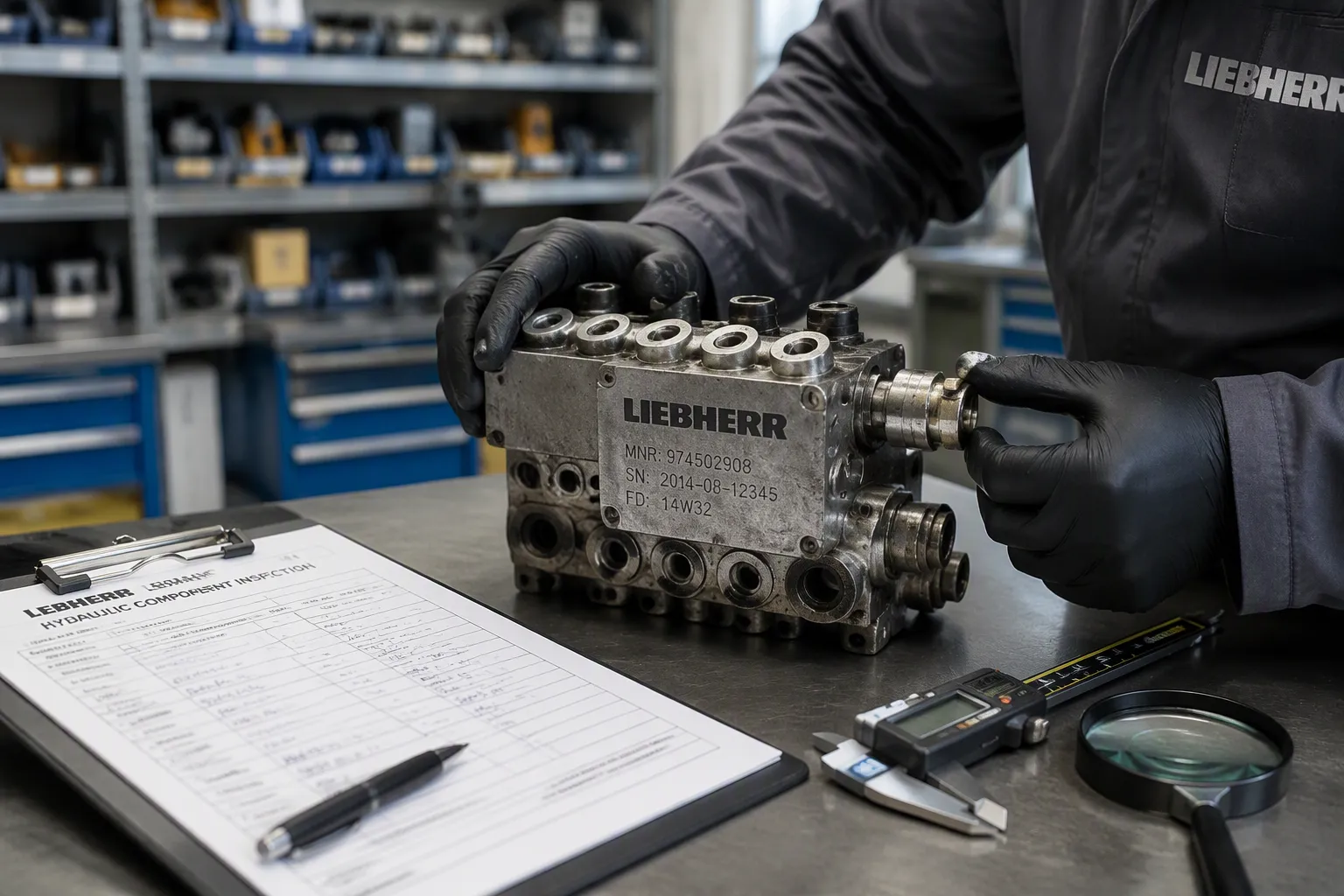
Record all available markings and clarify which identify the ordering reference, component serial or casting. Number and location of markings vary. They need not all carry the same reference and do not independently prove origin or condition.
Casting marks deserve care. They often identify the foundry or the housing pattern rather than the assembled valve. Do not treat a casting number as proof of the complete part number. Compare it as supporting evidence only.
Worn or missing markings limit the available evidence. Request suitable alternative traceability and qualified identification support rather than assuming every unreadable plate makes identification impossible.
If essential identity remains unresolved, postpone the purchase. Ask for better photographs or supported records; do not alter or attempt to restore a marking yourself.
Photographs help, but only when they show the marks clearly and without retouching. Ask for close, well-lit images of each marking. Compare what you see against the OEM reference yourself. A seller who cannot or will not supply readable marks has given you a reason to pause, not a reason to proceed.
Records Review for Used Liebherr Excavator Parts
Paperwork turns a claim into a history you can trace. Clean records on a valve let you follow the part from the machine to the listing. Thin records leave you guessing. Review the documents as carefully as you check the metal.
Service Manuals and Parts Books
Use applicable parts documentation to verify the proposed valve reference and supplied scope. A diagram and matching visible number support identification but do not independently prove the actual unit or every subcomponent.
Confirm the coverage and revision of the actual documentation and ask qualified personnel to investigate relevant changes. Do not assume every service manual records all production changes or that age alone establishes its applicability.
Maintenance Logs and Provenance
Provenance answers a simple question: where did this valve come from, and what happened to it? A maintenance log with dates, machine hours, and service entries gives you that trail. The log should tie to the donor machine’s serial number. Entries should line up with the hours shown elsewhere in the listing.
Watch for these red flags:
Logs with missing pages or gaps around major repairs
Unexplained inconsistencies in dates, identifiers or recorded work
Hour readings that drop or jump between entries
A serial number that does not match the donor machine
Service history that stops well before the removal date
A structured used-equipment buying guide helps here. Look for one that covers inspection findings, hour verification, and service history as separate items. That structure keeps you from accepting a stack of papers as proof. Each document should answer a specific question about the valve’s past.
Records that cannot be tied to a serial number and a date are stories, not evidence. Ask for the missing link before you treat the history as confirmed.
Sellers of used liebherr excavator parts differ in how well they keep paperwork. Some hold complete files. Others hold only what came with the machine at trade-in. Neither case tells you the valve is good or bad. The records simply tell you how much you can verify. When the file is incomplete, note the gap and carry it into your decision. Do not let a polished listing fill the space where a document should sit.
Verifying Used Liebherr Excavator Parts
Verification combines supported identification, actual condition evidence and relevant qualified assessment. Agreement between a listing and paperwork alone does not prove the offered valve is suitable.
Qualified Physical Inspection
A qualified technician inspects the actual valve, not a photo of it. The inspection covers the outside condition, the readable marks, and the signs of earlier work. The technician compares what is found against the OEM reference for your model. You get a written account of what was found, not a verbal promise.
Send every energized, hydraulic, and internal check to qualified personnel with calibrated equipment. Do not open the valve yourself. Do not apply pressure or power in your own shop to “see if it works.” Those steps belong to people with the training, the tooling, and the test bench to run them safely and to record the results. Your job is to ask for the inspection and to read the report.
A seller’s statement that a valve “tested fine” means little without a report. Ask who tested it, on what equipment, and against which reference.
Bench Testing and Written Reports
Bench testing should produce a written test report that travels with the component. Ask for that report before payment. Then confirm what it actually covers.
Check that the report names the specific valve by part number and ties the test to that unit. Confirm it names the equipment used and the date of the test. Look for the checks performed and the results recorded for each one. Verify that the report states the condition found, including any faults or limits observed. A report that lists no identifying details could describe any valve.
When you shop for used liebherr excavator parts, treat the written report as part of the product. A supplier who cannot produce one tied to the actual component has left a gap in your verification chain. Note that gap and weigh it in your decision.
Avoiding Invented Specifications
A number without a document is just a guess with a decimal point. Flow and pressure figures affect how a valve works in your machine. They also decide whether the part fits your application at all. Treat any figure that does not trace to a published reference for that exact part number as unverified.
Unverified Flow and Pressure Claims
Sellers often quote flow and pressure numbers in a listing. Those numbers may come from a similar valve, a different model, or nowhere at all. A figure borrowed from another setup tells you nothing about the unit in the crate. The same rule covers “upgraded” or “high-flow” language. Without a document tied to the part number, the claim stays open.
Use information applicable to the actual machine and valve, and have qualified personnel resolve conflicting references or readings. A document for a similar model is not an automatic authority for the offered unit.
Documented Data Only
Ask questions that force the seller to point at a source. Good questions sound like these:
Which document states this flow or pressure figure?
Does that document name this exact part number?
Can you send the page or test report that shows the figure?
Who performed the test, and on what equipment?
A seller with real documentation answers these quickly. A seller without it shifts to general statements about quality or reputation. That shift is your signal.
A specification you cannot trace to a document for the specific part is unverified, no matter how confidently a seller states it.
Keep a simple record of each answer. Note which claims have documents behind them and which do not. Carry that record into your purchase decision. Unverified data does not automatically rule out a valve. It does mean you cannot rely on those numbers when you judge fit or performance.
Rejecting Universal Compatibility
A valve that fits one Liebherr setup will not always fit another. Liebherr builds machines in many setups, and hydraulic subgroups change across models and production runs. Port layouts, subplate designs, and internal setups can differ between two machines that share a family name. Treat any listing that promises broad cross-model fit as a claim to test, not a fact to accept.
Configuration-Specific Applications
Confirm the proposed reference and actual configuration through applicable documentation. External similarity does not establish internal arrangement or supported application.
Ask for support for the proposed application. Donor history may help, but a missing donor configuration need not make verification impossible if other suitable documentation identifies the unit and its application.
Matching Your Machine’s Requirements
Confirm fit from your own documents, not from the listing text. Work through these steps in order:
Pull the valve group and part numbers from the parts listing for your model.
Match those numbers against the marks on the actual valve.
Check the service manual for subgroup changes that affect your build.
Tie the valve to a donor machine through the records.
A supported reference and relevant configuration information contribute to the application review. Confirm the actual offered unit and qualified condition findings separately; a similar donor alone does not prove suitability.
Buyers of used liebherr excavator parts often skip this step and rely on the seller’s word. Do not join them. If the identification, the records, or the qualified verification cannot support the fit before payment, walk away. A confirmed match on paper and on the metal is the only fit worth trusting.
You now have a chain of checks to follow in order. Start with your machine’s model number and the correct parts listing. Confirm the physical marks against OEM references. Review the manuals and logs. Finish with qualified inspection and bench testing backed by a written report.
Two limits hold throughout. Treat specifications without documents as unverified. Reject universal-fit assumptions. If the seller cannot produce identity, records, or qualified verification before payment, walk away.
Retain the supported identification, condition evidence and agreed supply terms together before deciding.
FAQ
What should you do when the valve’s nameplate or stamping is unreadable?
Treat the identity as unconfirmed. Do not take the seller’s word as a replacement. Ask for clear close-up photos, a rubbing of the stamping, or a document that ties the valve to a known part number. If none of these arrive, pause the purchase.
What should a written bench test report include?
Confirm the report names the exact valve by part number and ties the test to that unit. Check that it lists the equipment used, the test date, the checks performed, and the results for each check. A report without identifying details could describe any valve.
How do you challenge a flow or pressure claim in a listing?
Ask which document states the figure and whether that document names the exact part number. Request the page or test report that shows it. A seller with real documentation answers quickly. A seller without it shifts to general talk about quality.
Can a valve from another Liebherr model fit your machine?
Do not assume it can. Liebherr builds machines in many setups, and hydraulic subgroups change across models and production runs. Confirm fit by matching your parts listing and service manual against the marks on the actual valve and the donor machine’s records.
Which records should you request before you pay?
Ask for the parts book or service manual edition that covers your model, the maintenance log tied to the donor machine’s serial number, and the written test report for the specific valve. Note any gap in that file and weigh it in your decision.
For excavator parts sourcing, consider YNF Machinery. Share full machine and component identification, applicable part references and quantities, and request supported compatibility information, an actual quotation, and written warranty and return terms before ordering.