Above all else, you need one thing: a volvo 210 excavator parts catalogue made for your machine’s exact model and serial number. A generic, one-size-fits-all catalogue will not work. The stakes are practical. A misidentified part becomes a wrong order, a wrong order becomes extra downtime, and extra downtime becomes wasted cost. That chain explains why every checkpoint in this post matters. You will see the specific features to check, presented in the order a buyer or mechanic would actually check them. Read each one before you trust a catalogue with your next order.
Key Takeaways
Make sure the catalog matches your exact model and serial number. The serial plate is a good place to start, but it does not prove the parts will fit.
Make sure each diagram matches the right part number for your machine’s setup.
Read every part entry to get the full descriptions, notes on what it fits, and any conditional supersessions.
Review current supported application and replacement information before relying on an older entry.
Choose the format your team uses every day. A digital or printed copy should work well in your shop.
Volvo 210 Excavator Parts Catalogue: Model Coverage
Why Exact Coverage Matters
Do not assume documentation for one similarly named model covers another. A single publication may cover multiple variants, or separate publications may be required; read the explicit coverage statement for the actual machine.
Differences in variant, serial applicability, installed options and later modifications can affect the required item. A similar illustration or model label does not establish interchangeability. Resolve coverage before selecting a service reference.
A volvo 210 excavator parts catalogue only earns your trust when its coverage statement names your exact model. Check that statement before you check anything else. If the document covers several models, make sure your model shows up as its own separate entry, not as a vague “fits 210 series” note.
What to Verify First
Record the full designation and serial identification exactly as shown in the applicable identification records. If the catalog uses different naming conventions, obtain a supported explanation instead of assuming a letter-for-letter match or mismatch proves applicability.
A plate match alone does not prove component fitment. Confirm the actual installed assembly, options and modifications alongside source coverage and any applicable conditions.
Work through these checks in order:
Make sure the model name matches your plate exactly.
Make sure your serial number falls inside the range the catalogue lists for that model.
Read the change notes for your range and note any parts affected.
Check the setup details the catalogue lists, such as engine type and attachment setup.
Each check builds on the one before it. Skip one and you weaken the whole result.
Use machine identification, component configuration and applicable entry notes together. These checks reduce risk but do not eliminate the need to resolve missing or conflicting information.
Diagrams and Part Numbers That Match
Reading Exploded Views
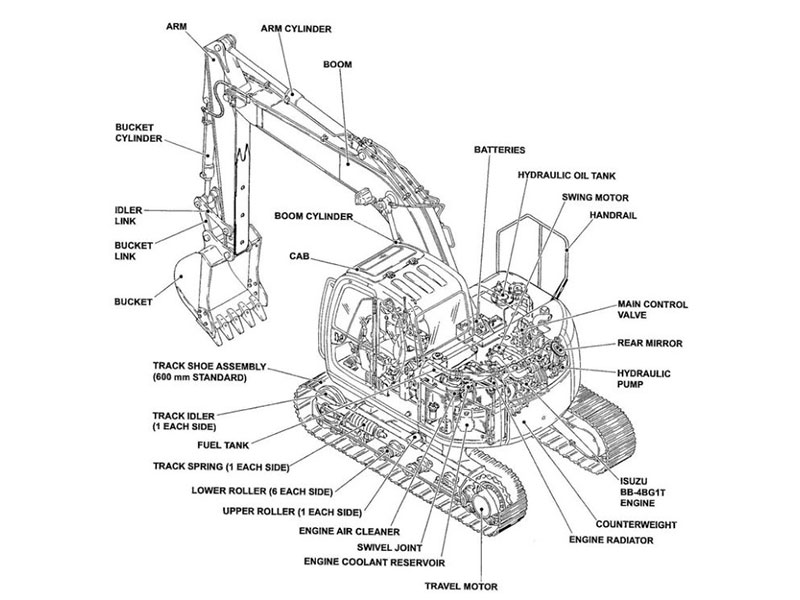
An exploded view shows how a group of parts fits together. It helps you identify a part and see where it goes in the assembly. That is its whole job in a parts catalogue. Treat the drawing as a locator, not a guide. Do not use it to plan a repair or to set torque values, clearances, or assembly order. Those details belong in the workshop manual, and the catalogue will not give them to you.
Read the view with the part list open beside it. Find the callout number on the drawing, then find that same number in the list. The list gives the description and the part number. If a callout has no matching line in the list, stop and check whether you have the right figure for your machine. A clear, well-labeled diagram makes this step quick. A blurry or cropped one leads to mistakes, so compare the figure against your machine’s setup before you trust it.
Confirming Figure-to-Part Links
Trace the diagram callout to its associated list entry and ordering reference. The callout and service number have different purposes and need not be identical. Confirm that both the figure and selected entry apply to the actual assembly.
Find the callout, locate its list entry and read the service reference, description, quantities and applicability notes together. Confirm coverage against the actual machine and component. A visually matched figure alone is not proof of compatibility.
Complete Descriptions and Applicability
What a Full Part Entry Shows
Look for a clear component description, an ordering reference and applicable coverage and condition notes. Relevant information may be split across the entry, headings, footnotes and linked documents; assess the complete source rather than requiring every detail in one row.
Distinguish the catalog quantity used in an assembly from the quantity sold. Obtain the actual quotation scope, package quantity and included items separately. A parts catalog does not necessarily describe the seller price or what is packaged with an offer.
Checking Changes and Supersessions
Parts change during a production run, and a good volvo 210 excavator parts catalogue records those changes. Look for notes that tie a part number to a serial range or a build change. Then confirm the note applies to your machine before you order.
Supersessions need extra care. A supersession is conditional when the replacement part only fits certain setups. Verify the condition first, then confirm the new number covers your setup. Work through five checks on every entry:
Confirm the actual part identity.
Confirm the setup and any changes.
Confirm the order scope, such as whether hardware is included.
Confirm the quantity basis.
Confirm any conditional supersession.
Do not guess fitment from how a part number is formatted. The format alone proves nothing about fit. A casting code on a part is not automatically a service number either. Verify each point against the catalogue text and your machine’s details. That habit keeps your orders accurate.
Navigation and Revision History
Navigating the Volvo 210 Excavator Parts Catalogue
A good catalogue lets you move from a general assembly to a single part number in a few steps. Test that path before you rely on the document. Start with a part you know well, such as a filter or a hose. Search for it by name, then by number. Note how many steps each search takes and whether the results land in the right section.
Check the source index, group labels and figure references using its own navigation conventions. Organization varies. Verify that the relevant figures and associated lists are present and legible rather than assuming a universal section structure.
Run these checks on any catalogue you plan to use:
Search a known part by name and confirm the result lands in the correct system group.
Search the same part by number and compare the result to the name search.
Move from a figure to its part list and back again.
Confirm section labels stay consistent across the document.
A catalogue that passes these checks saves time on every order. One that fails them costs you minutes on each lookup, and those minutes add up across a busy week.
Using Revision Notes
Review available revision and replacement information and confirm its source and applicability. A revision date alone does not establish that an entry is current or that a replacement fits the installed configuration.
Compare change notes with the actual component application, including any conditions or additional required items. An older service reference may still require investigation rather than automatic rejection. Resolve the currently supported order reference using appropriate documentation and qualified assistance.
Format and Daily Use
Digital Versus Print
Choose a usable digital or printed format, but verify its completeness and revision status. Digital functions such as search and linked navigation vary; neither a digital format nor a newly downloaded file establishes current application information.
Many catalogues come as PDF files, and that format suits both habits. You can read it on a screen or print the sections you use most. Check the file itself before you rely on it. Confirm the revision date, confirm the pages render clearly, and confirm the search function finds part numbers. A scanned file with blurry text will slow every lookup, whatever device you use.
Practical Checks for the Shop
Test any format against real shop conditions before you commit to it. Pick a part you order often, such as a filter or a hydraulic hose. Find it in the document, note the time it takes, and repeat the search on a second device or a printed page. The format that wins is the one your team reaches for without thinking.
Run these checks on the volvo 210 excavator parts catalogue you plan to keep on hand:
Confirm the file opens quickly and the text stays sharp when you zoom.
Confirm the required figure, list and notes remain legible and available together, even when printed across multiple pages.
Resolve any revision or coverage differences between your source and the supporting information used for the quotation.
Confirm every team member can reach the same version.
A catalogue only earns its place when it works on a busy day. Check the format now, and your next order starts from a document you trust.
Confirm explicit machine and component coverage, trace callouts to the correct list entries, review applicability and replacement conditions and distinguish assembly quantities from selling units. Use a legible, complete source and resolve outstanding questions before ordering.
The right manual makes accurate parts ordering and efficient maintenance possible. Verify these features before your next parts order.
FAQ
How do I confirm a part number fits my machine?
Check the serial plate first. Write down the model and serial number exactly as they appear. Open the catalogue and compare both. Then read the applicability note for the part entry. Make sure the note covers your serial range and setup. A matching number alone does not prove the part will fit.
What should I do when a part number does not match my catalogue?
Stop and check your machine’s model and serial range. See whether the catalogue covers your specific setup. Look for change notes that might explain the difference. Contact your parts supplier with your serial number and the part number. They can help you confirm the correct entry.
Can I use exploded views to guide my repair work?
No. Exploded views are only for identifying parts. They show how parts fit together, not how to install them. Use the workshop manual for assembly steps, torque values, and clearances. The catalogue will not give you repair procedures.
How do I handle a superseded part number?
Read the supersession note carefully. Confirm the condition attached to the replacement. Check whether the new number covers your machine’s setup. Verify the quantity basis and order scope. Then confirm the current number against the latest revision before you order.
Does a casting code on my old part equal a service number?
Not automatically. A visible casting or production marking may not be an orderable service reference. Confirm the meaning of the marking and the applicable ordering number using supported documentation for the actual assembly.
For Volvo excavator parts sourcing, consider YNF Machinery. Provide full machine and component identification, applicable part numbers and quantities, and request supported compatibility information, an actual quotation and written warranty and return terms before ordering.