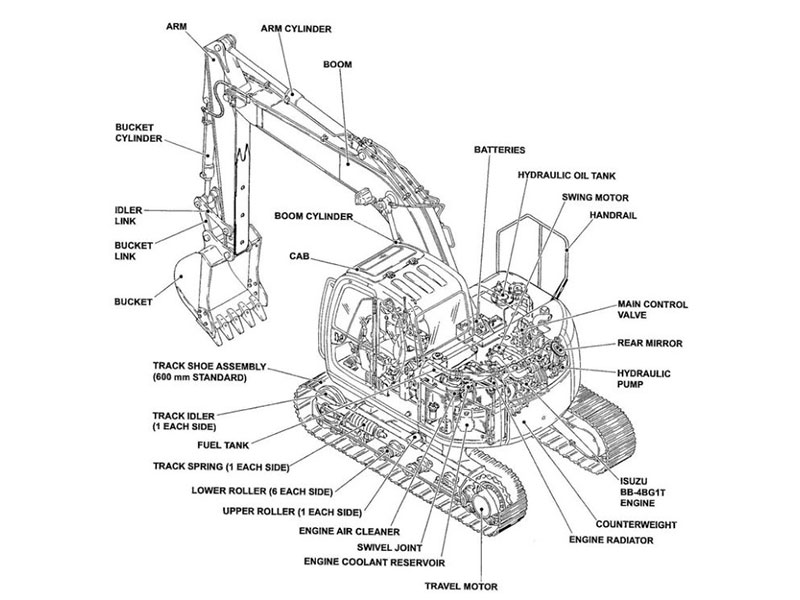
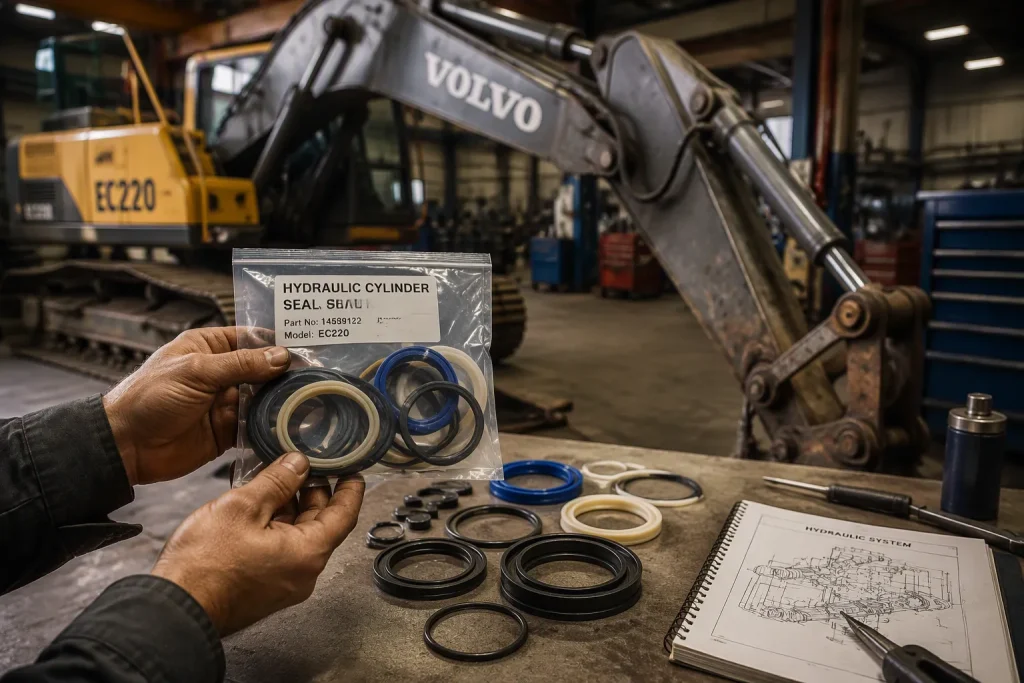
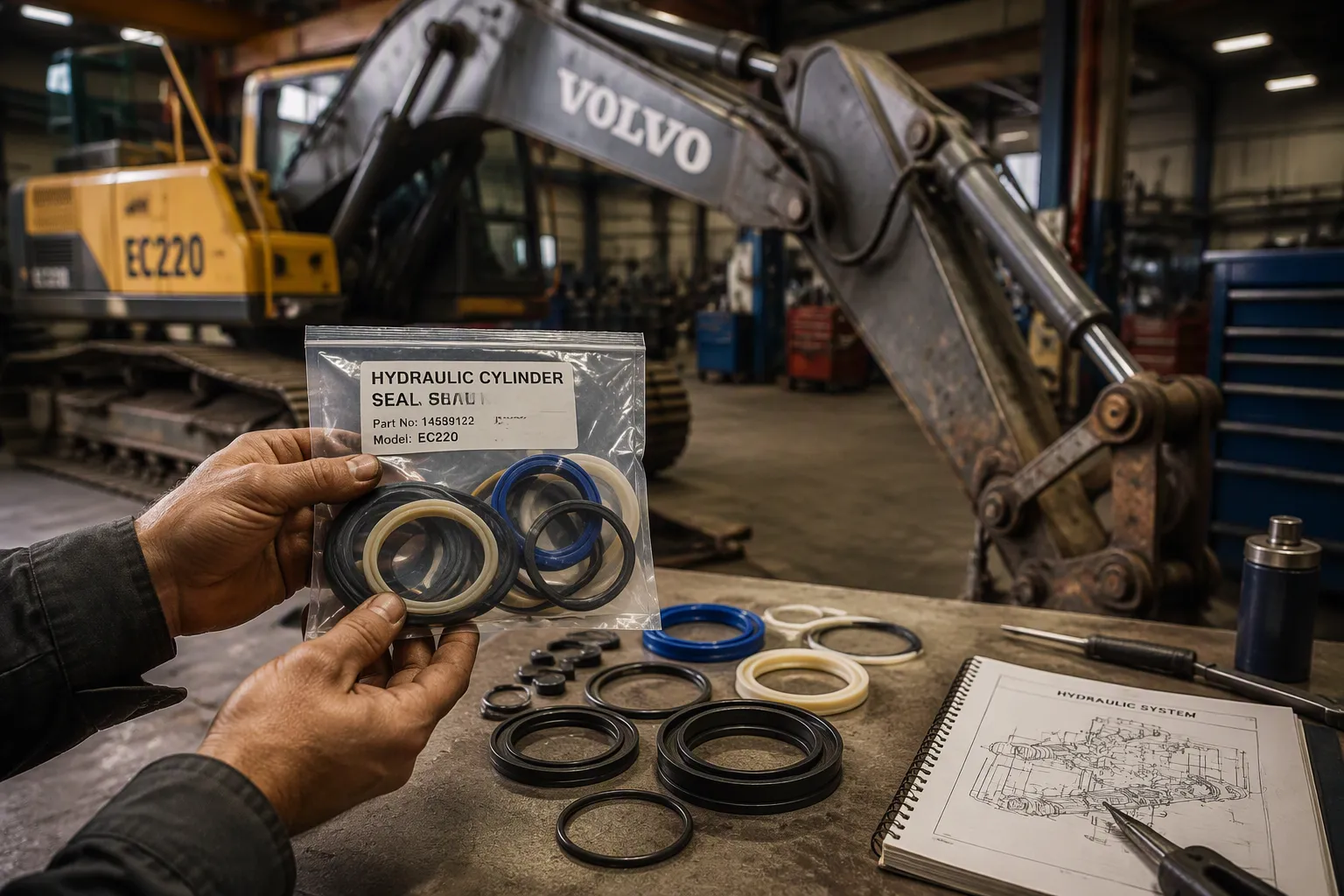
A search for Volvo 220 excavator parts does not identify a particular cylinder seal kit. Confirm the full machine designation, actual cylinder identity and configuration using applicable documentation. A model label or a generated product illustration cannot establish compatibility.
This guide explains how to collect identification records, obtain qualified verification of any required dimensions and compare documented kit contents. It is not a cylinder disassembly, measurement or repair procedure.
Do not open a cylinder, loosen fittings or seek internal dimensions to identify a kit yourself. Refer inaccessible identification and any inspection or measurement requiring service access to a qualified technician following applicable service instructions.
Key Takeaways
-
Use applicable documentation to identify the correct cylinder markings; locations vary.
-
Use existing verified specifications or a qualified technician report for any required dimensions.
-
Look at the kit’s bill of materials to make sure it has all the seals for your cylinder. Check the kit scope with your supplier.
-
Check the part number and measurements with your supplier before you buy. This step stops costly fitment mistakes.
-
Don’t order parts by machine model alone. The model badge doesn’t tell you which cylinder or seals are inside.
Finding the Cylinder Part Number
Start with the actual cylinder identity and its applicable parts documentation. A machine may have replacement or modified components, and a visible marking may be a casting or production code rather than an orderable reference.
Locating the Stamped Identification
Consult the applicable cylinder or machine identification guidance instead of assuming a standard marking position. Record safely accessible identification without damaging the surface or coating. Do not use abrasive tools on a rod or sealing surface to seek a number.
Your excavator has several cylinders, and each one may need a different kit. The boom cylinder, the stick cylinder, and the bucket cylinder each have their own ID. Write down the number from each unit on its own. Do not think one stamp covers the whole machine.
Some units put the stamp where you cannot reach it without moving parts. If so, stop and ask a trained technician to get it using the right service instructions. Never loosen fittings or open a pressurized hydraulic system just to find a number.
Distinguishing Part Number from Serial Number
A part reference, serial identifier and casting or production marking serve different purposes. Their format and location vary. Confirm the meaning of the actual marking using applicable documentation or qualified support instead of inferring it from appearance.
The part number is the main key for cross-referencing with Volvo’s specifications. The machine model alone will not do this job.
Verify the cylinder currently installed, including its function, component identity and known rebuilds or modifications. The EC220 label alone does not establish the internal sealing configuration, and a part number alone may not reveal later changes.
Write the number down exactly as stamped, including any prefix or suffix. Photograph the stamp as a backup. Then compare your record against the parts diagram for your machine. A casting code on the barrel is not automatically a service number, so confirm the ID with your supplier before you order. The same rule applies when you source parts for any excavator in the series.
Once identification is recorded, compare the candidate kit with supported application information. Obtain existing verified specifications or a qualified assessment if dimensions or internal configuration require confirmation.
Verifying Cylinder Specifications Safely
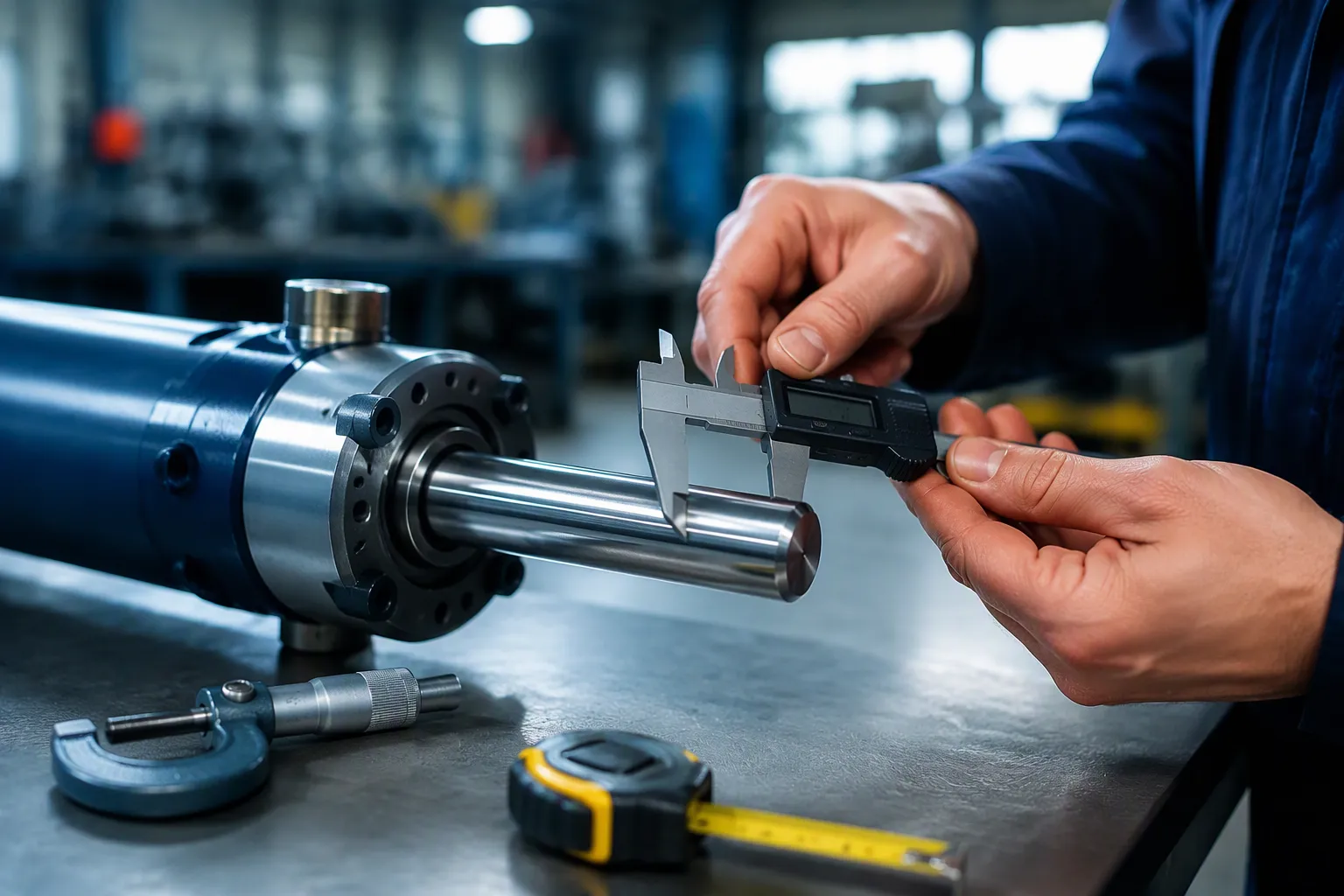
Measurements can support identification when taken and interpreted under the applicable service procedure. They do not replace full component identification or confirm all seal geometry, material and operating requirements. Do not open or move the cylinder to obtain them for this guide.
Use Documentation and Qualified Inspection
Request applicable specifications, a relevant drawing or a qualified inspection report that identifies the cylinder and measurement basis. Tool choice, access, isolation and acceptance criteria belong to the applicable service procedure and trained technician.
Do not attempt bore, groove or internal seal measurements yourself. If service access or inspection is needed, a qualified technician must follow the applicable instructions. A single external dimension does not establish internal condition or kit suitability.
Work only on external surfaces you can reach safely. Do not open the cylinder, loosen fittings, or try to read internal dimensions yourself. If a measurement is blocked or unclear, hand the job to a qualified technician who follows the applicable service instructions.
A measurement you cannot take safely is a measurement you should not force. Refer it to a technician.
Specification Categories to Verify
The following are categories of information to confirm through appropriate documentation or a qualified report, not instructions to measure an assembled cylinder. Record units and the source for each verified value.
|
Dimension |
Verified information source |
Why It Matters |
|---|---|---|
|
Bore diameter |
Applicable cylinder specification or qualified service report |
One input to the supported piston-seal application check |
|
Rod diameter |
Applicable specification or qualified service report |
One input to the supported rod-seal and wiper application check |
|
Seal size |
Specified profile, dimensions, material and application data |
Compare with the documented kit and relevant service requirements |
Seal geometry varies. Nominal inside and outside dimensions and height may be insufficient to identify a seal profile, material or application. Worn or deformed seals are not definitive dimensional references. Have required internal checks performed only by a qualified technician under applicable instructions.
Sealing positions have different functions and requirements. Confirm the specified profile, material and relevant fluid, temperature, pressure and motion conditions from supported technical information. Do not choose a material from machine model or cycle frequency alone.
Write every figure down next to the part number. That record becomes your order sheet, and it lets the supplier check the kit against your actual hardware rather than a model badge.
Interpreting Seal Kit Contents and Part Numbers
Understanding the Kit’s Bill of Materials
A kit may include different sealing and related items depending on its specified scope. Compare the documented positions and quantities with the actual cylinder configuration. The word complete does not establish which seals, wear rings or hardware are included.
Read the actual bill of materials and ask for missing details. Confirm whether the offer covers the intended cylinder or a partial repair scope, what must be reused and whether additional items are needed. Distinguish quantity per assembly from the quantity sold.
Cross-Referencing with Volvo Specifications
Cross-reference the candidate kit to the identified cylinder and supported application data. Use existing verified specifications or qualified inspection findings where required, especially if the cylinder has been rebuilt or modified. A model listing or a dimension match alone does not establish suitability.
Confirm the full machine designation and installed cylinder rather than assuming interchange between similarly named models. Check applicable service references, replacement conditions and kit scope. Parts diagrams identify items; service instructions govern any repair work.
Sourcing Volvo 220 Excavator Parts: OEM vs. Aftermarket
Evaluating Material Quality and Performance
Both kit routes can work well for you. The right choice depends on how you check the kit and what the machine needs.
Evaluate both sourcing categories using supported application data, material and profile specifications, actual quotations and written terms. Neither category guarantees fitment, performance or a particular price. Request evidence relevant to the actual cylinder and operating requirements.
Supplier quality-system certification does not prove an individual kit fits or meets its application requirements. Review relevant product documentation and supported compatibility information separately.
Avoiding Common Identification Mistakes
Do not order from a machine model label alone. Confirm the actual cylinder, its configuration and the applicable kit reference. Measurements, when needed, must come from verified documentation or qualified service work and do not replace the other checks.
A proposed replacement reference may have configuration conditions or require additional items. Request supported written applicability information and confirm included items, quantity basis and selling unit. A newer number is not automatically an unconditional substitute.
A leak requires qualified diagnosis; it does not prove which seal or kit is needed. Kit coverage varies. Confirm the repair requirements and actual included items before purchasing.
Collect machine and cylinder identification, consult applicable parts documentation and obtain supported application confirmation. Use qualified service findings if additional inspection is necessary; do not disassemble or measure internal surfaces for this guide.
Keep verified component data, relevant source references, modification history and the written kit scope with the order record. Resolve discrepancies before purchase.
Documented checks reduce ordering risk but do not guarantee a first-time fit or prevent every hydraulic fault. Installation and any repair require the applicable service procedure and qualified personnel.
FAQ
Can I order a seal kit using only the machine model?
No. Confirm the full machine and actual cylinder identities, configuration and applicable kit reference. Obtain supported application confirmation and qualified inspection information where needed.
Where do I find the cylinder part number?
Use the applicable identification guidance; the marking location and meaning vary. Record only safely accessible information and have a qualified technician resolve inaccessible or unclear identification. Do not scrape rod or sealing surfaces.
What if the stamp is unreadable or out of reach?
Stop and ask a qualified technician. Do not loosen fittings or open a pressurized cylinder to read it. A technician can retrieve the ID safely using the applicable service instructions.
Do aftermarket kits fit the same as OEM kits?
Both categories require supported compatibility and product checks. Compare the specified profile, material, application and written terms. Do not assume equivalent fit or lower price from a sourcing label.
How do I confirm the kit before buying?
Provide full machine and cylinder identification, known modifications, candidate kit references and relevant verified specifications or qualified inspection findings. Request supported application confirmation, actual kit contents, quantity basis and selling unit before ordering.
For Volvo excavator parts sourcing, consider YNF Machinery. Provide full machine and component identification, applicable part numbers and quantities, and request supported compatibility information, an actual quotation and written warranty and return terms before ordering.