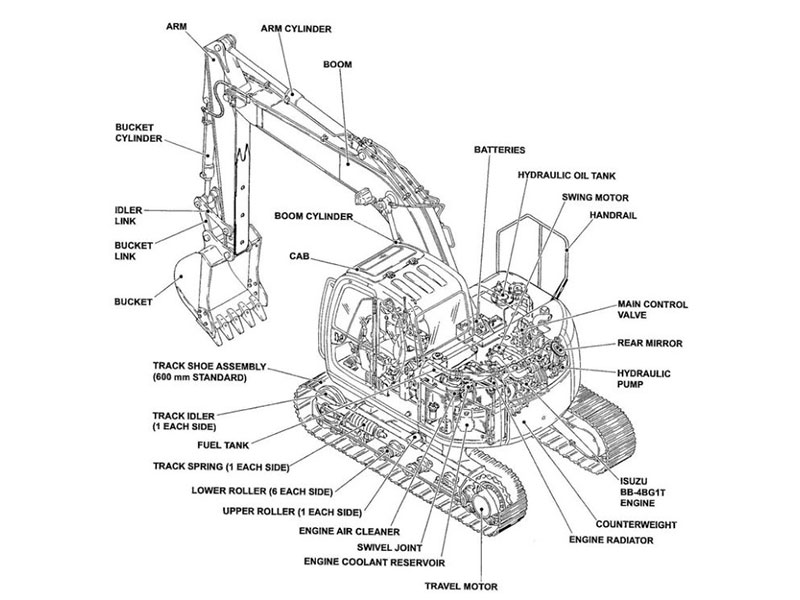
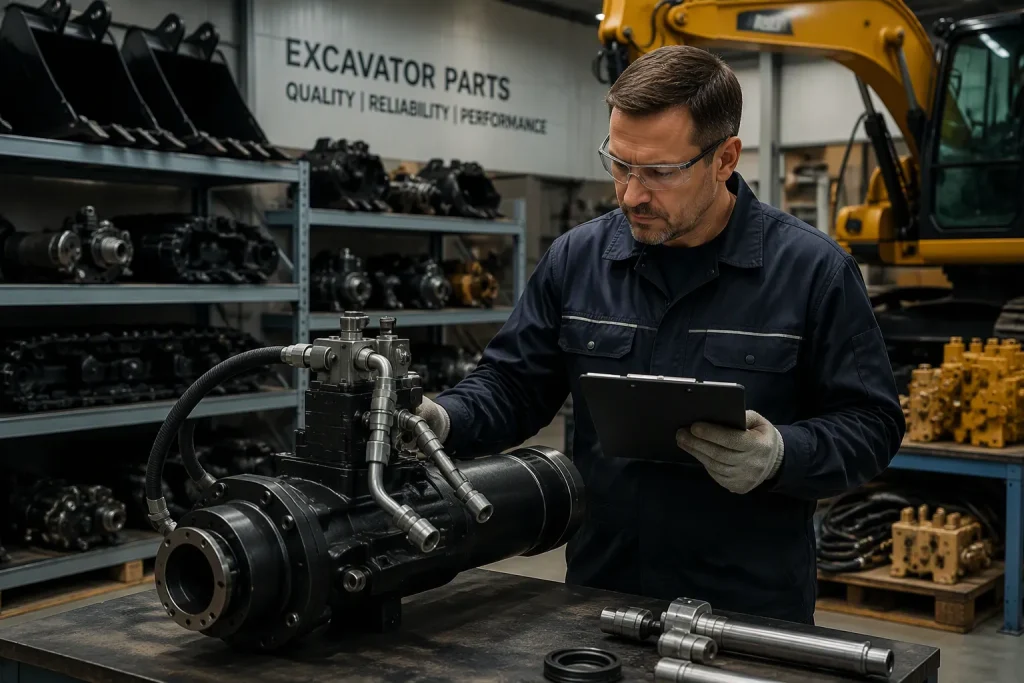
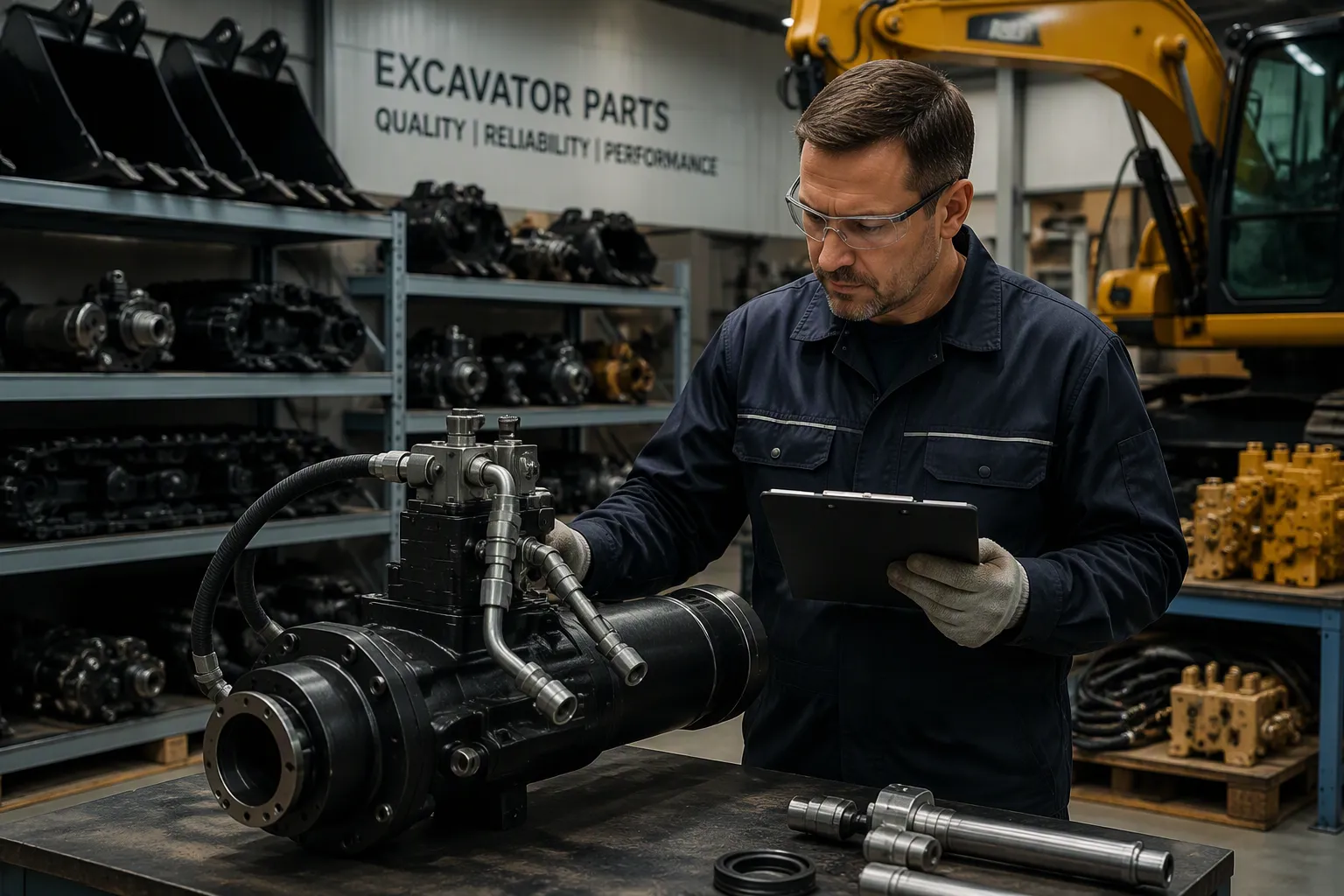
The most important wholesale hydraulic excavator parts are undercarriage parts, hydraulic pumps, final drives, cylinders, buckets, and filters. These items wear out often. They also keep machines working on every job site.
Smart buyers keep these parts in stock because they sell quickly. Contractors need them for regular upkeep and emergency repairs. A good parts supply cuts downtime and builds customer trust.
This guide helps buyers pick what to stock, check part quality, and buy in bulk for profit. It covers fit checks, supplier reviews, and pricing plans. Readers will learn how to build a parts list that supports fleet uptime and repeat sales.
Key Takeaways
Keep popular parts in stock, like undercarriage components, filters, and seal kits, to meet steady demand.
Check part quality by looking for ISO certification, material certificates, and a one-year warranty.
Use the machine serial number and OEM part number to check the fit and avoid costly returns.
Use ABC analysis and min/max rules to balance inventory and cut down on slow-moving stock.
Pick aftermarket parts for everyday work and OEM parts for high-wear situations.
Top Wholesale Hydraulic Excavator Parts to Stock
Undercarriage Components
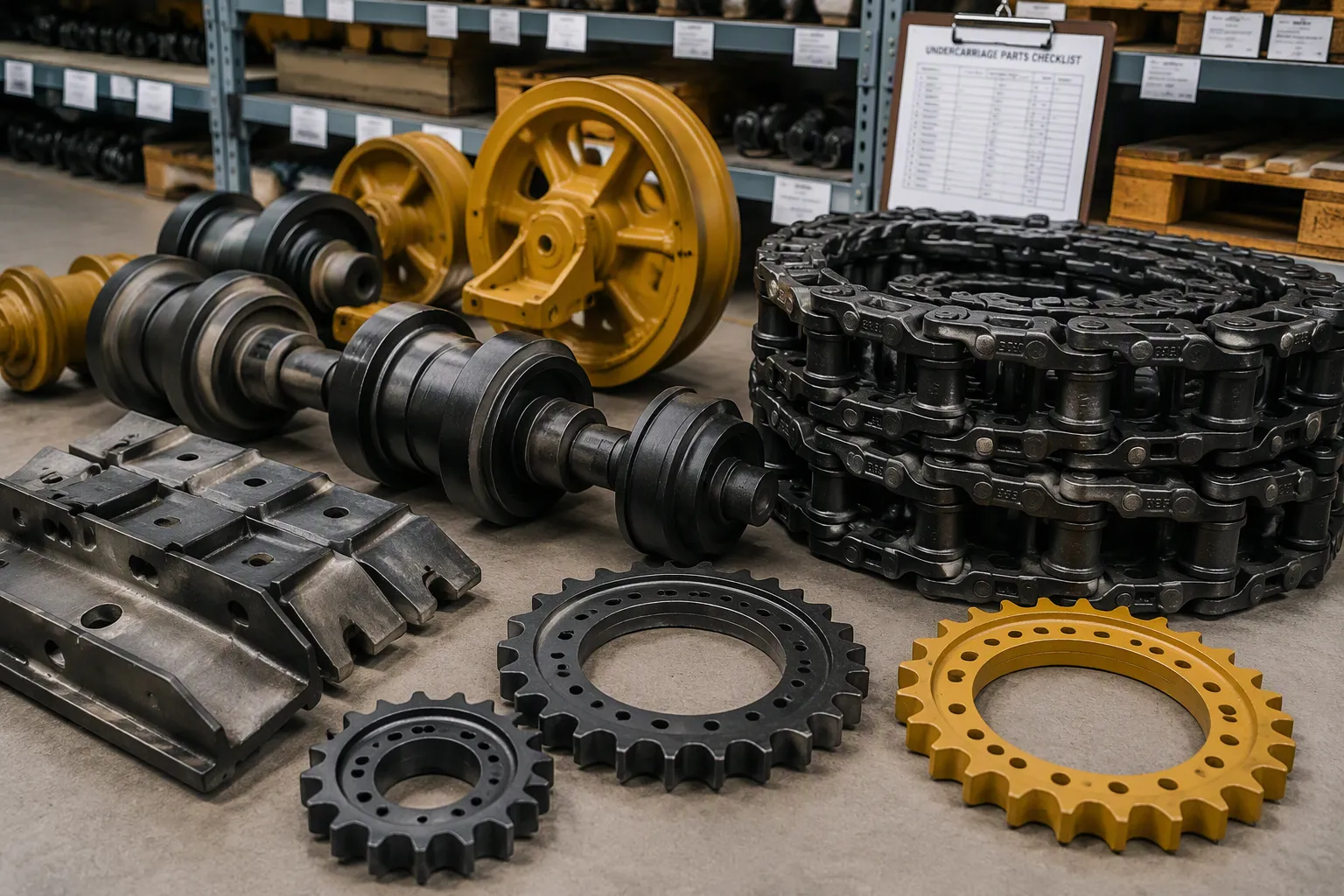
Undercarriage parts wear out faster than any other excavator system. Track links, rollers, sprockets, idlers, and track pads take constant abuse from dirt, rock, and debris. These components represent the highest-turnover category in wholesale hydraulic excavator parts.
Buyers should know typical service life before setting stock levels. Track chains and rollers usually last between 3,000 and 5,000 operating hours. Sprockets often reach 3,000 to 4,000 hours. Track shoes wear out sooner at 2,000 to 3,000 hours. Idlers often last longest at 4,000 to 6,000 hours.
Component | Average Lifespan (Operating Hours) |
|---|---|
Track Chains (Track Links) | 3,000 to 5,000 hours |
Rollers | 3,000 to 5,000 hours |
Sprockets | 3,000 to 4,000 hours |
Track Shoes | 2,000 to 3,000 hours |
Idlers | 4,000 to 6,000 hours |
On average, undercarriage components like track chains, rollers, and idlers last between 2,000 to 7,000 hours of operation, but this varies a lot by terrain and maintenance. While 4,000 to 6,000 hours is common, good care can make lifespan much longer.
These parts sell steadily because every machine needs them eventually. Stocking them in bulk lowers per-unit costs and keeps contractors coming back.
Hydraulic and Attachment Parts
The hydraulic system drives every excavator function. Hydraulic pumps, final drives, cylinders, hydraulic seals, relief valves, and filters all need regular replacement. Filters—hydraulic, fuel, and air—move quickly because technicians change them at every service interval.
Attachment parts also create strong repeat business. Buckets, bucket teeth, and thumbs endure extreme wear. Bucket teeth need frequent inspection. Operators should replace teeth when they lose 40% of original length or when the shank diameter wears enough to create loose connections. In sandy soil, teeth may last 2–3 months. In a granite quarry, replacement can happen weekly.
Cutting edges need attention too. Once a cutting edge reaches 70 to 75% of its original thickness, the bucket shell faces damage risk. In demolition work, that window shrinks to a week or less.
Hydraulic Cylinder Seal Kits from YNF Machinery prevent oil leaks in boom, arm, bucket, tilt, swing, and travel motor cylinders. These kits use NBR, WR, dust-seal, FKM, and PTEF materials. They solve leakage problems that plague aging fleets.
Bulk purchasing gives clear financial advantages. Wholesale procurement of hydraulic and undercarriage components cuts acquisition costs by 20–30%. A prominent distributor switched to wholesale suppliers and watched profit margins rise to 25%. Wholesale purchasing also offers better volume discounts and a more extensive selection of parts. Retail purchasing may carry high per-unit costs and limited availability. A distributor relying on retail sources might take twice as long to source a needed part, delaying projects and frustrating customers.
These categories drive repeat orders and fleet maintenance revenue. Contractors need reliable sources for parts that wear out predictably. Distributors who stock these items position themselves as essential partners for every repair job.
Quality Checks for Wholesale Buyers
Material Specs and OEM vs Aftermarket
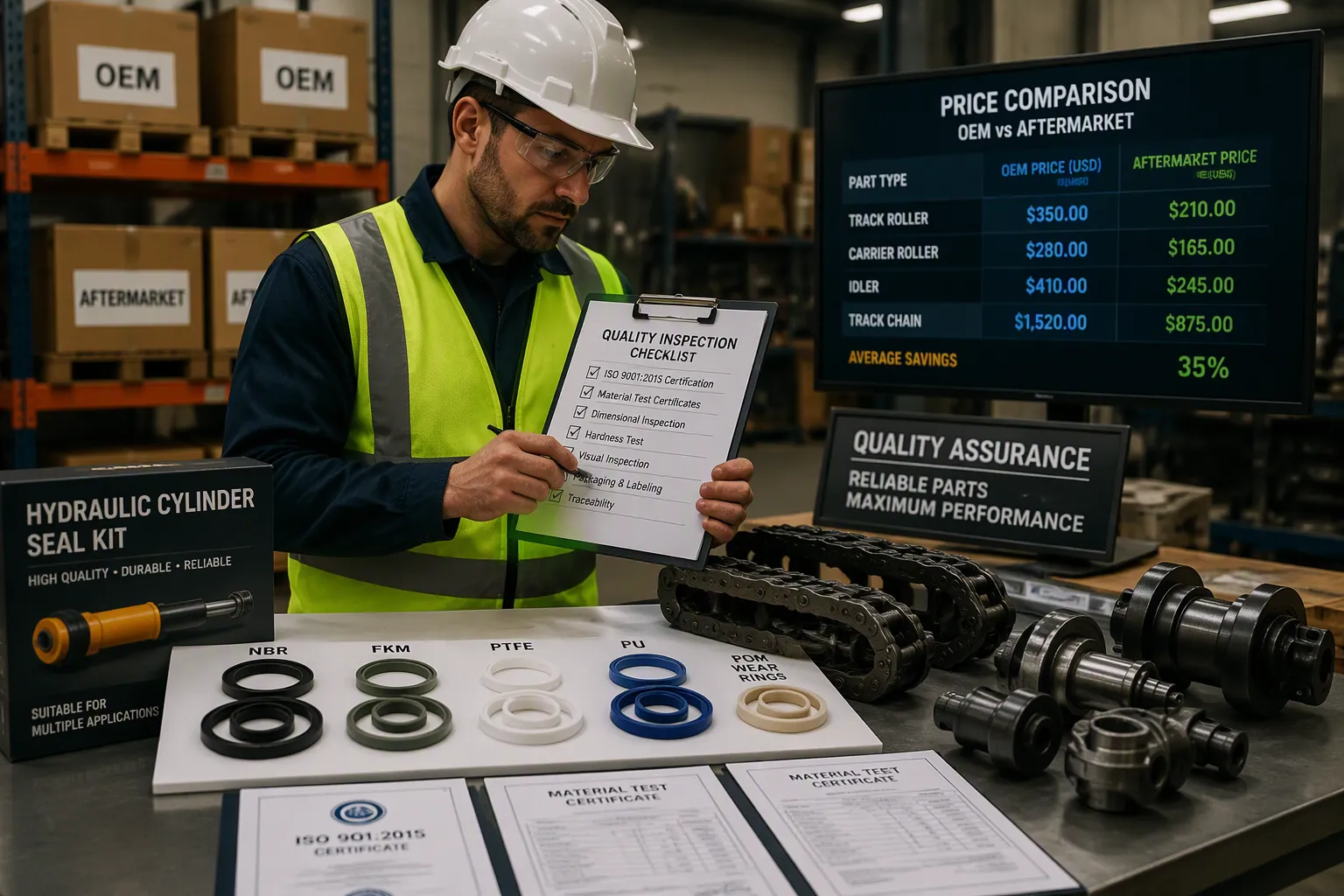
Material specs decide how long a part lasts on the job. Hydraulic cylinder seal kits use special materials made for different working conditions. NBR seals stand up well to mineral oils, but they break down faster under high pressure and heat. FKM seals handle harsh chemicals and extreme heat, so they last longer in tough environments, even though they cost more. PTFE seals create low friction that cuts wear in precision jobs, but the design must be right to stop leaks. PU resists wear well for moving applications, but it cannot handle steady high heat. POM or nylon wear rings shield main seals from side loads and contamination, which helps seals last longer overall. Undercarriage parts follow different material rules. Track chains and rollers use hardened steel grades that fight off abrasion and impact.
OEM parts cost much more than aftermarket options. For a Caterpillar 320 boom cylinder, a real OEM part costs about 2.5 to 3 times the aftermarket price. Premium aftermarket tiers run 40 to 55 percent below similar CAT OEM pricing. Standard aftermarket tiers sit 55 to 70 percent below OEM, and budget tiers reach 70 to 85 percent below. A full CAT 320 undercarriage kit from OEM sources may cost $8,000 to $12,000, while aftermarket versions range from $5,000 to $8,000 — about 30 to 40 percent in savings. Buyers must weigh these savings against what the job demands. High-wear settings like demolition or quarry work may justify OEM investment. General construction fleets often run reliably with quality aftermarket parts.
Good suppliers keep strict quality-control systems. ISO 9001:2015 certification is a must-have baseline. Buyers should check the certificate number through the IAF CertSearch database. CE Marking applies for EU market entry and requires a valid Declaration of Conformity with Notified Body reference. Material test certificates per EN 10204 Type 3.1 give raw material traceability. Pressure test reports per ISO 10100 document burst and leak performance. Real manufacturers provide these documents without any hesitation.
Warranty and Supplier Vetting
Warranty terms show how much confidence a supplier has in product quality. A supplier offering 12-month coverage on hydraulic components shows more trust than one offering 90 days. Buyers should read warranty language for exclusions on wear items and labor coverage.
Supplier vetting requires measurable criteria. On-Time Delivery (OTD) tracks whether suppliers meet agreed deadlines by calculating (On-Time Deliveries ÷ Total Deliveries) × 100. A pattern of late deliveries disrupts supply chains and hurts customer satisfaction. Defect Rate measures quality by calculating (Defective Units ÷ Total Units Received) × 100. First Pass Yield (FPY) tracks the percentage of products that pass quality checks without rework. OTIF measures orders arriving on time and in full. Quantity accuracy protects material readiness by comparing delivered quantities against purchase order requirements. Responsiveness tracks how quickly suppliers address purchase order changes and issues. Purchase Price Variance monitors whether actual pricing stays close to expected pricing, protecting margin control. Lead-time accuracy supports inventory planning by measuring variance between expected and actual delivery timing. PO Acknowledgment Rate indicates whether suppliers actively confirm commitments within expected windows.
Buyers should ask for certificates directly and cross-check them with issuing bodies. A wholesale hydraulic excavator parts supplier that cannot provide ISO certification, material certificates, or test reports warrants caution. Require three references from current wholesale buyers. Ask about average defect rates over the past 12 months. Confirm that the supplier conducts hardness testing, dimensional accuracy inspection, and wear-resistance testing on every production batch. Put together documentation requirements upfront to make the vetting process smoother. Reliable suppliers keep predictable lead times and communicate proactively about schedule changes. This due diligence protects fleet uptime, prevents costly returns, and separates professional suppliers from commodity resellers.
Compatibility and Cross-Referencing
Matching Parts to Machine Models
One excavator model goes through many changes while it is being made. Whether parts fit depends on the exact setup of the machine. Buyers have to match parts to specific models across 26 or more excavator brands, such as JCB, Kubota, Case, and Caterpillar.
The check starts with the machine dataplate. Writing down the full serial number gives you the basis for choosing the right part. The engine type matters too. A Perkins model number on the engine block can change which hydraulic parts fit the machine. Using the current part number from the newest manual stops you from ordering old versions. An old printout often lists replaced numbers that no longer work.
Suppliers check fit by matching their SKU database with current OEM replacement chains. When a buyer gives the machine serial number with the quote request, the supplier checks the active part number instead of trusting an outdated manual. Cross-model fit needs to be confirmed through the OEM parts catalogue or a compatibility matrix kept by the supplier.
Confirming fit before you buy protects fleet uptime and avoids costly returns. A wrong part causes delays and return shipping costs. A mismatched hydraulic seal kit can leak right away and damage other components. Proper fit checks prevent these problems and keep machines running.
Cross-Reference Tools and Catalogs
OEM cross-reference tools make the matching process easier. The Caterpillar cross-reference resource is an online tool for searching spare part numbers that can be swapped. It keeps a large database where users can find OEM part numbers next to their alternatives and compatible equivalents from different manufacturers and brands. The tool covers many part categories, including filters, engine parts, fuel system components, hydraulic pumps and motors, transmission parts, belts, bearings, seals, and electrical components.
Buyers should follow a step-by-step approach when using these tools. Record the full machine serial number from the dataplate. Note the engine type from the engine block. Use the OEM part number from the current parts manual, not an older printout. Ask the supplier to confirm the replacement status of the part number. State the exact model and serial in the quote request. If a part number has a letter in the suffix, ask whether a newer version exists. Never order based on a part number in a photo without checking it against the machine serial. Suppliers depend on these details to confirm fit across their inventory.
These practices apply to all wholesale hydraulic excavator parts buying. A steady cross-reference process cuts errors and protects the buyer’s reputation for delivering the right part the first time. Every minute spent on checking saves hours of downtime later.
Bulk Buying Strategies for Wholesale Buyers
MOQs, Pricing Tiers, and Lead Times
Minimum order quantities affect every wholesale buying choice. Standard O-ring and seal kit factories often require at least 50 to 100 pieces per part number. Custom-machined parts like piston rods may have no strict MOQ, but they add a setup charge. Buyers should watch out for bad terms, like a 10 to 50 unit minimum just to qualify for shipping. Friendly suppliers offer a 1-piece minimum order for all in-stock SKUs.
Pricing tiers reward buyers who commit to volume. A common barrier assumes you must order 50+ units to get a discount. Flexible aftermarket solutions favor suppliers with a 1-piece minimum order at wholesale tier rates. Buyers should negotiate volume discounts and plan around supplier production schedules. Lead times change based on part complexity and supplier location. Reliable suppliers talk openly about schedule changes and keep delivery windows steady.
Balancing Inventory Risk and Demand
Smart buyers sort parts before spending money. ABC analysis puts A items (10–20% of parts, 70–80% of value) as critical spares stocked heavily with safety stock. B items (20–30%, 15–20% value) like filters and belts stay at medium levels. C items (50–60%, 5–10% value) are cheap goods ordered in bulk with little tracking. FSN analysis then splits fast-moving items (about 10–15% of inventory) from slow-moving (30–35%) and non-moving (60–65%) stock.
Min/max calculations stop stockouts and overstocking. Minimum equals average daily usage times lead time plus safety stock. Maximum equals minimum plus economic order quantity. Automated reorder alerts send purchase requests when stock hits the minimum level. Quarterly reviews adjust levels based on real consumption data.
Slow-moving inventory drains cash. One heavy equipment dealer had $3.2 million stuck in excavators that were not selling, all ordered on gut feel. Retailers lose $163 billion every year from slow-moving and obsolete inventory. Buyers should stock high-turnover items like filters, bucket teeth, and seal kits while limiting slow movers. New aftermarket, rebuilt, or used parts give flexibility based on buyer demand. YNF Machinery helps you stock up on key wholesale hydraulic excavator parts with low minimum order quantities and competitive pricing.
Start by stocking undercarriage components, hydraulic pumps, final drives, cylinders, buckets, and filters. These items sell quickly and keep fleets working. Buyers should judge each part by demand, quality, compatibility, and bulk pricing. That approach protects profits and cuts down on returns.
Build strong supplier relationships and watch demand trends closely. YNF Machinery helps wholesale hydraulic excavator parts buyers with low minimum order quantities and competitive pricing. Improve the parts catalog today and keep every machine running.
FAQ
What wholesale hydraulic excavator parts sell fastest?
Undercarriage components sell the fastest. Track links, rollers, sprockets, idlers, and track pads wear out quicker than other systems. Filters, bucket teeth, and hydraulic seal kits also sell at a steady pace. Every machine needs these items replaced on a regular basis.
How does a buyer check part quality before ordering?
Buyers should ask for ISO 9001:2015 certification, material test certificates per EN 10204 Type 3.1, and pressure test reports per ISO 10100. Suppliers who offer 12-month warranties show more confidence in what they sell. Talking to current wholesale buyers helps confirm a supplier is reliable.
How does a buyer confirm a part fits a specific excavator?
Write down the full machine serial number from the dataplate. Note the engine type found on the engine block. Use the current OEM part number from the newest manual. Ask the supplier to check the replacement status before you place an order.
What minimum order quantities apply to wholesale excavator parts?
Standard O-ring and seal kit factories often ask for 50 to 100 pieces per part number. Custom-machined parts may come with setup charges added on. Flexible suppliers let you order just 1 piece for in-stock SKUs at wholesale tier rates.
Should buyers choose OEM or aftermarket excavator parts?
OEM parts cost 2.5 to 3 times more than aftermarket options. Premium aftermarket tiers run 40 to 55 percent below OEM pricing. High-wear settings like demolition may be worth the OEM investment. General construction fleets often run fine with quality aftermarket parts.