
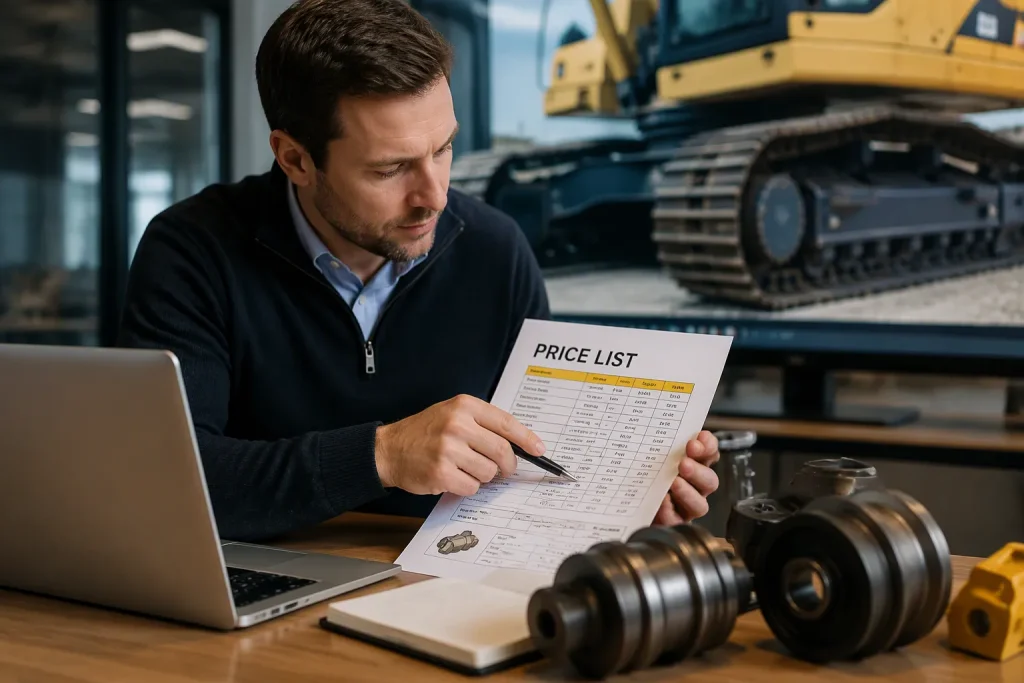
An excavator undercarriage parts price list is a reference document, not a complete quote by itself. To read it accurately, check how each part is identified, what unit the price covers, which specifications apply, and which costs or terms are listed separately. You also need to confirm that the listed component matches your machine and the exact quantity you need.
Price lists can use different layouts and pricing bases. Do not assume a listed amount applies to every machine, order size, destination, or date. Use the document to prepare focused questions and request written confirmation for the parts and terms in your order.
Key Takeaways
Match each line to the part number, description, machine model, and serial range where applicable.
Check the unit of measure and whether a price applies per piece, assembly, pair, or set.
Read currency, effective date, quantity tiers, and included or excluded charges before comparing amounts.
Confirm fitment and any substitutions against the machine’s catalog and part details.
Ask for a current written quote that restates the exact scope and terms you need.
Start with the Price List Header
What the Header Tells You
Look for the document title, revision or issue date, currency, unit conventions, and any stated scope. A list may cover only certain components, part families, or machine ranges. Check the notes and abbreviations before using its line items. If the document does not state when its information was prepared, ask whether it is current before relying on it.
Currency and units affect every comparison. Make sure that amounts use the same currency and that measurements or quantities are expressed consistently. If a document shows a conversion or a separate fee, check whether it is a reference amount or part of the offer.
Read Part Numbers and Descriptions Together
A part number should be read with its full description, suffix, and any fitment note. Check whether the number identifies an individual component or a larger assembly. Similar descriptions can refer to parts in different positions or configurations. Do not choose an item based on a shortened description alone.
Use the machine make, complete model, serial number or PIN, and the applicable parts catalog to check fitment. Record where the number came from: a catalog, a previous invoice, or a marking on an existing part. If two references appear to conflict, ask for clarification rather than choosing one by price.
Understand the Pricing Basis
Unit, Assembly, Pair, or Set
Find the unit that applies to each line. A listed amount may be for one piece, one assembly, a matched pair, or a package. Confirm what is included in that unit and whether accessories or related components are separate. When requesting a quote, state the quantity and unit explicitly so the total can be interpreted correctly.
Quantity Tiers
Some price lists show different amounts at different quantities. Read the quantity boundaries and check whether the amount applies to every unit or only to units above a threshold. Ask whether the listed tier is available for the exact quantity and part combination you need. Do not assume that a tier from one line applies to a different part or mixed order.
An advertised tier is not a commitment for a particular order until it is confirmed in the written quote. The quote should state the actual quantity, unit, price basis, and any conditions attached to a tier.
Specifications and Part Scope
Check whether the description includes relevant dimensions, material descriptions, configuration notes, or other identifiers. A price list may not include enough detail to confirm all specifications. If a specification matters to fitment or use, compare it with the catalog or request supporting documentation for the exact item. Do not treat general terms such as “heavy duty” as a measurable specification unless the document explains what they mean.
If the listed part is a replacement for an existing component, confirm that the complete reference and machine range match. Ask how any alternate number or substitution relates to the requested part. The price alone cannot establish whether a component is compatible.
Identify Costs Outside the Line Item
Review the notes for freight, packaging, taxes, duties, payment charges, minimum order conditions, and other exclusions. Whether a cost applies depends on the transaction and destination. A line-item amount may not represent the delivered total. Ask which charges are included, which are estimated, and which are billed separately.
Check delivery terms, destination, lead time, and quote validity. These should be stated clearly in the current written offer. Do not rely on an old list for a delivery date, warranty, return policy, or inspection service unless the current terms confirm it.
Compare Price Lists Fairly
Before comparing two lists or offers, normalize the scope. Match the complete part reference, specification, quantity, unit, currency, destination, and included charges. A comparison is not meaningful if one amount covers an assembly and the other covers a single component, or if one includes freight and the other excludes it.
Keep a simple comparison record with columns for part number, description, unit, quantity, currency, line amount, additional charges, delivery estimate, and terms. Note what has been confirmed and what remains unclear. If one offer uses an alternate part number or a different assumption, have that difference explained in writing before comparing totals.
Request a Current Quote
A useful quote request can include:
Machine make, full model designation, and serial number or PIN.
Catalog or part number, full description, position, quantity, and unit.
Relevant photos, markings, or dimensions, with any uncertainty identified.
Ship-to city, state, and ZIP code, plus requested timing.
A request for price basis, currency, included charges, lead time, validity, and applicable terms.
Ask the recipient to confirm the part description and fitment basis, and to list any assumptions or unavailable information. Keep the quote with the price list version you used. This makes later review clearer if the document is revised.
FAQ
Does a price list guarantee the current price?
Not necessarily. Check the issue date and conditions, then ask for a current written quote for the exact parts, quantity, and destination.
Why can two lists show different amounts for similar parts?
They may use different part references, units, specifications, quantities, currencies, or included charges. Match the scope before drawing a comparison and clarify any difference that is not explained.
Should I select the lowest listed amount?
First confirm that the part fits the machine and that the compared amounts cover the same quantity, unit, specification, delivery scope, and terms. A listed amount by itself does not establish compatibility or total order cost.
What information helps confirm fitment?
Provide the machine make, full model, serial number or PIN, part reference, and position. Add clear photos or requested dimensions when useful. If any information is uncertain, mark it as unknown and ask what else is needed.
Conclusion
Read a parts price list by checking its date and scope, matching each part number and description, confirming the unit and quantity basis, and identifying additional charges and terms. Then request a current written quote for the exact machine and order details. For excavator undercarriage parts quote support, contact YNF Machinery with your machine identification and part references.



