Successful negotiation on wholesale excavator undercarriage parts begins with preparation and market knowledge, not aggressive haggling. Undercarriage components represent one of the largest maintenance expenses for any fleet. A small per-unit reduction compounds quickly across multiple machines and replacement cycles.
Buyers who understand pricing factors, research wholesale excavator undercarriage parts manufacturers, and build a clear negotiation position consistently secure better terms. This guide covers the practical steps specific to the undercarriage market: how suppliers set prices, how to compare quotes, how to time a purchase, and how to close with favorable payment and delivery conditions. Each section delivers concrete tactics for excavator parts buyers who want measurable cost savings.
Key Takeaways
Know the price factors for undercarriage parts. Research the makers before you buy. This prep helps you get better deals.
Aftermarket parts cost 30 to 40 percent of OEM parts. They last about 80 percent as long. For many fleets, this trade-off saves money.
Get quotes from three or more suppliers. Buy during slow seasons or quarter-ends. These tactics help you negotiate better.
Put track chains and rollers together in one order. That way you order more items. Ask for a smaller minimum order to cut down your risk.
Keep good records of installation and maintenance. Complete paperwork leads to 94 percent warranty claim approval. Without it, approval drops to 51 percent.
Pricing Factors for Undercarriage Parts
Brand, Material, and Quality Tiers
Brand name affects the price you pay for each undercarriage part. OEM parts cost more because buyers want a perfect fit and factory quality. Aftermarket parts often cost less, and that difference gives buyers room to bargain. That price gap gives buyers power.
Aftermarket parts often have a lower upfront price, usually 20% to 40% less than OEM parts.
The table below shows how the two tiers compare.
Comparison | Price Difference Range |
|---|---|
OEM parts vs. alternatives | 20%–50% higher |
Aftermarket parts vs. OEM components | 20%–40% lower |
Material grade is just as important as brand. A forged roller costs more upfront than a cast roller, but it often costs less over the machine’s life. Forged steel lasts 30% to 50% longer in 550-ton rope shovel use, and its tensile strength is 10% to 20% higher than a similar cast grade. A low unit price does not always mean a better deal. Buyers who only look at the unit price miss these long-term savings.
Cost Metric | Forged Roller | Cast Roller |
|---|---|---|
Price premium over equivalent cast roller | +20% to +40% | Baseline |
Total cost of ownership over full service life | 30% to 50% cheaper over machine life | More expensive over machine life |
Knowing these pricing tiers helps buyers set realistic goals.
Demand Cycles and Supply Chain Pressure
Construction and mining seasons drive demand for undercarriage parts. Prices go up when fleets plan big rebuilds, and they drop during slow times. Prices for track chains and rollers follow these cycles. Buyers who watch prices all year find the best times to buy. Seasonal price changes create real chances.
Supply chain pressure adds another factor. Shipping costs, raw material supply, and lead times all change the true landed cost. Suppliers change prices when demand falls. These prices include both material costs and freight. Suppliers face the same pressure, so these items are still open to talk about. A buyer who knows freight and material trends negotiates from a stronger spot.
Researching Wholesale Excavator Undercarriage Parts Manufacturers
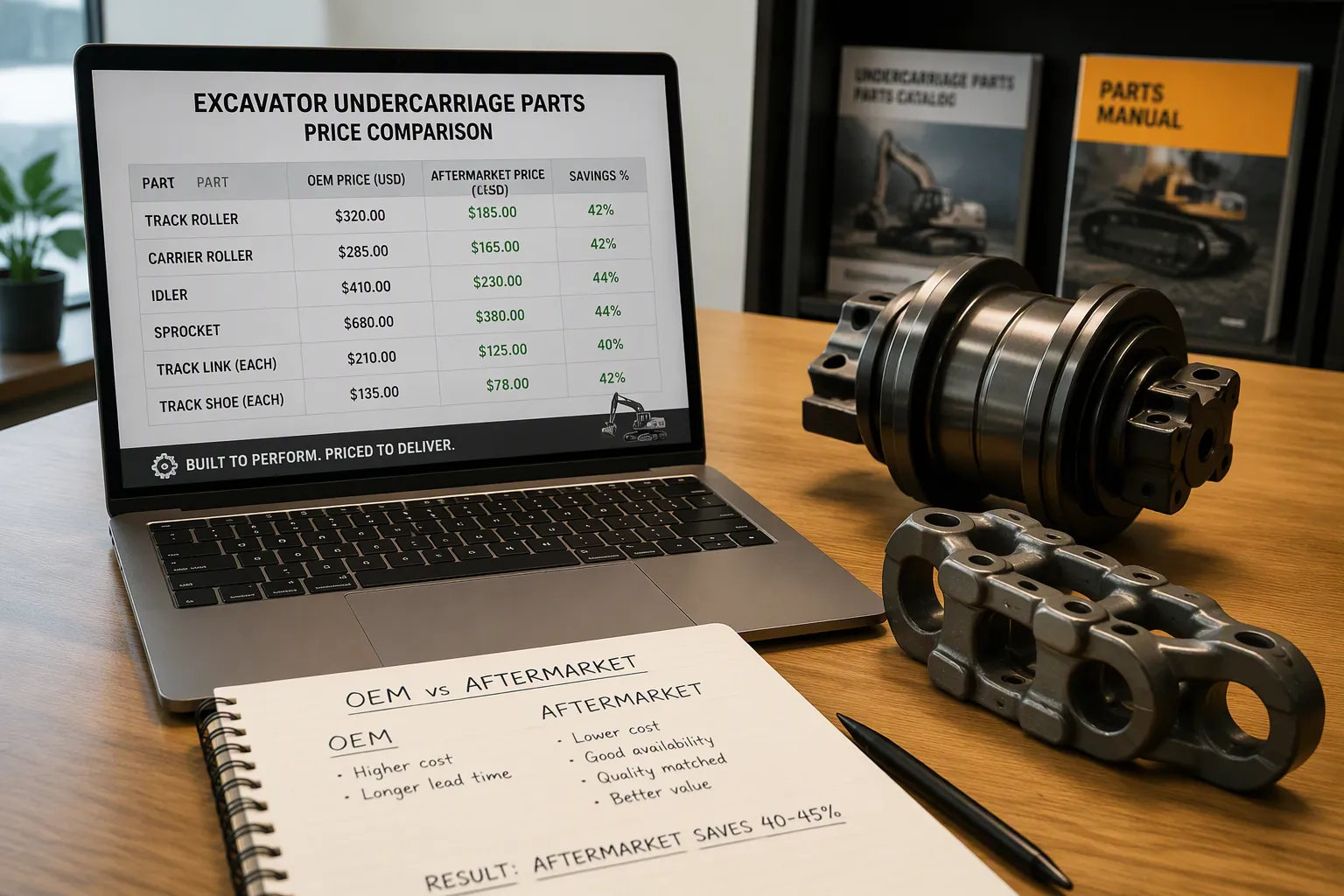
OEM vs. Aftermarket: Cost and Quality
Buyers have a basic choice to make between OEM and aftermarket undercarriage parts. OEM parts come with the manufacturer’s brand and a higher price. Aftermarket options from trusted wholesale excavator undercarriage parts manufacturers give similar performance for much less money.
Part Type | Cost Relative to OEM | Cost Savings vs. OEM | Service Life Relative to OEM |
|---|---|---|---|
High-quality aftermarket undercarriage parts | 30%–40% of OEM price | 60%–70% cheaper | ~80% of OEM |
OEM undercarriage parts | 100% (baseline) | — | 100% (baseline) |
The numbers make the point clear. Good aftermarket parts cost 30% to 40% of OEM prices and still give about 80% of OEM service life. For fleet operators running many machines, this trade-off often makes the aftermarket route the better pick.
Quality checks separate dependable suppliers from risky ones. Experts say to look at product range focus, control of the manufacturing process, and wholesale volume capability. Metallurgy and heat treatment matter too. Controlled surface hardness and core toughness stop early wear and cracking. A sealing design with multi-lip seals keeps bearings safe from dust and abrasives. Dimensional tolerance makes sure parts fit with track links, idlers, and sprockets. Documentation and traceability help with import, resale, and fleet maintenance programs. Buyers should ask for samples and begin with pilot orders before scaling up.
Quotes, Market Data, and Wholesale Excavator Bucket Teeth Pricing
Getting quotes from several suppliers gives you leverage. Buyers who gather three or more quotes can compare unit price, freight terms, and lead times side by side. This data becomes the base for every negotiation that follows.
Cross-referencing OEM part numbers stops costly compatibility mistakes. A major automotive manufacturer built a database linking OEM numbers with aftermarket equivalents. This cut downtime from unavailable parts and raised production efficiency by 15%. Patterson Equipment used a similar referencing tool and cut procurement costs by 25%.
Accurate cross reference part numbers helps to ensure that the right components are used in manufacturing, thereby reducing the risk of errors and defects. Studies show that having a good cross-reference system can really cut down on return rates and improve customer satisfaction by ensuring the right fit and compatibility.
Wholesale excavator bucket teeth pricing works as a benchmark for how competitive a supplier is overall. Bucket teeth are high-wear items with fairly clear prices. A supplier offering sharp wholesale bucket teeth terms likely gives similar value across the full undercarriage catalog. Buyers can use excavator bucket teeth quotes to judge whether a wholesale supplier sells at market rates or marks up prices on other components.
YNF Machinery is one supplier that meets these standards. The company offers competitive pricing, strict quality inspections, and support for multiple excavator brands. Buyers researching wholesale excavator undercarriage parts manufacturers can use YNF Machinery as a reference point when comparing quotes from other sources. The company’s low minimum order quantities also make it easier to test quality before committing to larger volumes.
Market data makes every conversation stronger. Buyers who track excavator bucket teeth prices across seasons spot patterns. They know when prices go up and when suppliers offer better wholesale bucket teeth terms. This knowledge turns a routine purchase into a smart sourcing decision.
Building Your Negotiation Position
Budget, Volume Needs, and Walk-Away Point
A clear budget gives a buyer a strong base for any negotiation. The buyer figures out the total cost for undercarriage parts across the whole fleet and sets a target range. Saying exactly how many parts they need makes this position stronger. Suppliers respond well to buyers who know how many track chains, rollers, or sprockets they need. This surety lowers the supplier’s risk and opens the door to better prices. Buyers should write down their fleet size and replacement schedule before talking to any supplier.
A walk-away point keeps the buyer from paying too much. The buyer decides ahead of time the highest price per unit that works for the business. When talks hit that limit, the buyer pauses or walks away. This discipline keeps negotiations rational and stops emotional choices. Buyers who hold firm on their walk-away point often find suppliers come back with a better offer. A written walk-away number also helps the buyer resist pressure during tough talks. Buyers who master this step gain confidence in every later negotiation. This preparation turns a tense talk into a calm discussion.
Timing and Long-Term Relationship Potential
Buying when the supplier is less busy leads to better terms. Construction and mining demand drops in some months, and suppliers want to keep their production lines running. Quarter-end goals create another chance. Sales teams often need to meet numbers, and they become more flexible during these times. A buyer who knows these cycles can plan talks for the best leverage.
The chance for repeat business matters a lot in any negotiation. A buyer who mentions future orders shows they want a long-term partnership. Paying bills on time adds weight to this claim. Suppliers value reliable customers and often give them lower prices. Buyers should share their maintenance schedule and fleet growth plans when talking. A buyer with a good record can ask for better prices without hurting the relationship. Smart buyers compare prices from different sellers before settling on final terms. They know that patience often leads to better prices.
Core Negotiation Strategies and Low MOQ Flexibility
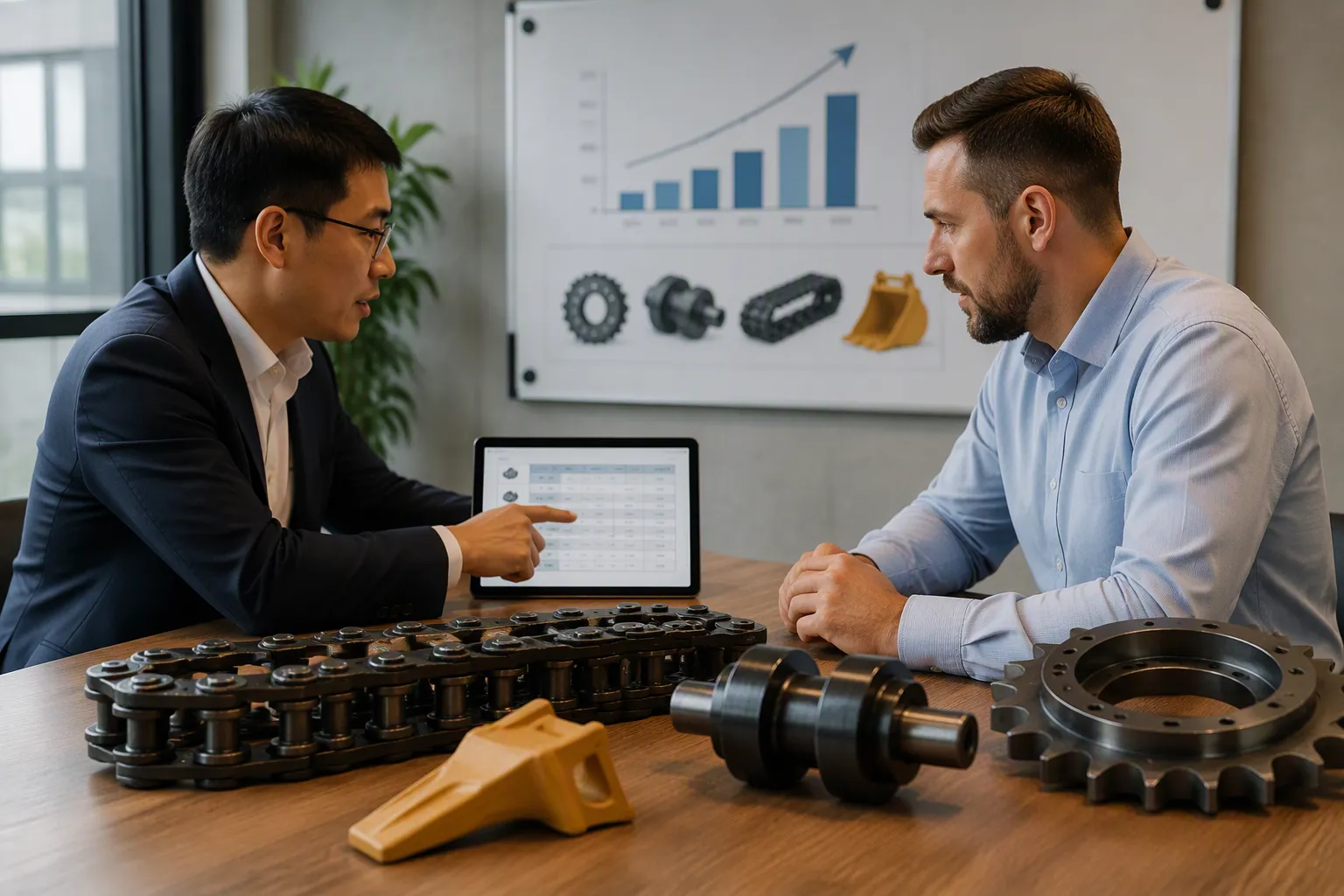
Anchor with Data and Use Silence Strategically
Using data to anchor gives the buyer a strong starting point. When a buyer shows competitor quotes and market data, a lower price request sounds fair. The anchor sets the range for the whole negotiation. For example, a buyer who shows three quotes for track chains at different prices creates a clear reference. The supplier has to respond to that data. This works better than just asking for a discount.
Silence is a powerful tool during talks with suppliers. After a supplier gives a price, a short pause often leads them to offer better terms. Many buyers fill silence with nervous talk and weaken their position. Patient buyers who wait gain an edge. This tactic takes practice. A buyer who masters silence often gets counteroffers without asking. The supplier may offer concessions to fill the gap. These moments define successful negotiations.
Bundle Orders and Leverage Lower MOQs
Bundling multiple part orders increases leverage for volume discounts. A buyer who combines track chains, rollers, sprockets, and bucket teeth into one purchase order presents a bigger deal. Suppliers value larger orders and often offer better bulk terms. This strategy also cuts shipping costs and makes logistics simpler. Combining SKUs across a fleet maintenance schedule makes the order more appealing to any supplier.
Suppliers like YNF Machinery offer low MOQs, so buyers can stock essential parts without tying up too much money. A low MOQ means the buyer can test quality before placing a large order. This flexibility lowers inventory risk while keeping supply steady. Buyers who negotiate lower MOQs gain room to adjust order sizes as fleet needs change. A flexible supplier understands that small first orders often lead to larger repeat purchases.
Order Approach | MOQ Requirement | Inventory Risk | Negotiation Leverage |
|---|---|---|---|
Single part, small volume | Standard MOQ | Low | Limited |
Bundled parts, mixed SKUs | Negotiable MOQ | Moderate | High |
Full fleet maintenance package | Low MOQ available | Managed | Highest |
The table shows how order structure affects MOQ terms. Buyers who bundle parts and negotiate lower MOQs get lower unit prices over time. A supplier who accepts a low minimum order quantity shows flexibility. This flexibility carries over to other negotiation points. Buyers should always ask about MOQ reduction during negotiations. Many suppliers treat MOQ as a starting point, not a fixed rule.
High MOQs create barriers for small fleet operators. A buyer with five excavators cannot commit to the same volume as a buyer with fifty machines. Negotiating a lower MOQ opens access to wholesale pricing for smaller operations. This step also builds trust. The supplier sees the buyer as a serious partner with growth potential. Over time, the buyer increases order volume and earns better bulk terms. The negotiation cycle continues with each successful transaction.
A buyer who secures flexible wholesale terms gains a lasting advantage. The supplier becomes a reliable source for essential parts. The buyer avoids stockouts and keeps machines running. This outcome defines a successful negotiation built on data, patience, and strategic bundling.
Closing the Deal on Favorable Terms
Quality Standards and Warranty Terms
Before signing any agreement, buyers need to check quality inspection standards and warranty coverage. Thoroughly documented claims are much more likely to be approved. This gap shows why paperwork matters when you negotiate.
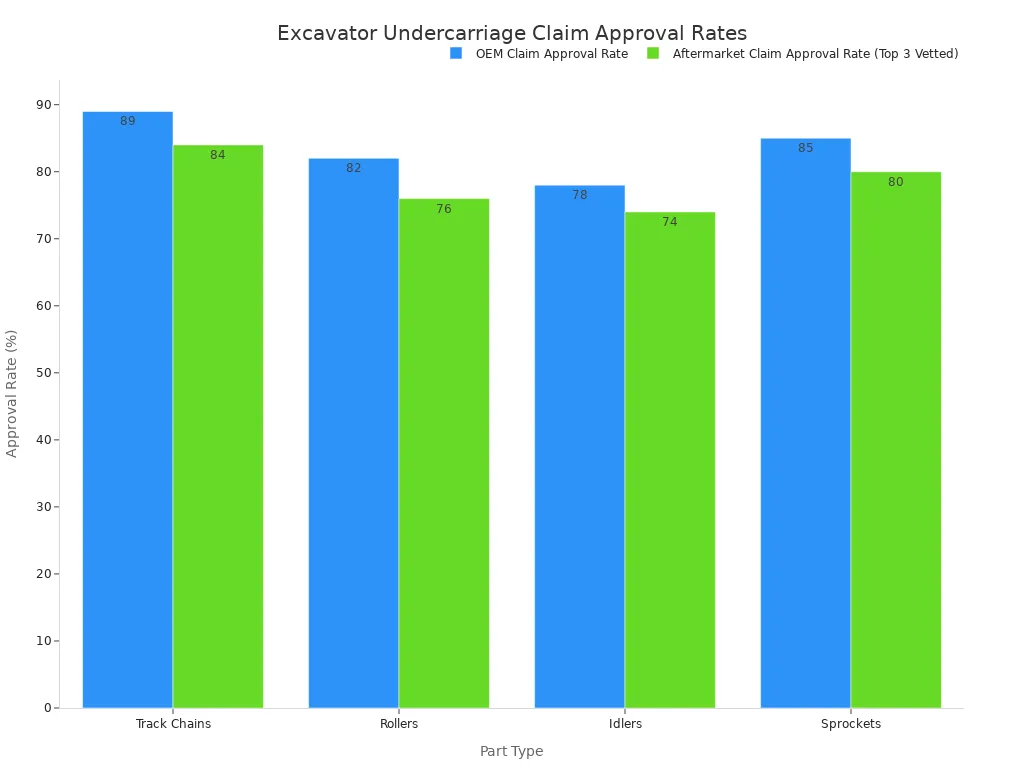
Warranty terms vary by supplier type. OEM warranties typically offer longer coverage, while aftermarket warranties may have shorter durations. Buyers should negotiate warranty terms that fit their maintenance cycles.
A quarry operator in the Middle East lost a substantial undercarriage warranty claim because their maintenance team checked track tension far less frequently than required. The failure (a cracked idler shaft) was probably a real manufacturing defect, but the missing maintenance records gave the supplier a solid reason to deny it.
This example shows why buyers must keep maintenance records and confirm warranty requirements during negotiations.
Payment Conditions and Delivery Schedules
Payment terms and delivery schedules affect the total cost of procurement. Buyers can negotiate partial upfront payments or net terms to improve cash flow. Flexible delivery schedules cut lead times and lower logistics expenses. CJ Logistics America used sourcing optimization to streamline transport sourcing and saved money while making supplier relationships stronger.
Flexible delivery helps keep a business agile and responsive to market changes and customer demand.
Putting agreements in a contract protects both sides and can unlock better pricing. Contracts with adjustment clauses for pricing, delivery schedules, or order quantities help both sides adapt to changing conditions. Buyers who write down agreed terms, delivery schedules, and service levels avoid disputes and build stable partnerships. YNF Machinery provides complete documentation and logistics help for a smooth purchasing experience.
Successful negotiation on wholesale excavator undercarriage parts manufacturers begins with pricing knowledge and ends with favorable contract terms. Buyers who research wholesale excavator undercarriage parts manufacturers, build a strong position, and apply core negotiation strategies consistently win better deals. Negotiation is a repeatable process built on preparation, data, and relationship-building — not one-time haggling. Apply one or two strategies from this guide in the next supplier conversation. Explore YNF Machinery’s excavator parts catalog for competitive pricing, low MOQs, and support across multiple excavator brands. Share your own negotiation experiences to help other buyers improve their future results.
FAQ
How much can a buyer save by choosing aftermarket undercarriage parts over OEM?
High-quality aftermarket undercarriage parts usually cost 30% to 40% of what OEM parts cost. They last about 80% as long as OEM parts. For fleet owners with many machines, this choice often makes aftermarket parts the better buy.
What documents should a buyer request before finalizing a wholesale order?
Buyers should ask for quality inspection reports, warranty details, and part number cross-references. Full installation records and maintenance logs are also important. Claims with full paperwork are much more likely to be approved than those with little documentation.
When is the best time to negotiate better pricing on undercarriage parts?
Construction and mining demand falls during slow seasons. During these times, suppliers want to keep their production lines busy. Quarter-end goals also make them more flexible. Buyers who plan purchases around these times often get better deals.
How does bundling orders affect minimum order quantity negotiations?
Putting track chains, rollers, sprockets, and bucket teeth together in one order creates a larger deal. Suppliers like bigger orders and often lower their minimum order requirements. This method also lowers shipping costs and makes logistics easier for the buyer.
What payment terms can buyers negotiate with wholesale suppliers?
Buyers can ask for partial upfront payments or net terms to improve their cash flow. Flexible delivery times cut lead times and lower shipping costs. Written contracts with change clauses protect both sides and can lead to better pricing over time.