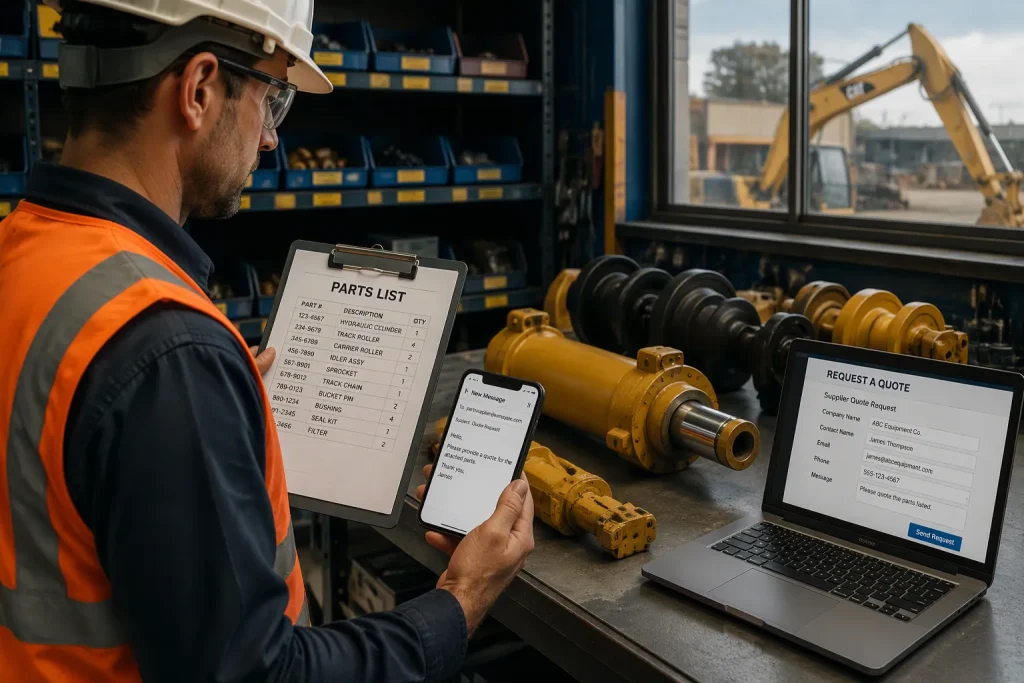
A clear parts inquiry helps an excavator parts supplier check the requested item against the machine and prepare a comparable quote. Include machine identification, the part reference, location and quantity, supporting photos or measurements, and delivery requirements. Sending these together reduces follow-up questions and makes it easier to resolve uncertainty before an order is placed.
Use the checklist below as a starting point. Confirm every item against the machine’s parts catalog or service documentation where available. If a detail is unknown, mark it as unknown instead of guessing.
Key Takeaways
Include the machine make, full model designation, and serial number or PIN when available.
Provide the part name, catalog number, position on the machine, and quantity with units.
Attach clear photographs and only the measurements requested for identification.
Ask for a written quote that states part description, quantity, price basis, lead time, shipping terms, and validity period.
Review fitment and all assumptions before approving an order.
Machine Identification
Make, Model, and Serial Number
Start with the equipment manufacturer and the complete model designation shown on the machine records. Add the machine serial number or product identification number (PIN) if available. Similar model names can have different configurations, so the model alone may not be enough to confirm a part. Use the machine’s own identification plate or reliable records, and copy each character carefully.
If a plate is hard to read, send a sharp photograph and state which characters are uncertain. Do not infer missing digits. Engine components may require the engine make, model, and engine serial number as well; an engine identifier does not replace the excavator PIN when checking machine-specific components.
Configuration and Existing Changes
Mention relevant information that may affect the assembly, such as a documented configuration, attachment, or previous replacement. Keep confirmed facts separate from observations. If the machine has been modified or a component was replaced, identify that clearly and provide the available part markings. This gives the person checking the request a reason to verify the current configuration before quoting.
Part Identification
Part Name and Position
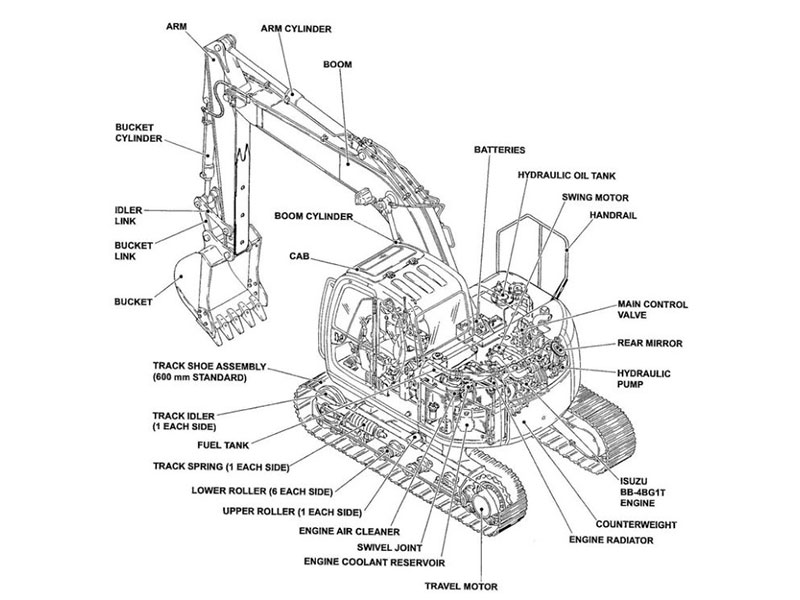
Use the part name from the parts catalog when possible. Describe its location as specifically as you can: for example, left or right side, upper or lower position, or front or rear location when those distinctions apply. Add the assembly name if the item belongs to a larger group. A name such as “roller” may refer to more than one item, while a catalog description and position narrow the request.
Catalog Number and Markings
Include the complete catalog or part number, including letters, suffixes, and revision details. Check the number against the machine model and serial range in the applicable catalog. If you are using a number read from an old component, distinguish it from a number taken from the catalog. A worn, painted, or damaged marking can be misread; attach a photograph and explain any uncertainty rather than silently correcting it.
If no number is available, provide the machine identification, part name, position, and clear images. A qualified fitment check may require additional dimensions or catalog research. A photograph alone should not be treated as proof that a component fits.
A clear parts inquiry helps an excavator parts supplier check the requested item against the machine and prepare a comparable quote. Include machine identification, the part reference, location and quantity, supporting photos or measurements, and delivery requirements. Sending these together reduces follow-up questions and makes it easier to resolve uncertainty before an order is placed.
Take well-lit photographs that show the complete component, its mounting points, visible markings, and the area where it is installed. Include a scale in a measurement photo only when it can be placed safely and clearly. Keep the camera square to the part for dimensions that could be distorted by perspective. Do not disassemble equipment or enter an unsafe area just to take a picture.
Record measurements only when you can identify the measurement points and method. State the units and whether a dimension is measured from the removed part or from documentation. For example, hole spacing should identify which hole centers were measured. Measurements help with cross-checking, but they do not replace the machine and part references needed for a fitment decision.
Quantity and Scope
List each requested item on its own line. Give a quantity and unit, such as one assembly or two individual components. For items installed in pairs or sets, clarify whether you need one side, both sides, or a complete set. Separate parts needed now from optional items so the quote does not combine different requirements.
If you are asking about multiple machines, label each machine and associate every part line with its make, model, and serial number. This prevents a shared request from blending parts for different configurations.
Delivery and Quote Requirements
Provide the destination city, state, and ZIP code for a US shipment, plus a requested delivery date if timing matters. You can also specify a preferred shipping method or whether split shipments are acceptable. These details help the quote state what is included and what still needs confirmation.
Ask for the quote in writing and check that it identifies:
The part description and complete reference number, including any stated fitment assumptions.
Quantity and unit of measure for every line.
Price and currency, with any quantity basis clearly stated.
Estimated lead time and the point from which it is measured.
Shipping method, destination, and any charges excluded from the quote.
Quote validity period, payment terms, and applicable return or warranty terms.
Request any documents or inspection information that are relevant to your purchase. Read the stated terms carefully; do not assume a warranty, return option, delivery date, or inspection is included unless the written offer says so.
A Simple Inquiry Template
Subject: Quote request — [machine model] — [part reference]
Machine make and model: [details]
Machine serial number or PIN: [number or “not available”]
Part name and position: [description]
Catalog or existing part number: [number, if known]
Quantity and unit: [amount]
Photos and measurements: [attached / available on request]
Ship-to ZIP code and requested timing: [details]
Please confirm the part description, fitment basis, price, lead time, shipping charges, quote validity, and applicable order terms. Please list any assumptions or additional information needed before the order is accepted.
Before You Approve the Quote
Compare each line with your original request. Confirm that the part reference, quantity, unit, and machine details match. Review shipping charges, lead time, validity, and written conditions. If the quote substitutes a reference or relies on an assumption, ask for that change to be explained and confirmed in writing. Keep the inquiry, quote, and final order together so the agreed details can be checked later.
FAQ
What if I do not know the part number?
Send the complete machine identification, a clear part name and position, and photographs of the component and any markings. State that the number is unknown. Additional catalog research or measurements may be needed before fitment can be confirmed.
Is the machine model enough to identify a part?
Not always. A serial number or PIN and the relevant catalog information may be needed to distinguish configurations. Include them whenever available and request confirmation when the exact range is uncertain.
Which measurements should I send?
Start with measurements requested for that component and identify the points and units used. If you are unsure which dimensions matter, ask before taking measurements. Dimensions are supporting information and should be checked with the part reference and machine details.
What should a written quote include?
It should identify each part and quantity, state the price basis and currency, explain lead time and shipping charges, and list quote validity and applicable terms. Confirm any fitment assumptions before approval.
Conclusion
A useful parts inquiry is complete, specific, and honest about what is not yet known. Machine identifiers, catalog references, position, quantity, photos, and clear delivery requirements help make the quote review more precise. Check the written offer against the original request before placing an order. For excavator parts assistance, contact YNF Machinery with your machine identification and part details.