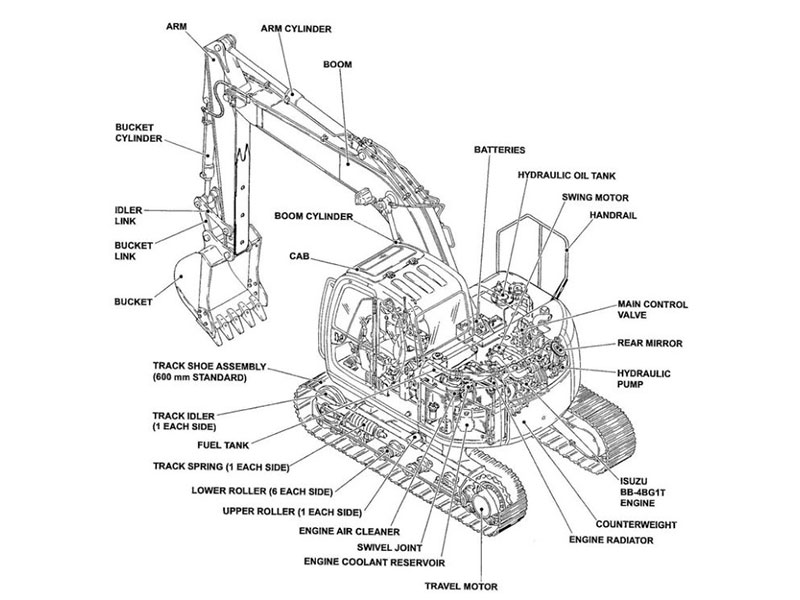
Inspecting used CASE excavator parts starts with verifying the exact machine and component. A part that looks similar may have different fitment, configuration, or condition. Record the machine identifiers, compare the part with applicable documentation, inspect the actual item, and keep measurements and terms together before deciding.
Key takeaways
Match the machine model and PIN or serial range with relevant parts documentation.
Compare part numbers, dimensions, mounting points, and connections.
Inspect the exact component for visible damage, wear, corrosion, leakage, and repair marks.
Use component-specific measurement methods and service limits.
Confirm included pieces, condition details, and applicable transaction terms in writing.
Verify identity and fitment
Record the machine model, product identification number or serial number, configuration, and the part number being replaced. Photograph the identification plate and component markings. Use parts documentation that applies to the machine’s serial range; the model name alone may not identify every version. Note any differences between the installed part, machine records, and catalog details.
Check dimensions and interfaces that affect fit. Depending on the component, compare mounting-hole spacing, shaft or pin size, connector type, port position, bracket orientation, and rotation. Clarify whether seals, spacers, fasteners, or brackets are included or need to be reused. If identifiers are missing or the physical details conflict, pause and ask a qualified technician to confirm the application.
Inspect visible condition
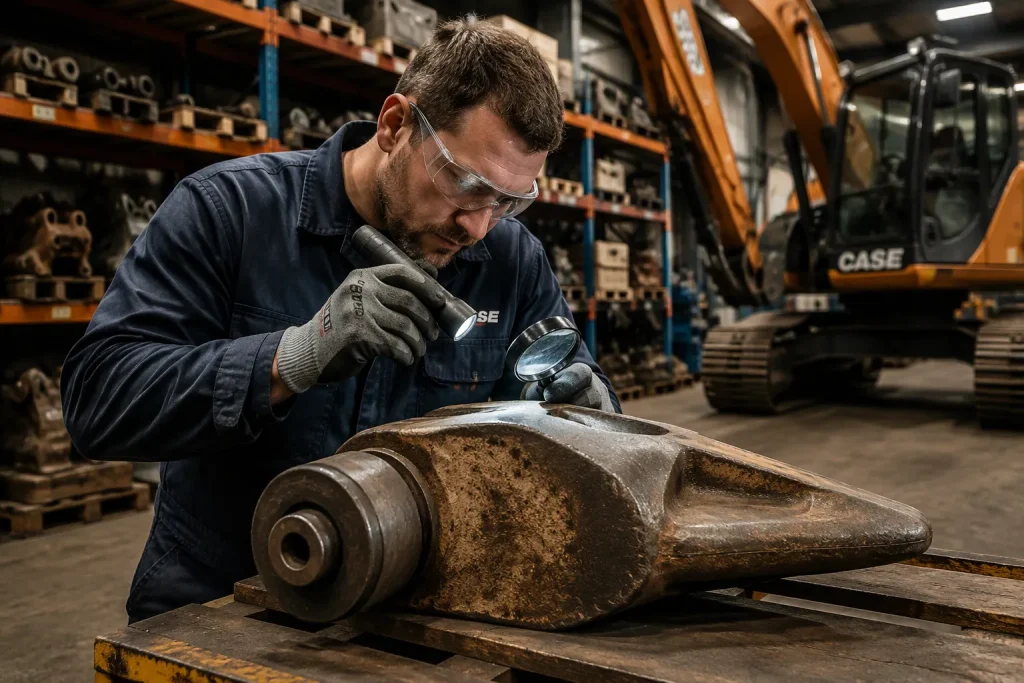
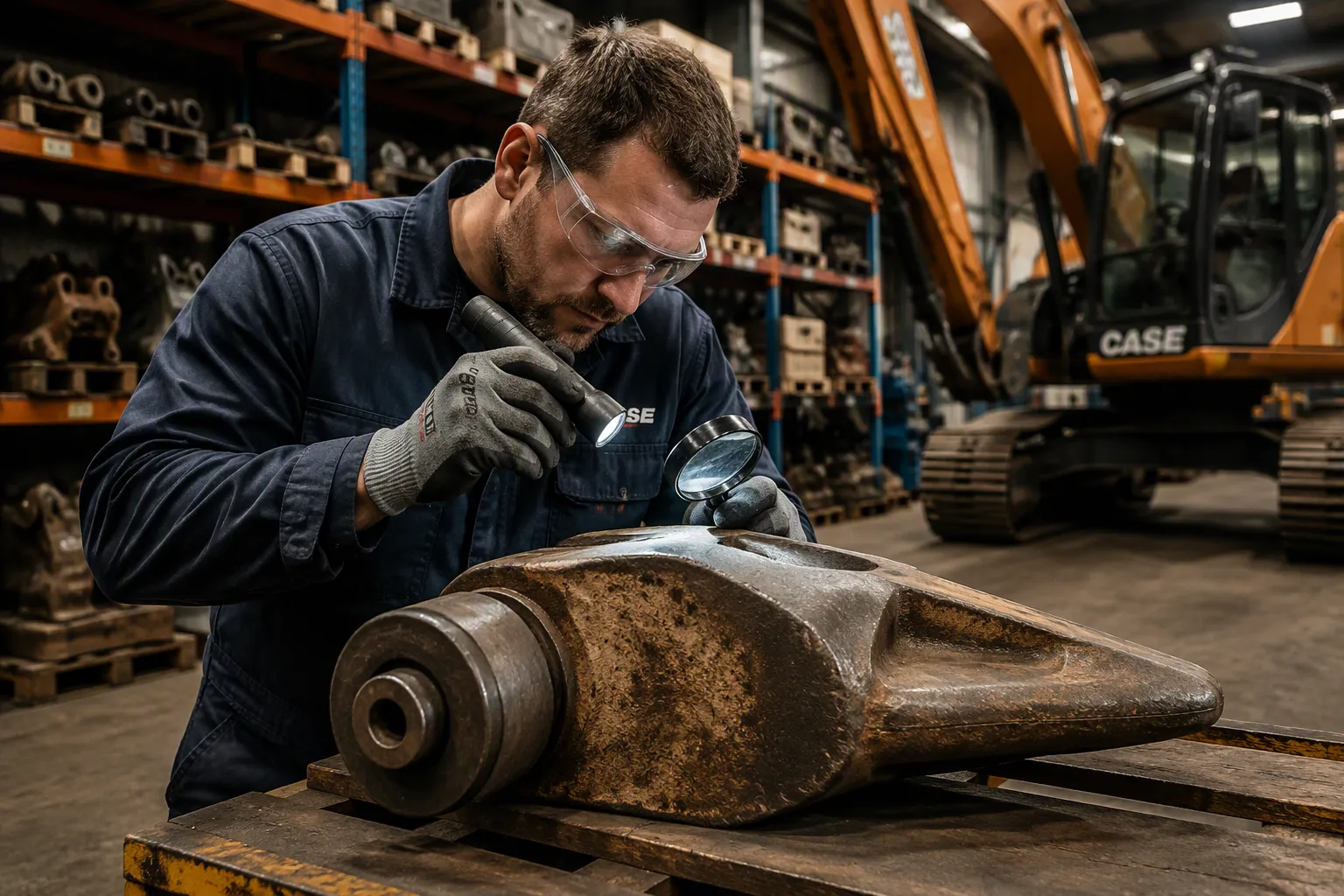
Review clear images of the exact item from several angles. Examine labels, mounting surfaces, ports, threads, connectors, welds, and wear points. Look for cracks, bending, corrosion, scoring, fluid leakage, damaged threads, uneven wear, loose joints, or signs of prior repair. Request a closer view of any area that could affect fit or operation.
Adapt the inspection to the part. A hydraulic component needs a close look around ports and sealing surfaces; electrical parts need connector and wiring checks; structural components need attention around welds and mounts. Appearance cannot reveal every internal condition, so distinguish what you observed from what remains unknown.
Review measurements and test information
Use the measurement methods and limits listed for that component in applicable service information. Relevant checks can include bore size, shaft play, pin clearance, surface thickness, pressure, or flow, depending on the part. Record units, measurement location, method, and conditions. Do not apply a generic limit from a different model. Have unclear or borderline results checked with suitable tools or by a qualified technician.
A useful test record identifies the exact item, procedure, date, conditions, and results. Confirm that the record corresponds to the component under consideration. One check cannot prove every internal condition or predict remaining service life. Treat incomplete or missing evidence as unverified rather than assuming a favorable result.
Confirm the details in writing
List the part number, stated condition, known limitations, and included items. Clarify whether it is a complete assembly or one component. Confirm the total cost, freight, inspection arrangements, and any applicable return terms before deciding. Compare those details with the machine records and repair plan.
Frequently asked questions
How can I check whether a used CASE part fits?
Match the part number with the machine model and PIN or serial range in applicable documentation. Then compare dimensions, mounting details, and connections. Get qualified help if the information conflicts.
What should I do if the part number is missing?
Collect photos of casting marks and labels, component measurements, and machine identifiers. Use parts documentation or a qualified technician instead of guessing from appearance.
Can one test confirm a part’s full condition?
No. A test shows the result of a specific procedure under stated conditions. Review it with visual inspection and measurements, and note what was not checked.
A consistent check of identity, fitment, visible condition, measurements, and item-specific evidence helps reduce assumptions when evaluating used CASE excavator parts. For additional excavator parts information, contact YNF Machinery through its website.