
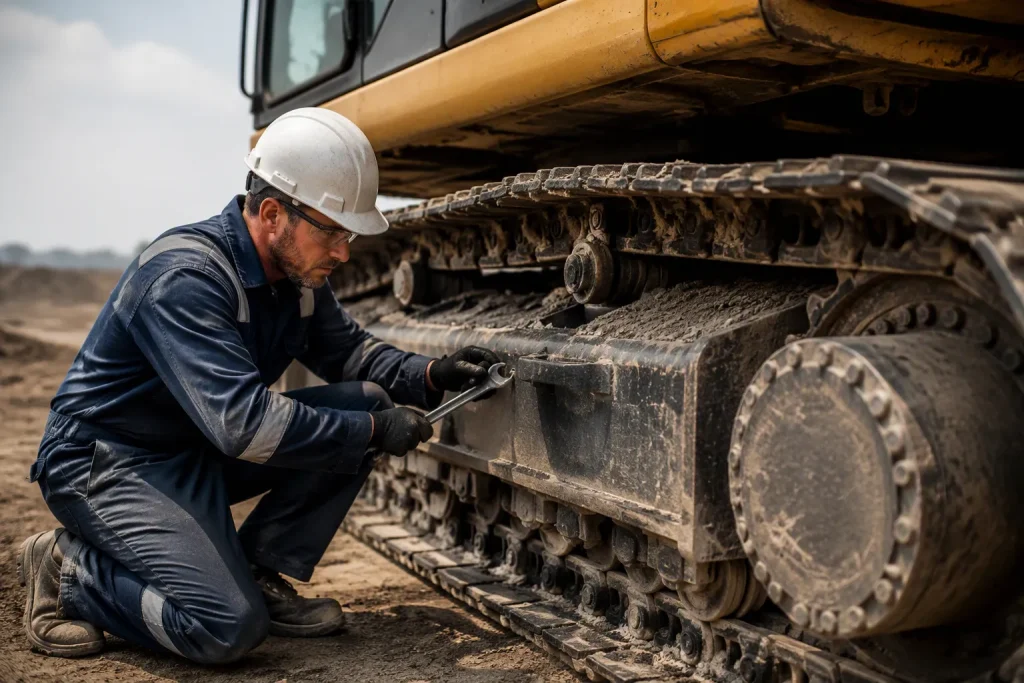
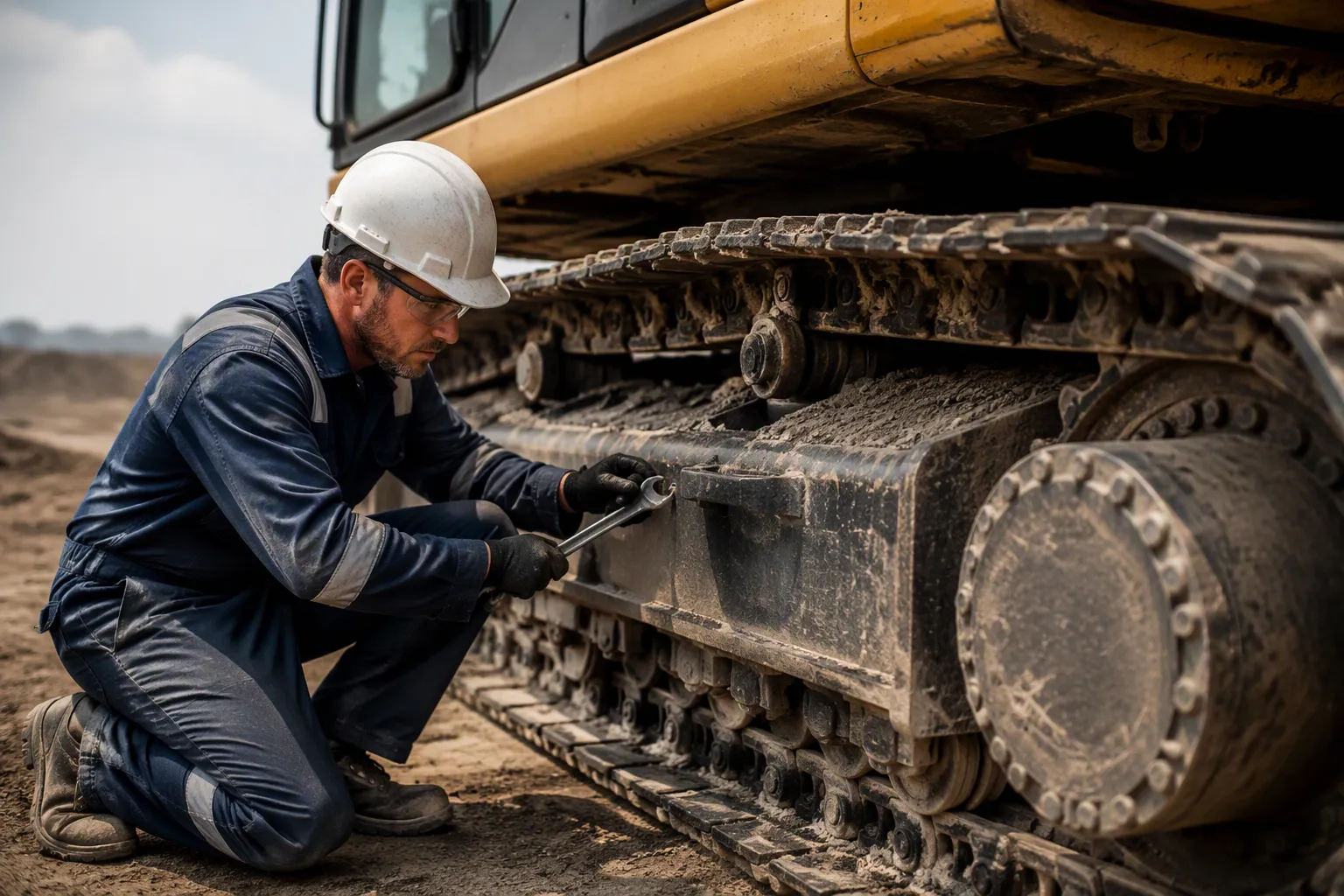
Undercarriage components support machine movement and contact the ground, so regular inspection can help you spot wear, loose hardware, damage, or packed debris before planning service. Exact maintenance steps and inspection intervals vary by machine and jobsite. This guide covers major components, common warning signs, cleaning, track tension, and replacement fitment checks for excavators and bulldozers working in Pennsylvania.
Key Takeaways
Identify key components and use machine-specific service information for inspection and maintenance.
Check tracks, rollers, idlers, sprockets, hardware, and visible leaks for changes or damage.
Remove packed debris using the method recommended by the machine manual and protect sensitive components.
Measure and adjust track tension only with the specified machine procedure and limits.
Verify machine model, serial number, part number, and relevant dimensions before ordering.
Key Undercarriage Components
Track Chains, Shoes, and Rollers
Track chains connect the shoes and help the machine move across the ground. Rollers support or guide the chain, while seals and internal details vary by design. Check the parts for your machine against its service information rather than assuming every system uses identical materials or construction.
Component | Primary Functions |
|---|---|
Track Chains & Shoes | Touch the ground; hold up machine weight; give traction; keep grip on muddy, sandy, or rocky ground |
Top & Bottom Rollers | Hold up the track chains; lower friction; carry machine weight |
Idlers, Sprockets, and Tension
Depending on the design, idlers guide the track and the sprocket engages with the track links. Tensioning systems differ between machines. Use the service manual to identify the correct adjustment method and components before attempting service.
Track tension outside the specified range can affect tracking and contribute to wear. Sag, wandering, unusual noise, or visible tightness are reasons to inspect the machine. Follow the machine-specific procedure and specification; do not guess at an adjustment.
Undercarriage components work as a system. Inspect the chain, sprocket, rollers, and idlers together because wear or mismatch in one area can affect adjacent parts. Record what you see and arrange a qualified inspection when the cause is unclear.
Common Wear Issues and Causes
Uneven Wear Patterns
Uneven or rapid wear can have several causes. Use the following signs as prompts for closer inspection, not as a diagnosis. Check the machine manual for wear limits and service procedures.
Component | Common sign of uneven wear |
|---|---|
Track rollers (bottom rollers) | Flat spots on the roller surface; chain misalignment; seal or grease leakage |
Carrier rollers (top rollers) | Uneven wear or cracks; misalignment or too much noise |
Idlers | Cracks, too much tread wear, or a loose fit with the chain |
Sprockets | Sharp or pointed (hooked) teeth |
Track chains and shoes | Uneven grouser wear or bent shoes from side loading or hard-surface work |
Track tension and alignment | Sagging or overly tight tracks; uneven wear on one side of shoes or rollers |
Loose hardware, damaged shoes, dry joints, or packed debris are warning signs that call for closer inspection. Turns, slopes, and jobsite conditions can affect side loading; operate according to training, site procedures, and the machine manual.
Root Causes of Premature Wear
Travel speed, track spinning, repeated sharp turns, side slopes, abrasive ground, and packed debris may contribute to wear, depending on the machine and conditions. Use trained operating practices and the site safety plan, and inspect when unusual wear appears.
Incorrect track tension may affect the chain, rollers, idlers, or other components. If the track appears too tight or loose, or tracking changes, check it using the machine-specific method and arrange service when needed. Avoid applying a generic adjustment value.
Cleaning and Track Tension Maintenance
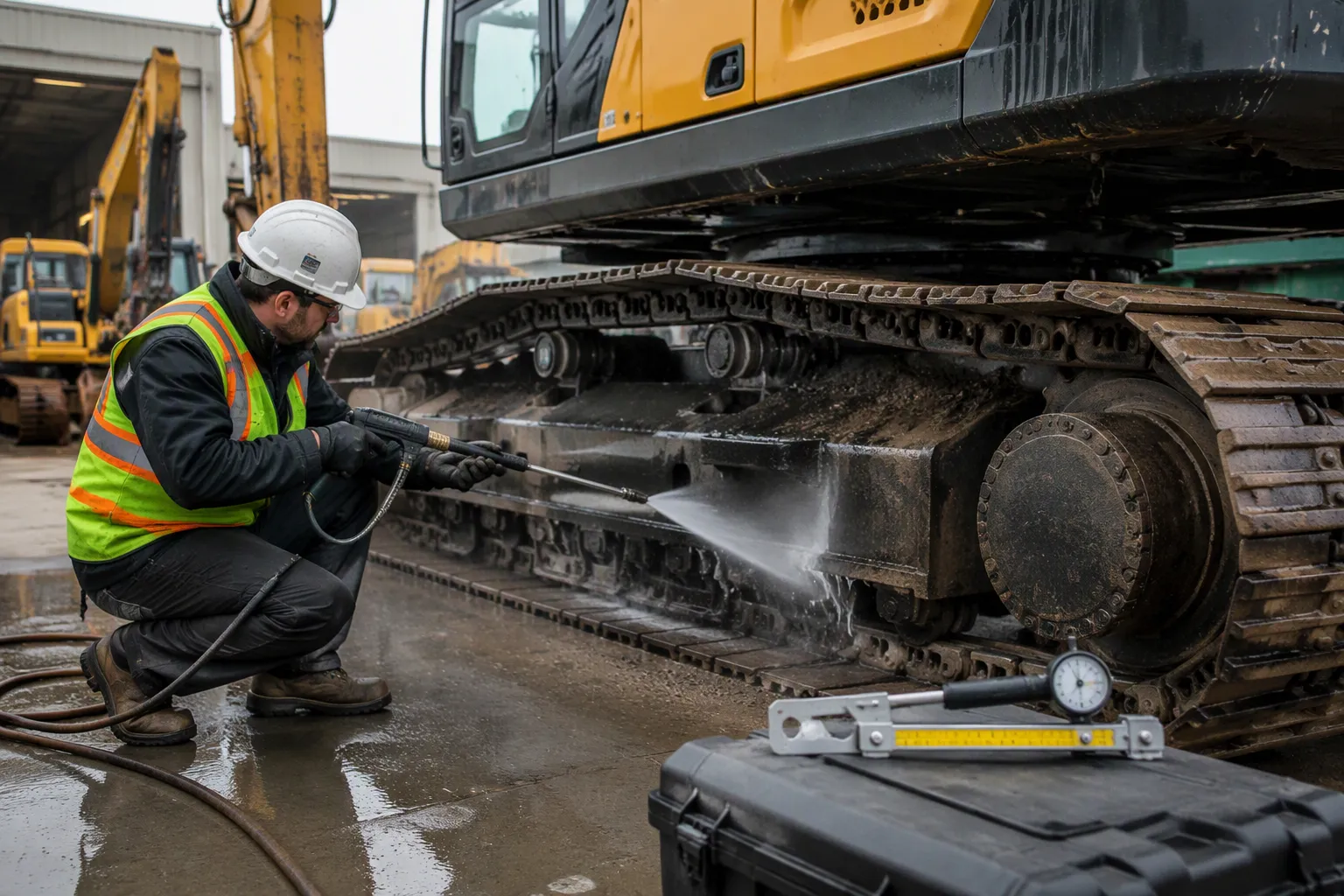
Routine Inspection Steps
Before operation, park and secure the machine as directed by its manual. Look for damaged shoes, loose or missing hardware, visible leaks, packed debris, and changes in track alignment. Do not reach into moving components.
Use this inspection checklist at the interval recommended by the machine manual and jobsite conditions:
Secure the machine according to the manual before inspecting.
Look for damaged or missing shoes, loose hardware, visible leaks, and packed debris.
Inspect sprockets, links, rollers, and idlers for unusual wear or damage.
Compare both sides for unusual changes using the machine service criteria.
Record observations and adjustments, then seek qualified service if damage is suspected.
Inspection frequency and measurement intervals depend on the machine and operating conditions. Follow the service manual for any wear measurements, tolerances, and adjustment procedures. Record findings so changes can be compared over time.
Setting and Checking Track Tension
Check | Guidance |
|---|---|
Track tension | Use the procedure and limits in the machine manual. |
Visible wear | Inspect according to the machine schedule and jobsite conditions. |
Records | Document observations and any adjustments. |
If the track looks slack, excessively tight, or misaligned, use the machine-specific inspection steps before adjusting it. Check adjacent components at the same time, and seek service if damage or unsafe conditions are present.
Regular inspection can help identify changes before a repair is planned, but it does not guarantee longer service life. Set cleaning and inspection timing according to the machine manual, operating conditions, and visible debris or wear.
Jobsite Conditions and Wear
Terrain, Soil, and Debris Factors
Rough or abrasive ground, rocks, sticky soil, slopes, and debris can affect undercarriage wear. The effect varies with the machine, attachments, operating technique, and maintenance history. Inspect for packed material and visible damage after demanding work.
Use travel paths and operating practices appropriate for the job and machine. Avoid unnecessary abrupt turns or spinning tracks when conditions allow, and follow operator training and the site safety plan. Do not trade safe control of the machine for a maintenance shortcut.
Adjusting Maintenance to the Jobsite
Dust, abrasive ground, and debris may call for more frequent cleaning or inspection, but the correct schedule depends on the machine and conditions. Use the service manual and maintenance records rather than applying fixed hour intervals across different models.
Excavators and bulldozers can use different undercarriage configurations and service procedures. Use the correct model-specific diagrams and inspection points, and keep this check focused on the track system rather than assuming other machine components share the same service requirements.
Replacement Signs and Fitment Verification
When to Replace Undercarriage Parts
Cracks, missing or loose hardware, unusual noise, leakage, alignment changes, or visible wear may indicate a service issue. Compare wear with the limits and procedures specified for the machine, and seek inspection if a part is damaged or the cause is uncertain.
Observed sign | Next check |
|---|---|
Uneven grouser wear | Compare with machine-specific wear limits; check traction and hardware. |
Loose or missing bolts | Use the specified inspection and torque procedure; check affected parts. |
Cracks or damage | Arrange inspection according to the manual before further operation. |
Elongated bolt holes | Have the shoe and chain inspected against the service criteria. |
Chain pitch or elongation should be measured with the method specified for the machine. Track riding high on a sprocket, unusual sag, or skipping can be warning signs, but confirm the cause and limits using service information.
Inspect sprocket teeth for uneven or hooked wear, cracking, or poor engagement with the chain. Decide whether service or replacement is needed using the machine-specific wear limits and inspection procedure; there is no universal percentage threshold.
The chain and sprocket should be assessed together because wear patterns can interact. Use machine-specific procedures and verified part references when deciding whether related components require service or replacement.
Replacement scope depends on the condition and wear limits of neighboring rollers and related components. Inspect the group and compare it with the machine-specific criteria before deciding whether one part or multiple parts need service.
Matching Model, Serial, and Part Numbers
Before ordering, identify the complete machine configuration and the specific component. Similar model names may use different undercarriage arrangements, so compare part references, dimensions, and service information.
Record the machine brand, full model, serial number, and configuration.
Check the part number and any documented supersession or cross-reference against verified parts information.
Confirm dimensions, mounting, and connection details for the exact component.
Compare photos and removed-component details; use part-specific information rather than unrelated component tags.
Confirm the machine brand, full model, serial number, and part number. Compare key dimensions and connection details with the removed component or verified parts information, and note any configuration changes or prior replacements. Ask for fitment confirmation when details do not match.
Part selection should be based on the machine details and the component specification. Keep the model, serial number, part number, dimensions, and clear photos together so fitment can be checked before an order is placed.
A consistent inspection routine helps you understand component condition. Identify the parts, follow the machine-specific maintenance procedure, and verify fitment before ordering replacements.
Use inspection notes to plan service based on actual condition and the machine manual. When a warning sign appears, confirm the cause and repair requirements before returning the machine to work.
FAQ
How often should you check track tension?
Check track tension using the method and conditions specified in the machine manual. Park and secure the machine as directed, take the required measurement, and adjust only according to the specified procedure.
What causes a track to come off?
A track can derail because of tension, alignment, worn or damaged components, debris, or operating conditions. Stop the machine and follow the manual safety procedure before inspection. Have a trained technician assess it when the cause is unclear; do not try to reposition a track under load.
Can you replace one roller instead of the whole set?
Whether to replace one roller or several depends on the condition and wear limits of the surrounding components. Inspect the group and follow the machine-specific service criteria before deciding.
How do you know when a sprocket needs replacement?
Inspect for hooked or uneven teeth, cracks, poor engagement, or related chain wear. Compare findings with the machine-specific wear limits and service procedure; do not rely on a universal percentage threshold.
What information do you need before ordering parts?
Before requesting a fitment check, gather the machine brand, full model, serial number, part number, and relevant dimensions. Include clear photos of the existing component and note any configuration changes or previous replacements.
For replacement excavator and bulldozer undercarriage parts, consider YNF Machinery. Share the machine model, serial number, part number, and relevant dimensions so the fitment details can be reviewed before you order.



