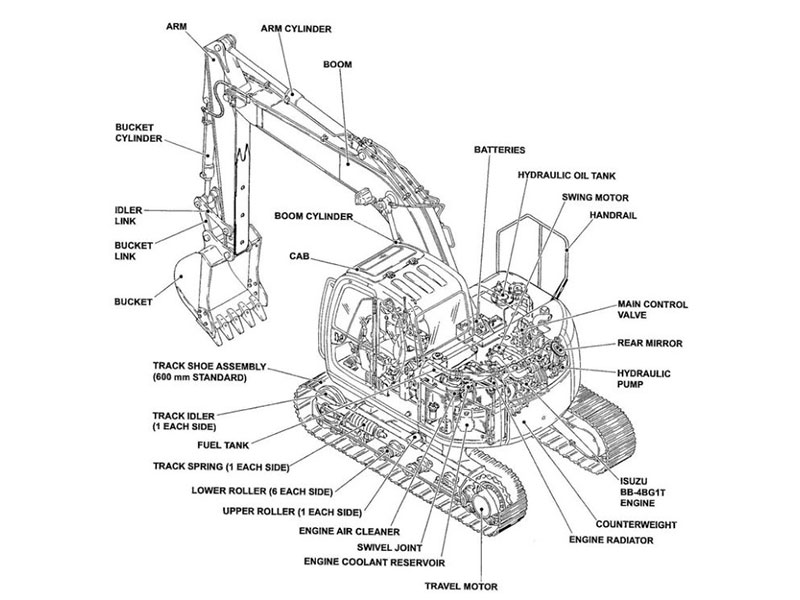
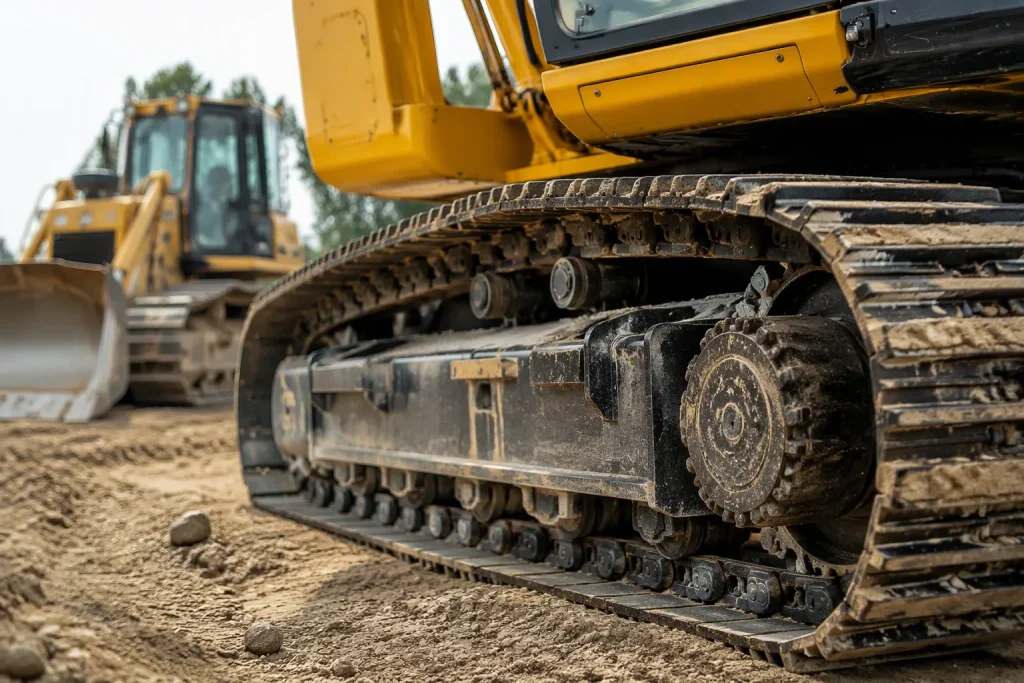
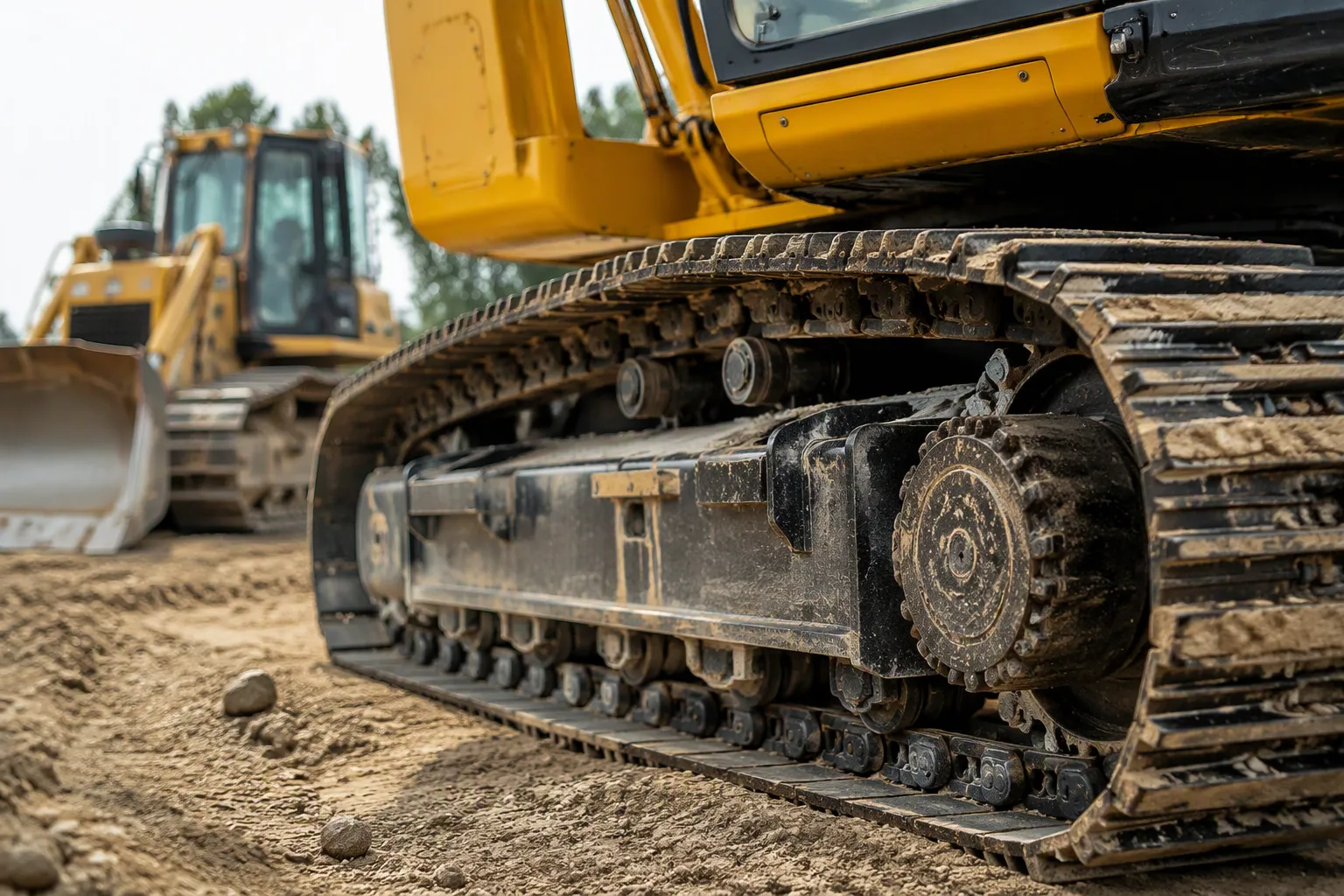
Undercarriage parts make up the track system under an excavator or bulldozer. This system holds up the machine’s weight, gives it grip, and lets it move over the ground. The main parts include track chains and shoes, rollers, idlers, sprockets, track adjusters, track frames, and final drives. Each part does its own job in the system.
Component layouts and service requirements vary by machine, so use the model-specific parts and service information when identifying a replacement.
This article explains what each part does, how the parts work together as one system, and how you check fitment before you order.
Key Takeaways
Undercarriage parts carry the machine’s weight and help it move over rough ground.
Track chains, shoes, and grousers work together to give the machine grip and spread its weight.
Rollers, idlers, and sprockets guide and drive the track chain smoothly.
Where present, adjusters set track tension and recoil components manage loads; procedures depend on the machine design.
Check the machine’s serial number and part number before you order new undercarriage parts.
Main Undercarriage Parts for Excavators and Bulldozers
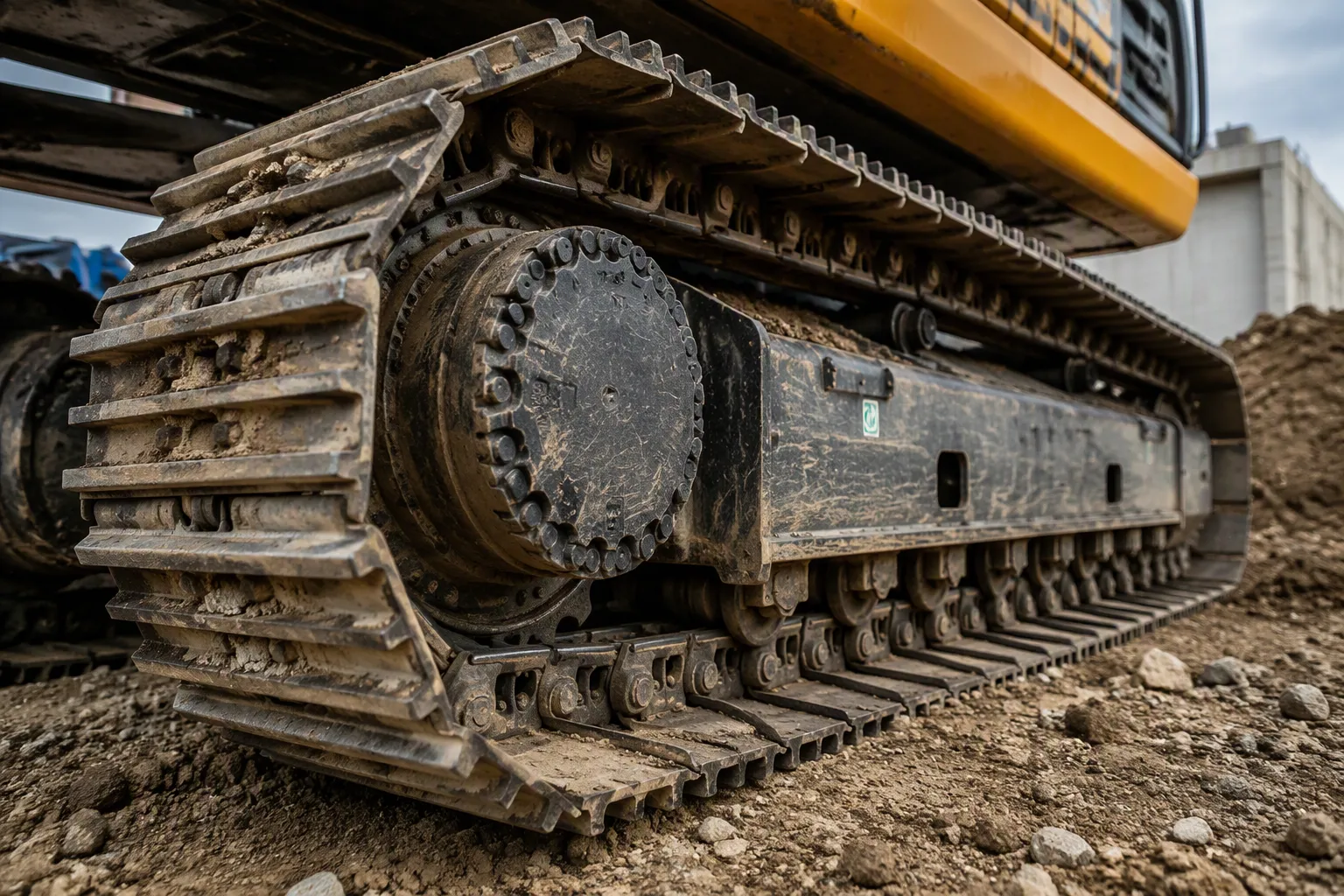
The undercarriage is the foundation of a tracked machine. It carries the entire weight of the excavator or bulldozer and transfers that load to the ground. The track frame is the main structural component of this system. It is a heavy steel structure that mounts to the machine body and holds the rollers, idlers, sprockets, and track adjusters in alignment. A sound track frame keeps every other component in its correct position.
Track Chains, Shoes, and Grousers
The track chain is the continuous loop that carries the machine. It wraps around the sprocket, idlers, and rollers and moves as one closed belt. Track shoes bolt to the chain links and form the ground-contact surface. Grousers are the raised bars on each shoe. They bite into soil and give the machine grip.
Track shoes do several jobs at once:
Track shoes provide the ground-contact surface for the track chain.
Grouser shape affects traction, while shoe width and profile influence contact with the ground.
Select shoes only after confirming the machine configuration and approved application.
Track shoe designs, grouser patterns, and widths vary by machine and application. Use the machine manual and current part information to confirm the correct shoe. Do not assume that a shoe from another machine is interchangeable.
Pins and Bushings
Pins and bushings act as the hinge of the track chain. The pin passes through the pin holes in the links, and the bushing is pressed into the outer links. This joint lets adjacent links rotate flexibly as the chain bends around rollers and idlers. The bushing also minimizes friction between the pin and the link.
Pins and bushings form the joints between track links. Their materials, surface treatments, seals, and lubrication arrangements vary by chain design. Inspect for abnormal looseness, leakage, or wear using the procedure and limits in the machine manual; do not apply a single hardness or service interval to every machine.
Rollers, Idlers, and Sprockets
Track and Carrier Rollers
Bottom rollers support the lower run of the track, while carrier rollers guide the returning chain. Their layout and service requirements depend on the machine design. Use the parts manual to identify the correct component and inspect for abnormal wear, damage, leakage, or restricted movement.
Roller wear or damage may be related to operating conditions, impact, contamination, lubrication design, or track tension. Some rollers are sealed and are not serviced the same way. Follow the machine manual for inspection and replacement procedures.
Idlers and Drive Sprockets
Idlers are the wheels that guide and line up the track at the front of the machine. Sprockets are the toothed wheels that drive the chain. The final drive turns the sprocket, and the sprocket pulls the chain around the loop. Front idlers and rear sprockets must stay lined up correctly. If they are out of line, the track walks sideways during operation.
Inspect the chain and sprocket for visible wear, damage, unusual noise, or poor engagement. Have related wear assessed against the exact machine procedure. Whether to replace one component or both depends on the measured condition and parts guidance.
Track Adjusters and Recoil Springs
Setting Track Tension
Track adjusters are part of the mechanism used to set track tension. Their design and adjustment method vary. Follow the machine manual, use the specified measuring point, and release stored tension only by the stated procedure.
Correct tension keeps the chain seated on the rollers and sprocket. A chain that is too loose can slap, jump teeth, or walk off the idler. A chain that is too tight loads the pins, bushings, and bearings and speeds up wear. Check tension at the point your machine manual specifies, and follow that manual for the correct value and adjustment procedure. Tension changes as the chain wears, so check it on a routine schedule.
Protecting the Track System
Recoil springs are used in some undercarriage designs to help manage loads when the track meets an obstruction. Their arrangement and inspection requirements vary by machine. Consult the parts and service manuals before inspecting or servicing a recoil assembly.
Where fitted, recoil components help manage loads in the track system. Their function and service requirements vary by design.
Where fitted, recoil components help manage track-system loads; the exact function depends on the machine design.
Inspection and service procedures depend on the model and component.
Follow the specified service procedure because a recoil assembly may store energy.
Inspect accessible components for visible damage or leakage as directed by the machine manual. Recoil assemblies may store substantial energy; do not disassemble or adjust them without the specified service procedure and appropriate training.
How Undercarriage Parts for Excavators and Bulldozers Work Together
Load Transfer to the Ground
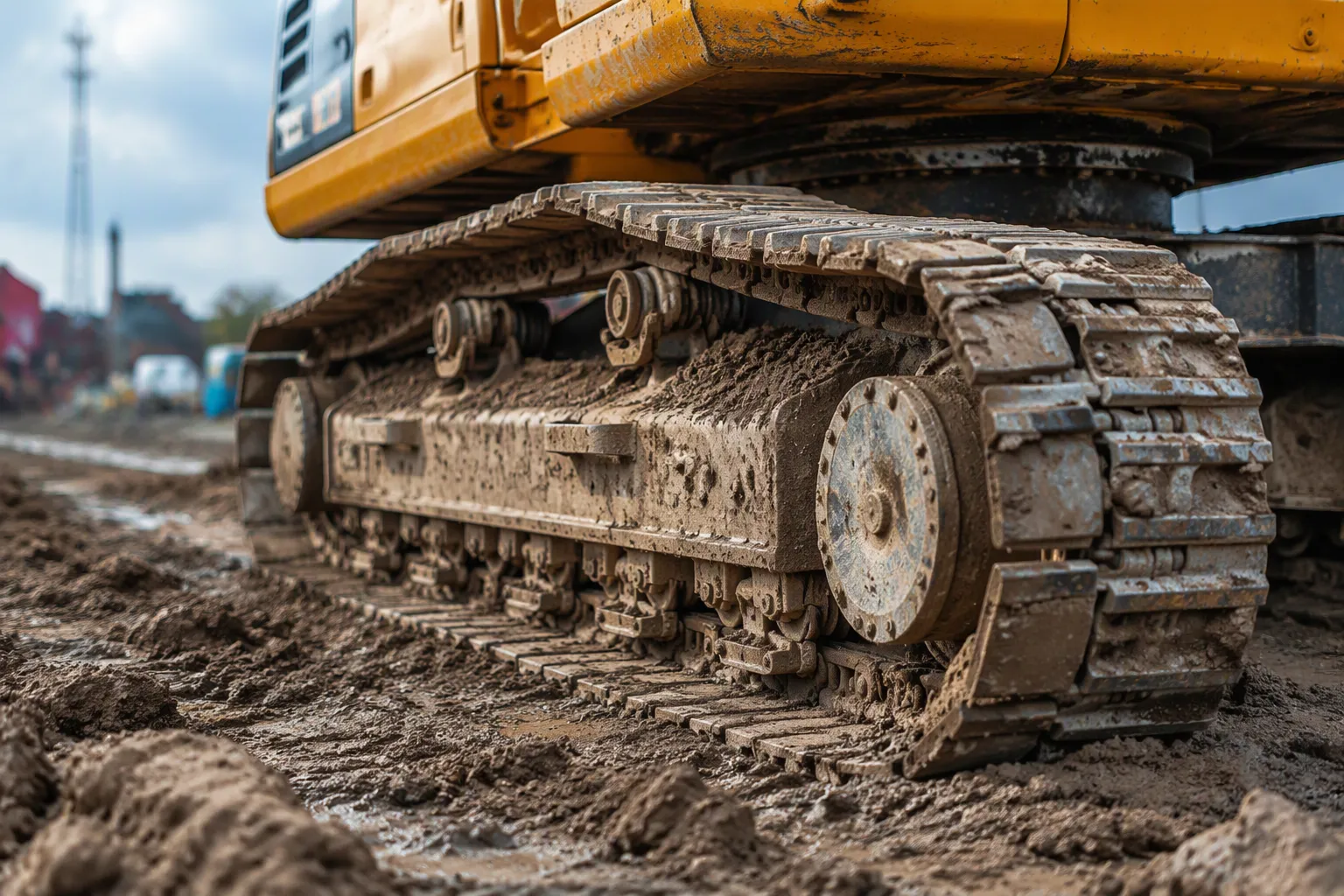
Weight moves through the undercarriage in a clear path. The machine body sits on the track frame. The frame passes the load down to the bottom rollers. The rollers push the track chain and shoes against the ground. The idlers guide the chain at the front and keep it lined up. Every part in this chain shares the load.
The number, spacing, and load carried by rollers vary with machine size and undercarriage design. Use the parts manual for the correct layout rather than applying a general roller count or load estimate.
Why Tracks Are Used
Track design affects traction and ground contact, but results depend on machine weight, track width, shoe design, and ground conditions. Compare the specifications for the exact machine and job.
Traction and ground contact depend on the track and shoe design.
Ground pressure depends on machine weight, contact area, and undercarriage geometry.
Check permitted track and shoe configurations in the machine manual.
Contact area is one factor in ground pressure. Machine weight and undercarriage geometry also matter, so use model-specific specifications when comparing configurations.
Track width and shoe design are selected for the machine and working conditions. Wider shoes are not automatically suitable; verify the permitted configuration and operating limits in the machine manual.
A tracked machine distributes its weight across the portion of the track in contact with the ground. Actual ground pressure depends on machine weight, track dimensions, shoe configuration, and terrain. Use published specifications for the exact model and configuration; avoid assuming a fixed percentage or direct comparison with tires.
Confirming Fitment by Machine and Part Number
Make, Model, and Serial Number
The same model name may cover different serial ranges or configurations. Record the make, complete model designation, and machine serial number or PIN, then use the parts manual or an approved parts lookup to identify the correct assembly.
Serial plate locations vary by manufacturer, model, and production range. Use the operator or parts manual to locate the machine identification plate and record the number exactly as shown.
Before you order, gather these details:
Record the machine make, full model designation, and serial number or PIN.
Record the part number and relevant dimensions or configuration details from the existing component or parts manual.
Ask for confirmation against the exact machine serial range before ordering.
Matching Part Numbers
A cross-reference can help identify a possible replacement, but it does not by itself prove fit or equal performance. Confirm the part number against the machine serial range, dimensions, connection details, and required specifications.
Before ordering, compare the complete part number and relevant dimensions or configuration details with the parts manual. If an interchange is proposed, request confirmation for the exact make, model, and serial range; do not treat a catalog match as a universal fitment guarantee.
Track frames and rollers support the undercarriage, shoes provide the ground-contact surface, and idlers and sprockets guide or drive the chain. Adjusters set tension in designs that use them, while recoil components manage loads according to the machine design. Inspection intervals and replacement decisions should follow the machine manual.
Before ordering, confirm the machine make, complete model, serial number or PIN, and the required part number. Check any configuration differences against the parts manual.
FAQ
How often should you inspect undercarriage parts?
Inspect undercarriage components at the intervals and in the manner specified by the machine manual. Depending on the model, checks may include track tension, sprocket condition, roller seals, and pin or bushing wear. Operating conditions can affect how often additional inspection is appropriate.
What are the warning signs of worn undercarriage parts?
Common inspection cues can include uneven wear, visible damage, leakage at serviceable seals, unusual noise, or poor chain engagement. A loose or walking chain and abnormal track pitch also warrant attention. Check symptoms using the service procedure for the exact machine.
Should you replace the track chain and sprocket together?
Whether to replace a chain and sprocket together depends on measured wear, compatibility, and the machine maker’s procedure. Have the components assessed together and follow the parts manual rather than assuming a fixed rule.
How does track tension affect undercarriage life?
Correct tension keeps the chain seated on the rollers and sprocket. A loose chain can slap, jump teeth, or walk off the idler. An overly tight chain loads the pins, bushings, and bearings and speeds up wear. Set tension to the value in your machine manual and recheck it as the chain wears.
What details do you need to confirm fitment?
For undercarriage parts, contact YNF Machinery with your machine make, model, serial number, and part number to request a fitment check and current product details.