
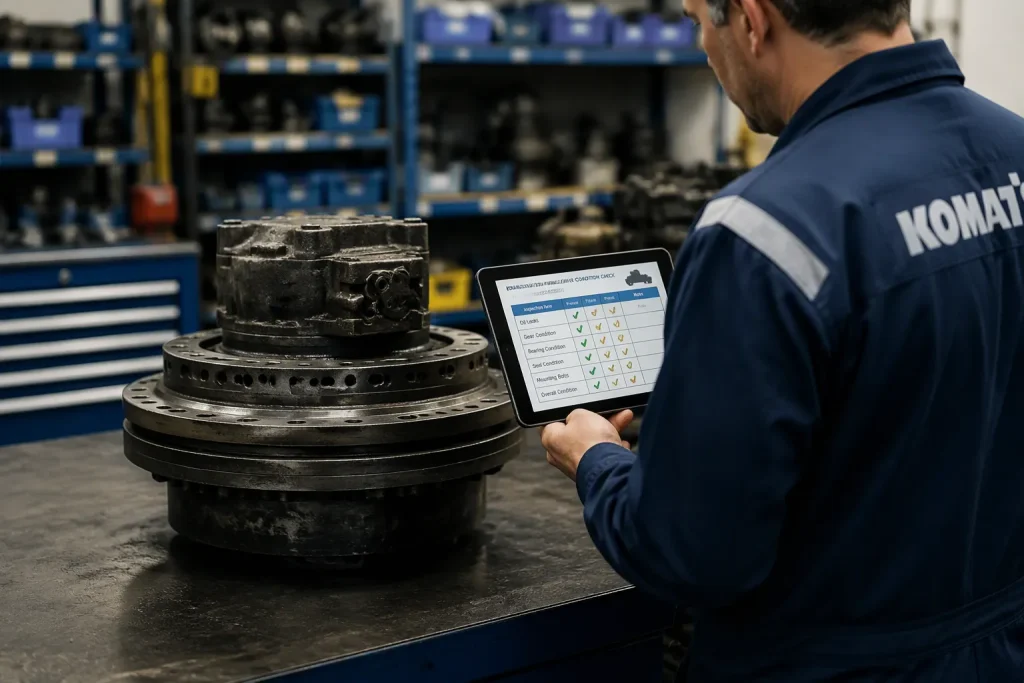
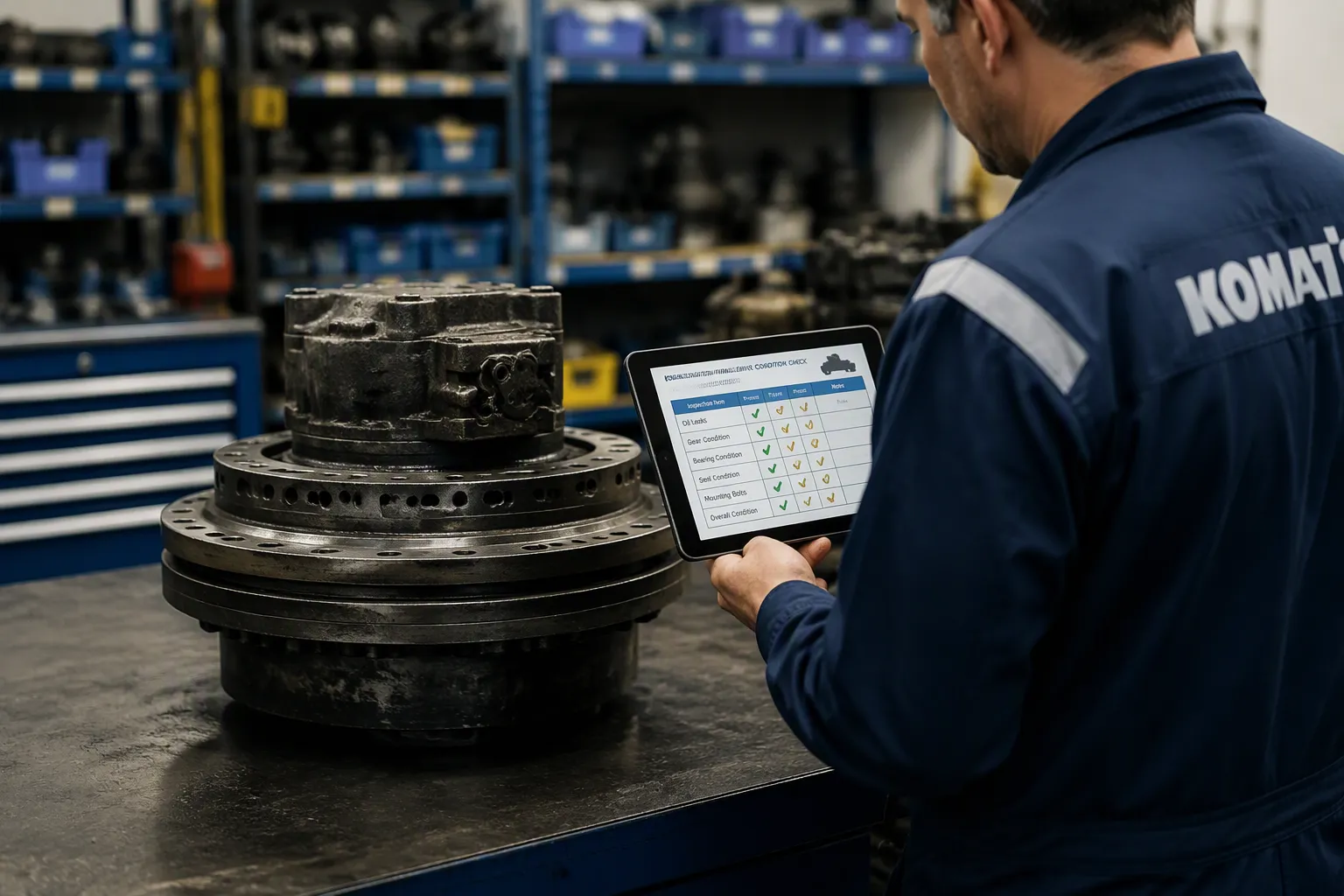
You use condition records to judge a used final drive, but those records vary a lot. Some come in incomplete. Others mislead. This final drive buying guide gives you a method you can repeat: read the record, check that it is real, confirm it through a qualified inspection, check exact fitment, then weigh cost against condition. Only documented, verifiable information counts here. You will find no made-up specifications and no claims that it fits every machine. Treat this as your used excavator buying guide checklist for any replacement final drive listing, including used Komatsu excavator parts for sale. Use it before you commit.
Key Takeaways
Before you buy a used final drive, ask for complete service records and inspection reports.
Check the records by matching the serial numbers and part numbers on all the documents.
Hire a qualified inspector to check the final drive and confirm what the seller says.
Make sure the exact part number matches your machine model and serial number.
Compare prices based on the condition written down, not just the lowest price.
What Condition Records Should Include
A useful condition record identifies the actual assembly, inspection scope, findings, work performed and limitations. Not every used unit has internal inspection records; treat missing evidence as uncertainty rather than proof of condition.
Core Documentation Elements
Request the documents available and record what is missing. Useful evidence may include the following, depending on the actual history and assessment scope:
Complete service records that name the work done and the date of each entry
Rebuild scope and the reference criteria used, where a rebuild is claimed
Component rebuild documentation covering bearings, gears, and seals
Complete service and maintenance logs tied to the machine’s serial number
Part number and model identification that matches the unit being sold
Strong, complete service records also show who did the work. A full service history from one owner reads differently than scattered notes from several hands. Treat missing items as questions, not reasons to reject, and ask the seller to explain each gap.
Maintenance History and Internal Wear
Review available maintenance, repair and inspection entries, including the work scope and item identification. Neither an original unit nor a rebuilt unit is automatically preferable; compare the actual findings, limitations and terms.
Ask a qualified assessor to explain inconsistencies between the records and the component. Resolve those differences before ordering rather than assuming either source is always correct.
Testing Record Authenticity
Cross-Checking Entries
Distinguish the donor machine identification, component identification and orderable part reference. These numbers serve different purposes. Check that each document consistently refers to the relevant machine or actual assembly and that the sequence of dates is explained.
Ask how records are tied to the offered unit. Readable identification photographs, documented work scope and assessor details can support traceability. A casting mark or a long file alone does not establish identity or authenticity.
Red Flags of Thin Records
Some warning signs show up again and again. Watch for these patterns:
A final drive described only as “good condition,” with no inspection details
Maintenance logs with no dates, no shop name, and no serial number
A history that begins after removal, with the earlier service history unavailable
Photos that show a clean housing but no internal documentation
Treat each flag as a reason to ask for more evidence, not proof of fraud. Honest sellers can explain a gap. They can produce records that match the final drive in front of you. When the file stays thin after your questions, the risk is yours. Compare final drives on what the seller can prove, and let the unverifiable unit stay on the shelf.
Inspection and Critical Inspection Points
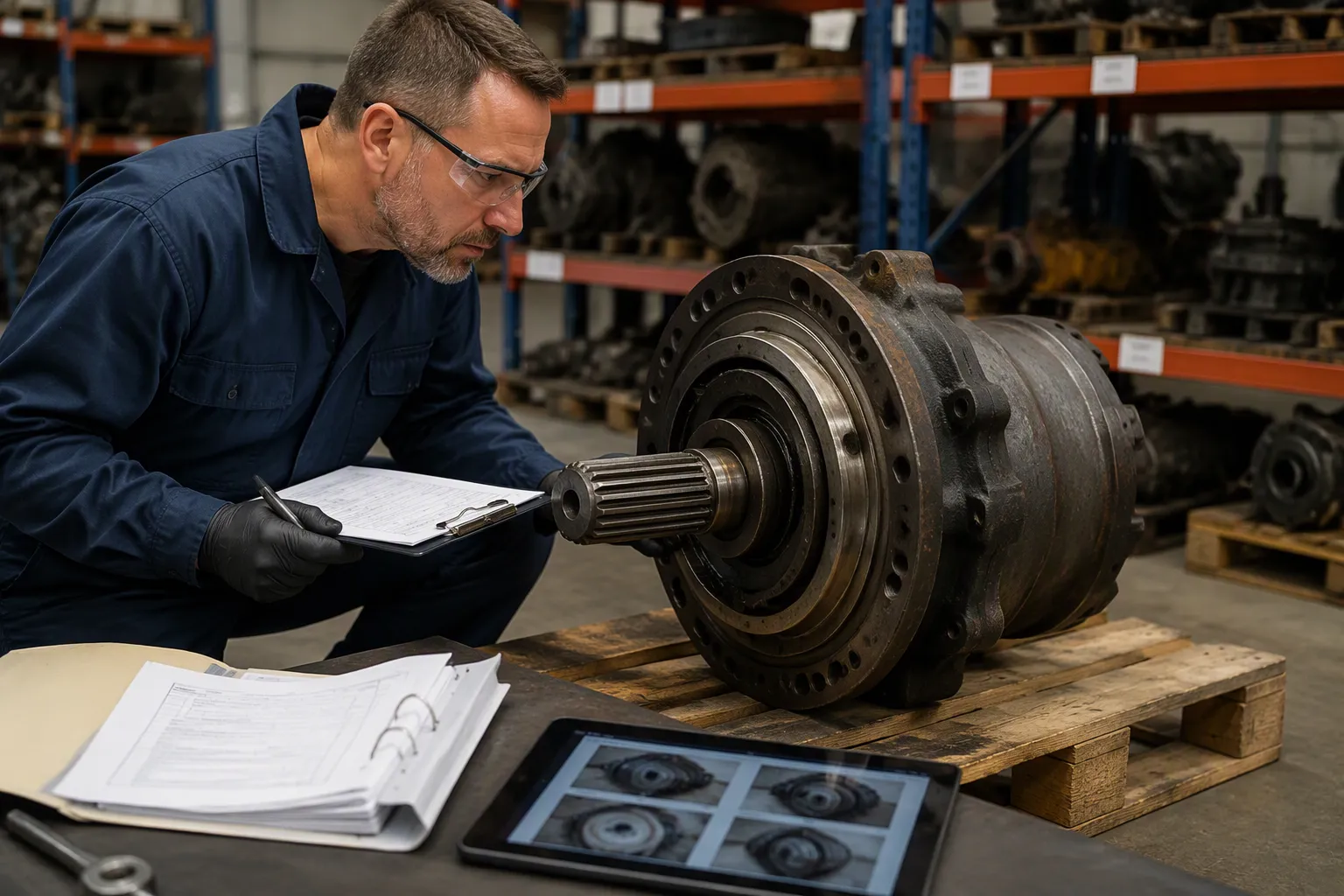
Arrange an assessment by qualified personnel familiar with the applicable drive assembly. The report should state what was examined, the method, findings and limits. An inspection supports the decision but does not guarantee future performance.
What a Qualified Inspector Verifies
Ask the assessor to identify the actual motor, reduction assembly or combined unit and the supplied scope. The applicable inspection points depend on that design and may include housing, mounting, interfaces, leakage, contamination or internal condition where appropriately assessed. Request the actual findings and reference criteria rather than a generic checklist marked as certified.
Any opening, internal measurement or functional testing should be performed only by qualified personnel under the applicable service procedure. Request actual-item photographs and readable identification where relevant; do not require identifying information to be hidden.
Matching Findings to the Record
Compare the seller claims with the assessment scope and findings. A record of replacement work does not establish present condition by itself. Ask a qualified specialist to explain discrepancies and unresolved questions before acceptance.
Compare units using the same evidence categories while respecting differences in assessment scope. A fuller report may reduce some uncertainty, but its findings and limitations matter more than its length or format.
Final Drive Fitment by Model
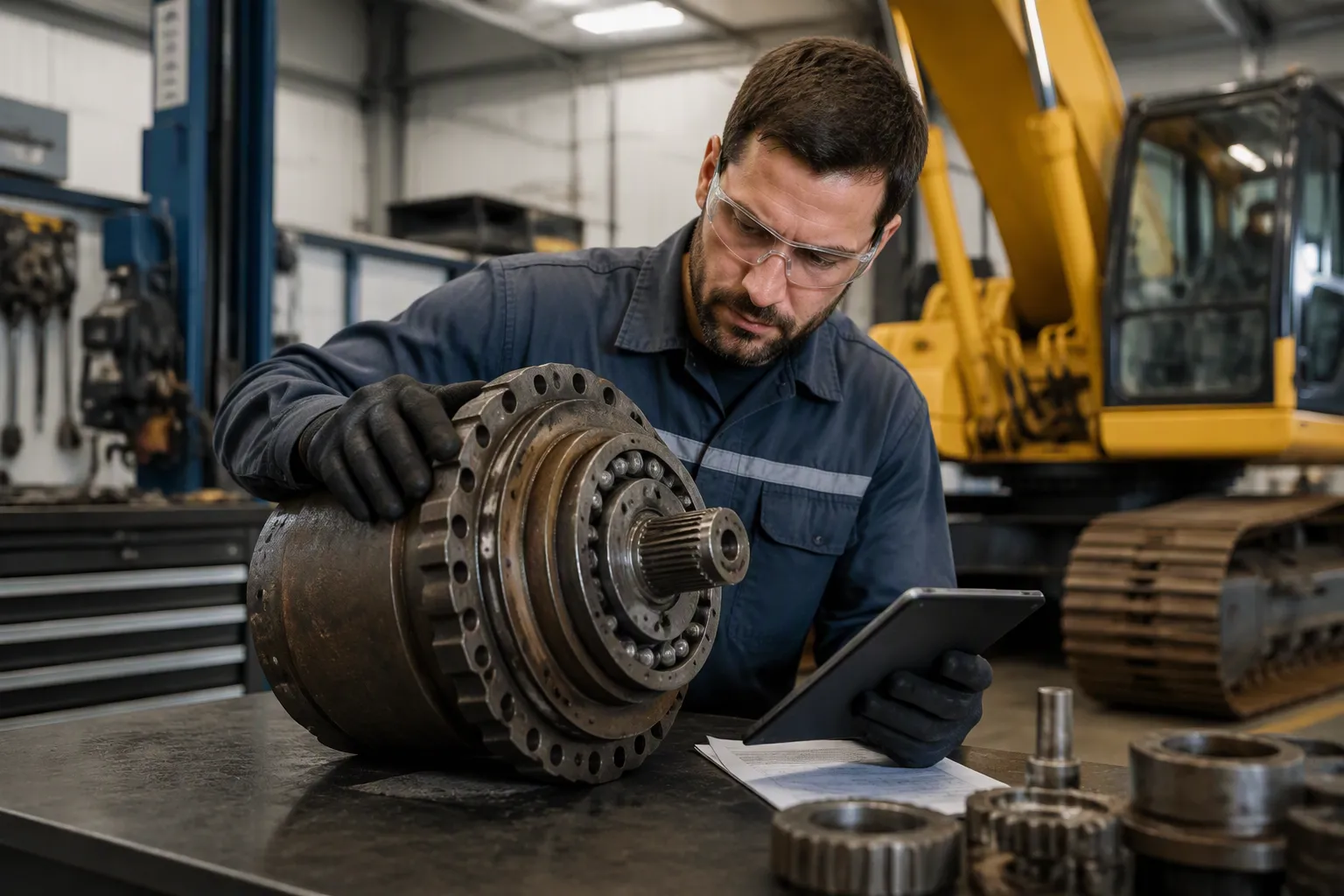
Do not assume either interchangeability or incompatibility between model lines. Confirm the proposed assembly against the actual machine identification, configuration and applicable part reference.
Why Universal Claims Fail
A multi-model listing can only support a purchase when the seller provides a documented match for the specific application. Similar mounting does not establish the required hydraulic, reduction or control compatibility.
Compatibility issues often hide in small details. Mounting bolt patterns vary. Output shaft splines vary. Hydraulic motor interfaces vary. A final drive that looks right on the outside can be wrong inside. Never accept a broad fitment claim as proof. Ask for the model, serial number, and part number of the machine the unit came from. Then compare those details against your own machine’s records.
Confirming Exact Part Number Match
Use the full machine identification and configuration to establish the applicable service part reference. Check the actual offered assembly and any documented replacements or supersessions with a qualified specialist. A number match alone does not prove complete fitment or condition.
Follow these steps to confirm the match:
Write down your machine’s model and serial number from the data plate.
Look up the correct final drive part number for that machine.
Request actual-unit identification and the basis for its proposed service part reference.
Resolve differences, including documented replacement references or supersessions, with a qualified specialist.
Ask a qualified technician to check that the unit matches before you buy.
Record the supported application match and any restrictions. If numbers differ, investigate the reason rather than guessing; if identification is missing, obtain additional supported evidence before committing.
Keep fitment references and qualified findings with the order. They support the decision but do not replace receiving checks or the applicable installation procedure.
Cost Versus Verified Condition
Compare actual quotations alongside compatibility evidence, condition findings, included items and agreed terms. Documentation alone does not determine fair price or future repair cost.
Comparing Units on Documented Evidence
Use a comparison sheet for quoted price, actual supply scope, identification, assessment findings, documented repair work and remaining uncertainties. Define labels such as used, repaired, refurbished and rebuilt by the actual work performed.
Request equivalent evidence where possible and note differences rather than assigning an automatic premium or discount. Include quoted freight, required accompanying items and agreed return responsibilities in the comparison.
Where Each Option Fits Best
An undocumented unit remains uncertain even if the buyer has a workshop. Obtain appropriate verification before purchase or record why the unresolved risk prevents proceeding. A documented unit still requires review of the findings, limitations and applicable fitment.
Shop for used Komatsu excavator parts for sale with this framework in hand. Weigh used vs. refurbished listings on the same scale. Check that every final drive carries a condition story you can trace. A documented used vs. refurbished unit competes fairly with any other documented unit. That is the whole point of comparing on evidence.
Check every listing with five steps. Ask for a complete record. Make sure the record is real. Set up a qualified inspection. Confirm the exact model and part number fit. Then judge cost against proven condition. These five steps work for any final drive you compare.
Walk away from records you cannot verify. Do not fill gaps with guesses.
Buyers who look for used Komatsu excavator parts for sale should expect proof, not promises. A final drive with a file you can trace earns its price. A final drive without one earns a pass.
Use the accepted evidence file as the reference for receiving checks. The article photographs illustrate workshop context and are not condition records for any offered unit.
FAQ
What should you check first in a condition record?
Start with the serial number and part number. Follow both through every document in the file. Then make sure the dates and shop names match. A final drive with matching entries across the whole file gives you a base to verify. Mismatches deserve questions before you go further.
Can you trust a listing that says “good condition”?
No. That phrase describes nothing you can check. Ask for inspection reports, service history, and rebuild documentation instead. A final drive with a thin file stays unverified, no matter how clean the photos look. Let the paperwork carry the claim, not the adjective.
How do you confirm a final drive fits your machine?
Have a specialist confirm the applicable service part reference for the actual machine and offered assembly, including any documented replacement reference. Record relevant interface and configuration checks; a number alone does not establish a known fit.
Should you buy an undocumented unit?
Only proceed once appropriate identification, application and condition verification support the decision. In-house service capacity does not itself establish the condition of an undocumented component.
Who should verify the unit before purchase?
A qualified inspector at a shop that services excavator undercarriage and drive parts. That technician confirms the actual component, checks the critical inspection points, and writes down each finding. You compare that report against the seller’s file. Skip this step and you carry the risk alone.
For excavator parts sourcing, consider YNF Machinery. Share full machine and component identification, applicable part references and quantities, and request supported compatibility information, an actual quotation, and written warranty and return terms before ordering.



