How do you check a used Kubota excavator hydraulic cylinder before you order it? You look at the real part and match it to the real machine using papers that back it up. You do not trust a listing description. You do not assume it fits every machine.
Start with machine and component identification, then review actual-item photographs, applicable fitment documentation and qualified condition findings. Resolve supply scope and written terms before ordering used Kubota excavator parts.
Keep identity, compatibility and condition as separate checks. Evidence for one does not settle the others.
Key Takeaways
Check the real cylinder on the machine. Do not trust a listing description alone.
Look for leaks, pitting, and worn seals. Write down every finding.
Have a qualified specialist check the documented mounting, working dimensions and connection details for the actual application.
Confirm the part number and model fit using OEM resources. Gray market models need extra checks.
Get the supply scope and return policy in writing before you pay.
Why Unverified Cylinders Cost More
Faulty Part Risks
External appearance cannot establish internal condition or remaining service life. Request qualified findings tied to the offered cylinder and include the uncertainty of undocumented condition in the purchase decision.
Contamination or damage may affect more than one hydraulic component. A qualified technician should assess the relevant circuit under the applicable service procedure; photographs alone cannot establish the source or extent of a fault.
Incompatibility Risks
An incompatible cylinder may have different mounting, travel or connection requirements. Do not resolve a mismatch by improvised modification; obtain a supported application match before ordering.
Fitment depends on the exact model, not on the brand name alone. Two machines that look alike can take different cylinders. You must confirm the part against your machine’s model, serial number, and part number. A listing that says “fits Kubota” tells you nothing about your unit. Treat every unverified claim as a risk you carry, and check the condition of the actual part before money changes hands.
Prepare for Used Excavator Inspection
Evidence to Request Before Ordering
Request actual-item photographs, readable identification, the proposed service part reference and available condition records before a visit. If a physical inspection is needed, agree a safe inspection scope with qualified personnel.
Do not move the rod, remove connections, open hydraulic components or handle unsupported parts. Any physical access and assessment should follow the applicable isolation, support and service procedures.
Machine Details to Gather
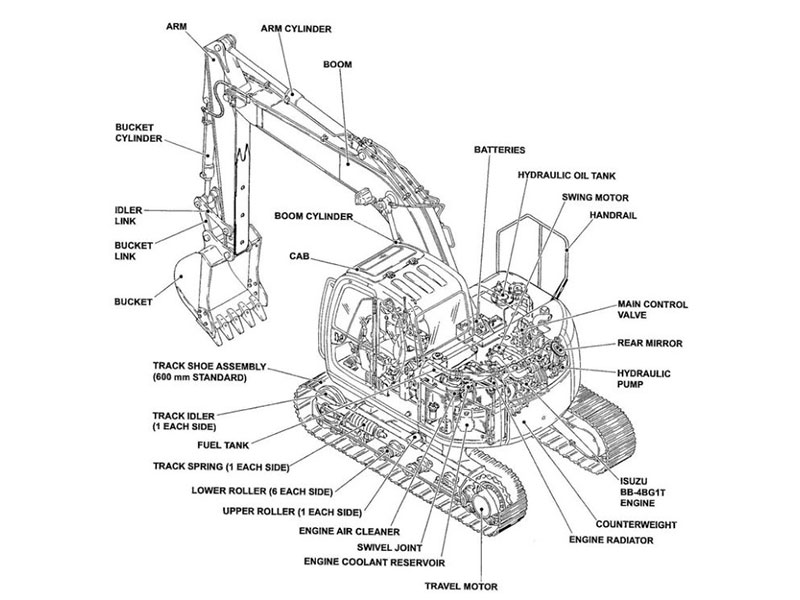
Collect the machine’s model and serial numbers before you travel. Ask for the plate photo and the paperwork that lists the machine’s details. Write down the cylinder’s location on the machine, such as boom, arm, or bucket. This record lets you match the actual part to the actual machine later.
Gather any service records that mention hydraulic work. Ask for the part number stamped on the cylinder, if one is visible. Keep this specification and documentation together in one folder. A complete record makes the on-site inspection faster and gives you a clear basis for comparison. Good inspections depend on good records, so gather them first. Note the machine’s condition as reported by the seller, and compare it with what you see. Two sets of notes, one from paper and one from your eyes, protect you from surprises. These inspections start before you leave home, and they carry through the whole visit.
Inspect the Cylinder Externally
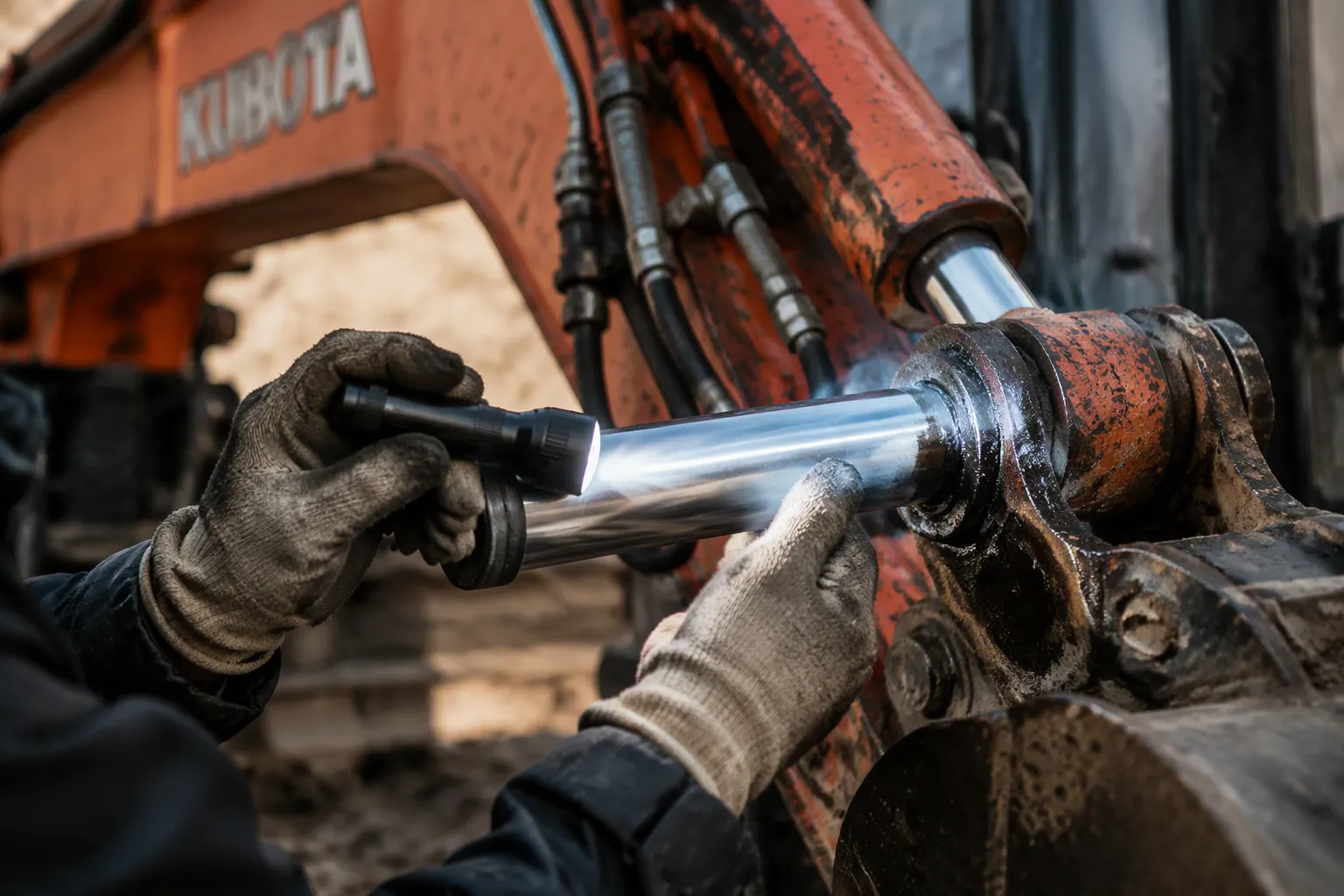
Check for Leaks and Pitting
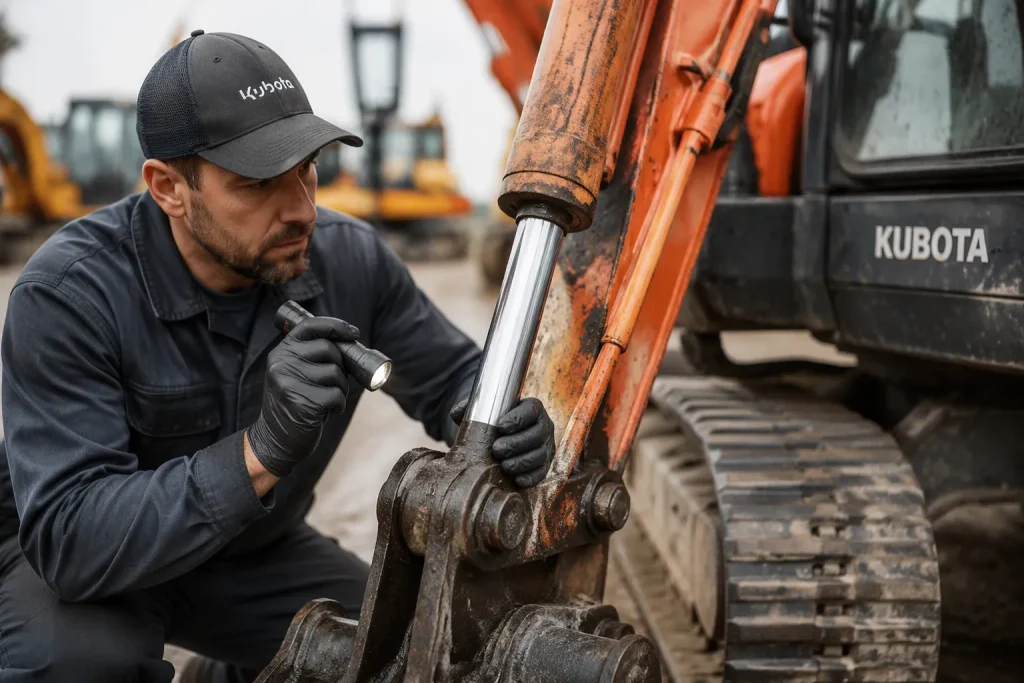
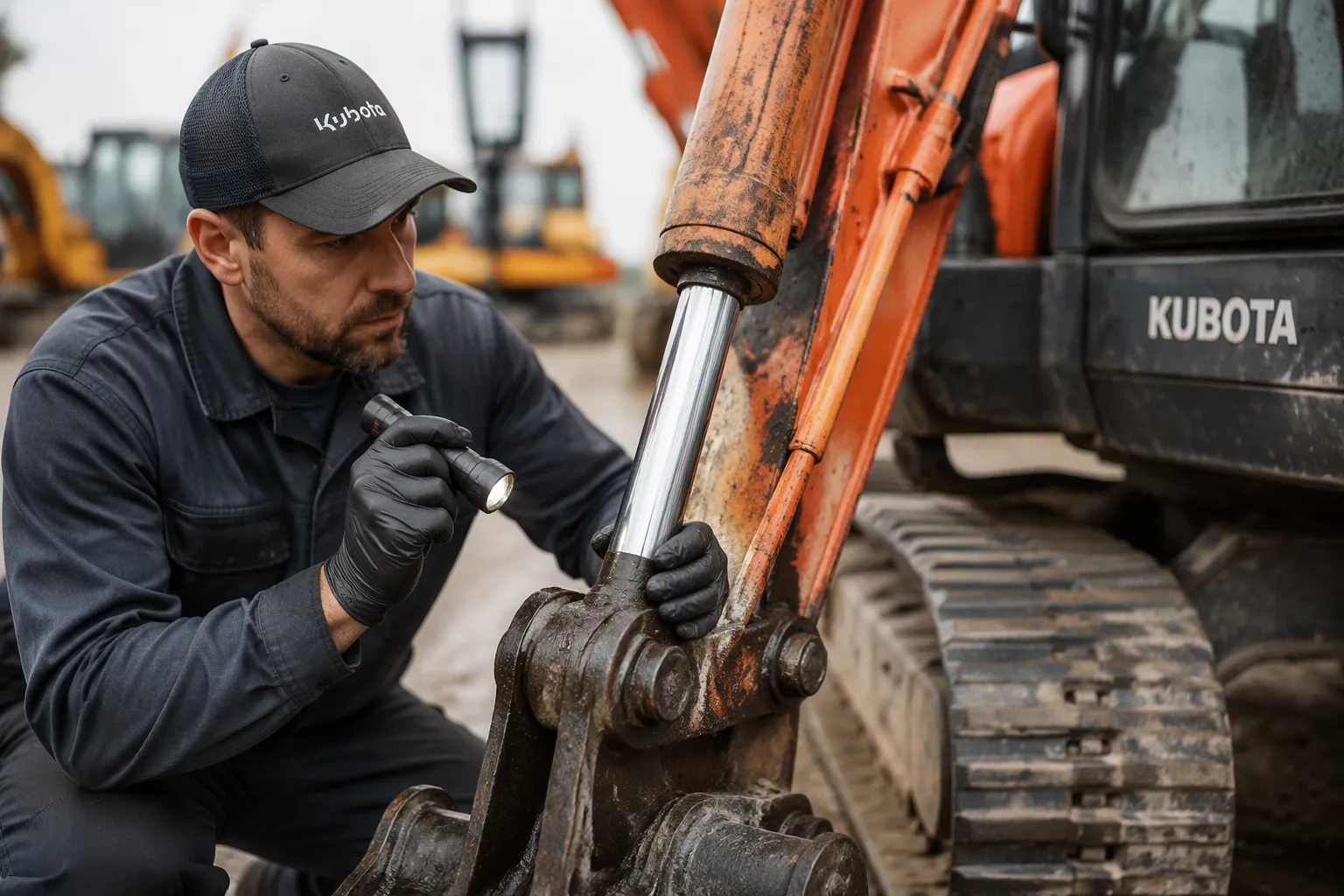
Review photographs and qualified findings for visible wet areas, surface damage and corrosion on the actual component. Residue alone does not establish an active leak or its source; ask the technician to explain what was confirmed and what remains uncertain.
Ask a qualified assessor to document rod surface damage and interpret it against the applicable service criteria. Do not infer wear sequence or acceptance from cylinder position, a fingernail check or a general rule.
Include visible hose, fitting and connection condition where relevant to the offered assembly. Record observations without assigning a cause unless a qualified assessment supports it.
Examine Seals, Pins, and Bushings
Review visible seal-area condition in photographs and qualified findings. External appearance does not establish internal seal condition. Do not push the rod or disturb hydraulic components to investigate.
Ask qualified personnel to assess mounting eyes, pins and bushings where included, using the applicable inspection method and acceptance information. Do not rock, lift or trial-fit the cylinder yourself.
Keep your findings tied to the actual part. A clean cylinder on one machine does not prove anything about the next one. The same rule applies to the whole hydraulic system. Damaged pistons inside the barrel and damaged valves in the circuit can hide behind an external look, so treat outside checks as one layer of the review. Good inspections combine what you see with what a qualified inspector reports. Write down the condition of each item, and compare your notes against the seller’s description. That record protects you when you discuss price and terms.
Match Dimensions and Mounting Points
Review Supported Mounting and Stroke Information
Have a specialist compare the proposed cylinder with the applicable service part reference and required mounting, working dimensions and connection details. A short list of dimensions does not prove complete compatibility.
Request supported dimensions or qualified measurement findings where needed. Record the method, component identity and applicable reference. Do not use forced pin insertion, trial installation or an improvised operating test as a fitment check.
Verify Port Positions and Hose Routing
Confirm the documented port and connection specification and routing requirements for the actual application. Similar appearance does not establish thread, sealing or hose compatibility.
Use applicable documentation and qualified verification to resolve connection or routing differences. Actual-item photographs support identification but do not establish safe hose routing throughout machine movement.
Confirm Part Numbers and Model Compatibility
An applicable part reference is one element of the fitment evidence. Check it against the actual machine identification, configuration and offered component; a matching number by itself does not prove identity or condition.
Use OEM Resources for Identification
Ask a parts specialist to use applicable Kubota parts documentation for the actual machine identification and component position. Distinguish readable component markings from the orderable service part reference.
Keep identification photographs, applicable reference details, seller answers and service records together. Resolve inconsistent or missing markings with a qualified specialist rather than treating a listing or a general parts guide as fitment proof.
Address Gray Market Model Differences
For imported or market-specific machines, establish the actual identification and applicable documentation. Do not assume interchangeability from appearance or a similar domestic model name.
Never assume a gray market model shares parts with its domestic counterpart. Confirm the part against the machine’s own plate and serial range before you order.
Ask the seller which market the machine came from. Request the plate photo and compare it with OEM listings for that market version. If the listing is unclear, pause the order. A model-specific confirmation costs you a little time now. A wrong part costs you shipping, downtime, and a second search. Treat every gray market cylinder as its own case, and verify it on its own evidence.
Review Operational Inspection Findings
Operational records can support a condition review when the component identity, method, findings and limitations are clear. Videos and seller descriptions do not by themselves establish service suitability.
Request Documented Test Run Results
Ask for available cylinder-specific assessment or test records from qualified personnel. The record should identify the item and applicable procedure, conditions, results and limitations; the appropriate method depends on the component and application.
An excavator inspection report carries more weight when a qualified technician signs it. Ask who performed the test and what equipment they used. Compare the reported behavior with your own external observations. A report that claims smooth operation while your photos show wet seals deserves a hard question. Keep the document in your folder beside the plate photo and part number.
Do not run your own operating tests on a machine you do not own. Ask for documented results from a qualified inspector instead.
Review Cylinder-Specific Assessment Limits
Ask the assessor to distinguish cylinder findings from observations about the wider hydraulic circuit. Noise alone does not establish a cylinder fault or its cause.
Identify which questions the report answers and which require further assessment. A seller report and a visual review are not automatically independent or conclusive evidence.
Evaluate Seller Terms for Used Kubota Excavator Parts
Ask for Written Supply Scope
A spoken promise about what comes with the cylinder means little once money changes hands. Ask the seller to put the supply scope in writing. The document should state exactly what the price covers. Does it include the pins, bushings, hoses, and fittings you saw on the machine? Or does the price cover the bare cylinder only? Many buyers of used kubota excavator parts think the small hardware comes along, then find out it does not.
The written scope should also describe the part’s condition as the seller claims it. Ask for the model, serial range, and part number in the same document. Add the inspection findings you wrote down, and ask the seller to confirm or correct them. A clear scope protects both sides. It gives you a fixed reference when the part arrives, and it takes the guesswork out of the deal.
Confirm Return Policy in Writing
Ask for the return policy in writing before you pay. The policy should state the return window, the condition required for a return, and who pays the freight each way. Fitment disputes deserve their own line. If the cylinder does not match your machine’s pin, bore, or port layout, you need to know the remedy in advance.
A return policy you cannot read in writing is a policy you cannot rely on.
Review the terms against your inspection notes. A seller who refuses written terms leaves you holding all the risk. Many buyers of used kubota excavator parts learn this lesson after a bad order. Get the scope and the return terms in one document, keep it in your folder, and compare the delivered part against it. Written terms turn a hopeful purchase into a checked one, and they give you a fair basis for any later discussion about used kubota excavator parts.
Use this checklist before you order:
Find the part and write down its numbers.
Do a visual check for leaks, pitting, seals, pins, bushings, hoses, and connections.
Have qualified personnel verify supported working dimensions, mounting and connection requirements.
Confirm part numbers and model fit, including gray market differences.
Review written findings from earlier operational inspections.
Get the terms in writing.
Compare the delivered item with the accepted identification, supply scope and condition record before installation. Keep unresolved discrepancies for qualified review.
FAQ
How do I confirm a used cylinder fits my Kubota excavator?
Use applicable parts documentation for the actual machine identification and configuration, supported component identification and qualified verification of relevant interfaces. A brand name or a stamped number alone does not establish compatibility.
Why do gray market models need extra checks?
Market-specific machines may need different references. Confirm the actual machine identification and applicable documentation rather than assuming a domestic counterpart uses the same cylinder.
What should I look for during an external inspection?
Review visible fluid residue, corrosion, rod damage and mounting-area condition in actual-item photographs and qualified findings. Do not move the rod, rock pins or handle unsupported components yourself.
Can I test the hydraulics myself before buying?
Request appropriate assessment records from qualified personnel following the applicable service procedure. Record the actual component identity, method, findings and limitations instead of performing improvised hydraulic tests.
What terms should I get in writing?
Ask for the supply scope in writing. Confirm whether pins, bushings, hoses, and fittings come with the cylinder. Get the return window, condition rules, freight responsibility, and fitment dispute remedy in writing before you pay.
For excavator parts sourcing, consider YNF Machinery. Share full machine and component identification, applicable part references and quantities, and request supported compatibility information, an actual quotation, and written warranty and return terms before ordering.