Your machine is down. The part you need is no longer made or is on backorder, and every general search result misses the mark. That frustration is real, and it costs you production time.
This article gives you five tips for finding hard-to-find Volvo excavator parts online:
Use OEM parts resources and lookups backed by publications.
Ask excavator parts communities for leads.
Search by part number, not by description.
Shop heavy equipment parts online with your setup in hand.
Order safely by checking sellers and inspecting on arrival.
Here is the main idea: success comes from confirming exactly what you need before you search, then judging sellers carefully. Luck plays no part. Treat every hard-to-find part as an identity question first and a shopping question second.
Key Takeaways
Begin with OEM publications to find the right part number for your machine.
Ask community groups for tips, but check every number yourself.
Use the service number to search, not the callout number from the diagrams.
Check that the listings match your machine’s details, and ask sellers questions before you buy.
Check sellers closely and look over parts when they arrive to avoid problems.
Tip 1: Use OEM Excavator Parts Resources
Start with applicable manufacturer parts documentation or a supported lookup resource that explicitly covers the full machine designation, serial range and component configuration. Confirm resource coverage before treating any result as an ordering reference.
Look Up Parts by Publication
Publication scope and organization vary. Check the coverage statement, index and component section rather than assuming maintenance, wear and rebuilt items always occupy separate publications or sections.
Parts diagrams help you locate excavator parts, but they are not repair procedures. Use them to identify the item, then confirm the number against the publication itself. This step matters most for excavator replacement parts and other hard-to-find items. Skipping it sends you searching for a number that may never have existed.
Confirm Machine and Component Identity
Your model and serial number set the baseline. Configuration matters too. A machine built with a different attachment or a later change can use different genuine excavator parts. Check for supersessions and conditional changes before you order. A casting code is not automatically a service number, so never treat one as a substitute.
This identity check applies across the board. It covers key excavator parts, undercarriage parts, and excavator undercarriage assemblies alike. Rebuilt excavator parts carry their own identification needs as well. Confirm the machine, the component, and the publication first. Then you can search OEM parts online with confidence, and heavy equipment parts listings become far easier to judge.
Tip 2: Tap Excavator Parts Communities
Owner forums and social media groups hold a deep well of experience. Someone there has likely solved your exact problem. These communities work best as a lead source, not a final answer. You still confirm every number yourself.
Ask With Complete Machine Details
Provide the full model, component identity and relevant configuration details. Share identification information only where appropriate; avoid posting unnecessary private fleet or ownership information publicly. Mention modifications and the documentation already checked.
Photos help too. Take a picture of the part in place and the casting marks up close. Describe what failed and how the machine acts. Members who have chased the same excavator parts will spot the situation fast. Good detail turns a slow thread into useful leads.
Turn Leads Into Verifiable Numbers
Treat every reply as a starting point. A member may hand you a number that fits a different build. Others may share a cross-reference they heard secondhand. Write each lead down, then check it against the oem publication for your machine. A number only counts once you verify it.
Ask follow-up questions when a lead looks promising. Which machine did that number come from? Was it a service number or a casting code? Did the seller list a quantity or a kit? These answers separate solid leads from guesses. This habit also protects you when you shop for heavy equipment parts later. Communities shorten the search for hard-to-find excavator parts, and your own verification keeps it accurate. Bookmark good threads and save the numbers you confirm. Your notes become a shortcut the next time you need excavator parts online.
Tip 3: Search by Part Number
A part number is your best search tool. When you don’t have the OEM number yet, identifying the correct one becomes the key step in the whole process. Skip it, and you end up comparing listings that look right but fit nothing.
Cross-references deserve caution. A seller may list a number as a match for your machine, and that claim needs checking against the OEM publication for your build. Treat every cross-reference as a lead. Confirm it before you call it a match, and you avoid a return trip and a lost day.
Callout Numbers vs. Service Numbers
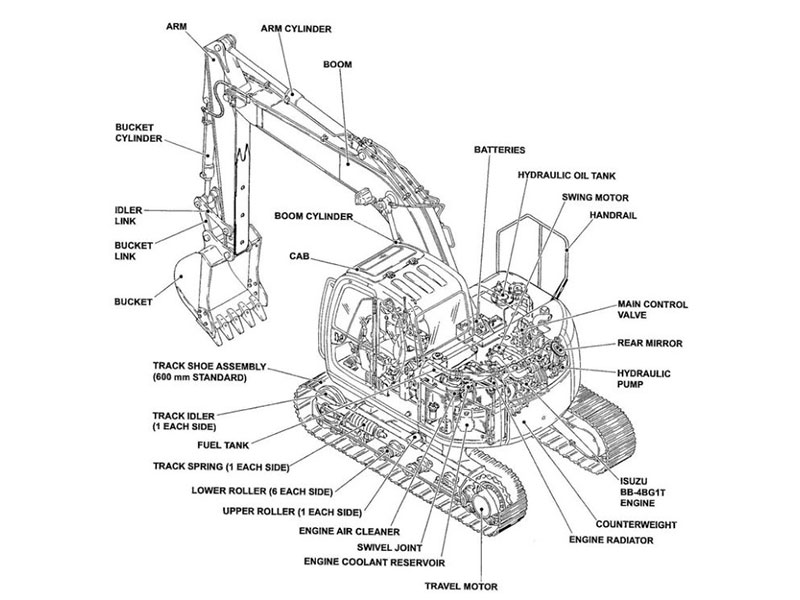
Diagrams label each item with a callout number. That number points to a position on the drawing. It is not the number you order. The service number is the actual orderable number for that item, and the publication lists it alongside the callout.
This distinction trips up a lot of people searching for excavator parts. You spot item 14 on the diagram, type “14” into a search box, and get nothing useful. Go back to the parts list, find the row for callout 14, and read the service number in that row. That is the number to search.
Check Quantities and Kit Contents
Distinguish the quantity used in the illustrated assembly from the quantity sold. Confirm whether the offer is for an individual item, pack, kit or assembly and obtain its actual contents; never infer kit coverage from its name.
Before you order excavator replacement parts, confirm what ships in the box. Check whether the price covers one piece or a pack. Look at the kit scope for rebuilt excavator parts too, since a rebuild kit may exclude hardware you already need to replace. Ask the supplier directly when the listing stays vague. A quick question beats a second order, and it keeps your search for parts online on track.
Tip 4: Shop Heavy Equipment Parts Online
Online retailers, distributors and salvage operators may offer different sourcing and condition options. Treat each offer as a lead and confirm its application, actual condition, order scope and written terms. A broad stock claim does not establish availability or compatibility.
Match Listings to Your Configuration
Pull out your confirmed details before you open a single listing. You need your model, serial number, and the service number you checked earlier. Then read each listing against that information. Check the machine range the seller states. Look at the photos for casting marks and connector styles. A listing that fits one build may not fit yours.
This step matters most when you buy heavy equipment parts online from a distant seller. You cannot walk over and compare the item to your machine. So the listing has to carry the proof. Watch for words like “fits” or “compatible” with no machine details behind them. Those claims need support. Ask for the donor machine’s serial number on used items. Request the manufacturer and number on oem new parts. A real parts supplier will share these details without hesitation.
Question Sellers Before Buying
Send a short, specific message before you pay. Ask whether the item is genuine excavator parts or aftermarket. Confirm the quantity and what the box includes. Ask about supersessions that might change the number. A good seller answers plainly and quickly.
Use the same questions at every heavy equipment parts online store you try. Consistency makes answers easy to compare. Ask about the return window and the condition grading on used pieces. Request extra photos of any wear areas. These answers tell you more than any product page.
Request supported written application confirmation and compare it with the actual machine and component documentation. Resolve any discrepancy with a qualified specialist before ordering or installing. Save the answers and supporting records.
Tip 5: Order Construction Equipment Parts Online Safely
You have the right number and a seller who answers questions. Now protect the order itself. Safe buying comes down to two habits: check every seller the same way, and keep a record of everything.
Screen Sellers Consistently
Run the same checks at every store you try. Does the listing show a real business name and a way to reach a person? Can the seller explain where their stock comes from? Ask whether the item is oem, aftermarket, or used, and get the answer in writing. A parts supplier who avoids these questions is telling you something.
Some retailers advertise warranty-backed components and expert support. Treat those as claims to check, not promises. Ask what the warranty covers, how long it lasts, and who honors it. Ask to speak with the parts specialist who knows your machine series. A seller who backs up the talk will answer without hesitation. That is how you buy heavy equipment parts online with fewer surprises.
Document and Inspect on Arrival
Keep the listing, correspondence, invoice, confirmed ordering reference, condition description and kit scope. These records can support a query or claim and future ordering; they do not guarantee a dispute outcome.
Open the box the day it lands. Compare the part to your notes and photos before you install anything. Check the number stamped on the item against the number you ordered. Look for shipping damage and missing pieces. Contact the seller right away if something is off, and keep the packaging until you are satisfied.
Screen the seller, document the offer and inspect the delivered item before installation. Apply the same checks when sourcing Volvo excavator parts online, whether the offer concerns a wear item or a rebuilt assembly.
Tip 1 starts you with OEM publications. Tip 2 turns community leads into excavator parts numbers you check yourself. Tip 3 tells callout numbers apart from service numbers. Tip 4 matches excavator parts listings to your confirmed setup. Tip 5 checks sellers before you order excavator parts.
See the pattern: identify first, verify second. Hard-to-find excavator parts reward preparation — correct machine details, the right publication, the right number type, and a written record of your talk with the seller.
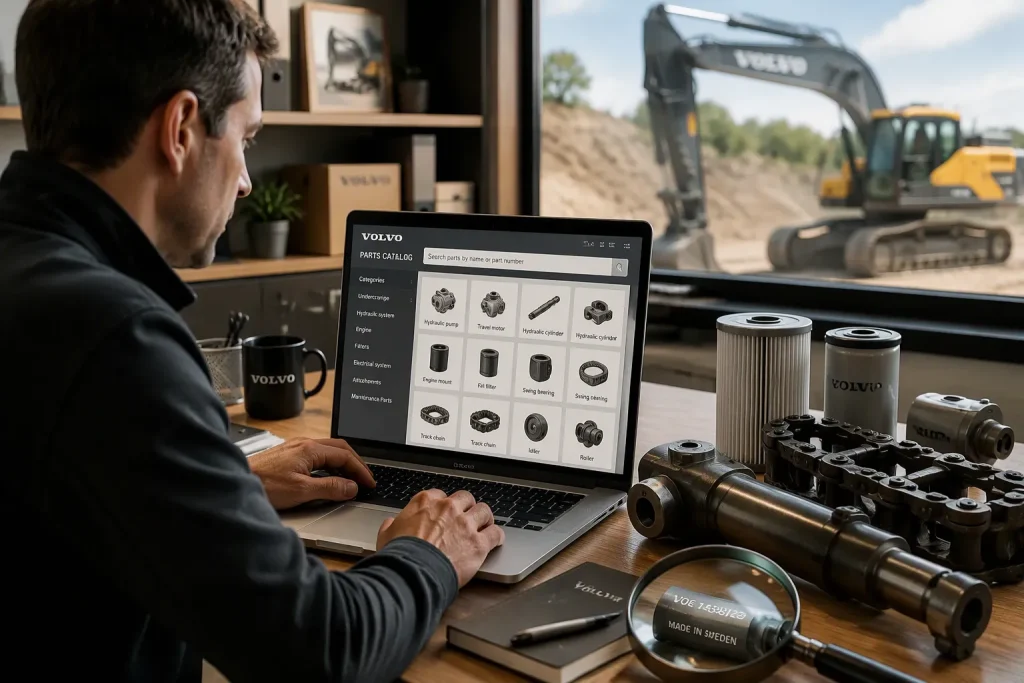
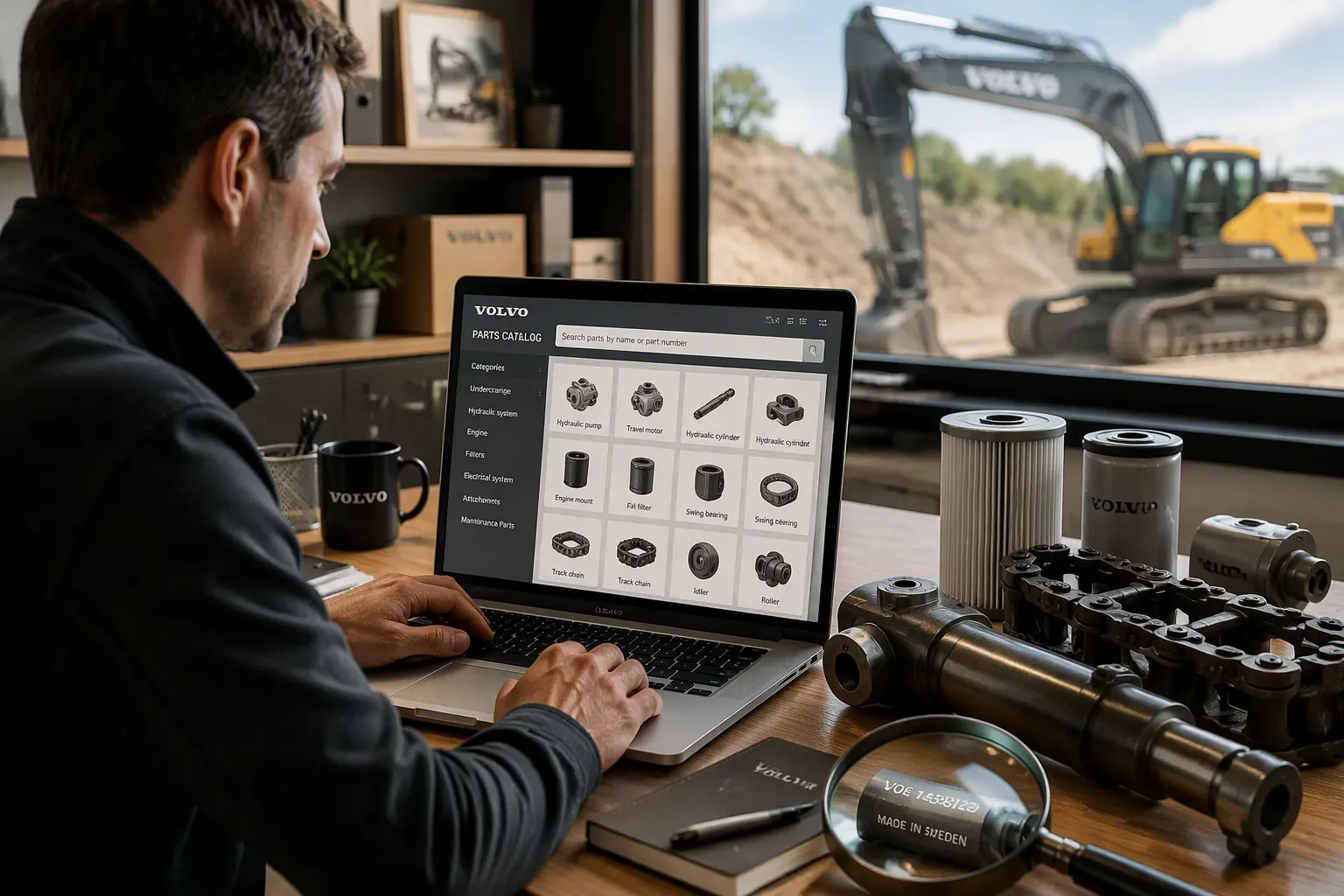
Use the checklist on each search and retain the application checks and supplier responses for later reference. Images in this article are generated illustrations; screen details and markings do not establish actual catalog data, part numbers or fitment.
FAQ
How do I confirm a part number before I search?
Start with your model and serial number. Check the OEM publication for your machine and the right category. Find the service number in the parts list, not the callout on the diagram. Verify any cross-reference against that publication before you trust it.
Can community leads help me find discontinued excavator parts?
Yes, they often can. Owners and mechanics share real leads on hard-to-find items. Treat each reply as a starting point, though. Ask which machine the number came from, then check it against your own publication. A lead only counts once you verify it.
What is the difference between a callout number and a service number?
A callout number marks a position on the diagram. It is not orderable. The service number is the actual number you search and order. Read the parts list row for your callout, then use the service number in that row.
Should I buy used excavator parts from an online salvage yard?
Used assemblies can fit well when you need a hard-to-find piece. Ask for the donor machine’s serial number and photos of wear areas. Confirm the condition grade and return window. Then match everything to your confirmed configuration before you pay.
How do I screen a seller before I order?
Run the same checks every time. Confirm the business name and a way to reach a person. Ask whether the item is OEM, aftermarket, or used, and get it in writing. Ask what any warranty covers. Save every answer with your order records.
For Volvo excavator parts sourcing, consider YNF Machinery. Provide full machine and component identification, applicable part numbers and quantities, and request supported compatibility information, an actual quotation and written warranty and return terms before ordering.