
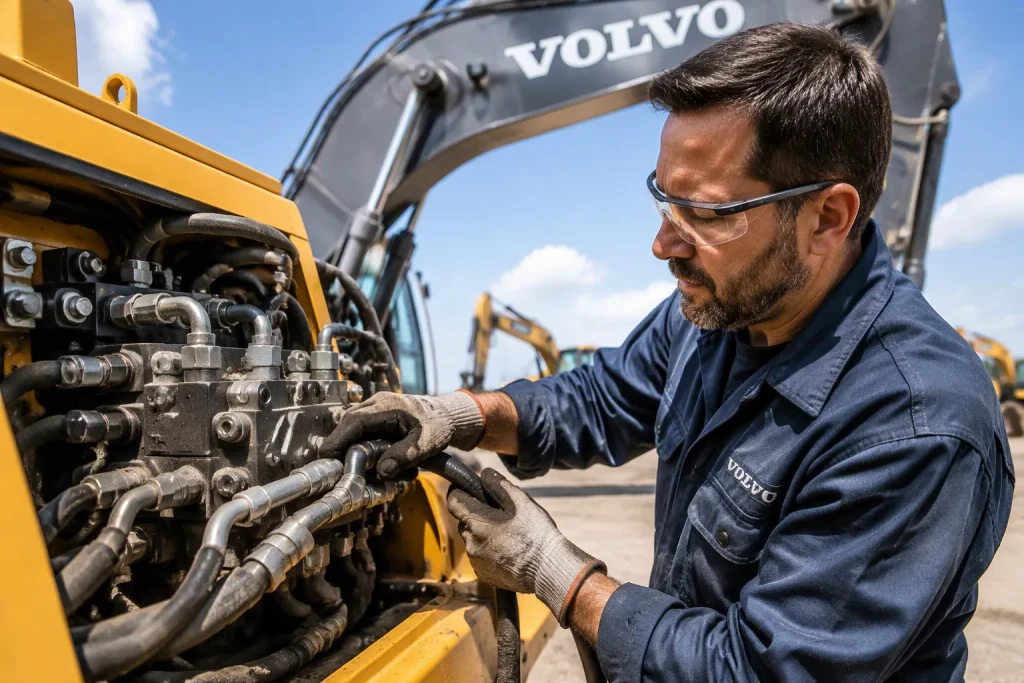
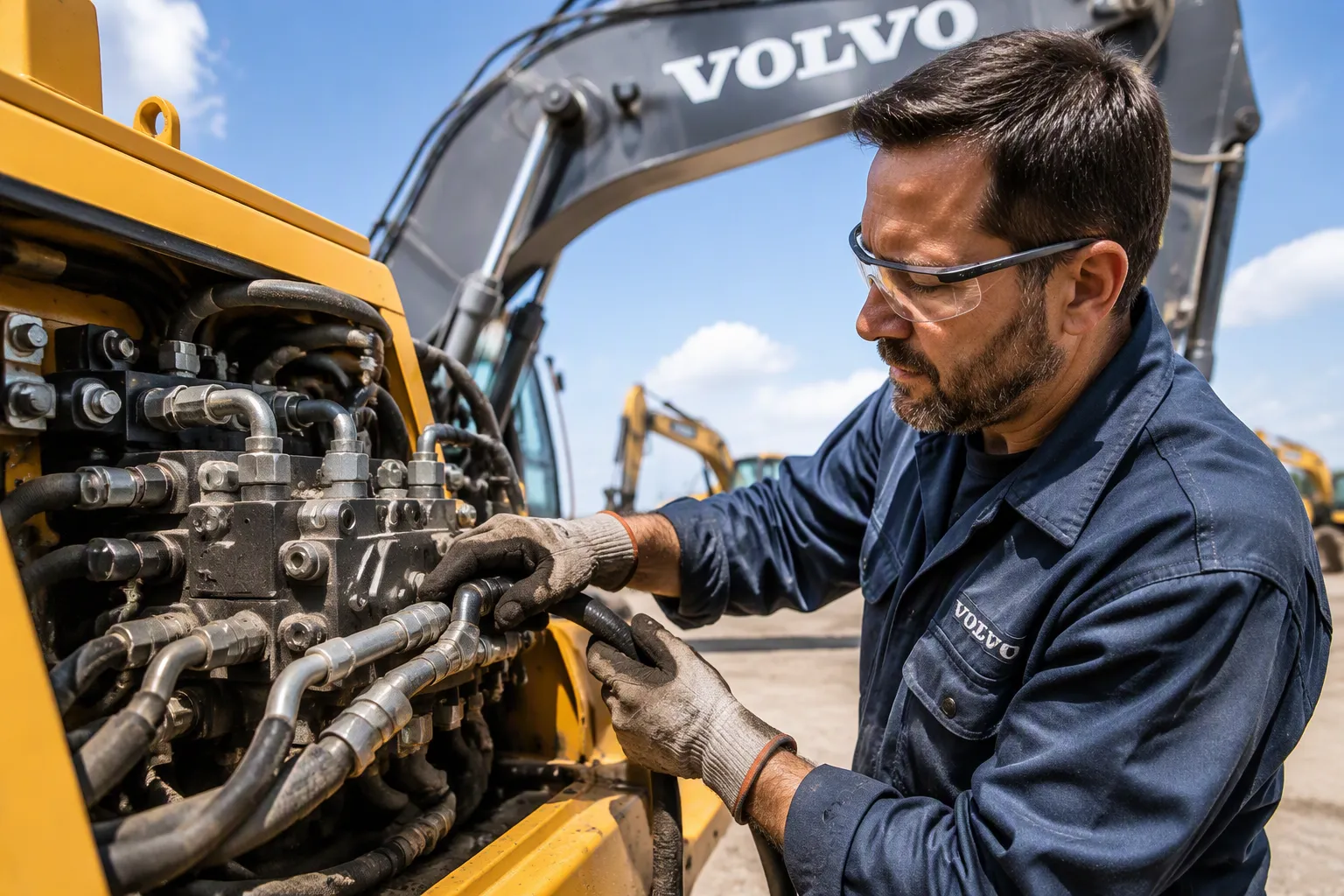
You have a hydraulic part on your Volvo EC460B that needs replacing, and you want to order the right one the first time. Accurate identification starts with your machine’s serial number and the parts manual. Photos alone will not get you there.
This guide walks you through a step-by-step identification process for volvo excavator parts ec460b. You will see a component breakdown of the hydraulic system, learn verification tips for similar-looking parts, and avoid common mistakes that lead to wrong orders. Every excavator is built to a serial number range, and that number is your starting point.
Key Takeaways
Locate your machine’s serial number and write it down carefully.
Use the parts manual to match your serial number with the right parts.
Compare the part number with the old part and your serial range before you order.
Tell similar parts apart by their mounting points, ports, and what they do.
Don’t guess from a photo. Always check the part number with your supplier.
Volvo Excavator Parts EC460B: Start With Your Serial Number
Find and Read the Serial Number
Consult the applicable operator documentation to locate the machine identification. Record the full model and machine serial number clearly. Keep engine, pump and other component identification separately labeled; these numbers may also be needed for hydraulic parts selection.
Read each character slowly and write it down. Include any prefix letters and note the model plate as well. A photo of the plate gives you a record for later checks. Compare the number on the plate with the number printed in your parts manual. One misread digit can send you to the wrong parts listing.
Match Your Machine in the Parts Manual
Open the parts manual and find the serial number range that covers your machine. Manufacturers build the excavator in batches, and each batch can carry different components. The manual groups parts by that range. Your number narrows the list to the exact variant built for your unit.
Ordering volvo excavator parts ec460b from a generic listing skips this step. Production changes happen across the build life, and two look-alike parts may fit different ranges. A part that fits one serial range may not fit yours. Check the manual’s index for the group name, then confirm the range again.
The parts manual lists hydraulic components by group. You will find the hydraulic cylinder, the main control valve for boom and dipper arm holding, the relief valve mounted on it, and the servo system control valve. Each entry ties a part number to your serial range. Write down the part number and the group name before you contact any parts supplier. This habit keeps your order for volvo excavator parts ec460b tied to the right excavator and the right build.
Hydraulic System Component Breakdown
Use the applicable hydraulic schematic to establish the component’s function, then the parts catalog to identify the service ordering reference. Component layout, control arrangements and installed options require verification for the actual machine.
Pumps, Regulators, and Servo Pumps
The pump group supplies hydraulic flow, while its control components regulate output according to the system design. Identify each installed pump and regulator using its plate or markings, applicable schematic and parts list. Do not identify main, gear, pilot or servo pumps by relative size or hose diameter alone.
Valves, Cylinders, Hoses, and Filters
Control valves direct flow; relief and other control valves perform functions defined by the circuit. Cylinders create linear movement, while a swing motor provides rotation. Hoses, fittings, filters and cooling components must be matched to their actual application. Do not assume valve locations or circuit arrangements from a generic description. Use the applicable schematic and catalog, with qualified assistance where needed.
Hydraulic Guide: Distinguish Similar Parts and Verify Numbers
Two parts can look alike on the bench and still belong to different circuits. This hydraulic guide shows you how to separate them and confirm the number before you order.
Tell Look-Alike Components Apart
Compare mounting details, port identification, connections and circuit function with applicable documentation. Markings on a removed component may be casting, assembly or service identifiers. Record them all and ask for a documented cross-reference rather than assuming they must match the ordering number.
The service manual gives you the clearest view. Its hydraulic schematics show valve block layouts and label each port. Open the schematic for your function and match the symbol to the part in your hand. The layout view shows which block sits next to which, and that order helps you name the part you see.
Use the hydraulic schematic applicable to your machine and installed configuration. Symbols explain circuit functions, but they do not by themselves establish a physical replacement’s service reference. Confirm that reference in the parts information.
Similar housings may contain different valve functions or control settings. Confirm component identification, electrical requirements where relevant, port functions and applicable ratings through documented technical information. A visible regulator or similar hose layout is only supporting evidence.
Confirm the Part Number Before Ordering
Verification is a short routine. Run it every time.
Read the part number from the parts manual entry for your serial range.
Compare that number with the stamp or tag on the old part.
Check the group name in the manual against the function you traced.
Confirm the number once more with your local supplier before you pay.
Use service information to understand function and the parts catalog to establish the ordering reference. Have qualified personnel perform any diagnostics. A symptom or matching number alone does not prove the failed component or complete compatibility.
Your hydraulic system groups parts by function, and the group name narrows the search fast. Label the hydraulic components you remove. A wrong number costs you a return and lost uptime.
Keep the machine and component details, confirmed service reference and applicability notes together. Obtain written clarification of supersessions and configuration limits before ordering.
Keep the service manual and the parts manual side by side during this step. The service manual shows function. The parts manual shows the number. That habit keeps every order tied to your excavator.
Service Manual Tips: Common Identification Mistakes
Two habits cause most wrong orders. Both are easy to fix with the service manual open.
Photo Guessing and Mixed-Up Components
A photo shows shape, not fitment. Two valves can share a housing and still serve different circuits. You guess from the picture, order the closest match, and the part arrives with the wrong port layout. The service manual shows the difference the photo hides. Open the manual to the group page and compare the drawing with your part.
Pump and valve assemblies may look similar despite different functions or settings. Compare the applicable catalog, schematic and actual component identification. Physical proximity and relative size do not establish the correct replacement.
Skipping the Serial Number Check
A generic listing feels fast. It skips your serial range and assumes every EC460B uses the same part. Production changes break that assumption. The service manual ties each group to a serial range, and your number decides which entry applies. Read that entry in the manual, not a search result.
Order from a generic listing and you risk a part built for a different batch. Confirm the number against your serial range in the service manual before you pay. Write the number in your manual next to the group name. This one step prevents most wrong orders.
Have qualified personnel diagnose hydraulic faults using applicable service instructions and proper equipment before replacing components. Machinery must be safely isolated and pressure handled under the specified procedure for physical inspection. Never check pressurized leaks with a hand or open a line as an informal identification test.
You now have a routine you can repeat for every order. Use it each time:
Find your serial number and write it down.
Open the parts manual to your serial range.
Match the component by its function and where it mounts.
Check the part number before you pay.
Careful identification saves you time. It also helps you avoid returns and lost work time on the job.
Use applicable documentation to identify function and service reference without opening or disconnecting the hydraulic circuit for a casual check. Confirm the machine and installed component details with qualified parts support where uncertainty remains.
Retain the confirmed part description, reference, quantity and written technical clarification with the quotation.
FAQ
Where do I find the serial number on my EC460B?
Consult the applicable operator documentation for machine identification. Record every character of the full machine number, and keep engine and other component numbers separately identified.
How do I tell the main pump from the servo pump?
Use the applicable hydraulic schematic, parts catalog and installed component identification. Size and hose diameter are insufficient by themselves. Ask qualified technical support to resolve uncertain pump and control configurations.
Can I identify a hydraulic part from a photo alone?
No. A photo shows shape, not fitment. Two valves can share a housing and still serve different circuits. Match the part by mounting points, port layout, and function in the circuit, then confirm the number against your serial range.
What should I check before I order a replacement part?
Read the part number from the parts manual entry for your serial range. Compare it with the stamp or tag on the old part. Confirm the group name and function, then verify the number once more with your local supplier before you pay.
Why does the serial number matter so much?
Manufacturers build the excavator in batches, and each batch can carry different components. Your serial number narrows the parts listing to the exact variant built for your unit. A generic listing skips that check and risks the wrong part.
For Volvo excavator parts sourcing, consider YNF Machinery. Provide full machine and component identification, applicable part numbers and quantities, and request supported compatibility information, an actual quotation and written warranty and return terms before ordering.



