
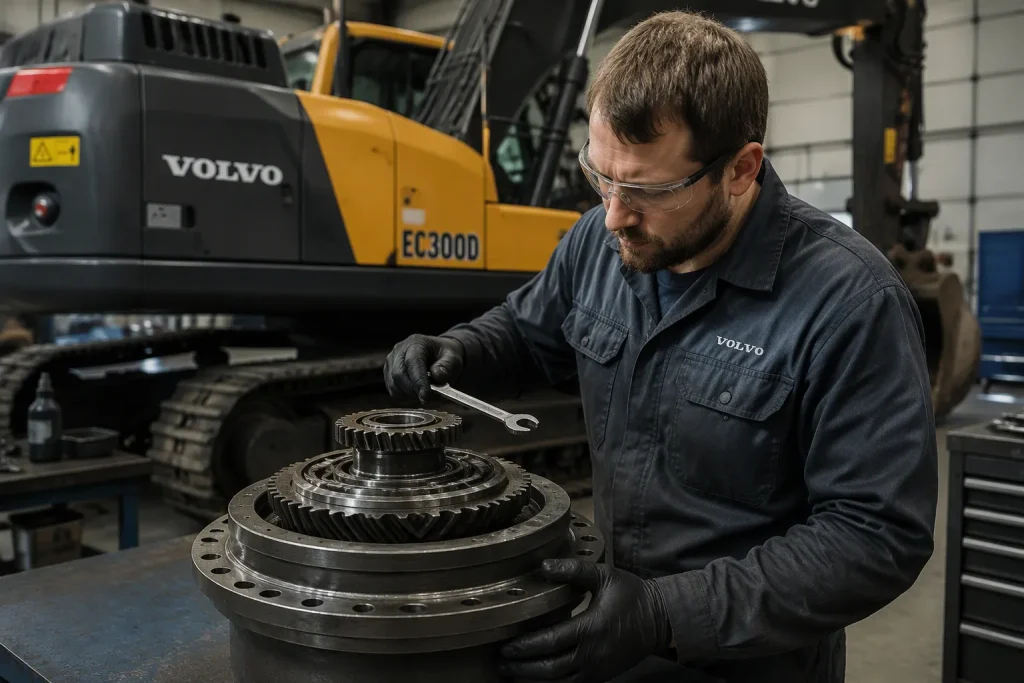
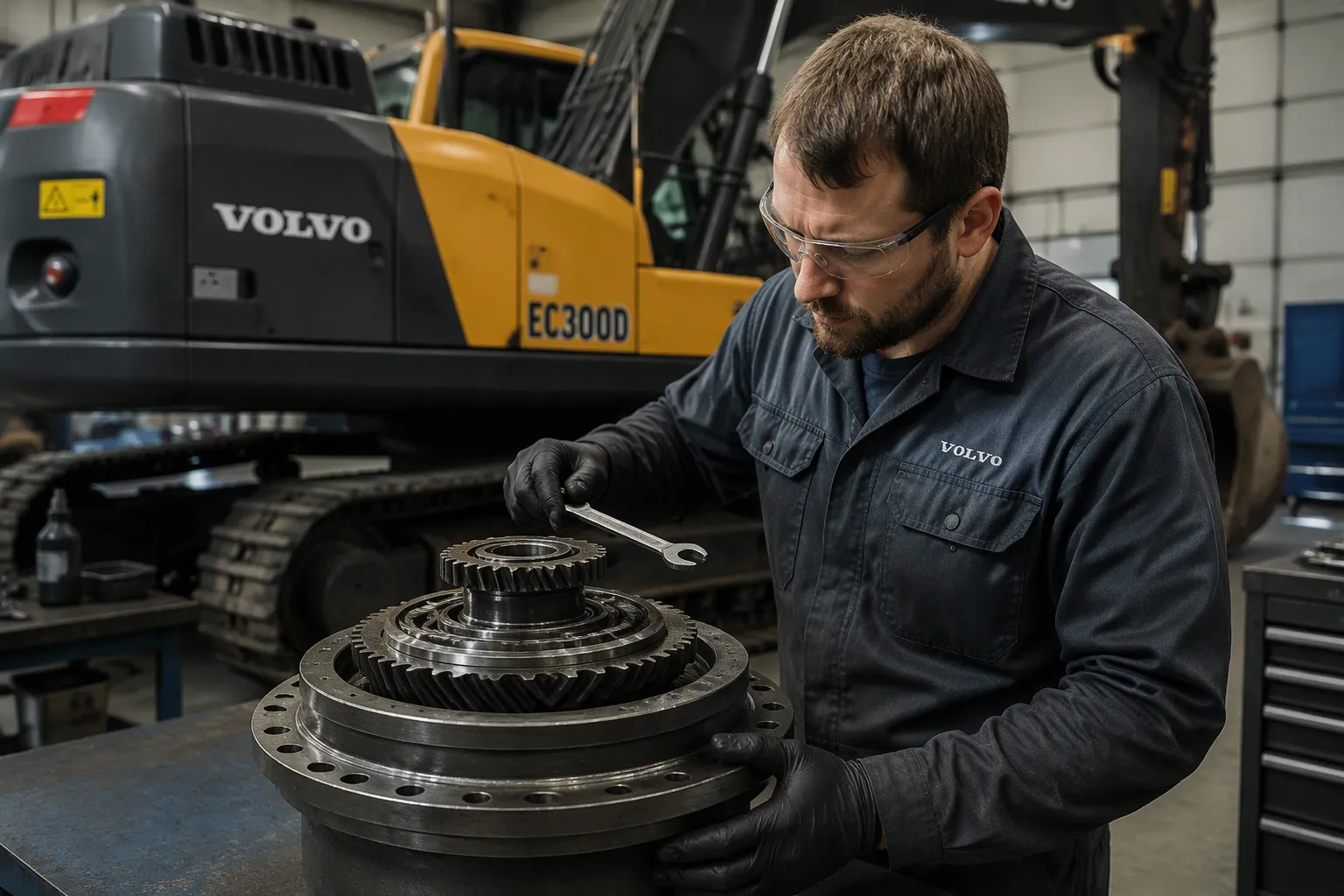
Before buying a final drive for a Volvo EC300D, have qualified personnel establish the cause of the travel fault. Gather full machine identification, the old unit’s identification and the applicable service reference. Ports, mounting and external appearance provide supporting details, but cannot establish the complete internal configuration. Verify the proposed assembly and written terms before ordering.
Key Takeaways
Check your excavator’s model suffix and serial range to find the right final drive variant.
Find and write down the machine serial number and the final drive serial number so the parts match correctly.
Use port layout and mounting details as supporting checks, not proof of complete compatibility.
Make a full order checklist with all the numbers and details before you contact a supplier.
Pick OEM, aftermarket, or rebuilt parts based on your workload and budget. Then check the specifications.
Know Your Volvo Excavator Parts EC300D Variants
The EC300D name covers more than one build setup. Volvo made this excavator in several variants, and the final drive specs can be different between them. Two machines that look the same on the outside may have different travel parts. You cannot order by model name alone. Check the model suffix and the serial range before you call any parts supplier. This one step saves you from the most common ordering mistake.
Confirm the Model Suffix and Serial Range
Look at the model plate and write down the full suffix that comes after EC300D. The suffix shows the exact build setup. The serial range tells you which production batch your machine is from. Suppliers use both details to match the right final drive to your excavator. A machine built in one range may use a different unit than one built in another. Write both details down exactly as they appear. Do not round or shorten the serial number. A partial number slows down the selection process and leads to mistakes.
Check the Final Drive Ratio
The reduction gearing relates hydraulic motor rotation to sprocket rotation. A replacement must have the reduction and motor configuration required by the actual machine. Do not select a different ratio as a general upgrade; mismatches can change travel behavior and loading. Obtain the required specification from applicable documentation and qualified technical support.
Check reduction gearing separately from motor displacement, speed-control arrangements, brake and other requirements. Single-speed or two-speed descriptions alone do not establish the complete specification. Confirm the actual assembly rather than inferring it from a general model description.
Establish the service ordering reference using applicable documentation and the machine and installed-unit identification. A number copied from another listing may cover a different configuration. Obtain a documented explanation of any cross-reference or supersession.
A final drive ratio that matches your machine keeps the final drives running within design limits. The correct gear ratio also protects the hydraulic motor from needless strain. Check the ratio on your old unit and compare it with the spec for your variant. This comparison takes minutes and prevents a costly return.
Check Your Machine Serial Number
The machine’s serial number is the single most important detail for getting the right final drive. Every other check builds on it. Your excavator left the factory in a specific build configuration, and that number ties your unit to the correct parts list. Without it, a supplier can only guess. A guess may fit, or it may not. You want certainty before you pay.
Where to Find the Plate
Locate machine identification using the applicable operator documentation. Record the complete model and machine serial number. Do not search an assumed series of locations or confuse a final-drive tag with machine identification. Seek qualified assistance if the documentation or plate is unclear.
Never order a final drive from a partial number or a guess. A wrong unit costs you return shipping and days of downtime.
What to Do if It Is Missing
If machine identification is missing or unreadable, gather available ownership and service records and clearly label photographs and component identifiers. Ask an authorized construction equipment dealer or qualified identification support what evidence can establish the machine application. Do not assume engine or component numbers automatically recover the machine identity.
Check the Final Drive Serial Number
Locating the Number on the Old Unit
With the machine safely isolated under the applicable procedure, have qualified personnel locate safely accessible final-drive identification. Record it exactly without removing the unit simply to read a tag. Use an appropriate cleaning method that preserves markings; do not abrade identification.
If the final-drive tag is absent, keep that fact explicit. Do not substitute a frame or engine number as the component identity. Use applicable records, safely obtained component details and qualified technical support to establish a documented replacement application.
Why the Unit Number Matters
A component tag may help establish the maker and configuration when supported by applicable records. Two units with similar mounting can differ internally. Verify the complete service reference and specifications rather than treating a readable tag as proof by itself.
This serial number also separates the component from the machine. Your excavator serial number identifies the machine. The unit tag identifies the part. Keep both records apart and label each photo clearly. Mixing them up sends the wrong data to the supplier.
A matching unit protects the final drive system from mismatch. Correct internal gearing preserves torque delivery to the tracks. Wrong gearing changes torque at the sprocket and strains the motor. Confirm the tag before you order the final drive assembly. A used final drive with no readable tag deserves extra caution. Ask the supplier to confirm the match in writing.
Match Ports and Bolt Count
Ports and bolt count narrow the field, but they do not close the deal. Treat them as two checks among many. A unit can match on both counts and still carry the wrong internal setup. Use these checks to filter candidates, then confirm the rest of the assembly before you commit.
Comparing Hydraulic Port Layout
Look at the hydraulic motor face on your old unit. Note the number of hydraulic ports and their positions around the mounting face. Check the port size and thread type as well. A replacement with a different layout will not connect to your hose routing without adapters or rework. Photograph the face straight on, and measure the spacing between port centers if you can. Compare your photo against the candidate unit before you order.
Port layout alone cannot confirm a match. Two final drive units may share the same port pattern and still differ in motor displacement, control type, brake design, and pressure ratings. Ask your parts supplier to verify those details against your machine serial number. A qualified technician should confirm the assembly scope, including what comes with the unit and what you must reuse from the old one.
Counting the Mounting Bolts
Count the number of bolts used to install the final drive to the track frame. Note the bolt size and the spacing between holes. A different count or pattern means the unit will not bolt up, no matter how well the ports line up. Clean the bolt heads first, then count slowly and write the total down. Check the pattern twice.
Bolt count is a fitment check, not a performance check. The right pattern still leaves gear ratio, torque delivery, and brake function unconfirmed. A mismatch in any of these affects how the excavator travels and how much torque reaches the tracks. Give your supplier the full picture, and let qualified staff confirm the match before you buy.
Get the Right Final Drive
Stay Safe During Checks
Follow the applicable machine isolation, access and inspection procedures. Have qualified personnel perform difficult checks or work near heavy components. Do not work beneath unsupported equipment or rely on hydraulic pressure to support a load.
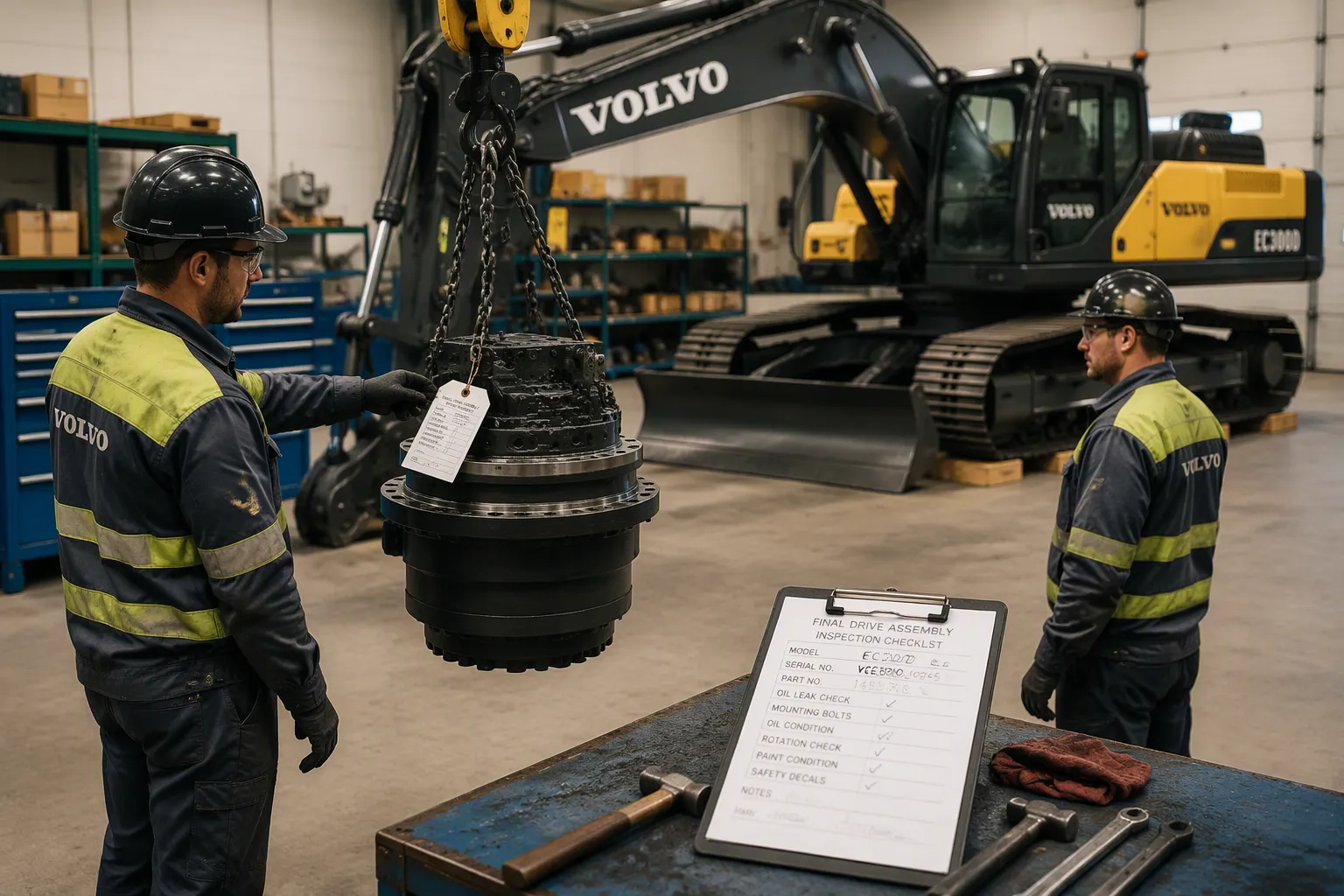
If removal or lifting is required for an actual repair, qualified personnel must use the applicable procedure and lifting equipment suitable for the assembly. Do not remove or suspend the unit merely for a casual identification check.
A travel noise or loss of movement does not by itself prove a failed final drive. Stop unsafe operation and have qualified personnel diagnose the fault using applicable service procedures before ordering a replacement.
Build Your Order Checklist
Write down every detail before you call a parts supplier. A complete list speeds up the match and cuts down on errors.
Machine serial number
Model suffix and serial range
Final drive serial number from the old unit
Hydraulic port layout and port count
Mounting bolt count and pattern
OEM part number, if the tag is readable
Keep this list with your machine records. The machine’s serial number is the base for every other check on the list.
Compare documented offers for the verified application, specifications, condition and complete assembly scope. Genuine, OEM, aftermarket and rebuilt labels alone do not establish price, configuration or performance. Confirm any items to be reused, installation requirements, warranty and actual delivery terms.
Verify machine and component identification, service reference, reduction, motor and brake requirements, controls, mounting and connections. Have uncertain specifications checked before purchase. A thorough record reduces ordering risk but is not a guarantee of fitment.
Write every detail down and keep it with your machine records. The next time your excavator needs parts, the numbers are already there. You avoid another walk around the frame with a flashlight.
Keep the verified reference, technical clarification and confirmed item description with the quotation and maintenance records.
FAQ
Can I order the right unit if the old tag is unreadable?
Yes, but you must give other proof. Give your parts supplier the machine serial number, model suffix, and clear photos of the mounting face and port layout. Ask them to confirm the match in writing before you pay. Never rely on a guess.
Does a matching port layout and bolt count guarantee fitment?
No. Those two checks only filter candidates. Internal gearing, motor displacement, brake design, and pressure ratings can still differ. Ask qualified staff to check the full assembly against your machine serial number. A match on the outside does not prove a match inside.
Should I choose OEM, aftermarket, or rebuilt?
Choose on verified specifications, condition, test evidence, actual price and written terms for the offered unit. Ask for a clear description of rebuild work where applicable. No sourcing label alone guarantees equivalence or suitability.
How do I confirm the final drive is the failing part?
Have qualified personnel diagnose the travel fault using the applicable service instructions. Noise, heat, leaks or loss of movement are observations for assessment, not conclusive proof of a failed final drive. Do not run an uncertain machine as an informal test.
What should I keep with my machine records?
Store the machine serial number, model suffix and serial range, the old unit’s serial number, port layout, bolt count, and any readable OEM number. Keep clear photos of each tag. These records speed up every future parts order and protect you if a plate goes missing.
For Volvo excavator parts sourcing, consider YNF Machinery. Provide full machine and component identification, applicable part numbers and quantities, and request supported compatibility information, an actual quotation and written warranty and return terms before ordering.



