
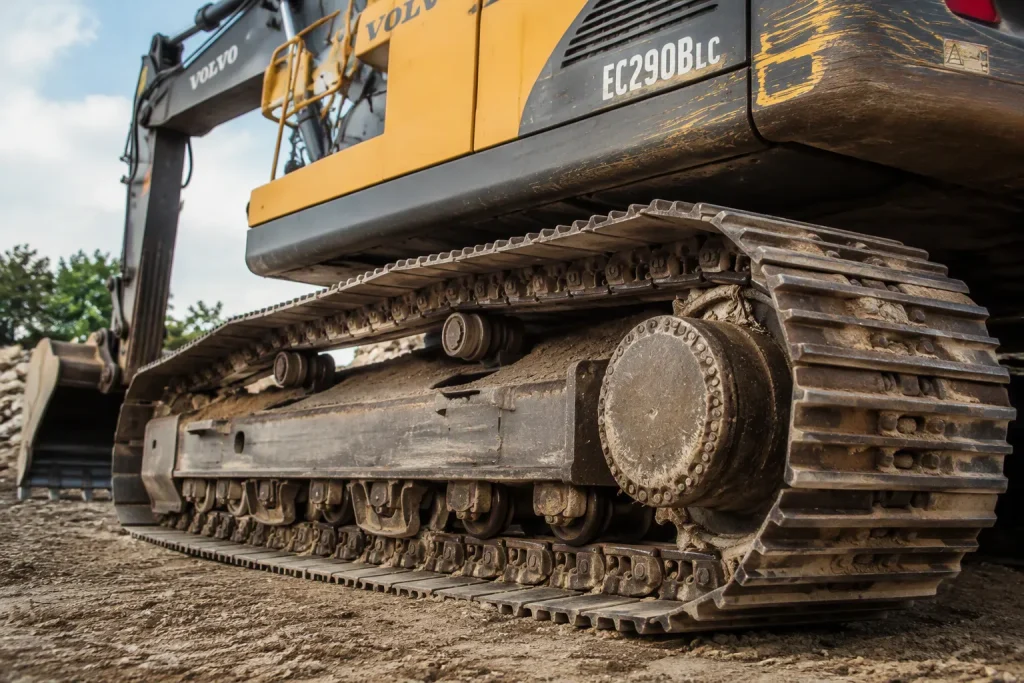
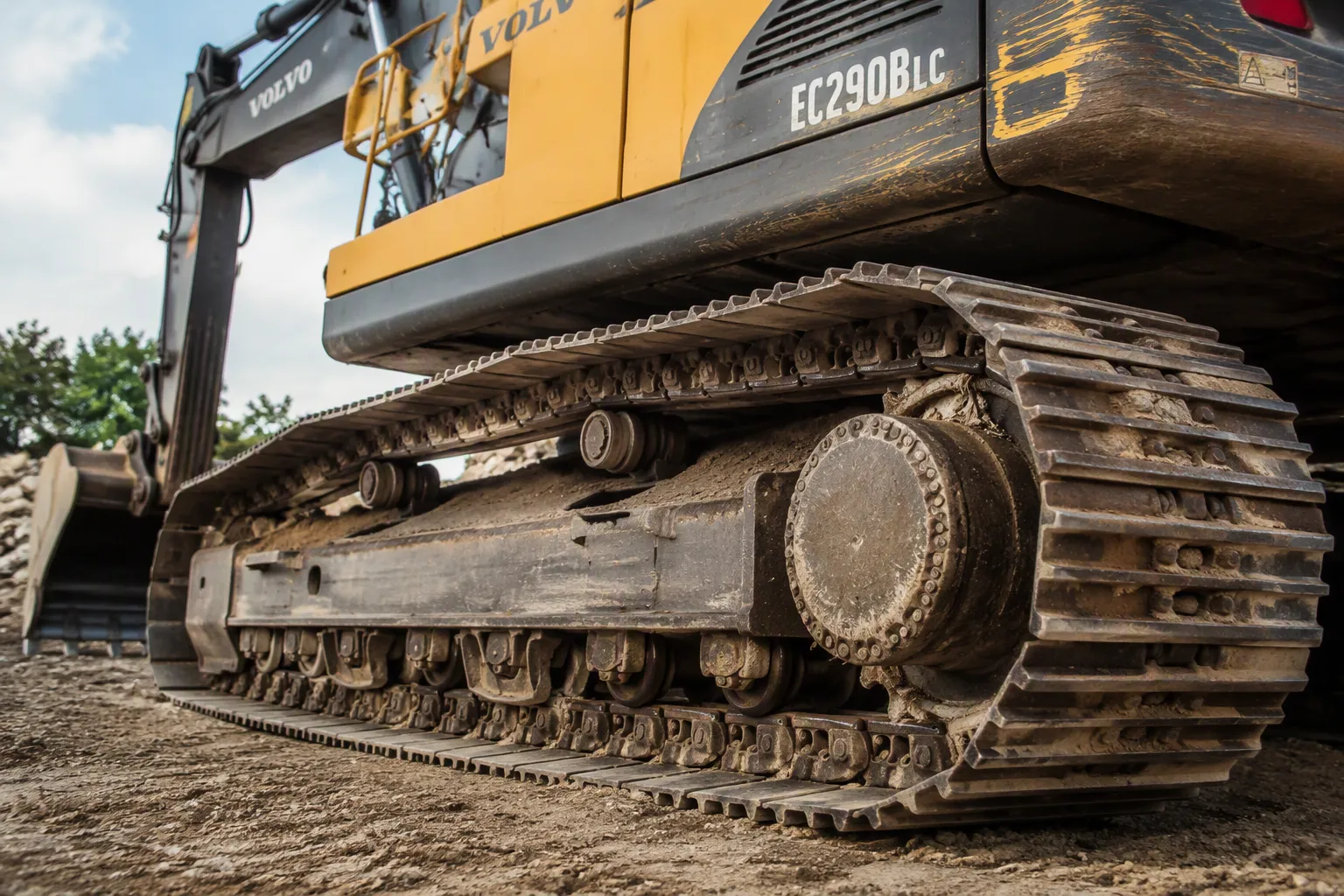
The Volvo EC290B undercarriage includes track chains and shoes, rollers, idlers and sprockets. These components work together under demanding loads and ground conditions. Use the applicable machine and component documentation to plan inspection, assess wear and verify replacement references. This guide explains identification and purchasing checks; it does not replace model-specific service procedures.
Key Takeaways
Get to know the main undercarriage parts: track chains, rollers, idlers, sprockets, and track shoes.
Check the undercarriage every day for leaks, loose bolts, and strange noises.
Keep the track tension correct to prevent derailment and wear.
Check the wear often and write down the numbers so you can plan when to replace parts.
Have abnormal wear assessed for its actual cause before choosing corrective work.
Figure out what is causing the noise and failures before you replace parts, so you can save money.
Check the part numbers and fitment before you buy Volvo excavator parts for the EC290B.
When picking wear parts, think about both cost and how long they last to save money over time.
Undercarriage Components and Functions
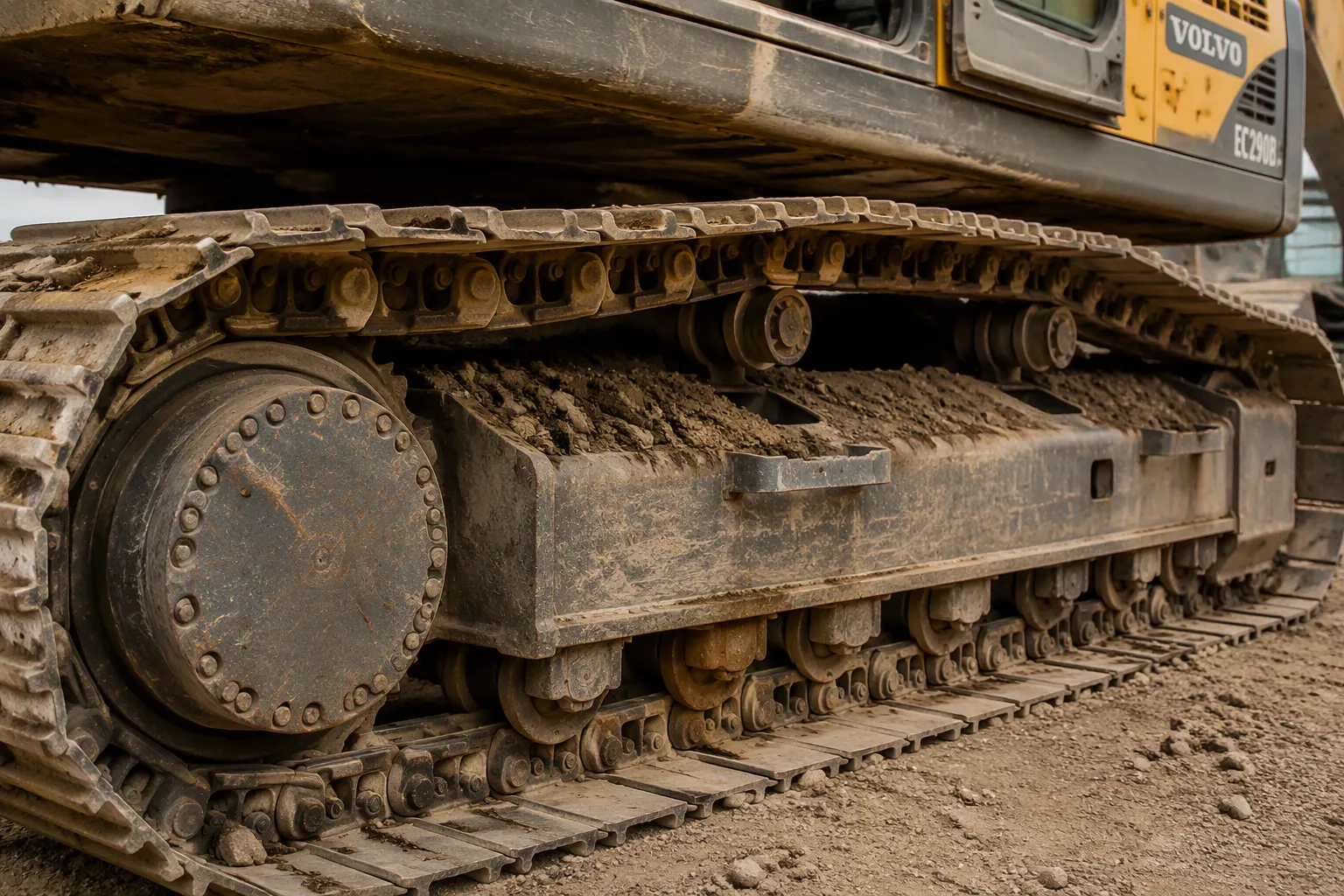
The undercarriage system on the EC290B carries the machine’s full weight and absorbs every impact from the ground. Each component has a distinct job. Each one also shows a distinct pattern of wear. Owners who learn these patterns spot problems early and plan repairs on their own schedule.
Track Chains and Shoes
The track chain forms the moving loop that lets the excavator travel. Links, pins, and bushings work together as the chain flexes around the front and rear wheels. The track chains wear at the pin and bushing joint, where metal grinds against metal with every rotation. Watch for these indicators:
Stretched pin-to-bushing clearance that makes the chain ride loose
Flat spots or grooves on the bushings
Rust streaks or cracked links near the pin bosses
A chain that no longer sits evenly on the drive sprocket
Track shoes bolt to the chain and grip the ground. They are true wear parts, and their condition changes traction and flotation. Owners should check for worn grousers, missing or loose bolts, bent shoes, and cracks around the bolt holes. Worn track shoes reduce grip on soft ground and increase strain on the rest of the system.
Rollers, Idlers, and Sprockets
The lower rollers support the machine’s weight along the track frame. The upper rollers hold the chain up on its return run. The front idler guides the chain and works with the track adjuster to hold tension. The drive sprockets at the rear pull the chain and transfer engine power to the ground. All of these parts are available as replacement maintenance parts for the EC290B.
Inspect each group with these checks in mind:
Rollers: look for leaking seals, oil streaks, flat spots on the tread, and wobble when the roller turns
Idlers: check for worn tread faces, seal leaks, and play in the bearing
Sprockets: examine the teeth for hooked tips, sharp edges, and uneven tooth height
A leaking roller seal lets grit into the bearing. That grit turns a cheap seal job into a full roller replacement. The same logic applies to idlers. Sprocket teeth wear in a curve, and a badly worn sprocket accelerates chain wear in return.
How Wear Affects Performance
Wear or damage can affect track engagement, load distribution and travel behavior. Pulling to one side or abnormal noise can have more than one cause. Have qualified personnel diagnose the actual fault rather than identifying a failed item from a single symptom.
The maintenance parts in this system interact. A new chain on old sprockets wears out quickly. New track shoes on a stretched chain still track badly. Owners should judge the whole undercarriage as a set, not as isolated pieces. This view supports smarter maintenance planning and better control of wear parts spending over the life of the machine.
Step-by-Step Undercarriage Maintenance
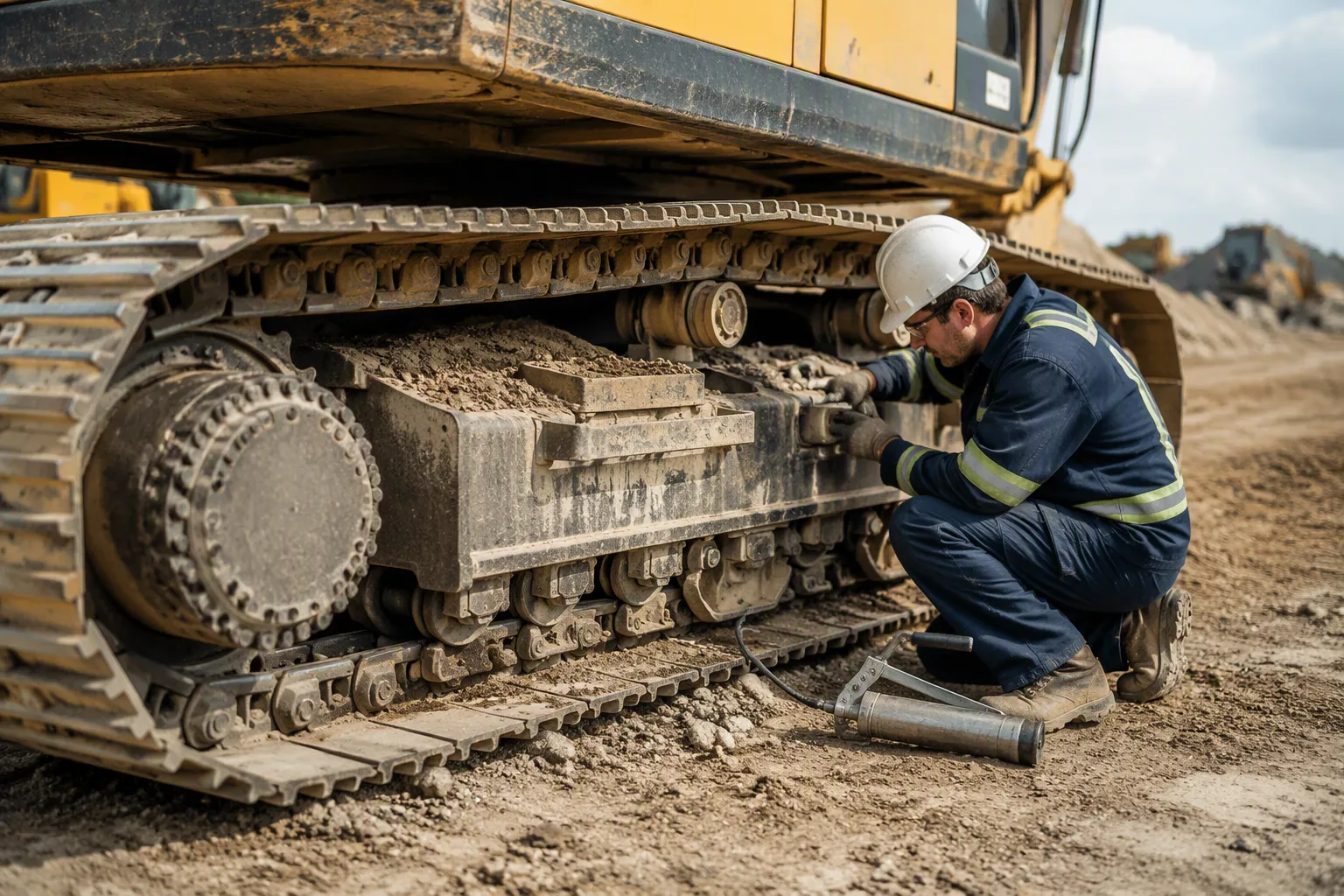
A steady maintenance routine keeps the undercarriage healthy and the machine productive. The work splits into three habits: inspect often, lubricate and tension correctly, and measure wear. That way, replacement happens on plan instead of in an emergency.
Routine Inspections
Follow the applicable operator inspection procedure and site safety arrangements. From a safe position, note visible damage, leaks, missing hardware or accumulated debris. Report abnormal behavior already observed during operation; do not run an uncertain machine as an informal test.
Use the inspection points and intervals specified for the actual machine, configuration and conditions. Qualified personnel should perform measurements and checks requiring access, support or component movement. Do not substitute a generic weekly schedule for applicable instructions.
Lubrication and Track Tension
Lubrication requirements depend on the installed chain and undercarriage component design. Follow the applicable instructions for lubricants, points and intervals. Track adjusters can contain pressurized grease and stored energy; qualified personnel must handle the required service procedures.
Have qualified personnel check track tension using the exact measurement conditions, method and limits for the installed configuration. This article does not prescribe a sag value or adjustment sequence. Do not loosen pressurized fittings or release grease as a casual check.
Keep undercarriage inspections, measurements and repairs documented with the machine records. Establish requirements from the applicable operator and service documents rather than a generic maintenance list.
Measuring Wear and Planning Replacement
Simple measurements turn inspection into planning. A technician measures chain pitch across several links, checks bushing diameter, and records sprocket tooth height. Roller tread diameter and idler face wear get the same treatment. The service manual states the limits for each item.
Record the date, hours, measurement method, readings and applicable service criteria. Track the trend and obtain qualified advice on replacement timing. Retain the confirmed service references and configuration details with each quotation.
Troubleshooting Common Undercarriage Problems
Most undercarriage problems show signs before they turn into breakdowns. The key is to read the signal the right way. Owners who find the root cause first avoid replacing good parts. They also stop the same fault from coming back.
Uneven Wear Patterns
Uneven wear may relate to alignment, tension, component condition, operating practice or other factors. A visual pattern is an observation for diagnosis, not proof of a specific cause. Record the location and have qualified personnel assess the affected system.
Corrective work should follow the established cause and applicable service instructions. Operators should follow approved operating guidance and report recurring wear. Do not adopt a generic change of travel direction or adjustment as a substitute for diagnosis.
Track Derailment
Derailment has a short list of common causes. Loose track tension ranks first. Worn sprocket teeth, a bent shoe, or packed debris in the sprocket pocket can also throw the chain. Soft ground and side-slope travel raise the risk even more.
Follow the applicable operating, cleaning and tension guidance. After a derailment or significant damage, stop use until qualified personnel assess the chain, idler, rollers, sprocket and related structure and complete the required repair. Do not attempt track recovery from a generic blog description.
Noise and Premature Failure
Record the circumstances of abnormal noise and stop operation where continued use is unsafe. Noise alone cannot establish a failed roller, bearing or other component. Have qualified personnel locate and diagnose the source using applicable service procedures.
Review application, installation, related wear, lubrication requirements and operating conditions when an item fails early. Retain the old component and records where appropriate. Establish the actual cause before ordering another replacement.
Choosing Volvo Excavator Parts EC290B
Owners who shop for volvo excavator parts ec290b face a crowded market. A clear evaluation process protects the machine and the budget.
Evaluating Wear Parts for Undercarriage Care
Request the applicable service cross-reference, dimensions and relevant material, manufacturing or test information for the actual item. Hardness requirements may vary across different surfaces and designs; visual finish alone cannot establish them. Have qualified personnel assess uncertain condition or measurements rather than assuming uniform hardness or a particular seal position proves quality.
Verifying Fitment
Fitment errors cost more than the part price. The owner confirms the specific model and serial number before ordering. Component IDs differ from the machine ID, and a diagram does not replace the service procedure. The model and serial number narrow the correct configuration.
Use a catalog covering the actual model, serial range and configuration. Read the relevant diagram, list entry, quantity basis and applicability notes. General maintenance, repair and wear categories do not establish a catalog layout or complete machine coverage.
Managing Costs
Smart buying balances price, durability, and timing. Cheap wear parts often fail early and cost more in labor. Premium parts on a machine near retirement may not pay back. The owner tracks wear rates in the log and replaces maintenance parts on plan.
Compare actual quotations for verified application, specification and condition. Include inspection, installation, shipment and potential downtime in the assessment. Use the wear record to plan purchases and retain the confirmed ordering references. Unrelated hydraulic components should be diagnosed and budgeted on their own evidence.
Know the component functions, follow applicable inspection and service guidance, and retain wear and repair records. Diagnose abnormal behavior before choosing parts. Confirm the actual application, condition and written terms for each replacement order.
FAQ
How often should an owner inspect the EC290B undercarriage?
Follow the applicable operator and service instructions for inspection points and intervals, taking the actual operating conditions into account. Have qualified personnel perform checks requiring special access, measurements or component handling.
What causes a track chain to derail on this machine?
Tension, wear, damage, alignment, debris and operating conditions can contribute to derailment. The actual cause requires qualified assessment. Stop use after a derailment until the system has been inspected and the required repair completed.
Can an owner adjust track tension without help?
Track tension checks and adjustments require the exact procedure and safety arrangements for the installed configuration. Qualified personnel should handle pressurized adjusters and stored energy. Do not loosen fittings or use an assumed sag value.
How does an owner confirm the right parts before ordering?
The buyer records the model and serial number from the machine plate. Component IDs differ from the machine ID, so a diagram alone does not confirm fitment. Cross-checking part numbers against a complete excavator spare parts list catches most errors. A second review of the excavator spare parts list before checkout adds safety.
Which wear parts deserve the closest attention?
Track shoes, rollers, idlers, and sprockets carry the heaviest loads. These wear parts show clear signals: leaking seals, hooked teeth, flat treads, and loose bolts. The owner should log readings and replace maintenance parts on plan. A steady maintenance routine protects uptime and controls cost.
Why does uneven wear appear on one side of the chain?
Uneven wear has several possible causes. Document the pattern, machine hours and operating conditions, then have qualified personnel assess alignment, tension and related component condition. Corrective work should follow the established cause.
Does noise alone identify a failed undercarriage part?
No. Record the circumstances and have qualified personnel locate and diagnose the source using applicable service instructions. Do not order a roller, drive or hydraulic component solely because a sound seems to come from that area.
What records help plan replacement?
Keep machine and component identification, hours, inspection dates, measured wear, applicable limits, repair details and confirmed ordering references together. Consistent measurement records support planning, while each new order still needs an application check.
For Volvo excavator parts sourcing, consider YNF Machinery. Provide full machine and component identification, applicable part numbers and quantities, and request supported compatibility information, an actual quotation and written warranty and return terms before ordering.



