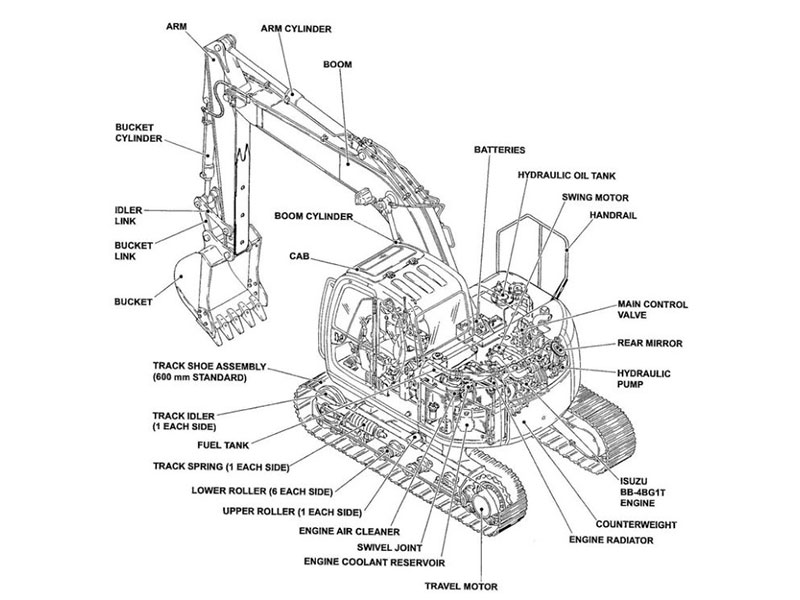


You rely on three main groups to run an excavator: the undercarriage parts, the upper structure, and the front working assembly. These important pieces power every basic job on the work site. Mechanical drives and hydraulic systems work together to dig, move heavy dirt, and drive over rough ground. Every operator should look at a visual chart to learn this full list of excavator parts on different types of machines. An operator controls daily machine performance with proper care. You protect key parts from wearing out. Knowing this list of excavator parts helps you fix them quickly and reduce lost work time. You also make ordering replacement parts for your machine much easier.
Key Takeaways
Excavators depend on three primary parts: the undercarriage, upper structure, and front attachment group.
Taking care of worn-out parts regularly stops expensive machine breakdowns and lowers repair costs.
Engine repair kits and fast attachments improve machine output and save important time on work sites.
Checking fluids every day and using clean filters keeps the main hydraulic pumps safe from serious harm.
Complete List of Excavator Parts in the Undercarriage
The lower frame of a track machine serves as the main base for your equipment. You depend on the excavator undercarriage to hold the top section, balance heavy loads, and help the machine move across the site.
Undercarriage Component / Feature | Structural Function in Heavy Machinery |
|---|---|
Basic Support System | Works as the main base for the machine while holding up its full weight. |
Track Frame | Functions as the middle frame that keeps parts together and gives a strong base for lifting. |
Steel Tracks & Links | Spreads heavy weight over more ground space to lower pressure and protect the dirt underneath. |
Overall System | Gives needed balance during hard work and allows the machine to travel over different grounds. |
The lower parts account for roughly 40% to 50% of all machine repair expenses. You should check a complete list of excavator parts to help you inspect these fast-wearing pieces correctly.
Tracks, Rollers, and Track Shoes
Your machine requires tough excavator tracks and track frame setups to spread weight over bumpy ground. Steel track shoes grip loose soil easily while moving your heavy equipment safely.
Roller Type | Position | Primary Load Supported | Weight Distribution Mechanism |
|---|---|---|---|
Bottom Rollers (Track Rollers) | Undercarriage bottom | Total machine weight & operational loads | Spreads heavy weight straight onto the tracks and soil to allow smooth driving |
Top Rollers (Carrier Rollers) | Undercarriage top | Track chain weight | Lifts the top track loop so it does not drag or sag |
Lower rollers support the full weight of the machine and spread force down the bottom track line. Upper carrier rollers hold up the track chain so it stays tight. These lower machine parts help keep the track loop at the right tightness.
Drive Sprockets and Final Drives
Drive sprockets send turning force straight from the travel motor to the track links. Internal gear setups inside the drive hub turn hydraulic power into strong travel motion.
Final drive gearboxes usually require power reduction settings between 20:1 and 30:1 based on the size of your equipment. These critical excavator parts grant your machine extra pushing strength on steep hills. Regular service keeps these inside gears safe from early wear and tear.
Main Parts of an Excavator Upper Structure and Cab
House Frame and Swing Motor Assembly
The engine and cab sit right on the upper structure. The top section of a track digger holds primary parts that supply energy for hard digging. You need these main parts of an excavator top frame to stay balanced.
The slewing gear keeps the machine steady while spinning by spreading out turning forces across the frame. This stops too much pressure from building up on single parts, which prevents metal damage and keeps the structure strong under heavy loads.
You run the swing motor to turn the top section all the way around on its tracks.
Specification Parameter | Value / Range |
|---|---|
Motor Model | M2X63-19 (8.0–12.0 ton excavator units) |
Maximum Operational Pressure | 29 MPa |
Maximum Torque Output | 5760 N.m |
Maximum Rotational Speed | 115 rpm |
The top frame holds up heavy work tools. You rely on this top section to shield the engine. The swing bearing acts as a key connection between the upper body and the lower frame while turning. It handles side forces, straight-down weight, and tipping loads. Oil power from the swing drive spins the top frame over the track base. Proper balance keeps the digger safe on hills. You can check the complete list of excavator parts during everyday inspections.
Operator Cab and Control Interfaces
You sit in the cab to run machine tasks. You get a clear view from inside this top cabin. Approved safety frames protect workers if the machine tips over.
Standard Category | Identifier | Scope / Description |
|---|---|---|
International Standards | ISO 12117-2 | Covers ROPS for construction excavator models |
Directives & Acts | Construction Regulations 2006 | Statutory safety regulations governing ROPS usage |
You steer the machine using hand levers inside the cab. These levers change hand movements into fluid power:
Operator Input: The driver shifts the control handle.
Path Adjustment: This movement shifts inner valves to direct oil flow.
Signal Conversion: Physical movement changes into fluid pressure signals.
Actuator Execution: The oil system sends these signals to move the hydraulic rams.
A worker does great work when the controls react right away. The driver manages all job site tasks directly from the main seat.
Key Parts of an Excavator Engine Assembly from YNF Machinery
The engine assembly functions as the main power hub for your equipment. The diesel engine creates mechanical power for your machine. This engine drives the hydraulic pump directly to supply pressurized fluid. Engine power also drives travel motors to move your excavator across sites. You need to inspect the key parts of an excavator engine assembly during regular checks.
Diesel Engine and Overhaul Components
Internal engine parts convert fuel energy into turning force. High power output lets your excavator move huge piles of soil fast. Over time, internal engine surfaces suffer mechanical wear. You protect continuous power output by replacing worn internal pieces during planned overhaul maintenance.
Complete engine overhaul kits help you restore factory power output quickly. These kit components eliminate mechanical engine downtime on job sites. A standard overhaul kit includes these essential replacement parts:
Piston assemblies alongside matching piston rings
Sets of main, connecting rod, and thrust bearings
Comprehensive engine gasket sets and oil sealing components
Camshaft bearings
Timing system parts, including timing belts or chains
Valve guides together with valve seals
Water pumps
Cooling Systems and Fuel Injection Components
Cooling systems protect critical excavator components from extreme thermal stress. The radiator transfers excess heat directly into ambient air. The engine must stay within strict temperature limits to prevent metal damage:
Operating Metric | Temperature Range (°C) | Temperature Range (°F) |
|---|---|---|
Normal Coolant Operating Range | 82°C to 96°C | 180°F to 205°F |
Thermostat Opening Starts | 82°C | 180°F |
Thermostat Fully Open | 95°C | 203°F |
High-Temp Warning Trigger | > 105°C | > 221°F |
Engine Protection/Shutdown | 110°C | 230°F |
Modern fuel systems spray fine fuel mist into engine cylinders. Precise regulation of high-pressure fuel delivery directly optimizes the combustion process. This accurate fuel spray creates clean engine energy and boosts overall excavator performance. Installing high-quality excavator parts maintains reliable machine productivity for years, while sourcing durable excavator parts prevents unexpected breakdowns.
Essential Excavator Components in Front Attachment Group
Boom and Arm Configurations
Front structural assemblies drive every digging task on the jobsite. You control the main boom and arm mechanism to reach deep trenches and lift heavy dirt. Heavy structural components support intense load forces during daily digging operations. You maneuver the versatile excavator through tight work areas with ease. Proper structural alignment prevents excessive metal strain during heavy lifting routines.
High-pressure fluid force powers the main lift assembly. Specialized hydraulic cylinders push heavy steel structures smoothly. Simple lever movements extend the main arm forward. The operator controls the bucket cylinder to tilt digging tools accurately. Fluid energy from reliable hydraulics delivers constant lifting power across every duty cycle. Material moves efficiently through this smooth mechanical motion.
Digging Buckets and Quick Couplers
You select distinct excavator attachments to perform different jobs effectively. Steel buckets let excavators scoop dirt, break rock, and level ground. Hardened steel teeth act as key bucket wear parts to shield main steel plates from severe friction. Ground friction damages unprotected metals quickly over time. Regular replacement of worn teeth preserves overall bucket strength and extends equipment lifespan.
The standard ISO 13031:2016 regulates quick coupler safety, acting as a Category C standard under the ISO 12100 framework.
Modern quick couplers speed up tool changes significantly. Direct cab controls let you swap tools without manual hammering:
Changeover Method | Average Swap Time | Annual Machine Hours Saved | Efficiency Gain |
|---|---|---|---|
Manual Pin-and-Clip | 10–15 minutes | Baseline | Baseline |
Hydraulic Quick Coupler | Under 1 to 3 minutes | 30–50 hours | Up to 70% reduction in downtime |
Every operator appreciates fast tool swaps on busy jobsites. Automated locking controls let the operator secure heavy tools safely. Without extra ground support, a single operator executes tool swaps quickly. Machine hours stay protected by this modern setup, cutting safety risks while holding maximum engine power through long shifts. High machine productivity and reliable field performance rely on keeping these key machine components in good condition.
Core Hydraulic Systems and High-Wear Attachments
Hydraulic Pumps and Main Relief Valves
Pressurized fluid carries mechanical energy through the whole hydraulic system. The main hydraulic pump forces oil to the hydraulic cylinders, stick arms, and rotating swing joints. This steady oil flow moves heavy machine parts with great accuracy. Good filters prevent air bubbles from damaging the main hydraulic pump:
Breather Filters: Mounted on top of the fluid tank, these parts let air inside as oil levels drop to keep pressure even and stop vacuums.
Return-Line Filtration: These devices clean dirty hydraulic fluid right as it flows back into the storage tank instead of at the pump suction point.
Off-Line (Kidney Loop) Filtration Systems: Separate cleaning loops pull oil from the tank, push it through a filter, and send it back before main pumps draw it out.
The main relief valve manages sudden pressure spikes inside your machine through three easy steps:
Holding Pressure (Standard Operation): A tight metal spring holds a small valve closed against its seat. So long as fluid force stays under the spring setting, the valve remains shut and oil flows normally.
Diverting Excess Pressure (Overpressure Event): High oil force pushes the valve open whenever system pressure rises too high. This action opens a side path that sends extra fluid straight back into the main tank to lower pressure instantly.
Resealing System (Pressure Normalization): The inner spring pushes the valve closed again once hydraulic pressure drops below the safety limit. This shuts off the side path and brings back standard fluid flow.
Ground Engaging Tools and Rubber Wear Parts
Parts that touch the dirt absorb high friction during tough jobs. Tough bucket teeth serve as essential bucket wear parts to break hard dirt and guard the main bucket. Every operator needs to check these pieces during normal inspections. Putting on sharp new teeth brings back full digging strength and shields key parts. Changing worn tips early keeps your machine working at its best.
You also need to check all rubber parts around your machine. Tight hydraulic seals keep oil inside the hydraulic pump, while strong rubber hoses send power under heavy pressure. Rubber floor mats protect cab metal, while rubber track pads cushion hard dirt. Regular care keeps every operator safe by stopping leaks, while one worker runs the controls and another checks machine output. Good maintenance protects the hydraulic pump to boost daily work speed.
You boost your daily work output when you learn all the key excavator parts. Each machine driver keeps the gear safe by doing simple daily checks. You need to inspect the top house, lower tracks, motor oil, and hydraulic lines on every shift.
Learning about the main excavator parts prevents sudden machine breakdowns on busy work sites.
You keep every digger working great by swapping out damaged pieces right away. A skilled driver trusts top-quality excavator parts to handle tough digging jobs. You stop expensive work delays when you check the bucket tips and track slack. Every driver can team up with YNF Machinery to get matching excavator parts fast for total fleet power.
FAQ
What main sections make up the complete list of excavator parts?
You split the full list of excavator parts into three main groups. These sections include the lower track base, the top house, and the front digging arms. Every system handles vital work on the job site.
Which key items sit on the upper structure of an excavator?
The engine, main oil pump, driver cab, and house frame form this top section. These parts rest on a spinning base. A swing motor rotates the upper frame easily right over the tracks.
How does an operator protect the hydraulic system?
A driver needs to check oil levels daily and look over rubber hoses for leaks. You keep system valves safe using basic daily care. Clean filters stop dirt from destroying the main pump.
Where can you order high-quality parts for your machinery?
You can buy tough excavator parts right from YNF Machinery. YNF Machinery sells strong engine setups, oil seals, and replacement parts for your fleet. As a driver, you receive quick shipping and helpful service.