
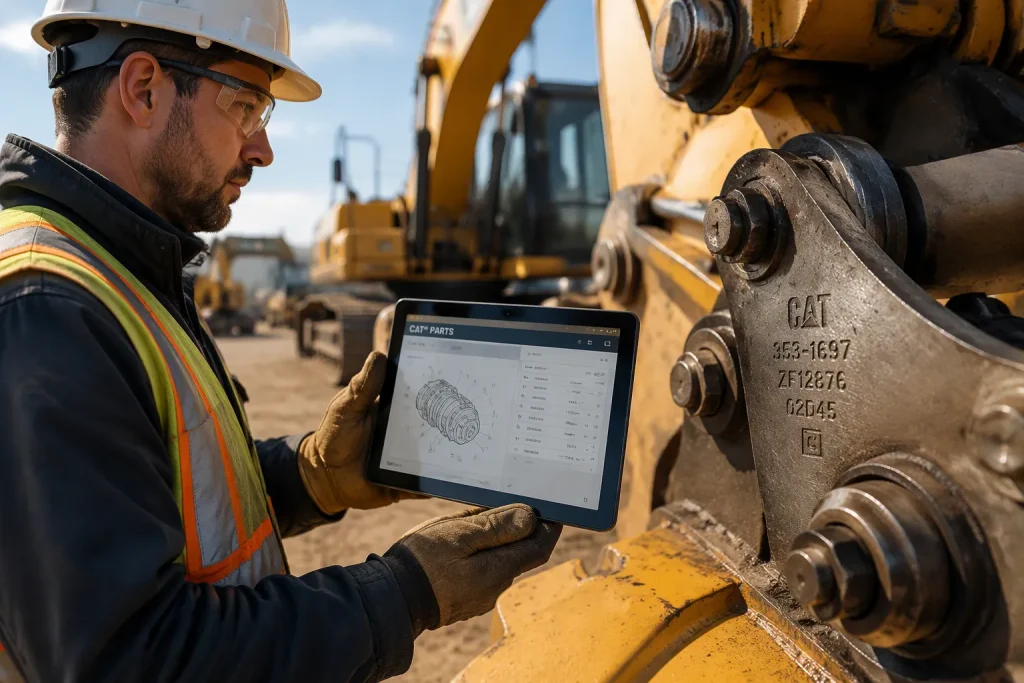
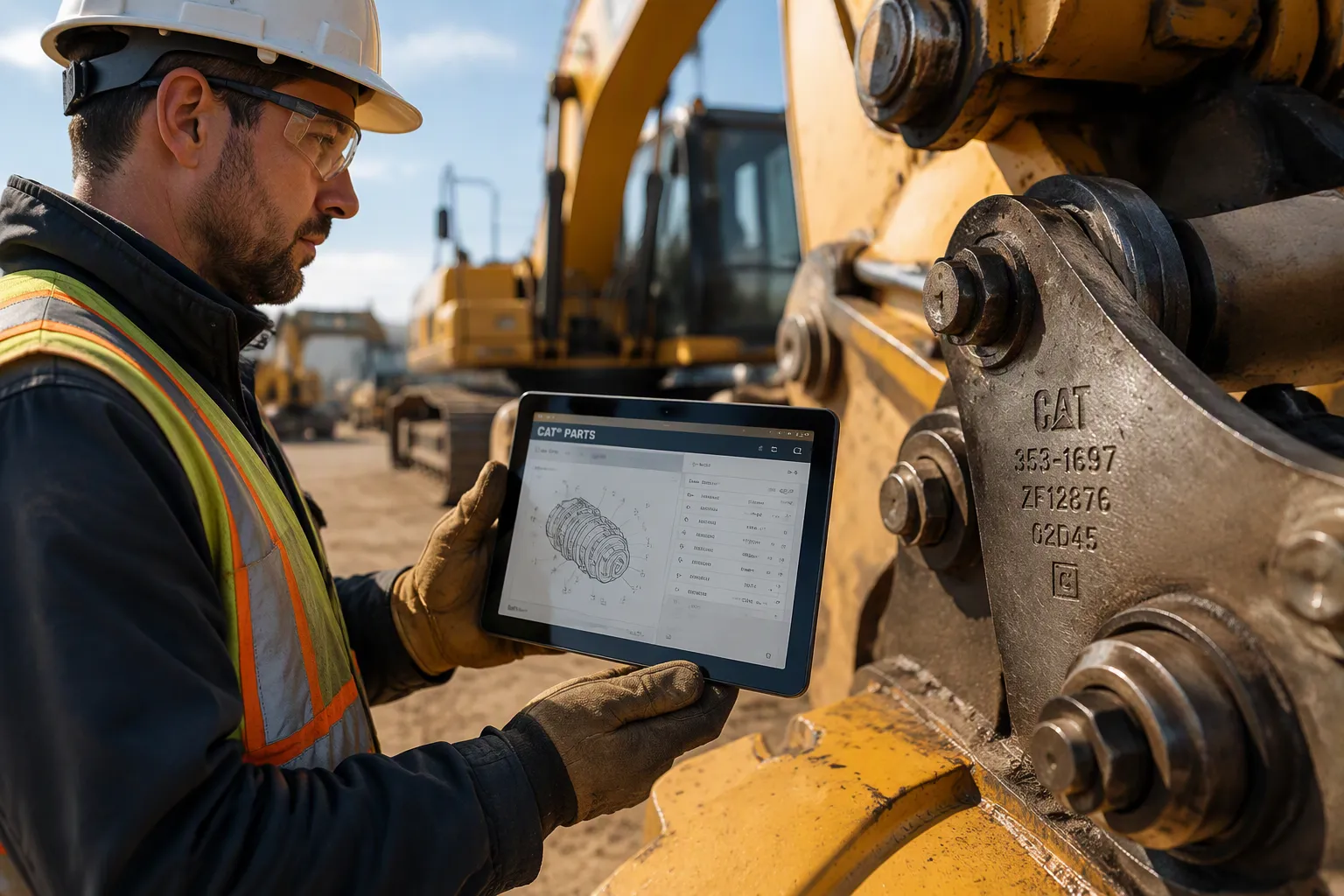
A practical starting point for identifying Warner Swasey excavator parts is the actual machine model and serial number, paired with the applicable parts publication. Verify the offered replacement’s identity and specifications before ordering; documentation and a supplier response do not remove every uncertainty.
Guessing wastes your money. A similar-looking part may not fit. You lose valuable work time while your machine sits idle. The wrong part can also damage nearby systems.
This guide gives you a clear, step-by-step process. You will learn to find machine identification, collect part details, read warner swasey excavator parts manuals, and check every number. Follow each step in order. You will order the right part on your first try.
Key Takeaways
Find the ID plate on your machine. Write down the model and serial number. Use these numbers to locate the right parts manual.
Use the parts manual for your exact model and serial range. Match the diagram item number to the official part number.
Check each part number with a supplier before you buy. Ask about replacement numbers and serial breaks.
Copy each letter and dash exactly from the manual. If you leave out a prefix, you may get the wrong part.
Give your supplier the model, serial number, part number, quantity, and photos. Ask for written confirmation before shipping.
Locate Machine Identification
Start with the machine’s identification records. If its ID plate is missing or unreadable, collect reliable ownership and service records and seek qualified identification help before selecting a manual or part.
Find the ID Plate
Identification-plate location varies by model. Consult the applicable operator or service documentation and avoid assuming one location applies to every machine.
A clean plate is very important. Dirt, grease, and rust can cover the numbers. Use a rag and a flashlight to look at the plate closely. Take a photo of the plate once you find it. That photo gives you a backup copy if the plate gets worn. You will use the numbers from this plate in every step that follows.
Record Key Numbers
Record the full model designation and every identification character exactly as shown. Preserve prefixes, suffixes and punctuation. Verify the information against the publication’s stated applicability.
Next, record the serial number. This number identifies the production run of your machine. It matters more than the model number. The same model can have different part numbers across serial ranges. Also write down the engine number and any attachment numbers. The engine number helps you order engine-related parts. Attachment numbers identify buckets, booms, or other implements.
Record a build date only when supported by reliable records. Model and serial applicability, component identification and later modifications are more useful than guessing a production year.
Gather Details About the Part
Describe the Part
You know your machine’s identity. Now you must describe the exact part you need. Start with the part’s location on the machine. Is it in the swing transmission? Does it sit in the lower unit as a hydraulic motor? Maybe it is a simple filter. Write down the area where the part belongs.
Next, explain what the part does. A swing transmission part controls rotation. A hydraulic motor powers movement. A filter cleans fluid. Your description helps the supplier understand your need. Use plain words. Avoid vague terms like “thing” or “piece.” Say “swing gearbox bearing” or “hydraulic pump seal.” This clarity prevents wrong orders.
Check the part for any stamped numbers or marks. Clean the surface first. Look for casting numbers, tags, or labels. These marks often link to the correct part number. Write down every mark you find. If no marks exist, note that too. Your description and any marks give the supplier a full picture.
Take Photos and Note Quantity
Photos remove doubt from your order. Take clear pictures from multiple angles. Shoot the part from the front, back, top, and sides. Include close-ups of any numbers or marks. Use good lighting. A blurry photo helps no one. Place a ruler or tape measure next to the part for scale. This step shows the part’s size clearly.
Note how many parts you need. A single filter is different from a set of bearings. Write the quantity next to your part description. Check if the part comes in a kit or as a single unit. Some assemblies require matching components. Count every piece you must replace. Record that number before you call the supplier.
Keep your photos and notes together. You will use them when you check the parts manual. You will also share them with the supplier. Good photos and an exact count speed up the order. They also reduce the chance of a return.
Using Warner Swasey Excavator Parts Manuals
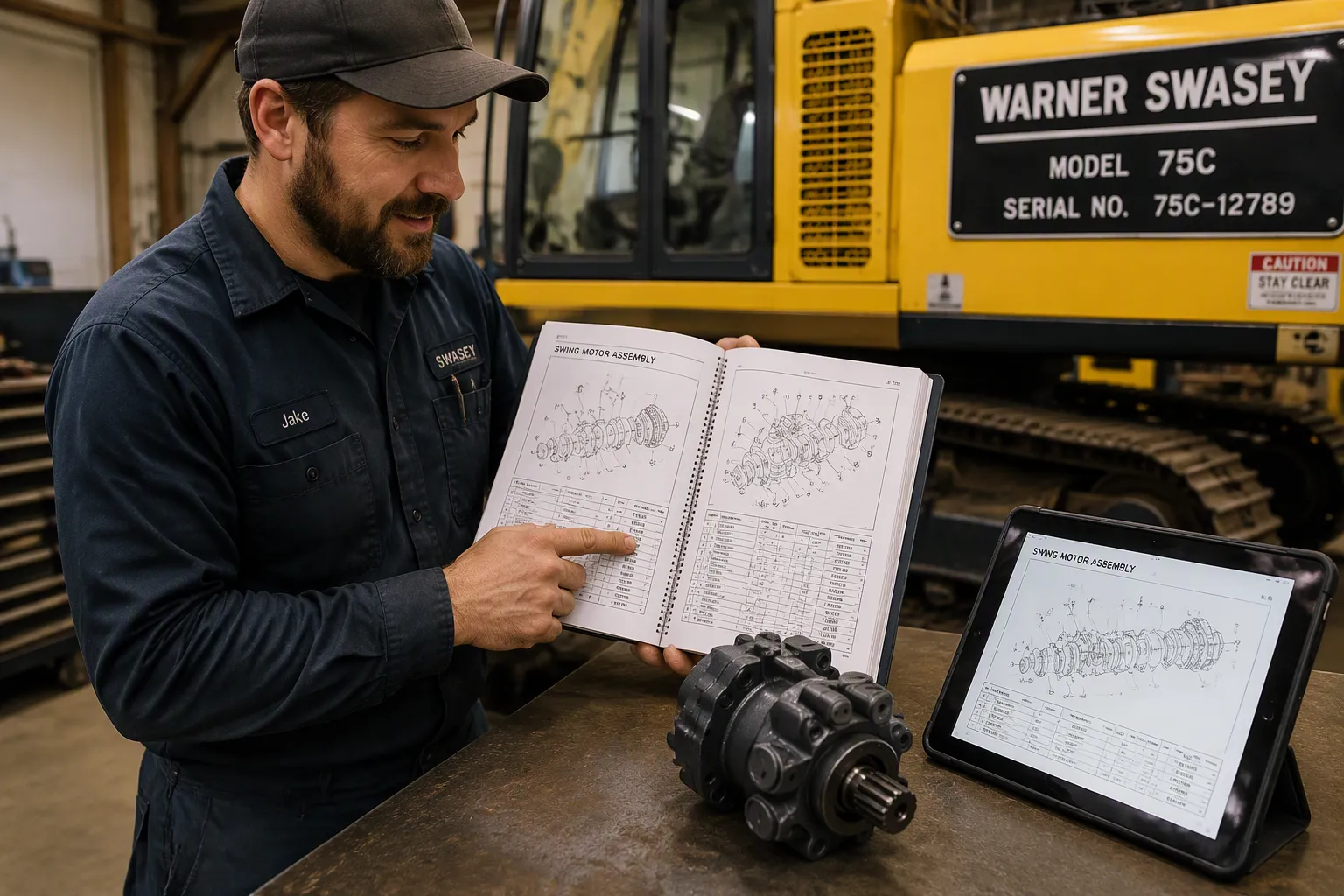
A parts manual is the best tool you have for finding correct numbers. It shows every part in your machine with its official part number. You must use the right manual for your exact model and serial range. Design changes over time mean the same model can use different parts across production years.
Find Your Model and Serial Range
Confirm that the publication covers the actual model and serial range. Availability and revision coverage vary for older machines; do not assume every model has a readily obtainable manual.
Check the first pages of any manual you find. These pages list the serial number ranges the manual covers. Match your machine’s serial number to the correct range. If your serial number falls outside the listed range, you need a different manual. Some models have multiple manuals for different production periods.
An operator or service manual can help describe a component and its maintenance, but may not provide orderable part numbers. Use the applicable parts publication or verified component records for replacement identification.
Match Item Number to Part Number
Open your parts manual to the correct section. Find the assembly diagram for the system you need. These diagrams show every component in an exploded view. Each part has an item number pointing to it from the diagram.
Locate the item number for your part on the diagram. Then find that same item number in the parts list. The list gives you the official part number for that item. Write this number down exactly as it appears.
Check for serial number breaks in the parts list. Manufacturers often list multiple part numbers for the same item. Each number applies to a specific serial number range. You must select the number that matches your machine’s serial number. Using the wrong number means you get a part that will not fit.
Some diagrams show assemblies within assemblies. You may need to look at a sub-diagram to find your specific component. Follow the item numbers through each level until you reach the exact part you need. This process takes time, but it gives you the correct number.
Compare old-component tags and markings with the applicable records. A casting number can identify a housing or blank rather than the complete orderable assembly. Investigate discrepancies instead of treating a matching mark as complete proof.
Verify and Cross-Reference Numbers
You have a part number from the manual. Do not order yet. That number is a starting point, not a final answer. You must verify it with a supplier. This step catches errors before they cost you money.
Contact a Dealer or Supplier
Call an authorized dealer or a trusted parts supplier. Give them your machine’s model number and serial number. Then read them the part number you found. Ask them to confirm that this number fits your exact machine. A good supplier will check their system against your serial range.
Ask about superseded numbers. Manufacturers often replace old part numbers with new ones. The old number may no longer exist. The supplier can tell you the current number that replaces it. Write down every replacement number they give you. This step saves you from ordering an obsolete part.
You also need to know if the part is OEM or aftermarket. An OEM part comes from the original manufacturer. An aftermarket part comes from another company. Ask the supplier which type they offer. If you choose aftermarket, ask for the cross-reference number. This number links the aftermarket part to the OEM number. Confirm that the cross-reference is correct for your machine. A wrong cross-reference leads to a wrong part.
Equipment-owner communities can provide leads to publications or component information. Treat anecdotes and shared numbers as unverified until checked against applicable documentation, the machine configuration and relevant specifications.
Never trust a single source for a part number. Confirm it with at least one supplier before you buy.
Check for Superseded Numbers
A superseded number is a new number that replaces an old one. Manufacturers make this change for many reasons. A design update, a new material, or a supplier change can cause it. Your manual may list the old number. The supplier’s system may only show the new number. You must connect the two.
Request documented supersession information and any substitution conditions. An updated part number may require related components or installation changes. An older number is not automatically unsuitable, and a current number is not automatically compatible.
Confirm the proposed replacement’s actual applicability and availability. A safe replacement may require further identification work; do not assume a current compatible part is always available for a vintage machine.
Keep a record of every number you find. Write down the old number, the new number, and the date you confirmed it. This record helps you next time you need warner swasey excavator parts. It also helps if you must return a part. A clear paper trail makes the process smooth.
Avoid Common Ordering Errors
Watch for Serial Number Breaks
The most common mistake is using the wrong serial number range. Two machines with the same model name can need different parts. Warner Swasey changed designs during production. The manual lists separate part numbers for each design change. Find the break point in the parts list. Then match your serial number against it.
Similar-looking components can differ across configurations. Use the applicable serial-range notes and dimensional or functional specifications rather than an unverified model-specific example.
Read the parts list line by line. Do not jump to the first number you see. Check every note next to the part number. Some notes say “serial up to” or “serial from.” These notes are the key to a correct order.
Parts that look alike cause confusion. A hydraulic pump seal for one model can look exactly like another. The inner diameter may differ by a tiny amount. Your eyes cannot see the difference. Only the part number tells them apart. Check the number against your serial range before you order.
Check for Missing Prefixes
Part-number prefixes and suffixes can distinguish items or versions, but their meaning depends on the particular numbering system. Preserve every character rather than inferring a universal code.
Imagine you find a part number listed as A-12345 in the manual. You write down 12345 and order it. The supplier sends a different component. The A prefix was the key. Any missing character can cause a wrong fit.
Some obsolete numbers still appear in old manuals. The manufacturer may have changed the design since the manual was printed. Ask your supplier about the history of the number. They can tell you the replacement. Confirm that replacement works for your serial range. Never assume an old number is still valid.
Double-check the prefix against the assembly diagram. The diagram may show the same digits for two nearby parts. Each one has a different prefix. Match the prefix to the exact item number you circled. One letter separates a correct order from a return.
Order Correctly
Provide Complete Information
You have done the hard work. Now you must give your supplier everything they need. Start with your machine’s model number and serial number. Read them directly from your notes. Do not rely on memory. A single wrong digit can send the wrong part to your door.
Next, share the part number you found in the manual. State the part description in plain words. Tell the supplier where the part sits on your machine. Mention its function, such as a swing transmission component or a hydraulic filter. Include the quantity you need. If you need three bearings, say three. Do not let the supplier guess.
Attach your photos to the order. Clear pictures from multiple angles help the supplier see exactly what you need. Include close-ups of any stamped numbers or marks. These photos act as proof. They show the supplier the real part, not just a number on a screen. When you buy warner swasey excavator parts, complete information speeds up the process and reduces errors.
Request Confirmation
Never finalize an order without confirmation. Ask the supplier to verify that the part number matches your model and serial range. A good supplier will check their system before they ship. This step catches mistakes while you can still fix them.
Ask the supplier to confirm the part is in stock and ready to ship. Request the current price and any available shipping details. If the number has been superseded, ask for the replacement number in writing. Keep that record for your files.
Request a final confirmation before the order ships. Ask the supplier to repeat the part number, quantity, and your machine details. This last check takes only a minute. It prevents a wrong part from arriving at your site. A confirmed order means you get the right warner swasey excavator parts and your machine goes back to work.
You now have a clear path to the right part. Start with the machine’s ID plate. Record the model and serial number. Use the correct manual for your serial range. Match the item number to the part number. Then verify that number with a supplier before you order. This process removes guesswork and saves you money.
Keep the confirmed machine identification, applicable catalog page and offered-part details with the quotation and order record.
FAQ
What if the ID plate is missing or unreadable?
Consult the model’s documentation and reliable machine records. Component plates or casting marks can provide clues, but are not necessarily substitutes for machine identification. Seek qualified assistance and resolve uncertainty before ordering.
Can I use a part number from a similar model?
No. Two machines with similar model names can use different parts. Serial number breaks change part numbers across production runs. Always match the number to your exact model and serial range. A number from another machine may fit poorly or not at all.
How do I know if a part number is obsolete?
Ask your supplier to check the number in their system. They can tell you if the manufacturer replaced it. Request the current replacement number in writing. Confirm that the new number works for your serial range before you order.
What information should I give my supplier?
Give your model number, serial number, and the part number from your manual. Describe where the part sits and what it does. State how many you need. Attach clear photos from multiple angles. Complete details help the supplier confirm the right part on the first try.
Where can I find a parts manual for my machine?
Check with an authorized dealer or a trusted parts supplier. They often have access to manuals for older models. Online forums for heavy equipment owners can also point you to manual sources. Always confirm the manual covers your exact serial number range.
For Warner Swasey excavator parts sourcing, consider YNF Machinery. Share reliable machine identification, component details and any applicable part numbers, and ask whether the required replacement can be supplied. Request supported compatibility information, an itemized quotation and written order terms before purchasing.



