
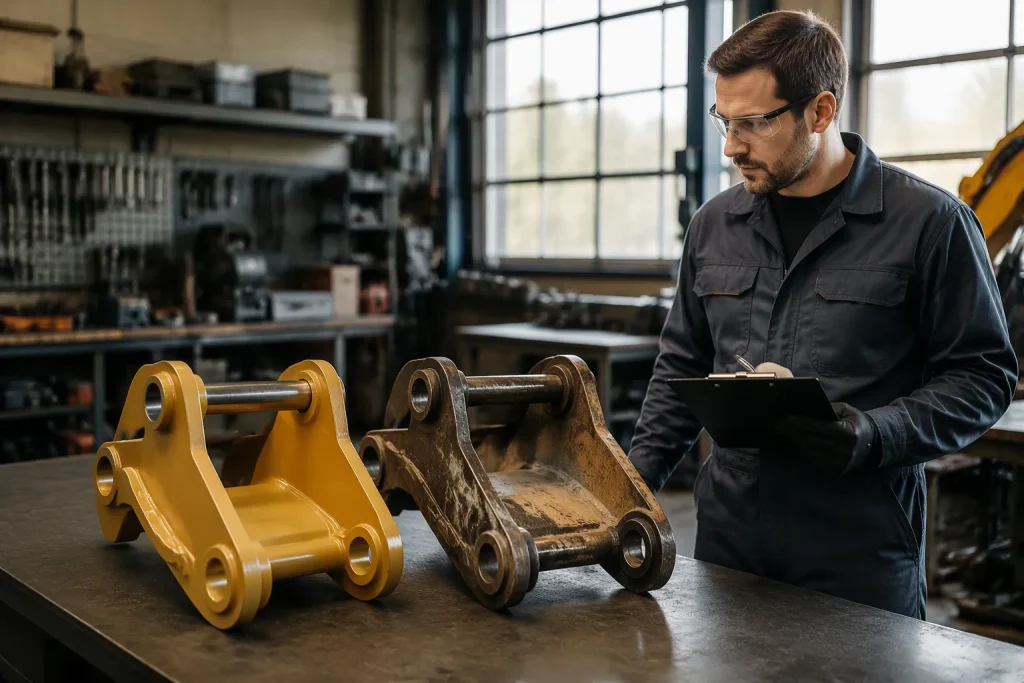
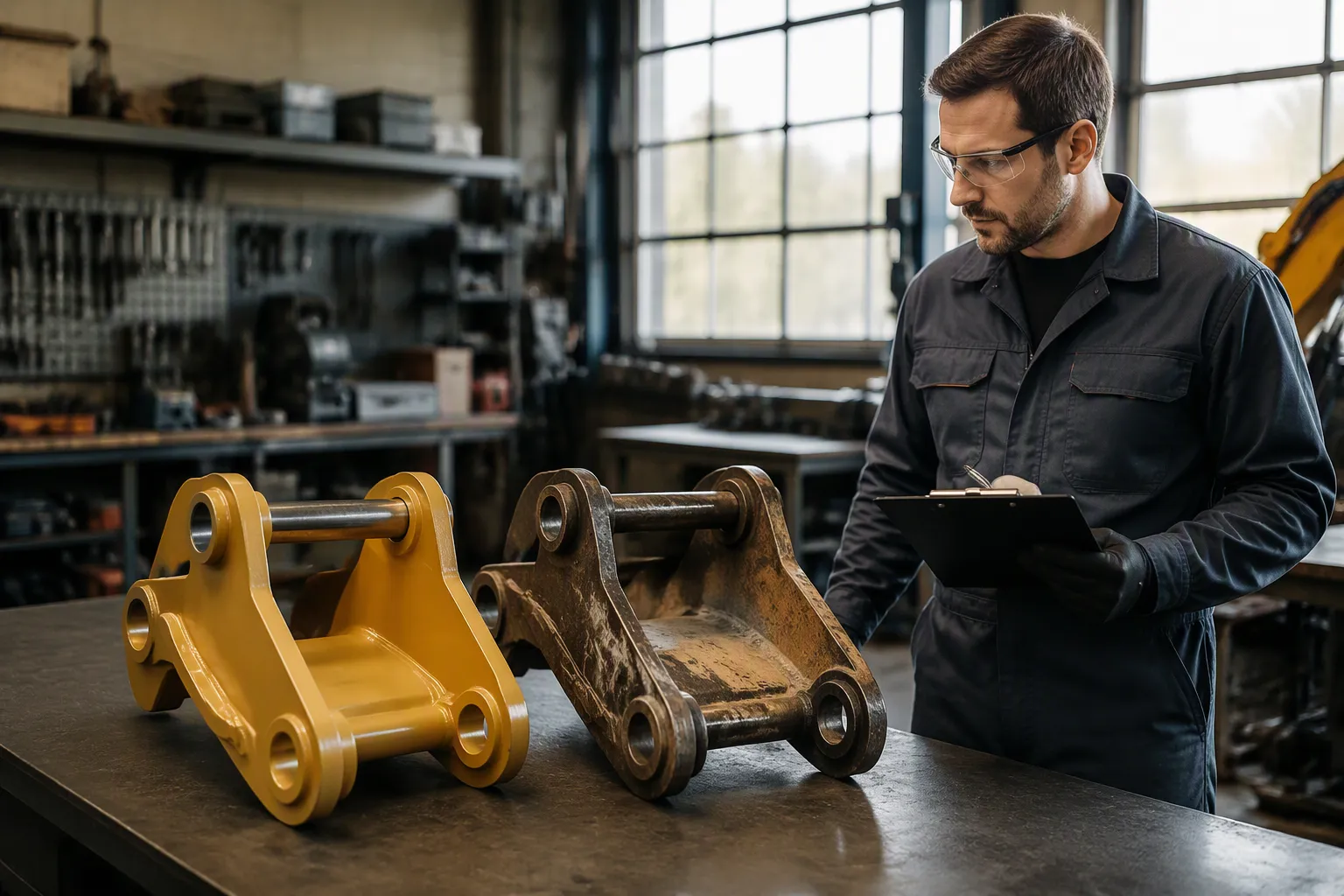
Your choice depends on your budget, your project needs, and your comfort with risk. Both new and used excavator parts work well if you pick the one that fits your situation.
This article compares new and used excavator parts to help you choose with confidence. You will learn how cost, availability, and wear affect your choice.
Many excavator owners face this question during repairs. A used excavator part saves money upfront. A new excavator part has a known condition. Neither choice wins every time.
You can find guidance on “we buy excavator parts” below. The right pick starts with honest numbers and clear expectations.
Key Takeaways
Used parts may be considered when their actual condition, compatibility and economics meet the repair requirements. Safety-related cab components still need careful inspection.
Match part numbers with your manual. Ask the supplier to confirm fitment. This step saves money. It prevents costly returns.
Pick a trusted supplier. Ask about warranty, returns, condition. Clear answers reveal honesty. A good supplier lowers your repair cost.
New Excavator Parts: Pros and Cons
New parts may be supplied through genuine or aftermarket channels. Confirm the exact application and provenance rather than assuming a new item belongs to the current generation of your machine.
Reliability and Warranty
A new part is sold without prior service use, but that does not guarantee freedom from manufacturing defects or damage. Verify applicable specifications, quality evidence and compatibility.
Coverage varies by seller, part and transaction. Read the written warranty, duration, exclusions, installation requirements and claims process. An early failure is not automatically covered.
Compare actual quotations and confirmed delivery estimates. New status does not determine the price difference, stock location or lead time.
Compare Actual Price and Availability
Evaluate the specific new-part quote, condition, compatibility and coverage against alternatives. The value depends on the repair requirements and the evidence supporting expected performance.
Availability adds another layer. New parts for older machines may sit on backorder. The manufacturer may slow production for models no longer in wide use. You might wait days or weeks for a part to arrive. That delay costs money when a machine sits idle.
Consider remaining machine service life and the consequences of repeat repairs. A new part can be suitable when its specifications and quality are verified, but purchase status alone does not establish reliability or resale value.
You should compare the total cost, not just the sticker price. Add the warranty value, the delivery time, and the risk of a comeback repair. For some jobs, the higher cost pays for itself. For others, it does not. The next section covers the used option, so you can see both sides.
Used Excavator Parts: Pros and ConsCompare the actual quote for a used component with suitable new or rebuilt alternatives. Any upfront saving must be considered alongside inspection, installation and potential repeat-repair costs.
Potential Savings and Confirmed Availability
A used part may offer a cost or stock advantage when the exact component is available in suitable condition. Obtain a current itemized quote and realistic dispatch and delivery estimates; there is no universal price fraction or same-day availability.
However, you should not assume a used part always costs less or arrives faster. Availability depends on the specific component and your location. A rare part for a discontinued model may take just as long to find as a new one. Always confirm the actual price and lead time before you commit.
The lower cost also affects your total cost of ownership. A cheap part that fails early can cost more in the long run. You may pay for a second repair and lost work time. Weigh the savings against the risk of another breakdown.
Wear Risk and Condition Variance
Condition varies widely with used excavators parts. One component may have low hours and look nearly new. Another may show heavy wear, cracks, or damaged seals. You cannot always know how many hours the part has seen. This uncertain service history creates real risk.
Wear shortens the life of any used excavator component. A worn hydraulic pump may fail sooner than a new one. A used cylinder may leak under pressure. These problems can lead to downtime and extra repair costs. You should inspect every part before you buy. Check for visible damage, leaks, and unusual noise. Ask the seller for the machine model and serial number. That information helps you verify fitment.
Used components can be an option for discontinued applications, alongside suitable new aftermarket or rebuilt replacements where available. Equipment age alone does not establish compatibility or acceptability.
You can manage the risk with a careful inspection and a clear return policy. A trusted supplier will let you verify the part before you pay. That step protects your investment and your schedule.
Buying New vs. Used Parts: Key Factors
Assess the replacement component against your machine, operating needs, budget and the consequences of failure. This is a parts decision; whole-machine purchase prices are not a substitute for comparing repair options.
Project Scale and Downtime
A flexible repair schedule may allow more time to inspect or source a used option. It does not justify accepting an unsuitable part or reducing safety requirements.
For deadline-critical work, prioritize supported performance, compatibility, actual delivery and reliable support arrangements. Evaluate new, used and rebuilt alternatives on their evidence rather than assuming new parts cannot fail.
Machine Age and Budget
Check actual availability for the specific machine. Older applications may be supported by new, aftermarket, used or rebuilt components, but each offered replacement still needs verification.
Compare the full repair cost, remaining machine service life and written coverage. A lower purchase price does not always reduce total cost, and a new-part warranty does not cover every failure.
Critical Components: Require Strong Verification
For components affecting movement, load handling or safety, require appropriate identification, condition and performance evidence. A new label alone is not enough.
Pumps, Finals, Motors, Cylinders
Pumps supply hydraulic flow; final drives transmit travel motion, and swing assemblies rotate the upper structure. Cylinders move the working equipment. For any replacement, confirm the applicable dimensions and functional specifications, with qualified installation and testing where needed.
Internal damage and wear may be invisible on used hydraulic or drive components. Request relevant inspection and test evidence and have qualified personnel assess suitability. New components can also have defects; no category eliminates failure risk.
Non-Critical Parts and Used Options
Some used covers or trim components may be economical when compatibility and condition are verified. Seats, mirrors, handles and latches can affect visibility, operator protection or access, so they should not be dismissed as having no safety consequence.
Inspect the particular item’s function and condition and check the applicable part number and mounting arrangement. Cosmetic damage must be distinguished from defects affecting function or safety. Match acceptance criteria to the actual component.
How to Verify Parts Before You Buy
Before you order, check the part. The right part number stops a bad buy. The machine manual shows the exact part you need. Match the manual to the number stamped on the old part. This fast step keeps the repair on time and controls the cost.
Check Part Numbers and Fitment
Use available component tags and marks as identification clues. A casting mark may identify a housing rather than the complete assembly. Confirm the orderable part using applicable records and specifications.
Your excavator machine manual also helps. It lists the right part number for your model and serial number range. Manufacturers change designs during production, so a part from one series may not fit another. Share the serial number with the supplier and ask them to verify compatibility before you pay. This step takes little time. It prevents costly returns and saves you from unnecessary expense.
Inspect Condition and Seller
Inspect for damage, corrosion and wear and request relevant condition and test records. A leak can have several causes and does not by itself identify internal damage. Qualified assessment may be needed for critical components.
The seller’s reputation also matters. Read reviews and request service records. A supplier who shares maintenance records shows honesty. Ask about the return policy before you commit. A confident seller offers a fair return period. Professional inspections from an independent mechanic add extra protection for critical parts.
A used excavator part works well for an older machine when new stock is gone. Many older excavators need this approach. Checking the part becomes even more important then. You balance the lower price against the condition risk. Careful inspection lowers the cost of a mistake and the total repair cost. When you confirm fitment and inspect well, you protect your safety features. You also keep your excavator working without surprise breakdowns.
We Buy Excavator Parts: Where to Source Safely
A good supplier keeps your budget and schedule safe. A search for “we buy excavator parts” brings up many listings. You need to tell real businesses apart from casual sellers.
Working With a Trusted Supplier
A trusted supplier shares clear photos and honest descriptions. They ask for your machine serial number and the part number from your old component. They confirm fitment before you order. You want a business that checks every part and writes down the results.
A business advertising that it buys excavator parts may purchase used components, salvage or cores. That wording does not prove any component has been tested or that the business supplies suitable replacements. Confirm the actual service and item details.
A strong supplier puts terms in writing. They offer a return policy and clear warranty details. You know the exact cost before you commit. Ask how they handle shipping damage. These answers show whether they treat buyers fairly.
Questions to Ask Before Ordering
Ask about the part’s history before you pay. How many hours has it run? Does it leak? Did the seller test it under pressure? Request the machine model, serial number, and OEM part number. A supplier should also give the original part number printed on the component. Match these numbers with your excavator machine manual.
Ask about returns in writing. What happens if the part does not fit? Who pays return shipping? Does any warranty cover early failure? Request the actual quotation with total delivered cost, including freight and import charges. The sticker price alone does not show the true cost. Older excavators need this extra verification.
A good supplier answers every question with details. A straight answer about condition tells you a lot. If they hesitate, look elsewhere. Take notes during the call. Compare the answers with what you see in the photos. The time you spend verifying a part lowers your repair cost and protects your uptime.
Keep the applicable part information and inspection evidence with the quotation and agreed order terms.
Pick the part that fits your budget, your project, and how much risk you can take. No single choice is always the best.
Evaluate suitable new, used and rebuilt options using actual compatibility, condition, performance evidence, cost, availability and coverage. For critical systems, strengthen verification regardless of category.
If a seller offers a core return or component purchase arrangement, ask for written acceptance criteria, valuation, inspection conditions and freight responsibilities. Do not assume your old component will be accepted or credited.
Confirm the full repair and purchasing terms before committing to either option.
FAQ
Do used parts come with a warranty?
Used-part coverage and return terms vary. Obtain the actual written policy, exclusions and claims process before paying; a return window is not necessarily warranty coverage.
How do I know a part will fit my machine?
Check the part number stamped on your old component. Compare it with your machine manual and the supplier’s listing. Share your model and serial number with the seller. Ask them to confirm fitment before you order. Never assume a part fits because it looks similar.
Can a used part really save money?
A used part often lowers your upfront cost. That savings disappears when the part fails early. You then pay for a second repair and lost work time. Weigh the lower price against the risk of downtime. The total cost matters more than the sticker price.
Must I always buy critical components new?
How do I pick a safe supplier?
Look for clear photos, honest descriptions, and written terms. Ask about condition, testing, returns, and shipping damage. A good supplier verifies fitment with your serial number. They answer questions with details, not pressure. Walk away when the answers feel vague.
For excavator parts sourcing, consider YNF Machinery. Share machine identification, applicable part numbers and quantities, and ask which suitable options are available. Request supported compatibility and condition information, an itemized quotation and written order terms before purchasing.



