
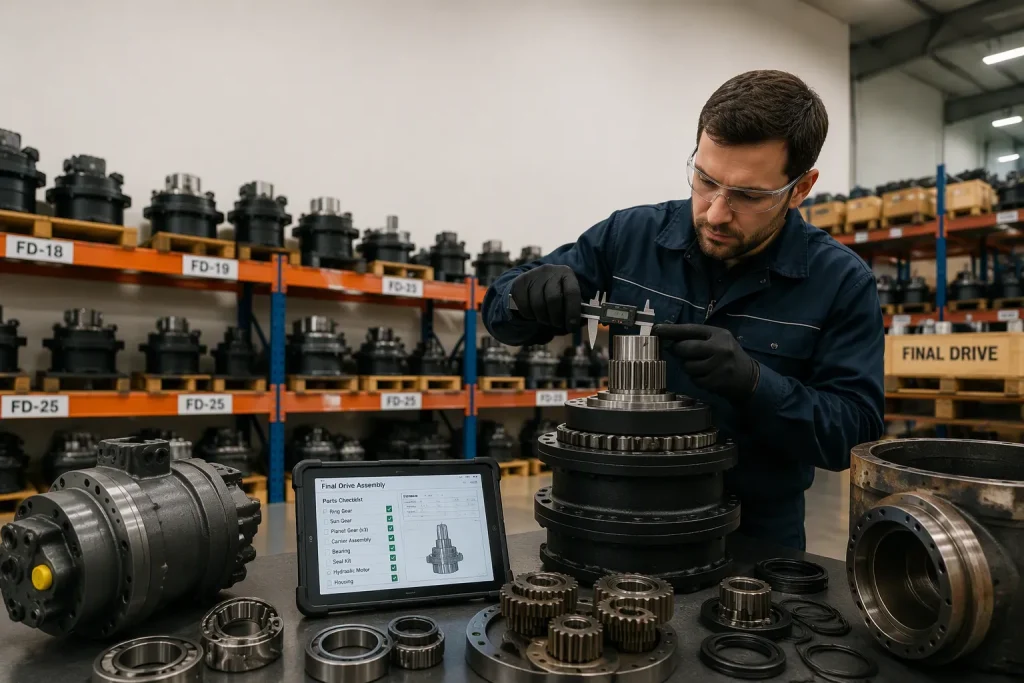
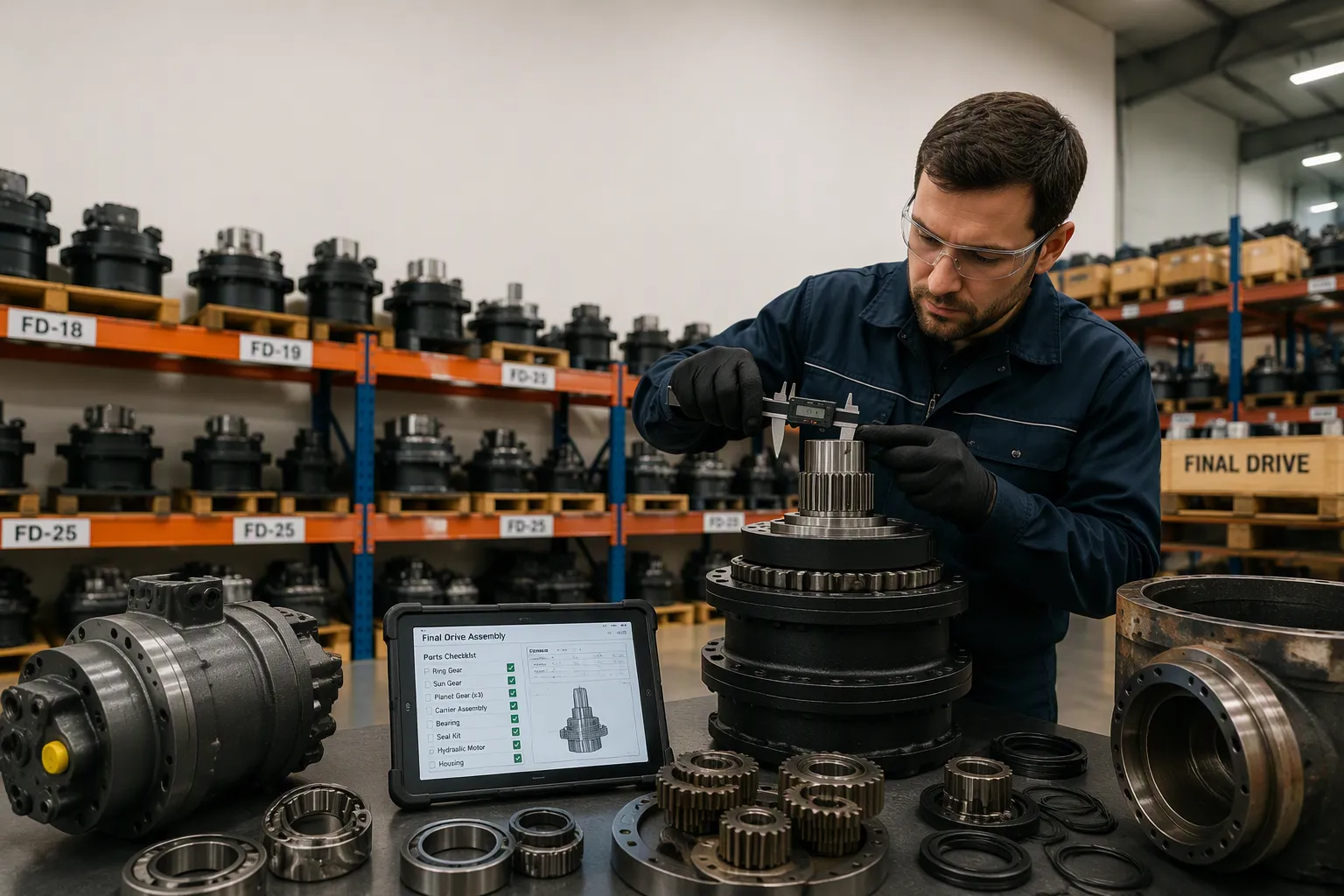
Buying the wrong replacement part for your excavator can lead to downtime and lost money. Early failure is a real danger. A final drive is a complex assembly, not a simple product. It combines a hydraulic motor with a gearbox in one precision unit. You must check wholesale excavator final drive parts carefully before you buy. This guide walks you through those checks, from machine identification to fitment and quality review. You will also learn how to judge warranty terms and part types. These steps help ensure compatibility, reliability, and a better return on investment. Quality final drives protect your budget and uptime.
Key Takeaways
Begin with the exact excavator model and serial number, then confirm the applicable final drive part number and configuration.
Record the identification marks on the installed drive. Some units have separate motor and gearbox identifiers; availability and marking vary by design.
Measure how well the mounting, sprocket, and hydraulic port fit. Small mismatches cause big failures.
Check the supplier’s quality documents and warranty. Test a sample before you buy in bulk.
Pick the part type that matches your workload. The right balance keeps your budget safe.
Ordering the Right Final Drive: Information Gathering
First, find out exactly which machine you have. Look for the information plate on the excavator. This plate tells you the make and model of the machine. It also shows the serial number. Suppliers cannot match a part without this information. You might buy the wrong component. Take a photo and write down all the numbers.
Locating Your Machine’s Model and Serial Number
Consult the machine manual to locate the identification plate; its position varies by model. Record the full model designation and serial number, including every letter and suffix. Take a clear photo and verify your transcription before using the parts catalog.
Inspecting Your Existing Final Drive for Part Numbers
A complete travel drive commonly combines a hydraulic motor and a reduction gearbox. Confirm whether your order requires the complete assembly, the motor, the gearbox, or an internal component. Record any identification tags or stamped markings available on the installed unit, and compare them with the model-specific parts information. A missing or unreadable tag requires further verification, not a guessed replacement.
Gather all measurements before calling a supplier. Include the bolt pattern and shaft size. Note the port locations and thread sizes. Give this data along with the part numbers. These details confirm compatibility. The final drive for your excavator must fit exactly. A replacement final drive should match the original part. Different final drives need different parts. Your service manual is the best guide. You avoid expensive returns and make ordering the right final drive easier with complete information.
Fitment Checks for Final Drives for Excavators
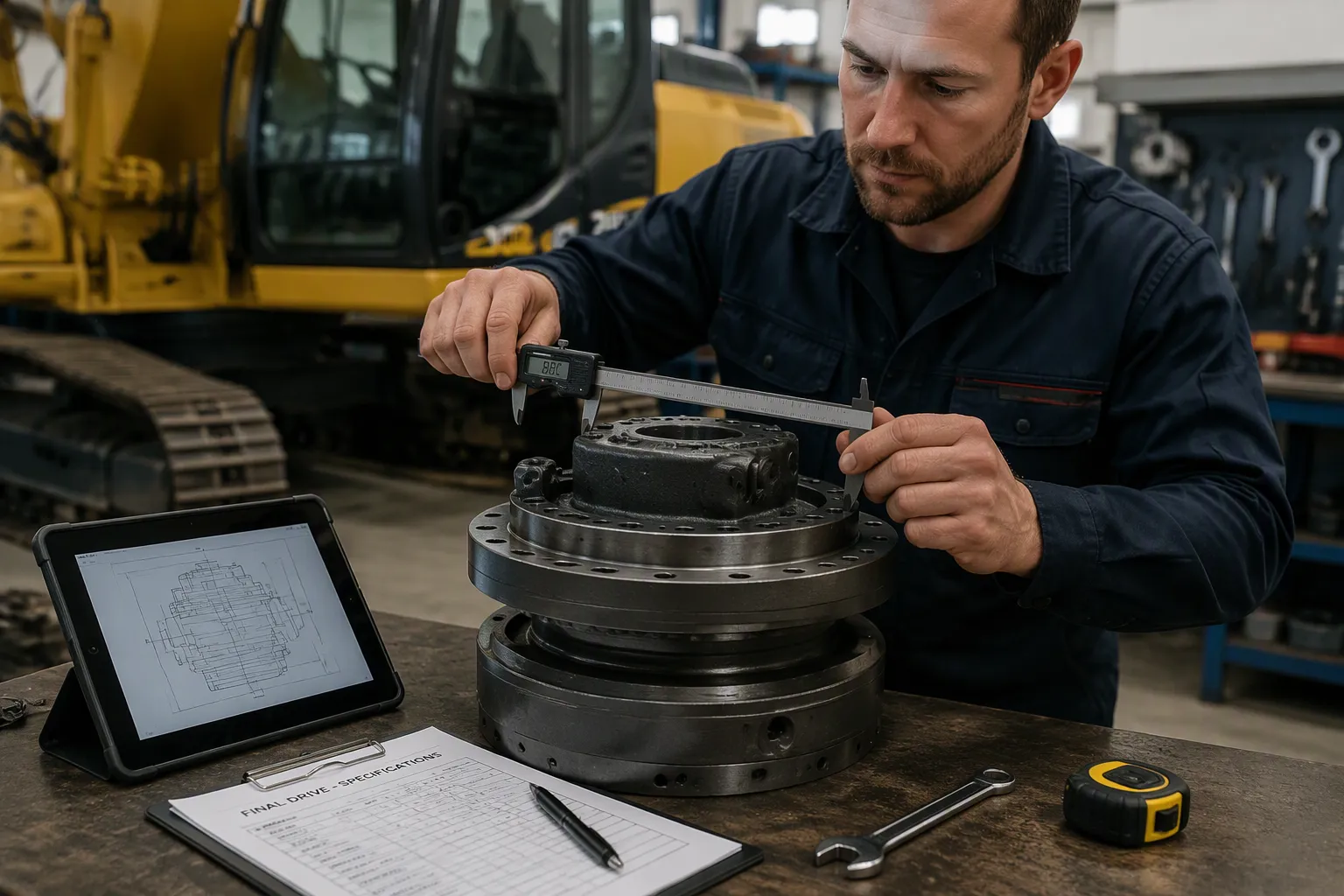
Confirm fitment against model-specific information before ordering. Compare mounting dimensions, the sprocket connection and the hydraulic configuration. These physical checks are necessary but do not establish operating compatibility by themselves; the replacement must also meet the applicable machine specifications.
Verifying Mounting Flange and Bolt Pattern
The mounting flange joins the final drive to the excavator frame. Count the bolt holes on your current unit. Measure the space between nearby holes and across the center. Write down the bolt diameter and thread pitch. Compare these numbers to the supplier’s drawing or spec sheet. Even a small mismatch of a few millimeters stops proper installation.
Also check the flange thickness and the pilot diameter. The pilot centers the unit on the frame. A worn or wrong pilot causes misalignment and vibration. Look at the bolt holes for stretching or cracks. These signs show stress or past installation problems. Your new final drive must match the original mounting shape exactly.
Take clear photos of the flange with a ruler or tape measure in the frame. Send these images to your parts supplier along with your machine’s model and serial number. This step helps confirm compatibility before you order. A good supplier will cross-check your measurements against approved drawings.
Checking Sprocket Interface and Hydraulic Ports
Check the sprocket connection specified for your drive. Depending on the design, it may use a bolted flange or another interface. Record the relevant dimensions and inspect the connection for wear or damage. Do not assume every final drive has an exposed splined shaft.
Record the hydraulic port functions, size, thread type and location, including any case-drain and speed-control connections. Confirm the hose routing and operating specifications with the service information. Changes to fittings or routing need technical approval; do not use adapters to compensate for an incorrectly specified drive.
Always consult your service manual and a qualified technician for specific measurements and torque specifications. Do not rely on generic data or guesswork for installation.
These compatibility considerations protect your investment. A final drive motor with the wrong port size will not connect to your hydraulic system. A wrong sprocket interface will not send power to the tracks. You avoid these problems by measuring twice and confirming every detail with your supplier.
Remember that excavator final drives vary widely across models and manufacturers. What fits one machine may not fit another. Your service manual gives the exact specifications for your equipment. A qualified technician can check your measurements and catch errors before they become costly. When you confirm compatibility at every connection point, you protect your machine and your budget.
Quality Checks for Wholesale Excavator Final Drive Parts
Fitment is only part of the job. You also need to make sure the parts are good quality. Bad parts break early and cost you more money over time. When you buy wholesale excavator final drive parts, you must check the supplier and the product before you buy.
Assessing Supplier Reputation and Documentation
Ask for relevant customer references, inspection records and a clear process for resolving incorrect or defective parts. Business experience is useful context but does not prove that a particular unit meets your requirements. Evaluate the evidence for the actual replacement being quoted.
Next, ask for paperwork about materials and testing. A good supplier will share details about the steel grades used in the gearbox housing and gears. They will explain how they test their units before shipping. Look for proof of a quality management system, like ISO 9001. Remember that ISO 9001 covers process consistency, not product certification. It shows the supplier follows written procedures. It does not promise that every final drive motor meets your machine’s exact specs.
Ask about where the parts are made and how they are tested. A supplier who answers these questions clearly is more trustworthy than one who avoids them. You can also ask for a sample inspection before placing a big order. This step lets you check the build quality yourself. Check the machining finish on the mounting flange. Look at the spline teeth for clean cuts. Inspect the hydraulic ports for smooth threads. These visual checks tell you a lot about the production standards.
Understanding Warranty and Sample Inspection
Warranty terms matter for wholesale purchases. Read the warranty policy carefully. Understand what it covers and what it leaves out. Does it cover parts only, or does it include labor? How long does the coverage last? What steps must you take to file a claim? A clear warranty shows the supplier stands behind their product.
Agree on a sample inspection and acceptance procedure before placing a large order. A qualified technician or test facility should conduct any installation or operating test using the machine service instructions and appropriate equipment. A successful sample does not guarantee every unit in the batch; require traceable inspection records for subsequent deliveries.
Match the drive operating requirements to the exact machine configuration, including applicable hydraulic specifications, reduction ratio and speed-control arrangement. Request the relevant test records and compare them with the approved requirements. Machine age or purchase price alone cannot establish compatibility.
Always verify warranty terms in writing before you buy. Verbal promises mean nothing when a failure occurs.
Choosing a Replacement Final Drive Motor: Part Types
You have three main choices when you need a replacement final drive motor. Each choice comes with different quality levels and costs. Knowing these differences helps you pick the right one for your machine.
New, Rebuilt, or Aftermarket Options
New OEM, new aftermarket, rebuilt and remanufactured units describe different sourcing or condition categories. Every option still requires exact part-number and configuration verification. For rebuilt or remanufactured units, ask which components were reused or replaced, what acceptance tests were performed, and what the written warranty covers. Definitions and practices vary, so evaluate the documented process rather than relying on the label.
Matching Part Type to Your Operational Needs
Your machine’s age, workload, and budget guide your choice among oem, aftermarket, and remanufactured options. An older machine with light duty may run fine on a quality remanufactured or aftermarket drive. A high-hour machine in constant heavy work needs a strong replacement final drive. Think about your final drive replacement options with care. A rebuilt or reconditioned final drive can stretch your budget. Remanufactured final drives balance cost and reliability for many owners. A final drive motor from the aftermarket can work well when you check the supplier’s quality controls.
Weigh cost against warranty coverage and expected return on investment. A cheap part with no warranty often costs more over time. A final drive replacement that lasts protects your uptime and your wallet. Match the part type to your real needs, not just the lowest price.
Good planning stops expensive errors. You found your machine’s model and serial number. You looked at the final drive motor and gearbox tags. You checked the mounting flange, sprocket, and ports. You reviewed suppliers, warranties, and part types. Every step protects your money.
This careful method protects your budget and builds trust. Write down every measurement and part number. Keep a checklist for future orders. Talk to your service manual and a skilled technician before final drive installation.
Use a documented checklist to confirm the proposed part, quotation, inspection criteria and return terms before committing to the order.
FAQ
How do I know if a final drive will fit my excavator?
You can confirm fitment by matching your machine’s make, model, and serial number to the supplier’s approved drawings. Check the mounting flange bolt pattern, sprocket interface, and hydraulic port setup against your existing unit. Always verify measurements with your service manual and a qualified technician before ordering.
What is the difference between a final drive motor and a final drive assembly?
A final drive assembly has two main parts: the hydraulic motor and the gearbox. The motor turns hydraulic pressure into rotation. The gearbox lowers speed and raises torque. You must figure out which part you need before you call a supplier.
Can I use an aftermarket final drive on my excavator?
An aftermarket drive may be suitable if its exact configuration and operating specifications meet the requirements for your machine. Obtain written compatibility confirmation and relevant inspection or test records. Evaluate the individual unit rather than assuming all aftermarket drives have the same quality or fitment.
What should I check on a final drive before installing it?
Look at the mounting flange for cracks or stretched bolt holes. Check the spline teeth for wear or damage. Look at the hydraulic ports for smooth threads and the right size. Make sure the pilot diameter centers the unit correctly. These visual checks catch problems before installation starts.
How long should a replacement final drive last?
There is no universal service life for a replacement drive. Operating loads, contamination, maintenance, installation and component condition all affect durability. Follow the machine service requirements and evaluate available inspection records instead of relying on an unsupported lifespan estimate.
For wholesale excavator final drive parts, consider YNF Machinery. Share your exact machine model, serial number and drive identification, and request compatibility confirmation, relevant quality documents and written order terms before purchasing.



