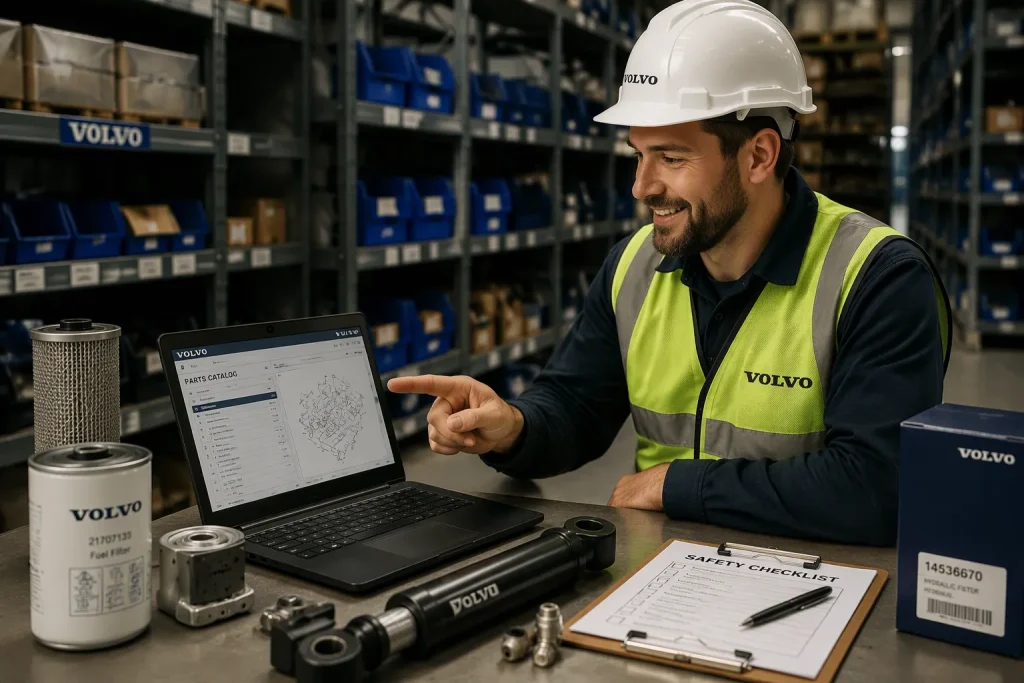
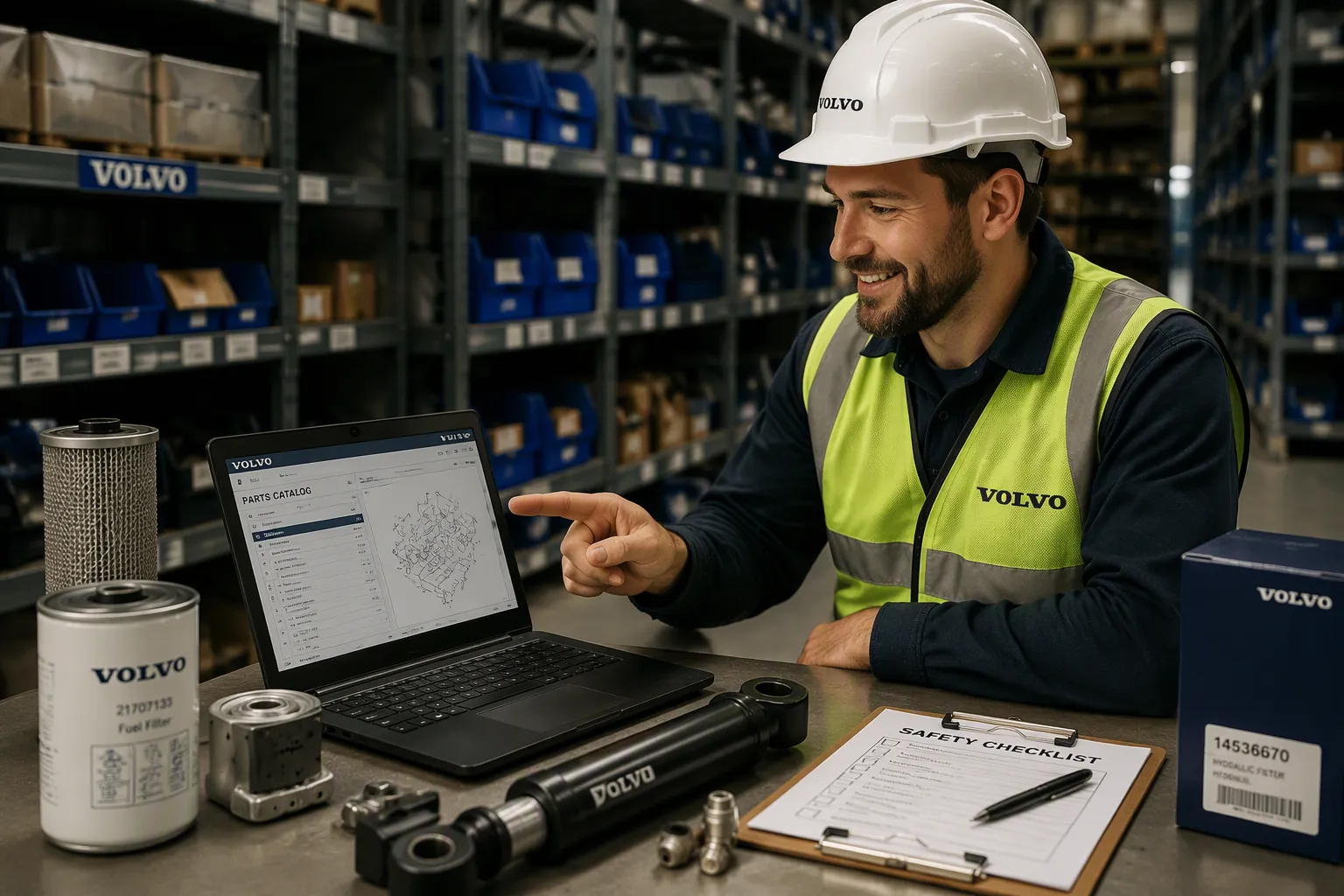
Safe online ordering starts with two steps. Find your machine’s model and serial number. Then check the exact part in the volvo excavator parts catalog before you pay anything. That simple habit protects you from the biggest risks: counterfeit excavator parts, wrong fitment, unclear return terms, and payment fraud.
You don’t need to be a mechanic to order well. You just need a clear process. This post walks you through machine identification, catalog use, supplier checks, authenticity checks, secure payment, shipping and return terms, and the pitfalls that trip up buying excavator parts online. Treat every order as a written quote first. A few careful minutes now save you weeks of hassle later.
Key Takeaways
Locate your machine’s model and serial number before you order any part.
Use the catalog’s ordering number to pick the right part, not the callout number.
Ask for a written price quote, and pay only after you check all the details.
Use actual-item photos and available traceability documents as evidence to investigate, not proof of authenticity.
Make sure you get shipping costs and return rules in writing before you finish your order.
Identify Your Machine First
Establish the complete machine and relevant component identity before selecting a catalog entry. Record options and later changes; a model name alone does not identify every installed part.
Find the Model and Serial Number
Use the applicable operator documentation to locate the identification plate for your model. Copy identifiers exactly as labeled and photograph them safely. Do not assume all machines use the same plate position or format.
The serial number matters more than most buyers know. It tells a supplier which build range your machine belongs to. Volvo often changes excavator parts between production runs. So the same model name can hide different components. Keep the number handy for every call, quote, and order you place.
Check the Operator’s Manual
The operator manual provides operation and maintenance guidance and may help locate identification information. It is not necessarily a service-parts listing. Use the applicable parts catalog to identify ordering numbers and service information for repair procedures.
Cross-check the manual against the machine itself. Confirm the installed component matches what the book describes. Previous owners sometimes swap parts. A modified machine may not follow the original build. Note any changes you find. Share those notes with your supplier so they can verify coverage before you pay.
A few minutes with the plate and the manual give you a solid foundation. Every later step, from catalog lookup to authenticity checks, depends on getting this right.
Use the Volvo Excavator Parts Catalog
Use an applicable catalog to locate the relevant assembly and associated parts table. Distinguish a drawing reference from an ordering number, and read variant and inclusion notes before selecting an entry.
Ordering Number Versus Callout
On a diagram and its associated parts table, distinguish these two references:
Number | What it does |
|---|---|
Callout number | Points to a position in the drawing. It helps you find the item on the page. |
Ordering number | Identifies the actual part you buy. This is the number you give your supplier. |
Never order by callout number. Callout numbers repeat across pages and drawings, so they can send you to the wrong item. Always copy the ordering number exactly, including every digit and dash. Then read the description next to it. The description confirms you picked the right item, not just a number that looks close.
Configuration and Quantities
Your machine’s configuration changes which excavator parts fit. Check the build details in the catalog against your serial number. A different setup can mean a different component, even on the same model. Confirm the identity of the installed component too. Look at the machine, not just the page.
Kits need extra care. A kit may include seals, bolts, or bearings, or it may not. Read the kit contents line by line. Check the quantity column as well. Some entries list one item, and others list a set. Order one when you need four, and you will wait on a second shipment.
Big assemblies deserve a close look. Hydraulic pumps, final drives and travel motors often come as complete units or as subcomponents. Decide which one you need before you order. Then match the ordering number to that exact choice.
Now turn the page into paperwork. Write down the ordering number, description, quantity, and machine details. Send that list to your supplier and ask for a written quote. Compare the quote against the catalog before you pay. This step catches typos, wrong quantities, and mismatched entries while fixing them is still free.
Choose a Reliable Excavator Parts Supplier
A good excavator parts supplier does more than list stock online. They check your machine details, answer fitment questions, and put terms in writing. Start with the part categories you need. Maintenance items cover filters and fluids. Repair and reman parts cover major assemblies. Wear parts cover buckets, teeth, and cutting edges. Ask each supplier which categories they really stock.
Genuine Versus Aftermarket
Genuine excavator parts come from the original manufacturer. Aftermarket versions come from other makers. Both can work, but the trade-offs are different. Ask the seller about material quality, warranty terms, and return options for each choice. A good supplier explains the difference clearly. They do not push one choice without a reason.
Compare sites for price and service before you commit. Ask owner communities which catalog sources they trust. Word of mouth helps you find a trusted source for genuine, rebuilt, and oem-compatible excavator components. Run every candidate through a supplier evaluation checklist. Check response speed, part knowledge, and written terms. A supplier evaluation checklist saves you from surprises later.
Confirm Delivery Coverage to Your US Address
Ask whether the quoted items can be delivered to your actual US destination. Confirm the shipping origin, dispatch estimate, carrier arrangements and delivery estimate in writing. Location alone does not establish stock or service capability.
If any goods cross a border, ask which party handles transport, customs clearance and any applicable charges. Request a written delivered-cost breakdown and clarify return logistics. Do not assume a supplier stocks every new, used or remanufactured option.
Confirm Kit Contents and Supersession
What the Kit Includes
A kit listing can fool you fast. The page shows one ordering number, so you assume one box holds everything you need. Read the contents line by line instead. Some kits ship with seals, bolts, and bearings. Others leave those out and sell them separately. Check each line against the job you plan to do.
Watch the quantity column too. One entry may mean a single item, and another may mean a full set. Order one when the machine needs four, and you face a second shipment and a second wait. Big assemblies deserve the same care. Hydraulic pumps, final drives and travel motors often come as complete units or as subcomponents. Decide which one you need, then match the ordering number to that exact choice.
Superseded Part Numbers
An older number may still be valid, discontinued or replaced under specific conditions. Check current applicable information instead of assuming age makes a number incorrect.
Ask your supplier to confirm the current number for your model and serial number. Give them the number you found in the catalog and the machine details from the ID plate. Then ask one direct question: has this number been replaced? Get the answer in writing, along with the number they will actually ship.
New, used and remanufactured options can differ in identification, scope and terms. Confirm the exact item, condition, replacement requirements and number that will appear on the quotation and shipment.
Compare the confirmed scope and current applicable ordering information with the written quote. Resolve differences before payment; these checks reduce errors but do not guarantee an outcome.
Check Excavator Parts Authenticity
Photographs and documents can help investigate an authenticity claim, but neither proves authenticity on its own. Request traceable sourcing information where available and resolve inconsistent markings or claims before purchase.
Photos and Batch Numbers
Request photos of the actual item, not a stock image. A real photo shows the casting marks, the surface finish, and the label. Ask the seller to include the batch or lot number in the shot. That number ties the item to a production run. It also lets you compare what ships against what you saw online.
A visible casting, batch or manufacturing code may legitimately differ from the service ordering number. Ask what each marking identifies and how it relates to the quoted item. Resolve unexplained differences without assuming every difference is a supersession or a counterfeit.
Record lot or batch identifiers where present, together with the supplier invoice and any traceability documents. Availability and meaning vary by product. An identifier can support an investigation but does not independently establish provenance or quality.
Packaging and Documentation
Photograph the packaging and labels when the item arrives and compare them with the quotation and supporting records. Packaging varies, so branded boxes, plain bags or printing quality alone do not prove authenticity. Ask about unexplained inconsistencies.
Compare the item identification with the supplied documentation. Ask the supplier to explain the relationship between service numbers, casting marks and label codes. Record any damage or apparent repackaging before accepting or installing the item.
Ask the supplier for documentation before you pay. A packing slip, a certificate of origin, or a manufacturer’s label photo all help. Treat these papers as evidence, not decoration. A quality management certificate tells you about a factory’s process. It does not prove this specific item passed a test or fits your machine. Keep those ideas separate. Fitment comes from your model, serial number, and catalog check, not from a certificate.
Ask for relevant actual-item information before shipment where practical, then inspect the delivered goods against the agreed order. Document unresolved discrepancies and follow the agreed return process.
Keep photographs, identifiers, invoices and supporting documents together. They support traceability and dispute handling, but cannot guarantee authenticity, fitment or performance. Have unresolved technical concerns assessed before installation.
Pay Securely and Get It in Writing
Money moves fast online. Once you send it, getting it back takes far longer. Slow down at the payment step. A few careful choices here protect your cash and your machine.
Protect Financial Information
Use an agreed payment channel and check its actual transaction records, dispute process and applicable protections before paying. Protections vary by provider and transaction; do not assume any payment method guarantees recovery.
Do not send sensitive payment details through ordinary email or chat. Verify the business contact and payment instructions through an independently checked channel. A professional response or useful technical answer alone does not prove a business is legitimate.
If the payee or account differs from the agreed quotation, pause and independently verify the change before sending funds. Record the verified instructions.
Written Quote Before Payment
Ask for a written quote before any money changes hands. The quote should list the ordering number, description, quantity, and your machine’s model and serial number. It should also show the price, shipping cost, and return terms. Compare every line against your catalog notes. Fix typos and wrong quantities now, while the fix costs nothing.
Check the quoted ordering numbers, item condition, inclusions, quantities and delivery terms. Ask for written clarification of vague lines and save the final quote and receipt. These records can support a later issue but do not guarantee its resolution.
Confirm Shipping and Return Terms
Shipping and returns decide whether a good order stays good. Ask about both before you pay. Get the answers in writing, right next to your quote.
Shipping Costs and Lead Times
Ask the supplier for the full shipping cost to your address. A low part price means little if freight doubles the bill. Confirm the lead time too. Ask when the item leaves the warehouse and when it should reach you. Those are two different dates, and both matter when your machine sits idle.
Confirm who arranges freight, who bears each charge and what handling or packaging the shipment requires. For any imported goods, have the responsible parties confirm applicable transport and clearance requirements; do not assume all orders follow one rule.
Return Windows and Conditions
Ask how long the return window stays open. Then ask what conditions apply. Many sellers want the item unused, in original packaging, with labels intact. Some charge a restocking fee. Ask for the exact terms in writing.
Clarify how incorrect supply, an unresolved fitment issue and transit damage are handled, including notification deadlines and return freight. Keep the agreed terms, photographs and receipt.
Avoid Common Ordering Pitfalls
Most bad orders fail for the same few reasons. You can spot them early with a quick, careful read.
Red Flags in Listings
If a price differs substantially from comparable quotations, ask whether condition, inclusions, availability or delivery terms differ. Price alone cannot establish quality or authenticity.
Stock photos are another warning. A listing that never shows the actual item tells you nothing about the batch number or the label. Ask for real photos, as covered earlier.
Vague descriptions deserve the same suspicion. “Fits many models” is not a fitment answer. You need the ordering number, the machine details, and a clear statement of what ships. Listings that dodge these questions rarely improve after you pay.
Pressure tactics are a final red flag. A seller who pushes you to pay now, before you confirm anything, is rushing you past your own checks. Slow down. Run the supplier evaluation checklist and walk away if the answers stay thin.
Checkout Mistakes to Avoid
The biggest checkout mistake is paying before you hold a written quote. Without that paper, you cannot compare the ordering number, quantity, or kit contents against your catalog notes. Fix errors first, while the fix is free.
Wrong quantities come next. Check the quantity column one more time at checkout. Confirm whether the entry means one item or a set. Then confirm supersession one last time, especially for hydraulic pumps and other large assemblies.
Skipping the return terms is a quiet trap. Read the window, the conditions, and who pays return freight before you click pay. Keep your photos, quote, and receipt together.
Treat buying excavator parts like a checklist, not a race. Confirm the excavator parts number, the machine details, and the terms. Then pay. Careful buyers keep their excavator parts orders clean, and their machines stay running.
Record machine and component details, verify the catalog entry and replacement requirements, confirm scope and quantities, and compare everything with the written quote. Retain traceability information and agreed payment, shipping and return terms.
Treat every order as a written quote or order confirmation before you pay. That habit keeps your parts orders clean and your machine running.
Keep a copy of the agreed order and receiving checklist for the shipment.
FAQ
How do I check a part number before I order?
Match the ordering number from the catalog to your machine’s model and serial number. Ask the supplier to confirm that number in writing. Compare the description and quantity against your notes. A quick cross-check catches most errors before you pay.
What if the part arrives and does not fit?
Stop and take photos of everything first. Keep the packaging and labels intact. Contact the supplier with your quote, photos, and machine details. Check the return window and conditions you confirmed before payment. A written quote makes this conversation much easier.
Are aftermarket excavator parts safe to use?
They can work well, but quality varies by maker. Ask about material quality, warranty terms, and return options. Compare those answers against genuine options. A good supplier explains the trade-offs clearly instead of pushing one choice.
How can I tell if a supplier is legitimate?
Independently verify the business identity and contact details, request an itemized written quotation, and resolve inconsistent payment instructions. A telephone conversation or knowledgeable response alone does not establish legitimacy. Do not pay while material questions remain unanswered.
The catalog shows a different number than my old part. What now?
The marking may be a casting code, manufacturing identifier, an old service number or another reference. Ask what it means and verify any claimed supersession and additional-item requirements. Confirm the number and exact item to be shipped in writing.
For Volvo excavator parts sourcing, consider YNF Machinery. Provide full machine and component identification, applicable part numbers and quantities, and request supported compatibility information, an actual quotation and written warranty and return terms before ordering.