
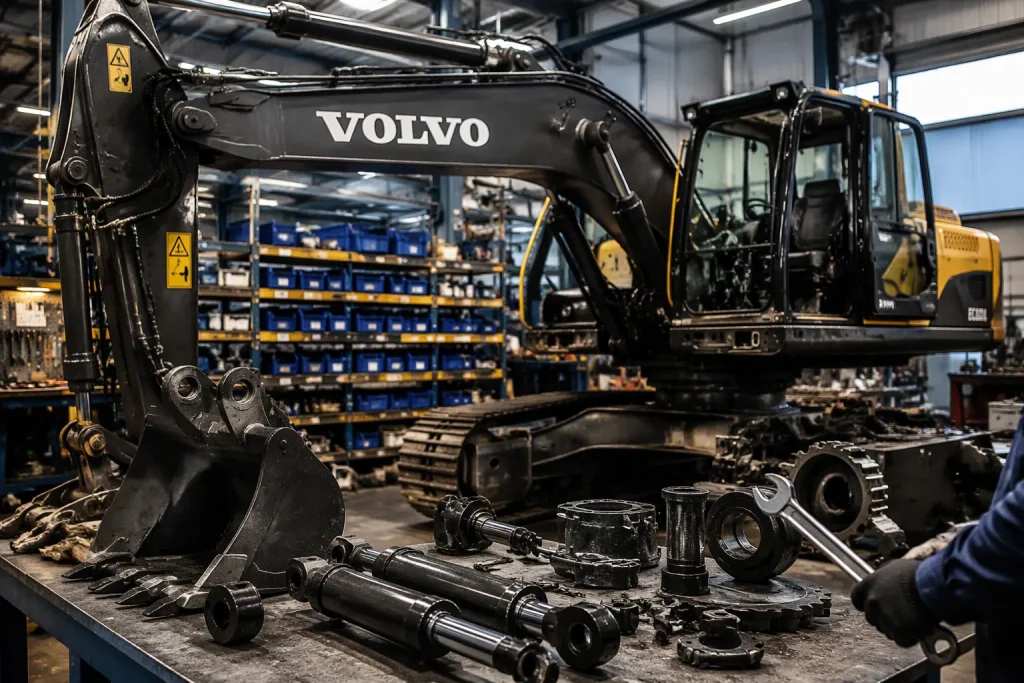
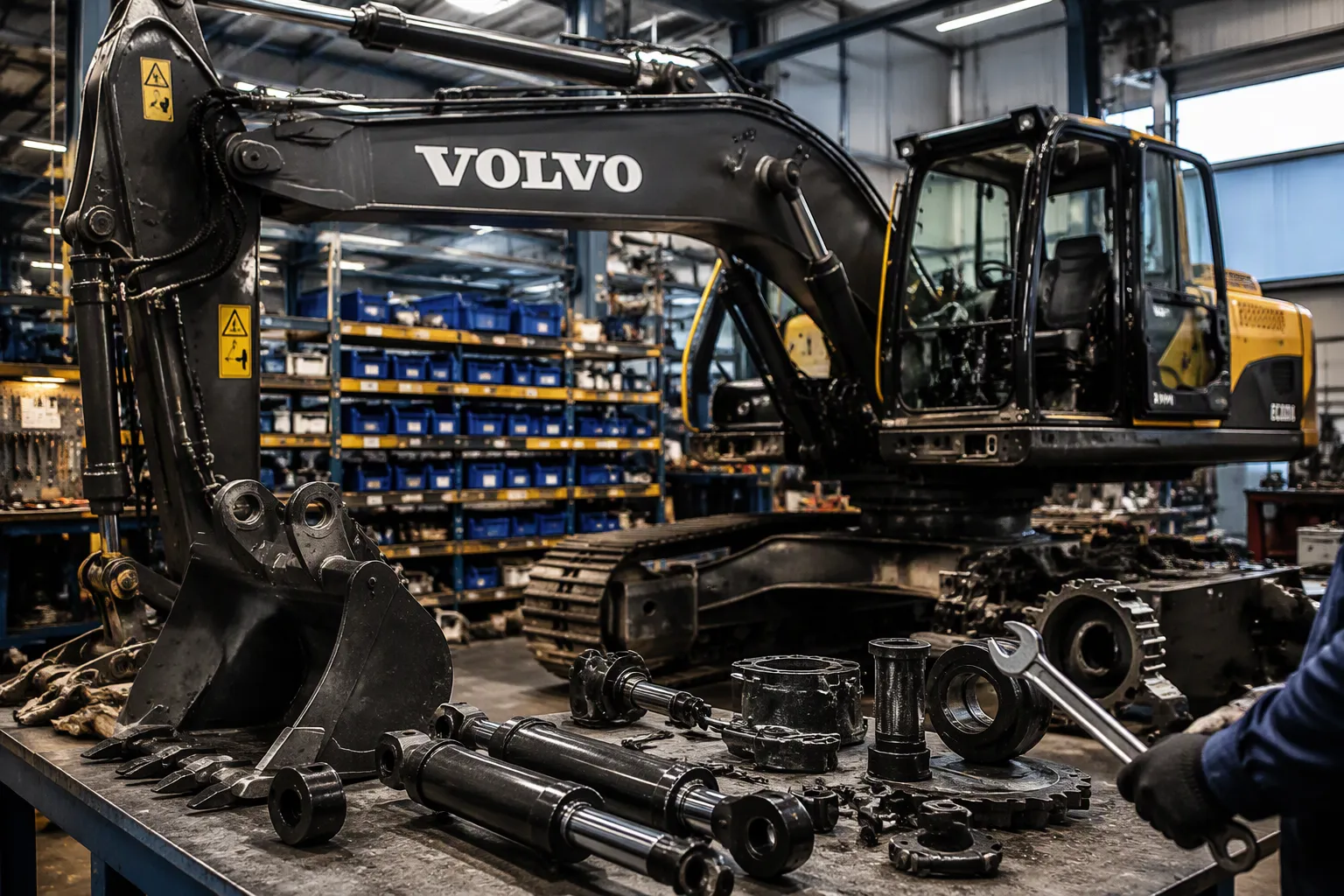
When reading a Volvo excavator parts catalog, distinguish assemblies, kits and individual components. These terms describe possible order scopes, not a universal three-section catalog layout. Read the actual item description and inclusion notes to determine what is supplied.
The distinction helps avoid ordering a larger unit than needed or assuming a kit contains every item for a job. The name alone does not settle supplied contents, separate availability or compatibility. Confirm those details from the applicable entry and quotation.
Key Takeaways
Distinguish assembly, kit and component order scopes; confirm their actual contents.
Check four details on each listing: callout number, ordering number, quantity basis, and variant applicability. This makes sure you order the right part.
Photos might show things that don’t come with the part. Always read the notes about what’s included so you know what’s in the box.
Check current supersession information and any conditions or additional-item requirements.
Check that the part fits your machine’s model before you order. This keeps the wrong parts from showing up.
Inside the Volvo Excavator Parts Catalog
Assemblies, Kits, and Components Defined
An assembly combines components into a unit. A kit bundles a stated selection of items. Component is a relative term: a pump can be a component of a larger system and also an assembly with internal parts. These labels do not establish the smallest separately orderable item.
Start from the required repair scope, then check which service items are actually offered. Some internal parts may be unavailable separately, while a kit may cover only part of a job. Confirm the quoted item’s contents and exclusions before purchase.
Navigate the Relevant Machine Systems
Use the actual catalog contents to locate the relevant system, such as hydraulics, undercarriage, engine, cooling, cab or electrical. Section names and grouping vary by publication. An assembly, kit or individual item may appear within a system breakdown rather than a separate category.
A description of the machine area can help locate the correct system and figure. Follow the publication’s cross-references to its parts table and applicability notes instead of assuming every catalog provides multiple navigation views.
Major Assemblies
Engine, Cooling, and Hydraulic Assemblies
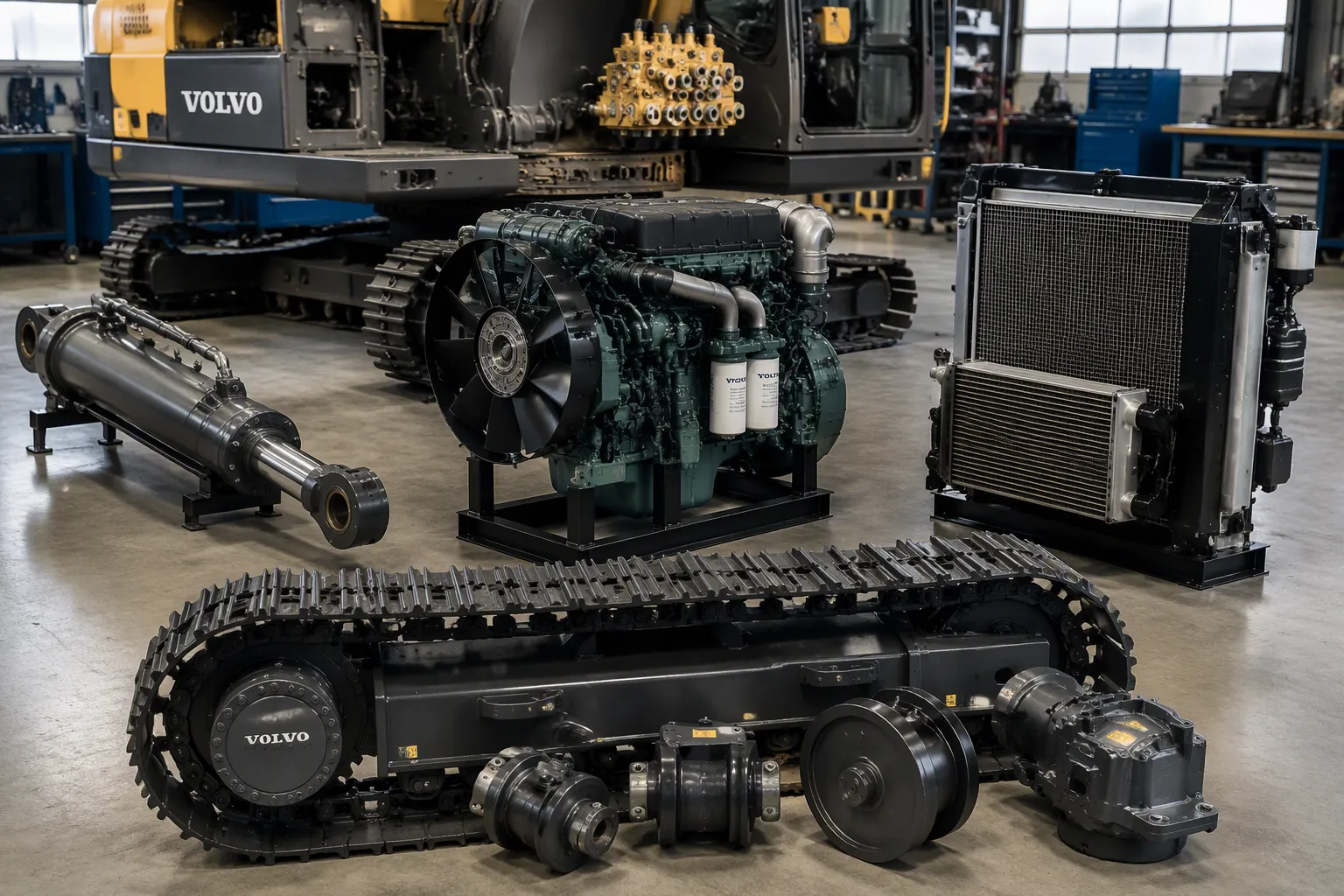
Engines, hydraulic cylinders, control valves, radiators and coolers may be offered as assemblies. Their supplied scope varies: a listed engine, for example, may exclude accessories or associated equipment. Confirm the exact item, condition, included components and configuration rather than assuming a complete ready-to-install package.
Control systems and installed components can differ by machine configuration. Check the applicable entry and component identification rather than inferring a control variant from the age of the machine or a generic illustration.
Items shown around an assembly may be included, separately offered or reference-only. Read the inclusion notes and ask for written clarification where needed; appearing for reference does not itself establish whether an item can be ordered separately.
Check the drawing reference, ordering number, quantity basis and applicability together. A catalog quantity may be per assembly or side, while the selling or packaging unit can differ. Verify both the repair quantity and quoted selling unit.
Undercarriage and Upper Structure Assemblies
Undercarriage listings can include track chains, shoes, rollers or idlers with different supplied scopes. A track chain need not include shoes. Booms and arms are large structural assemblies whose pins, bushings, hydraulic lines or other associated items may be separate.
These assemblies follow the same catalog rules. A boom listing may show pins, bushings, and hydraulic lines in the picture. Not all of those items come with the boom. Some are reference-only. Some are sold as separate components. The listing’s inclusion notes settle the question. A reader should read those notes before assuming a complete package.
Do not assume undercarriage items are sold in pairs or sets. Check the listed quantity basis and the quotation’s unit, then state how many items the repair needs. Confirm dimensions and variant applicability using the installed equipment information.
Callout numbers and ordering numbers close the loop. The callout finds the item in the drawing. The ordering number confirms the exact part. Together they turn a picture into an order line you can check.
Service Kits and Their Purposes
Seal, Filter, and Maintenance Kits
A seal, filter or maintenance kit contains the items stated for its specific service scope. It may not include every item needed to complete the work. Verify each included item, applicable assembly and any separately required parts.
Kits save time at the parts counter. A reader does not need to hunt down each seal or filter alone. The kit listing states what the package covers. Kit contents vary by machine variant, though. Two machines in the same family may take different kits. Supersessions also change kit contents over time. An older kit number may give way to a newer one with revised parts inside. A reader should confirm the current ordering number and the quantity basis before ordering. The quantity basis shows whether the kit serves one cylinder or a pair.
Repair and Reman Kits
Where repair kits are offered, confirm the defined repair scope and contents. A remanufactured assembly is a product condition or supply option, not automatically a kit. Do not assume a catalog offers reman kits or a universal kit category.
These kits follow the same rules as seal and filter kits. Contents differ across variants. A repair kit for one boom version may not fit another. Supersessions can swap individual pieces inside the kit without changing its purpose. The listing’s ordering number is the reliable guide. A reader should check that number, the quantity basis, and the variant note together. That habit prevents a wrong kit from arriving at the shop.
Individual Components
Pumps, Cylinders, and Valves
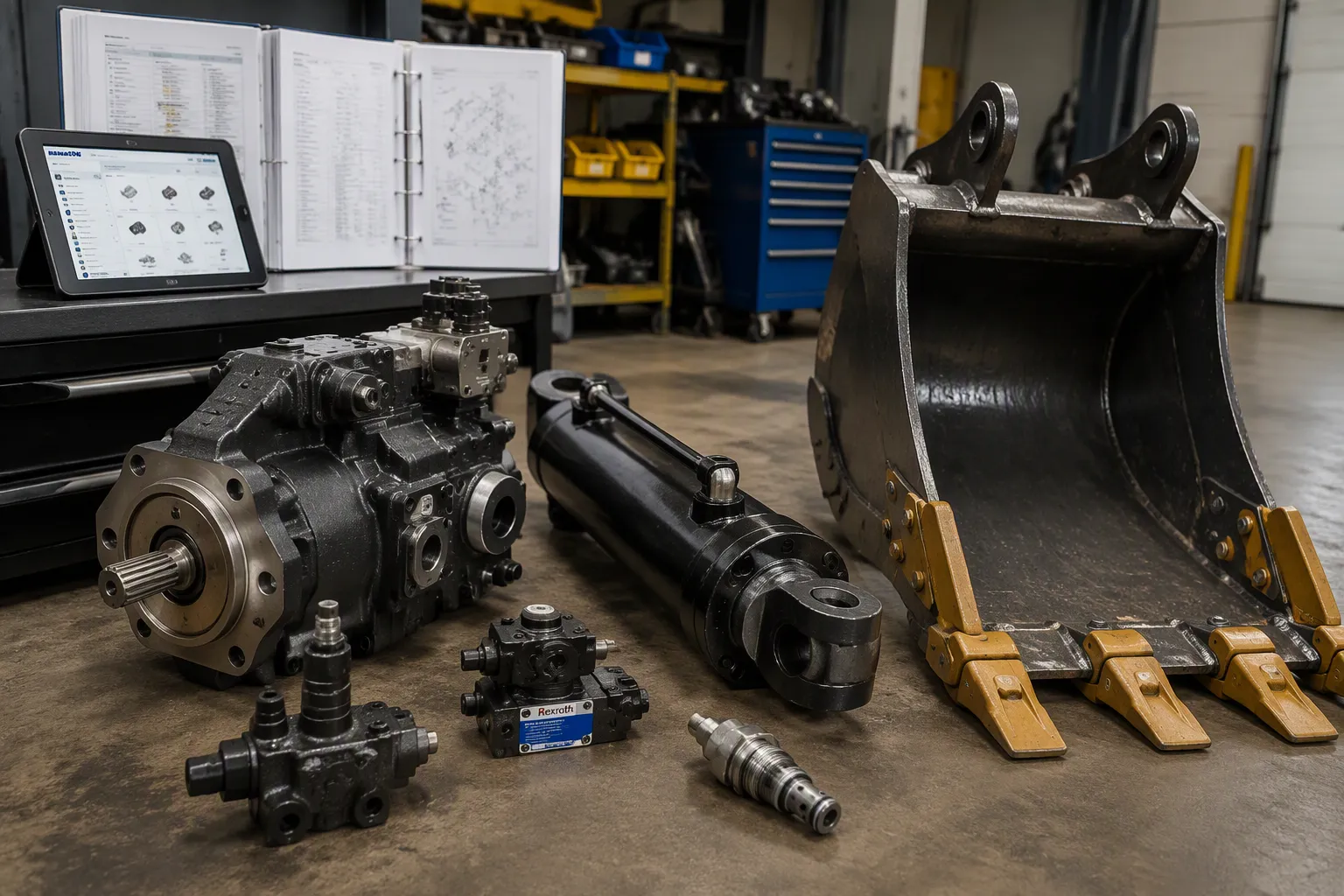
Pumps, cylinders and valves can be listed as system components and as assemblies with their own internal parts. A pump supplies hydraulic flow; system resistance determines operating pressure. Cylinders convert hydraulic energy to linear force and motion, while valves control circuit functions. Use the applicable assembly breakdown for ordering.
Locate the correct system and component breakdown, then check which complete units and internal service items are offered. The table, inclusion notes and quotation determine scope and availability.
Component listings carry the same inclusion notes as assembly listings. A pump drawing may show a coupling, a bracket, or a hose just for reference. Those items do not always come with the pump. Some are not sold separately at all. A reader should read the note before assuming the picture shows the full package.
Confirm the selected component’s actual applicability and current replacement requirements. An old catalog may not show later supersessions, and a changed number may require additional items. Resolve those conditions with a qualified parts contact before ordering.
Buckets, Teeth, and Wear Parts
Buckets, teeth, and wear parts are the components that touch the ground and take the most abuse. A bucket is a large welded component. It mounts to the arm and holds the load. Teeth bolt or pin to the bucket edge. They cut the soil and protect the edge from direct wear. Wear parts cover the smaller pieces that absorb friction. Examples include cutting edges, side cutters, and wear plates.
Use the actual catalog organization for the installed bucket or attachment. It may have separate documentation and identification. Do not assume a bucket repair is always listed under a repair-and-reman category.
The same catalog rules apply here. A bucket listing may show teeth, pins, and adapters in the drawing. Not all of those items come with the bucket. Some are reference-only. Some are separate components with their own ordering numbers. A reader should confirm each item against its own listing.
Variant applicability matters for buckets and teeth. Bucket width and mounting style differ across machine versions. Tooth profiles differ as well. A tooth that fits one bucket may not fit another. Supersessions can also change a tooth or adapter number over time. A reader should check the ordering number, the quantity basis, and the variant note together before ordering. That check keeps a wear part from arriving in the wrong size or style.
Catalog Listings and Ordering
Callouts, Quantity Basis, and Variants
Read the callout, ordering number, quantity basis and variant notes together. Confirm whether the catalog count is per assembly, side or another stated basis, and separately confirm the selling unit and required repair quantity.
Verify machine and component identification, configuration and modifications against applicable documentation. Dimensions can support the check but do not alone prove fitment. A publication date alone is not an applicability test. Parts illustrations show relationships, not safe service procedures.
Inclusion Notes and Supersessions
Inclusion notes settle what arrives in the box. A drawing may show brackets, pins, or hoses for reference only. Those items do not always come with the listed part. Some are not sold separately at all. The volvo excavator parts catalog marks these cases in the listing notes. A reader should read the note before assuming the picture shows the full package.
Check current applicable supersession guidance rather than assuming any catalog displays the newest number. Confirm replacement conditions and additional items, as well as the supplied scope and quantities.
Assembly, kit and component describe useful order-scope distinctions. The applicable listing, inclusion notes and written quotation establish what is supplied; these terms do not impose one catalog structure.
A reader should use this catalog guide to identify the part before ordering. Match the group, check the notes, and confirm the number. That habit keeps wrong parts from reaching the shop.
Resolve remaining questions about the selected scope and replacement requirements before ordering.
FAQ
What is the difference between an assembly, a kit, and a component?
An assembly combines parts into a unit, a kit bundles a specified selection, and a component is an item within a system. A component may itself be an assembly. Confirm contents and separate availability from the applicable entry rather than the label alone.
How does a reader read a catalog listing correctly?
Match the drawing reference to the applicable parts-table entry, then check ordering number, description, variant notes and quantity basis. Verify the selling unit and supplied contents separately against the quotation.
Does a pictured item always come with the part?
No. A drawing may show brackets, pins, or hoses just for reference. Those items do not always come with the listed part, and some are not sold separately. The inclusion notes in the listing answer that question.
Why do kit contents differ between machines?
Kit contents vary by machine variant. Two machines in the same family may need different kits. Supersessions can also change the parts inside a kit over time. A reader should confirm the current ordering number and the quantity basis before ordering.
What is a supersession, and why does it matter?
A supersession replaces a service number under specified conditions. Confirm current applicable information, any required additional items and the actual supplied scope; a newer number is not automatically a direct replacement for every use of the old one.
For Volvo excavator parts sourcing, consider YNF Machinery. Provide full machine and component identification, applicable part numbers and quantities, and request supported compatibility information, an actual quotation and written warranty and return terms before ordering.



