
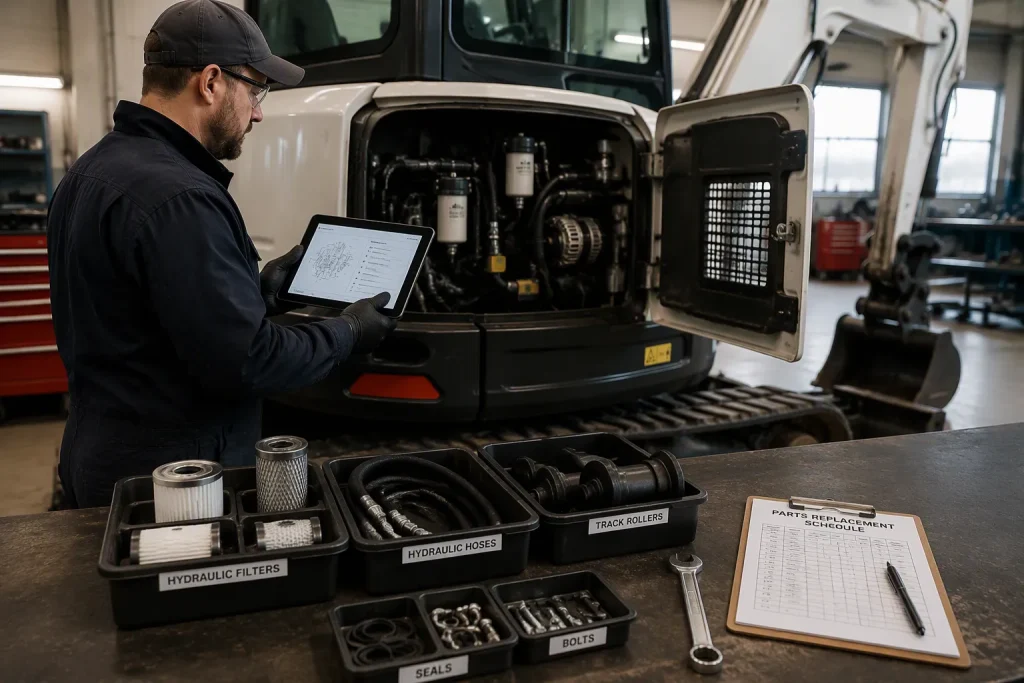
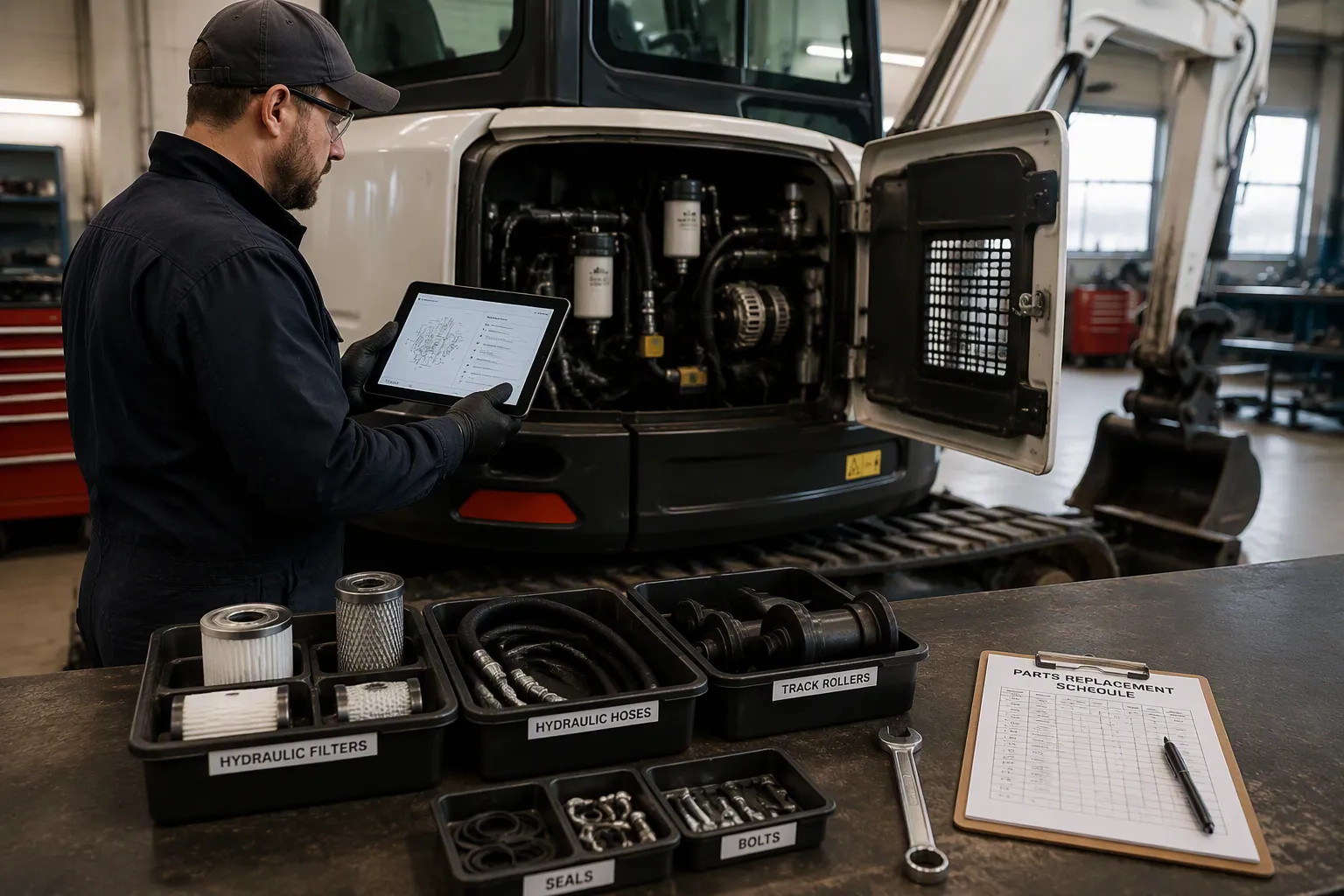
A sudden breakdown stops your work and costs you money. Wacker Neuson excavator owners know this problem well. The most common replacement categories include undercarriage components, hydraulic parts, engine and filter parts, and structural wear items. Each category wears at its own pace. Ground contact, pressure, heat, and dust all play a role.
You can take control of wacker excavator parts replacement with a simple plan. This guide helps you spot wear early, understand what needs changing, and schedule work before a small issue becomes a major failure. Good planning saves you both time and money.
Key Takeaways
Check your excavator often to catch wear early and avoid breakdowns.
Inspect related undercarriage components together and replace those that fail the applicable service limits. Do not assume a complete set or both sides must always be replaced.
Track the parts you replace so you can guess what you’ll need next and plan your money well.
Keep important spare parts, like filters and belts, in stock to fix small problems fast.
Plan to swap out parts during scheduled breaks so work does not stop.
Wacker Excavator Parts: Undercarriage Components
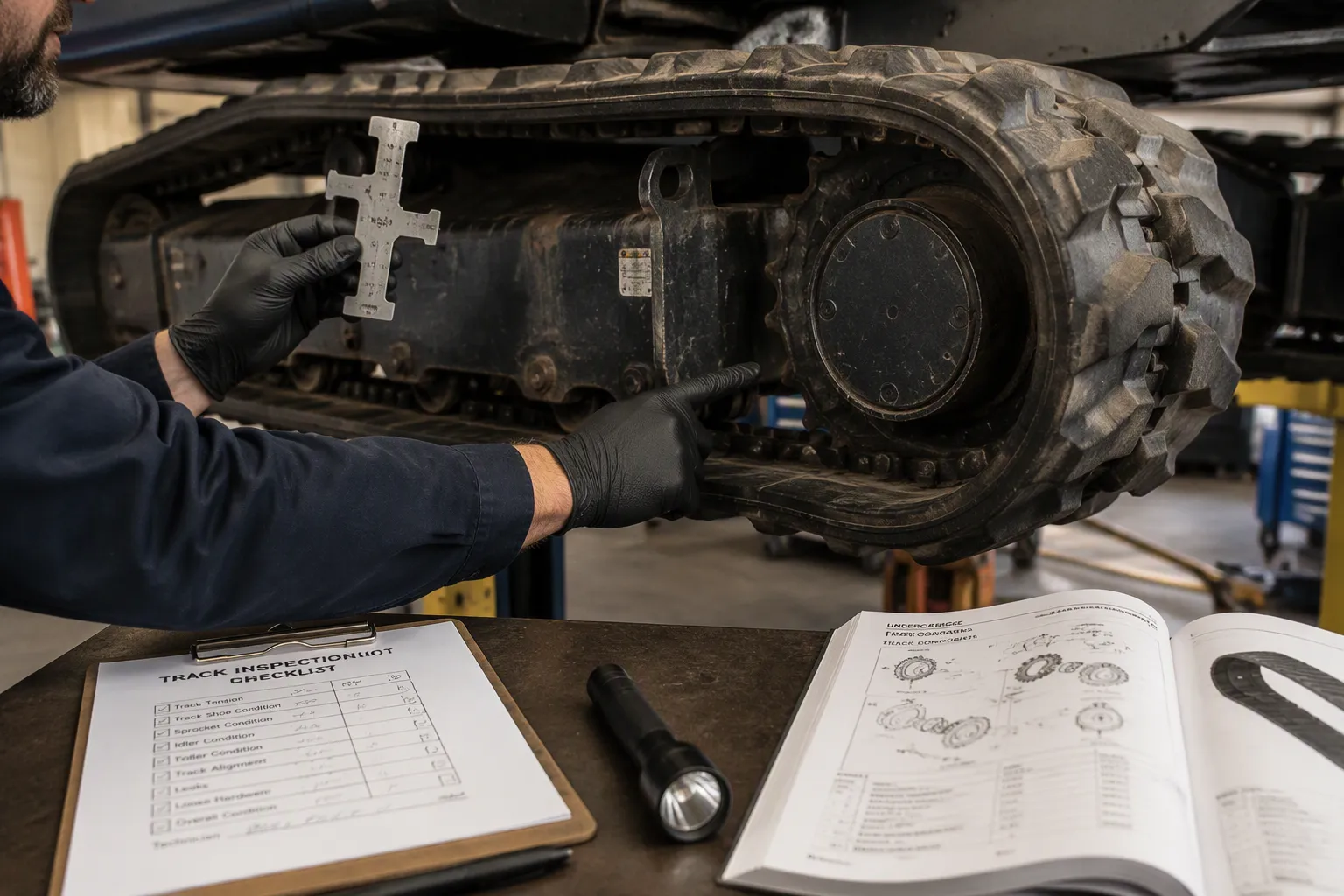
Undercarriage wear depends on ground conditions, operation and maintenance. Inspect tracks, sprockets, idlers and rollers using the excavator manual. Compaction-equipment vibration assemblies and base plates should not be treated as standard excavator components.
Tracks & Sprockets
Track assemblies deal with repeated stress. Rubber tracks bend around sprockets and idlers with every turn. That motion grinds away tread material and can stretch the inner cords. Sprockets drive the track by grabbing lugs on the inside surface. When track tension is wrong, sprocket teeth wear unevenly and can skip.
Inspect tracks for missing tread, exposed cords, cracking and uneven wear. Check debris and tension using the manual’s method; loose tension has several possible causes and needs diagnosis.
Inspect sprocket tooth profiles against the manufacturer’s service limits. Assess related track wear before installing replacements; visual changes alone do not define a universal replacement threshold.
Idlers & Rollers
Idlers and rollers guide and support the track system. Leakage, abnormal wear or failure to rotate needs qualified inspection. Bearing and lubrication designs vary, so use the applicable service information.
Abnormal travel noise, leakage, cracks or uneven running surfaces warrant inspection. Do not raise the machine or spin components by hand without the prescribed isolation, lifting and secure support procedure. Keep clear of moving tracks and pinch points.
Undercarriage failure rarely shows up without warning. Uneven wear, cracking, loose track tension, and abnormal noise are the main signs. You can catch most of them with a simple visual inspection at regular intervals. Set a schedule that matches your operating conditions. Measure track sag with a straight edge and compare it to your operator manual. Track hours and measurements in a notebook or spreadsheet to spot trends early.
Inspect tracks, sprockets, idlers and rollers as a system. Replace individual parts or a group according to measured condition, compatibility and the service manual. Damage on one side does not automatically require replacement of both sides.
Hydraulic System Parts
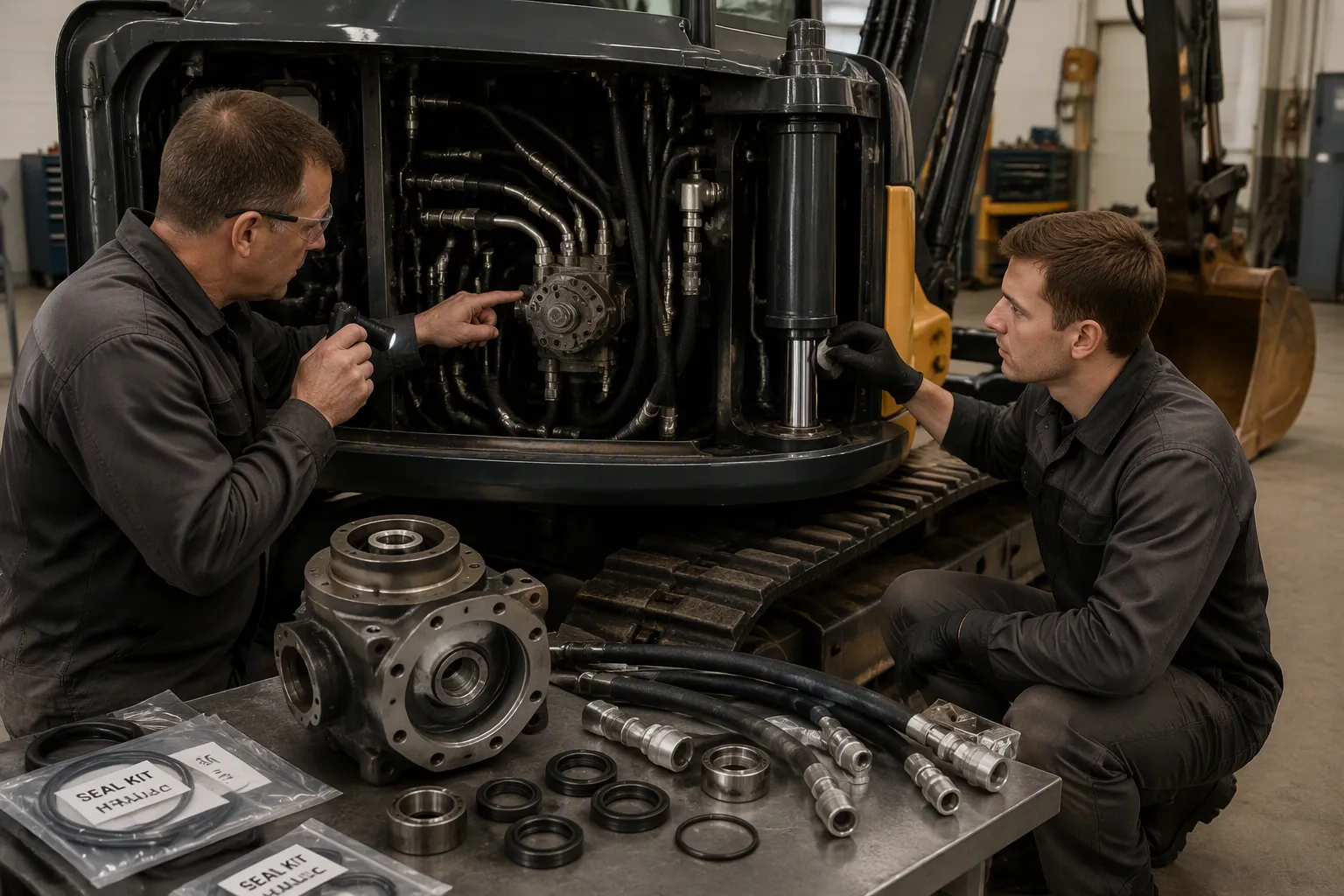
Hydraulic component condition is affected by loading, heat, contamination and maintenance. Investigate leaks, unusual temperatures or changes in operation using the correct diagnostic procedure rather than assuming one universal failure cause.
Identify the hydraulic components and any attachment actually installed on your excavator. Attachment-specific circuits require their own instructions; vibration exciter assemblies should not be assumed to be part of the base machine.
Hoses & Fittings
Inspect hoses for visible cracks, abrasion, bulges and leakage from a safe position. Stop operation if a defect presents a safety risk. Never feel for a high-pressure leak with your hands or loosen a fitting while pressurized; refer the problem to qualified personnel.
Cylinders & Seals
Leakage, rod damage, drifting or slow operation can warrant cylinder and hydraulic-system diagnosis. A light rod film alone does not prove a seal failure, and operating symptoms can have several causes. Qualified personnel should assess service limits and the repair scope.
Hydraulic service requires qualified personnel following the machine’s isolation, attachment support and pressure-release procedures. Stored pressure may remain after shutdown; never open a line until the prescribed procedure has been completed.
Plan hydraulic repairs from confirmed diagnostic findings and the service manual. Use the required seal kit and associated parts for the actual repair, and store identified spares according to their storage requirements. A spare part does not make a pressurized leak safe to repair during operation.
Engine & Filter Parts
Your engine works hard in dusty places. Normal use, dust in the air, and fuel quality all change how fast engine parts wear out. Dust gets in through the intake when filters break down. Bad fuel leaves buildup in injectors and fuel lines. These problems grow slowly. You often notice them only after power drops.
Parts replaced most often include filters, belts, and fuel system parts. Each one protects the engine in its own way. Filters catch dirt before it reaches sensitive parts. Belts run the cooling fan, alternator, and other accessories. Fuel system parts send clean fuel at the right pressure.
Wacker Excavator Parts: Belts & Fuel System
Belts wear out from heat, friction, and age. A belt gets cracks, glazing, or fraying along its edges. Loose belts slip and squeal. Tight belts put too much load on bearings. Check belt tension and condition at every service interval. Look for missing ribs and separation between layers.
Rough running, difficult starting, smoke or power loss warrants diagnosis. Fuel quality and contamination are possible factors, but these symptoms do not establish a fuel-system fault by themselves.
Air, Fuel & Oil Filters
Air, fuel and oil filters perform different functions. Check the applicable specifications, and identify whether water separation is provided by the fuel filter assembly or a separate separator.
Restriction indicators, warning lights or operating changes should be investigated using the machine and engine manuals. Filter restriction is one possible cause; do not diagnose from a single symptom or assume every filter system has the same bypass arrangement.
Follow the specified service intervals and operating-condition adjustments for your engine and machine. Keep correctly identified filters and belts where storage requirements and expected use justify it; verify actual cost and shelf life.
Replacement Planning
Planning helps you avoid downtime. You need a simple routine that mixes regular checks with a clear budget. This routine makes wacker excavator parts replacement easier because you control the process instead of reacting to breakdowns.
Recognizing Wear Signs
Start with a quick visual check. Walk around the machine before you start the engine. Look at the undercarriage, hydraulic hoses, and engine belts. Check for leaks, cracks, and loose parts. A simple habit like this catches small problems early.
Listen to the machine while it runs. New sounds often mean trouble. A grinding track, a squealing belt, or a knocking hydraulic cylinder all give you a warning. Stop and check when you hear something unusual. Finding the cause right away saves you from a big repair later.
Track your findings in a notebook. Write down the date, the machine hours, and what you see. Record any parts you replace. This log shows you exactly how long each part lasts. You learn the early warning signs for your specific machine.
Budgeting & Scheduling
Use recorded wear and service history to estimate future needs, allowing for changing operating conditions. Budget using current quotations and allow time for delivery and qualified installation.
Choose a small spare inventory using downtime risk, lead time, actual cost and shelf life. Verify identification and storage conditions; not every hydraulic assembly is inexpensive or appropriate to stock.
Schedule nonurgent replacement work during planned downtime when it remains safe to operate until then. Address safety-critical defects immediately; a convenient date does not justify delaying a necessary repair.
Obtain a written quotation with supported compatibility, scope of supply, delivery timing and warranty and return terms before ordering.
You now know the three main wacker excavator parts groups that need regular replacement: undercarriage components, hydraulic parts, and engine and filter parts. Regular inspections help you spot wear signs early. That habit stops major failures and costly downtime.
Plan ahead with a few simple steps. Keep a spare parts inventory for critical items. Schedule replacements during planned downtime. Budget based on how long each part lasts on your machine.
Retain part numbers, installed dates, machine hours and service findings so future replacement planning uses your actual machine records.
FAQ
What are the early signs that my tracks need replacement?
Inspect for missing tread, exposed cords, cracking and uneven wear, and investigate abnormal travel noise. Verify track tension using the manual rather than assuming debris is the cause. Use its service limits to decide whether replacement is required.
Should I replace undercarriage parts individually or in sets?
Inspect related components together and use measured condition, compatibility and the service manual to decide. A set may be appropriate, but replacing every component or both sides is not a universal rule.
What should I check during hydraulic system inspections?
Inspect visible hose damage and leakage from a safe position. Never use your hands to search for a pressurized leak. Qualified personnel must follow isolation, attachment support and pressure-release procedures before service.
How can I plan and budget for future part replacements?
Keep a replacement log in a notebook. Write down the date, machine hours, and parts you replace. That log shows how long each part lasts. Set aside money each month. Schedule replacements during planned downtime instead of emergency breakdowns.
How do I choose quality replacement parts?
Check the actual machine application, part specifications, traceability and supporting quality information. Compare written terms and total delivered cost. OEM or aftermarket branding alone does not prove suitability.
For Wacker Neuson excavator parts sourcing, consider YNF Machinery. Provide full machine and component identification, applicable part numbers and quantities, and request supported compatibility information, an actual quotation and written warranty and return terms before ordering.



