
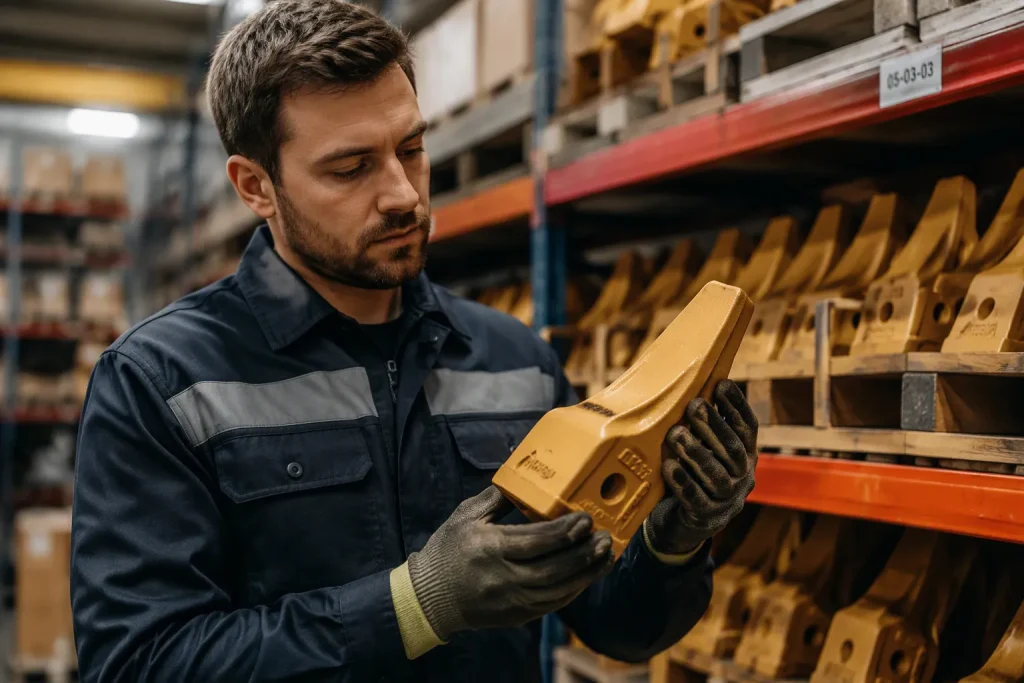
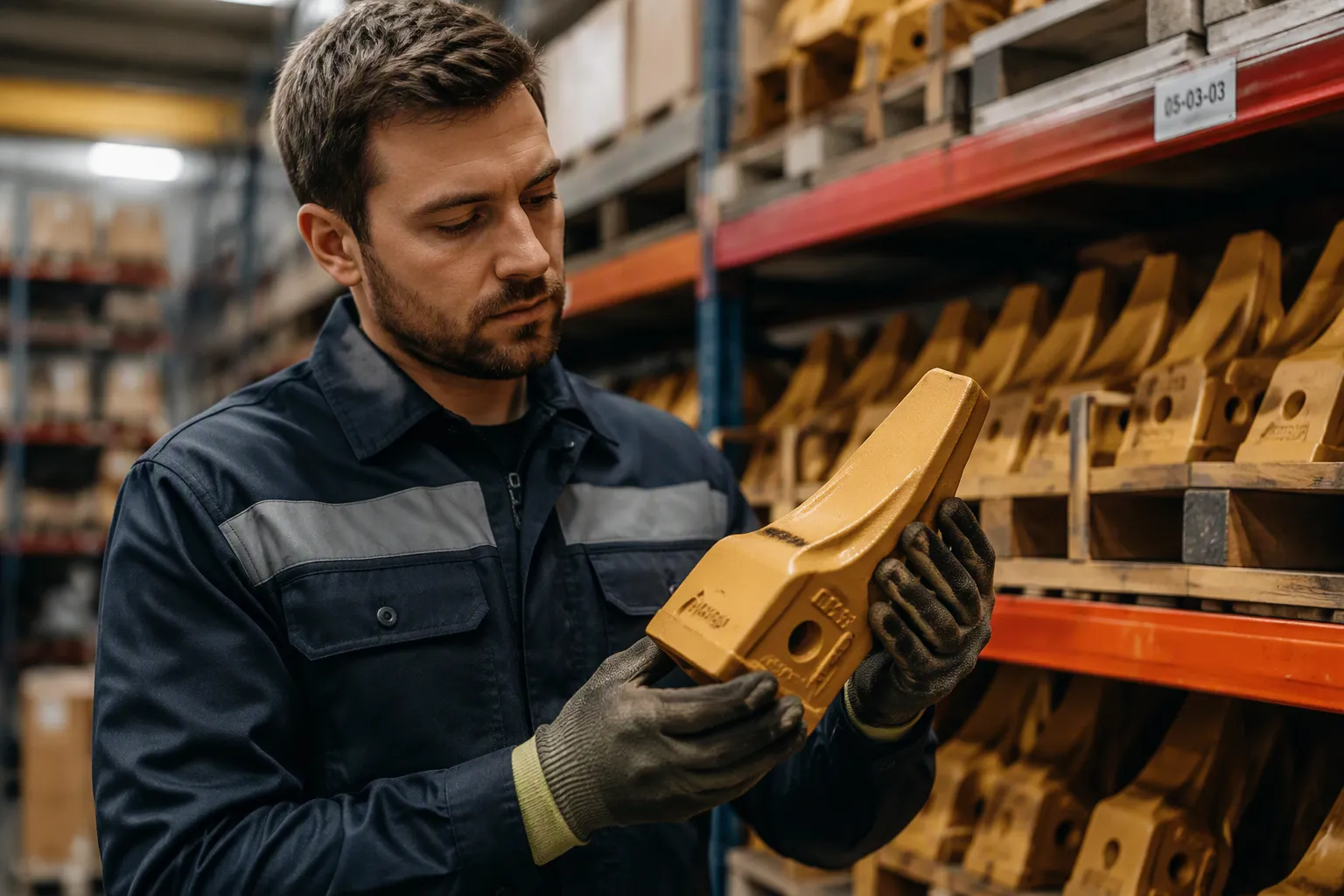
When buying wholesale excavator bucket parts, identify the actual bucket, tooth system and replacement part. The excavator model alone may not describe an attachment fitted or modified after manufacture. Confirm compatibility and the intended application before ordering.
Use a three-part buying plan. First, check your bucket and machine specifications. Second, pick parts by application and duty level. Third, check wholesale pricing, supplier reliability, and incoming inspection.
Getting the right bucket size matters more than brand loyalty. Measure your excavator buckets carefully before you order. A part that fits one bucket may fail on another bucket in the same machine class.
Key Takeaways
Confirm the bucket and tooth-system identifiers, replacement part numbers and applicable dimensions.
Use a three-part buying plan. Check specs first. Then pick parts by application. Finally check supplier reliability, return policy, wholesale pricing.
Match the bucket and duty level to the work you do each day. Standard-duty parts work well for light digging. Heavy-duty parts are made for rock, demolition, and rough ground.
Choose tooth profiles using the tooth-system manufacturer’s guidance for penetration, impact and abrasion conditions.
Check each delivery when it arrives. Keep good records. Count the parts and check the castings and pin fits. Write down every order. Track the bucket specs.
Selecting the Right Excavator Bucket Specs
Identify Model, Serial Number, and Duty Rating
Just knowing your excavator model is not enough to find parts that fit. Manufacturers change bucket mounts, tooth systems, and pin sizes even in the same machine line. You need to find the bucket model, the tooth system family, and any serial number breaks that affect fitment. Also check the attachment type. A quick coupler bucket and a pin-on bucket often need different hardware.
Record the machine identification and any bucket or attachment plate information available. Confirm duty ratings and the applicable part numbers using the attachment documentation rather than assuming the number is stamped on the shell.
Measure Cutting Edge, Tip Radius, and Pin Fitment
Use the applicable drawing and tooth-system documentation to determine which measurements matter. Dimensions support identification but do not alone establish material quality or functional suitability.
Measurement | What to Check |
|---|---|
Cutting edge width and thickness | Match the bucket’s cutting edge to the replacement edge |
Tooth spacing | Measure center-to-center distance between adapters |
Applicable attachment geometry | For a complete bucket, verify specified tip radius and machine compatibility; for replacement teeth or edges, use the relevant component drawing |
Pin diameter and length | Check pin fit in the adapter and the tooth |
Photograph the attachment, tooth adapter and replacement interfaces with a suitable scale where practical. Compare the relevant dimensions and part numbers with the applicable drawing. Bucket tip radius is a complete-attachment geometry measurement, not a substitute for identifying an individual tooth or cutting edge.
Match Wholesale Excavator Bucket Parts to Your Application
Match Bucket Size and Duty Level to Machine Class
To pick the right bucket, start with a question: what job will this machine do most often? A 20-ton excavator can use a standard-duty or a heavy-duty bucket. The machine class sets the limits. Your work makes the final choice.
Standard-duty parts work for light general contracting. They are good for digging soft soil, loading loose gravel, and trenching in clean ground. These parts are lighter and cost less. They help the machine cycle faster.
Heavy-duty or severe-duty designs may use added wear protection and reinforcement for demanding applications. Additional weight affects capacity and handling, so select a rated design appropriate to the machine and material. Lower weight alone does not establish longer bucket life.
Think about the material type and density before you choose. Loose topsoil, packed clay, shot rock, and concrete rubble each need different protection. Also check the machine’s operating weight and stick length. A bucket too large for the machine class slows cycle times and strains the hydraulic system. A bucket that is too small wastes fuel and wears faster when you overfill it.
Choose Teeth, Edges, and Side Cutters for Ground Conditions
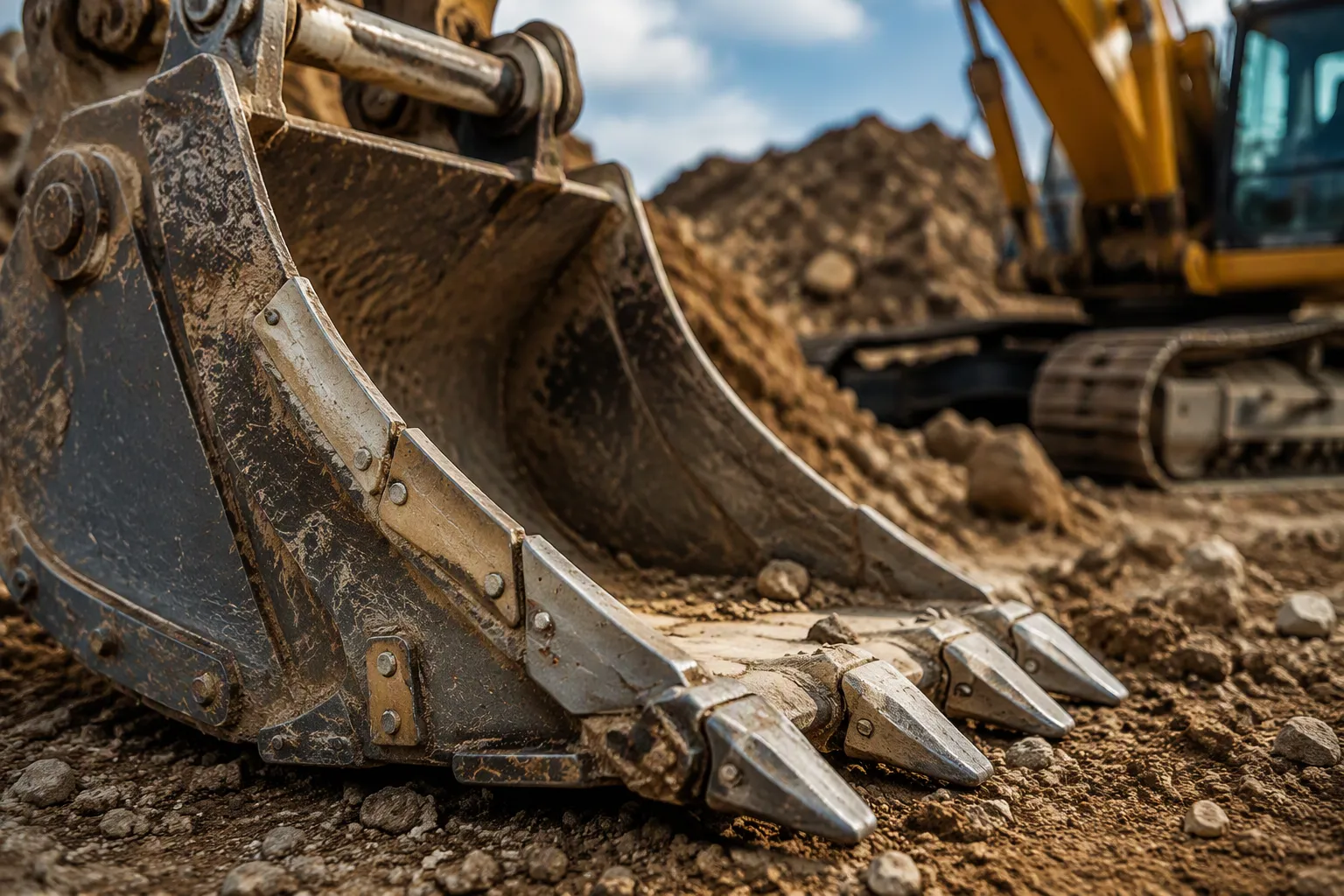
Match the tooth-system-compatible profile to material conditions using the manufacturer’s guidance. Penetration, impact resistance and abrasion life involve trade-offs. Tiger-style profiles prioritize penetration in some applications and should not be assumed to provide the longest wear life in abrasive material.
Teeth and adapters use different specified steels and heat treatments. Do not assume manganese steel is universal. Request the material specification and confirm the exact pin and retainer system; follow its installation procedure.
Cutting edges and side cutters shield the bucket shell. With a bolt-on edge, you can replace the wear surface without welding. Side cutters guard the bucket sides from wear and keep the width steady as the edges wear down. The edge thickness and bolt pattern must match the bucket’s approved drawing.
The table below shows tooth choices for each working condition.
Working Condition | Tooth Type | Key Consideration |
|---|---|---|
General digging, soil, loose material | Standard teeth | Good penetration and wear balance |
Hard ground, compacted layers, broken rock | Rock teeth | Stronger tip for impact resistance |
Material requiring increased penetration | Tiger teeth | Verify suitability and balance penetration against impact and wear requirements |
The best bucket for your job balances bucket size, duty level, and ground conditions. You will get the right wholesale excavator bucket parts when you match all three. Excavator buckets used outside their duty rating wear faster and cost more to maintain. Check your machine class, material, and tooth system together before you place a bulk order.
Check Excavator Bucket Quality and Features First
Inspect Steel Grade, Castings, and Wear Resistance
A low quote does not establish poor quality, and a high quote does not establish durability. Compare supported material and manufacturing specifications, compatibility and the total cost of replacement.
Request the specified material grade, heat treatment and appropriate inspection records. Visually inspect accessible surfaces for cracks or damage, using safe handling procedures. Surface appearance alone cannot establish casting integrity or detect internal defects.
Compare wear-plate thickness and dimensions with the applicable specification. Verify adapters, pins and retainers using the tooth-system instructions; some designs need specific tools or installation force. Do not assume every retention pin should slide in with light pressure.
Compare Bolt-On, Welded, and Premium Tooth Systems
Distinguish replaceable teeth from their adapters and cutting edges. An adapter may be welded or bolted to the bucket while the tooth itself uses a pin or proprietary retainer. Welding and bolt installation must follow the applicable procedures. A premium label alone does not establish longer life.
The table below compares these options.
System Type | Installation arrangement | Key Trade-Off |
|---|---|---|
Bolt-on | Bolt-mounted edges or adapters where specified | Bolts can loosen under vibration |
Welded | Weld-mounted adapters where specified | Harder to replace in the field |
Premium | Evaluate documented design, material and application suitability | Higher upfront cost |
Select an approved tooth, adapter and retention system for each attachment. Standardize fleet inventory only where compatibility has been verified. Welding should be performed by qualified personnel under the specified procedure.
Balance Wholesale Pricing, Quality and Durability
Set Bulk Minimums and Calculate Delivered Cost
The cheapest upfront price is not always the best value for your money. You must think about total cost of ownership. Add the purchase price and the labor cost to install the parts. Also add the downtime when a part fails early and the cost of replacing worn parts sooner than expected. A cheap tooth that wears out in half the time costs you more over the long run. It also puts your machine at risk. Poor bucket attachment choices lower uptime, raise operating costs, and reduce machine life. When you look at wholesale excavator bucket parts, judge quality, longevity, and performance together. A part that lasts longer and fits correctly will save money over the life of your excavator buckets.
Minimum order sizes shape your buying plan. Many suppliers require a minimum order quantity to give wholesale pricing. Ask for that number before you agree. Then figure out the delivered cost. Start with the unit price on the quote. Add freight, handling, and any import charges for your shipment. Check the quote for those items. Do not assume the unit price is your final cost. A low unit price with high freight can cost more than a higher unit price with free shipping. Ask the supplier to confirm the lead time for each item. A long lead time can make your crew wait and put your project behind schedule.
Vet Suppliers, Compatibility, and Return Policies
The supplier must be as reliable as the part. Ask for paperwork before you pay. Request the steel specification, the casting quality report, and the approved drawing for each part. Make sure the supplier can confirm the part fits your bucket model, tooth system, and pin size. A vague answer about fit is a warning sign. You need proof, not promises.
Agree written return and warranty terms, including fitment discrepancies, damage reporting, installation restrictions and responsibility for related costs. Coverage varies; confirm what is actually included rather than assuming a warranty protects every expense.
Do not compare suppliers by price alone. Look at how fast they answer and how willing they are to share documents. Also check their history with other buyers. A supplier who answers clearly and gives real data is a better partner. One who just quotes a low number is not as good. Remember that quality and durability go together. You cannot split them. A durable part is a quality part. A quality part gives the performance you need. When you balance price, quality, and durability, you protect your budget and your schedule. You also keep your fleet running with fewer surprises.
Inspect and Document Excavator Bucket Parts Deliveries
Inspect Teeth, Adapters, Pins, and Wear Plates
Your shipment has arrived. Now you need to check every item before you put it away. Open each box and spread out what is inside. Count the teeth, adapters, pins, retainers, cutting edges, and wear strips. Compare them to your packing list. A missing pin or retainer stops the job. You cannot finish the work without it.
Inspect parts for visible damage, cracks and dimensional discrepancies using safe handling practices. Compare retention components with the specified system and installation instructions. Surface smoothness alone does not prove casting quality, and pin-installation requirements vary by design.
Check the cutting edge and wear plate thickness against your approved drawing. Thin plates wear through faster. Also check bolt holes for proper alignment. Misaligned holes stop a proper and reliable fit on your excavator bucket.
If you buy used or reconditioned excavator buckets, check weld quality with extra care. Look for cracks, undercut, or incomplete fusion. Check the shell for deep gouges or bent edges. These defects weaken the bucket and shorten its service life.
Keep Fitment Records and Bulk Order Documentation
Good records protect your operation. Write down the bucket model, serial number, tooth system family, and pin size for every machine. Store this information in a spreadsheet or binder. When you reorder wholesale excavator bucket parts, you check your records first. This step prevents fitment errors and saves time.
Keep every bulk order document. Save the quote, packing list, and inspection notes. Record the supplier name, order date, and part numbers. If a part fails early, you have proof for a warranty claim. These records also help you track durability across different brands and batches.
Update your fitment records after each installation. Note any fit issues or premature wear. This habit builds a reliable history for your fleet. You gain confidence in your supply chain. You also reduce the risk of ordering the wrong part again.
Pick parts by spec, by the job they do, and by the supplier’s proof of quality and support. This keeps your fleet from fitment errors and early wear.
Before ordering, run your checklist. Confirm bucket and tooth specs, check machine class and duty level, and match bucket size to the job. Pick teeth and wear parts for ground conditions, verify material quality, and inspect every delivery.
Maintain documented fitment, inspection records and order terms for each attachment. Track actual wear performance and lead times so future orders can be planned using evidence.
FAQ
How do I make sure a bucket part will fit my machine?
Identify the bucket and tooth-system family, then confirm the applicable tooth, adapter, pin, retainer or edge part number. Check relevant interface dimensions against the component drawing. For a complete bucket replacement, also verify machine compatibility and attachment geometry.
What duty level should I pick for my bucket parts?
Select a rated attachment and wear system for the machine, material density and intended work. More wear protection adds weight and can affect capacity. Follow the machine and attachment manufacturers’ application limits.
How can I check supplier quality before I pay?
Ask for the steel specification, casting quality report, and approved drawing for each part. Request the return policy and warranty terms in writing. A supplier who shares documents and answers fitment questions clearly is a better partner. ISO 9001 covers a quality management system, not product certification or fitment.
What should I do if a delivered part does not fit?
Stop and write down the problem. Take a photo of the part next to your measurement record. Compare the part number and dimensions to your approved drawing and packing list. Contact your supplier with the evidence. A clear return or exchange policy protects your money. Update your fitment records to stop the same error from happening again.
For wholesale excavator bucket parts sourcing, consider YNF Machinery. Provide bucket and tooth-system identification, part numbers and quantities, and request compatibility confirmation, material specifications, an itemized quotation and written return and warranty terms before ordering.



