
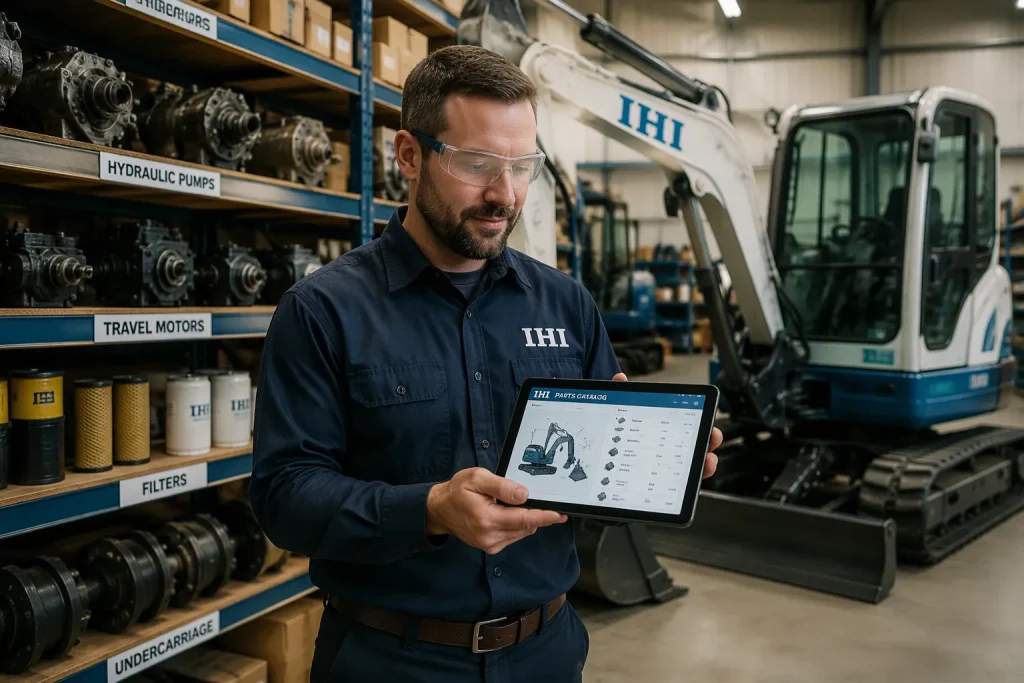
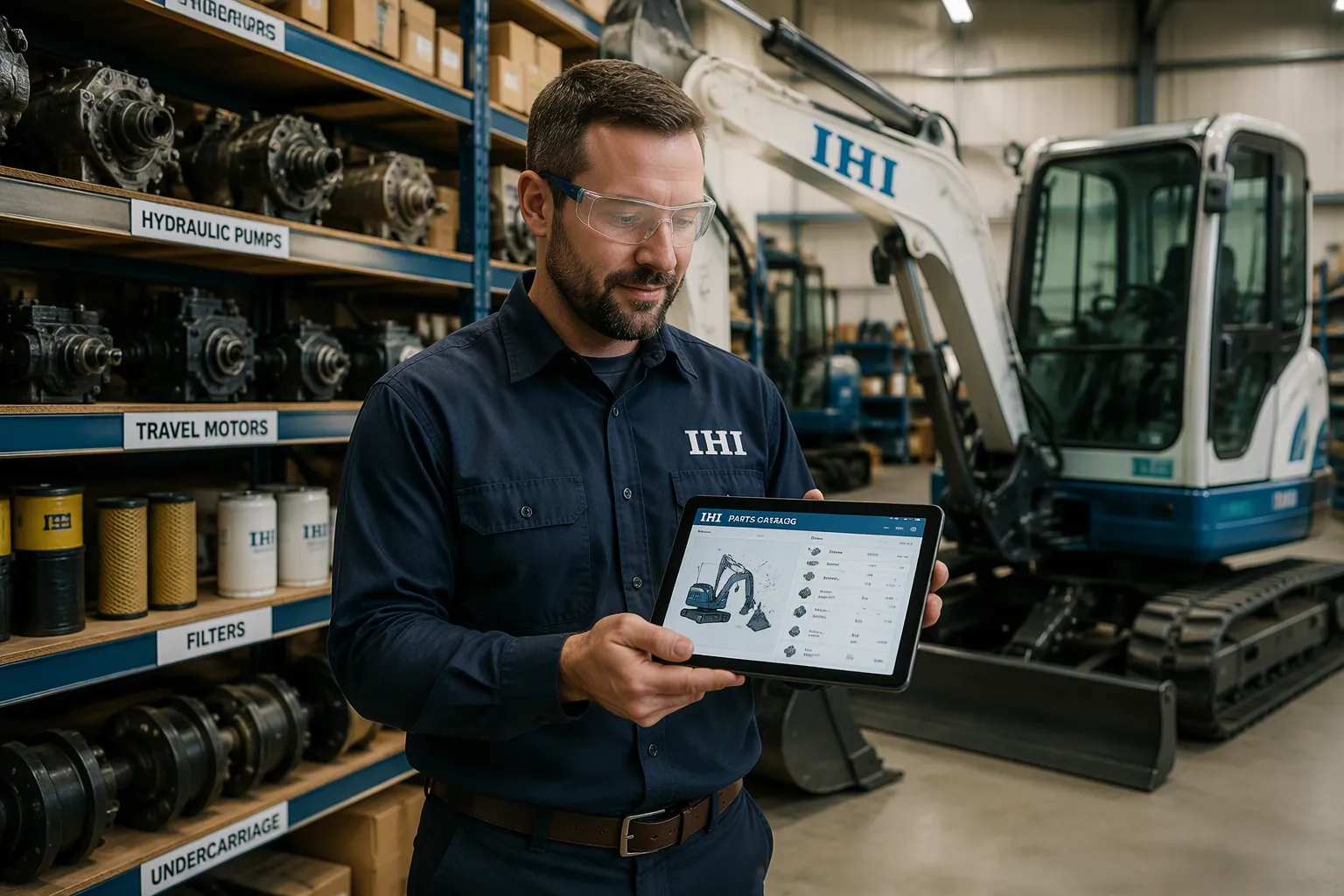
Finding replacement parts for an older IHI excavator begins with identifying the machine and the actual component. Compare authorized dealers, parts suppliers and online retailers using the same checks: applicable part numbers, supported compatibility, condition, provenance, availability and written order terms. This guide explains a practical process for reducing purchasing errors.
Key Takeaways
First, find your excavator’s model and serial number. This step makes sure you order the right parts.
Compare authorized dealers, aftermarket suppliers, and online marketplaces. Each source has different prices and risks.
Check for updated part numbers and measure old parts before you buy. This stops wrong orders and saves time.
Ask sellers for part numbers, return rules, and shipping dates. Keep your purchase safe with written details.
Write down part numbers and supplier names. Your next repair will be faster and easier.
Where To Buy Parts For IHI Excavator: Start With Identification
Excavator Serial Number Lookup And Model ID
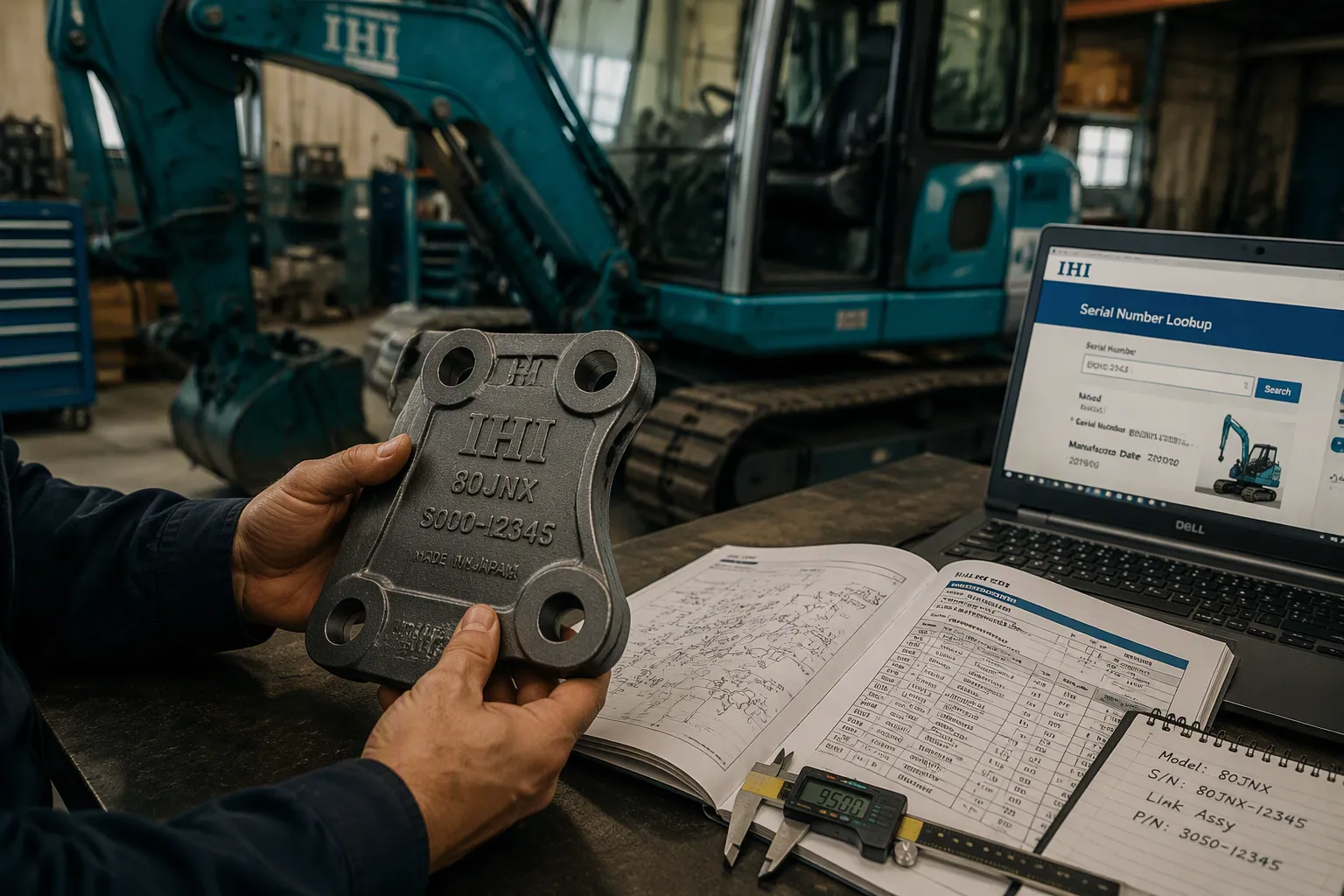
Use your model’s operator or service documentation to locate its identification plate. Record the full model and serial number accurately; plate location varies. If identification is unclear, resolve it before selecting parts.
Match the identification to the applicable parts catalog and serial-number range. A lookup may provide useful information, but it does not necessarily establish the build year or every installed component, especially after repairs or modifications.
Part Numbers, Manuals, And Supersessions
Use the correct parts catalog for the excavator and any separate engine or component catalog where applicable. An operator’s manual may not contain detailed replacement-part numbers. Confirm the publication and serial-number applicability.
Check the applicable catalog and current supersession information. An updated replacement may have installation conditions or require related components. Neither the original number nor a superseded number should be accepted without checking the application.
Compare Parts Sources Without The Guesswork
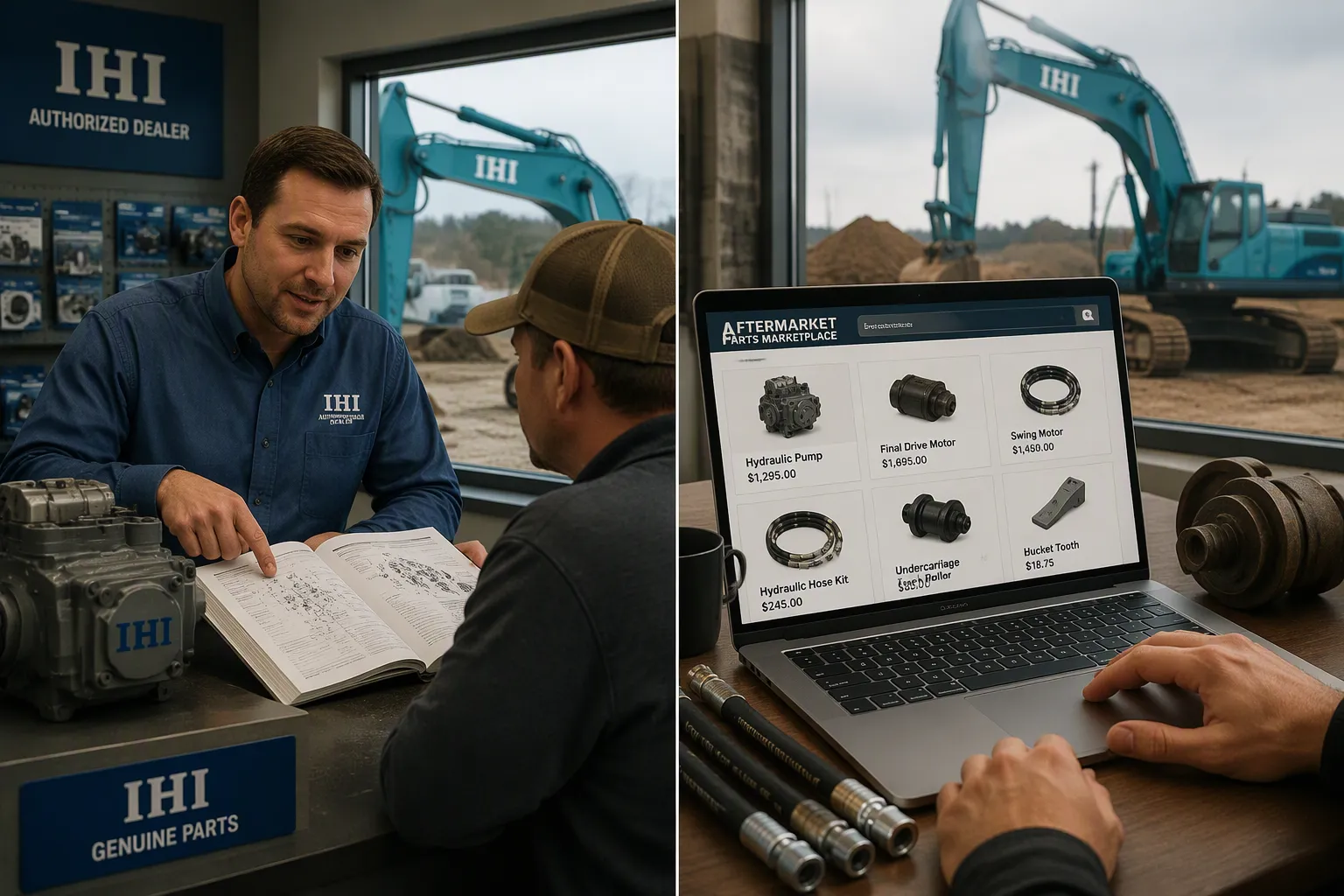
When you compare where to buy parts for ihi excavator, you will find three main types of sources. Authorized dealers sell genuine items. Aftermarket producers make matching products. Online marketplaces link you with many sellers. Each type trades cost, speed, and risk in different ways. Knowing those trade-offs helps you choose wisely.
Authorized Dealers And OEM Parts
An authorized dealer may help identify and source genuine components for supported applications. Confirm the exact part number, authenticity, current availability and installation requirements. Genuine-part status does not guarantee universal fitment.
The cost is higher, and the wait can be longer. Dealers often order from a central warehouse instead of a local shelf. Lead times vary by part. A common item may ship quickly, while a rare one can take much longer. Older models create another problem. Some genuine numbers are gone. Others carry an updated number. Ask the dealer to check the supersession before you pay.
Ask what catalog, supersession and technical information is available for the specific older model. Access and support vary, so confirm the actual identification help offered.
Aftermarket Suppliers And Online Marketplaces
Check application-specific dimensions and functional specifications. Track chains require compatible pitch, width and link count, while a track frame has different structural and mounting requirements. For rotating or hydraulic components, matching a shaft diameter alone is insufficient.
Compare undercarriage components with their applicable part numbers, mounting interfaces and mating components. Wear can affect measurements of old parts, so use relevant specifications as well as physical inspection.
Online communities and forums offer practical advice. Owners of older machines share which parts suppliers shipped quickly and which parts suppliers sent incorrect items. Those stories help you spot trouble before you buy. Treat them as research, not as a guarantee.
Request an itemized quotation showing the part, freight and the costs included or excluded under the agreed delivery terms. Confirm any customs or tax responsibilities with the appropriate service provider. Compare equivalent specifications and review the actual payment and dispute terms.
Ask for the serial number break and the OEM part number before you order. A good supplier gives both without arguing.
Verify Authenticity And Fit Before You Buy
Spot Counterfeit And Low-Quality Parts
Appearance can reveal damage or discrepancies but cannot prove authenticity or internal quality. Compare markings and packaging with reliable part information, request provenance and relevant inspection evidence, and investigate inconsistencies. Weight or surface smoothness alone is not a valid authenticity test.
An unusually low quote warrants investigation, but price alone does not prove poor quality or counterfeit origin. Verify the offered part’s identity, provenance, specifications and written terms before deciding.
Confirm Compatibility With Measurements And Catalogs
Use the machine identification, applicable catalog and relevant measurements together. Confirm the exact offered part and any permitted cross-reference. Resolve conflicting information before ordering.
Measure the old part before you order. Write down bolt spacing, shaft diameter, mounting hole positions, and overall length. These numbers matter more than a photo. A part can look the same and still not fit. Aftermarket parts are sold through online retailers, but you must check compatibility with your IHI model and serial number before buying. Never trust a listing that says “fits many models.” That phrase hides fitment problems.
Obtain the correct parts or service publication for the exact model and serial range from a reliable source. Confirm its revision and applicability before using its part information.
Do not assume IHI and Kato parts are interchangeable. Validate any claimed cross-reference against the applicable catalogs, serial ranges and component specifications for the exact machines.
A part that looks right but measures wrong will cost you more than the part itself.
Every verification step protects your correct fit. Use the excavator serial number lookup result, the catalog page, and your own measurements together. When all three agree, you can order with confidence. When they disagree, stop and investigate. That habit separates a smooth repair from a costly return.
Order, Return, And Keep Downtime Low
Ask The Right Questions Before Paying
You protect your money with a short list of questions. Ask the seller for the exact part number first. Then ask if that number has a supersession. A supersession means the manufacturer replaced the old number with a new one. Next, ask about the return window. Find out how many days you have to send a wrong item back. Ask about the restocking fee too. Some sellers charge a fee when you return a part. Finally, ask for the shipping time. You need a real date, not a promise.
Keep machine identification and the applicable catalog reference in the order record. Ask the seller to confirm compatibility with that configuration in writing rather than relying on a generic model listing.
Plan For Returns And Backup Options
A wrong part should never stop your job. Keep a backup plan ready before you order. Find a second supplier who stocks the same part. Check the return policy in writing. Save the original packaging until the new part works. Take photos of the old part next to the new one. This proof helps if you need a refund.
Some buyers purchase older IHI machines as incomplete projects. Investigate parts availability before you commit. Certain components for older models are hard to find. A written record of part numbers and sources saves time later. Write down every part number, supplier name, and order date. This log makes ordering the right parts faster on the next repair. When you know where to buy parts for IHI excavator, you avoid the guesswork. Good records turn a hard search into a quick order.
You can remove guesswork by using a set order. Identify the machine. Identify the part. Check the source. Confirm the fit. That order works every time.
Three habits keep your money safe. Use OEM part numbers from your manual. Check supersessions before ordering. Measure the old part before buying. These steps prevent wrong orders and lost time.
Write down every part number and supplier name. Your next repair will be faster and cheaper.
Keep these identification and purchasing records accessible for future repairs and compare actual delivery and part performance over time.
FAQ
How Do I Find My Exact IHI Excavator Model?
Locate the identification plate using the model’s documentation and record all characters accurately. Check the applicable parts catalog and serial range. Resolve unclear identification with qualified support before ordering.
Why Does a Part Number Change?
A supersession replaces an earlier number in the manufacturer’s records. Confirm the actual substitution instructions, applicability and any related installation requirements before accepting the replacement.
What Should I Measure Before Buying a Replacement Part?
Measure the relevant interfaces and compare them with the applicable specification. Account for wear on the old part, and verify functional specifications where needed. Matching dimensions alone may not establish compatibility.
How Can I Spot a Low-Quality or Counterfeit Part?
Inspect for visible damage or discrepancies, but do not treat appearance, weight or price as proof of authenticity. Request provenance, applicable specifications and appropriate quality evidence, and investigate conflicting information.
What Questions Should I Ask Before I Pay for a Part?
Ask for the exact part number and any supersession. Confirm the return window and restocking fee. Request a real shipping date. Run a serial number lookup first. A written quotation with the total delivered cost gives you the final number you need.
For IHI excavator parts sourcing, consider YNF Machinery. Provide the full machine identification, component details and applicable part numbers, and request compatibility confirmation, condition and specification information, an itemized quotation and written return and warranty terms before ordering.



