
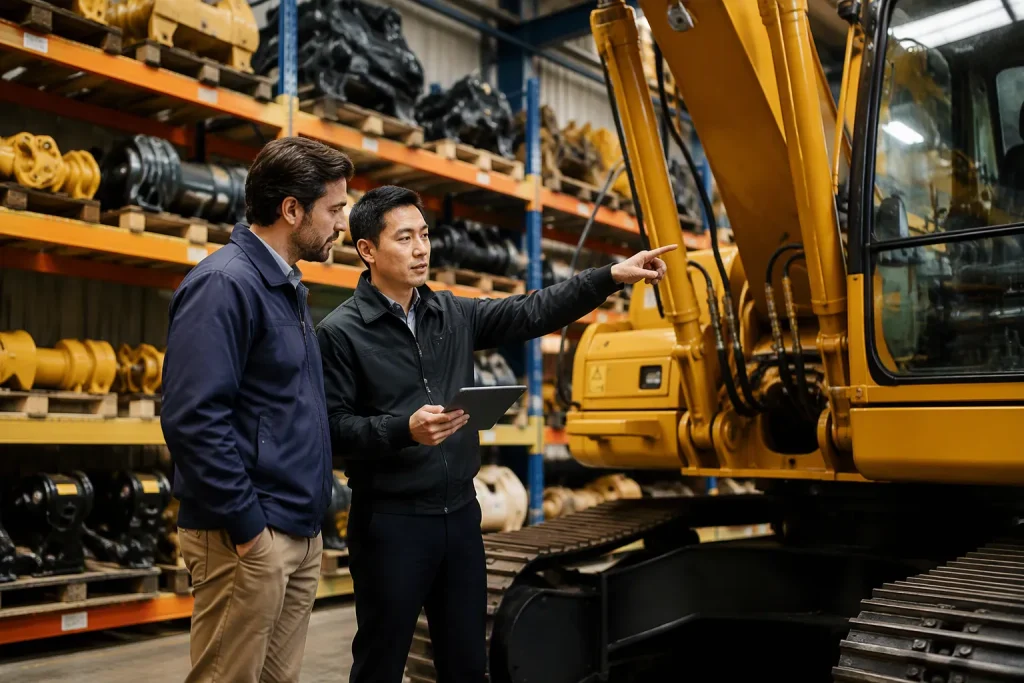
Start with one question: “What are your part warranties and return policies?” A wholesale excavator parts exporter who gives clear answers earns your trust. Answers that are vague mean trouble is coming.
Three risks come with every wholesale purchase you make. You might get the wrong parts, which wastes money and delays repairs. Shipping delays can stop your machine for weeks. Weak after-sales support leaves you stuck when a part fails early.
Ask how the parts will be inspected before shipment and how delays or discrepancies will be handled. Agreed inspection records and shipping responsibilities provide a clearer basis for the order than general assurances.
Ask the right questions before you pay. That habit protects your equipment uptime and your profit margin on every order. A careful buyer avoids costly surprises. A rushed buyer pays for them later.
Key Takeaways
Ask about warranties and return policies first. Clear answers earn trust.
Match part numbers with your excavator’s serial number. Avoid wrong parts.
Request relevant quality-management information and part-specific inspection or test records. Verify the evidence against the requirements for the actual parts.
Ask for every shipping term and cost in writing. That way, you can avoid surprise fees and delays.
Check a supplier’s references and history. Good suppliers save you time and money.
Core Questions for a Wholesale Excavator Parts Exporter
Start every talk with two questions. First, “Are these OEM or aftermarket parts?” Second, “Can you match parts to my excavator’s serial number?” These two questions stop the most common reason a wholesale purchase fails: getting the wrong part. A good wholesale excavator parts exporter answers both with clear details. If the answers stay vague, keep looking.
OEM vs. Aftermarket Parts
OEM refers to parts supplied through the original equipment manufacturer source; the manufacturer may produce them or have them made to its specifications. Aftermarket parts come from independent sources. Neither category removes the need to verify the exact part number, configuration and documented specifications.
Know which type you are buying. Ask the exporter to name the source for each part. Ask for packaging, labels, and catalog numbers the maker uses. A good supplier gives this information before you pay. Some exporters sell only aftermarket goods. Others offer both lines side by side. You need the difference spelled out on your quote, not hidden in fine print. Also ask how long the aftermarket brand has supplied excavator parts and which machines it supports. The answer shapes your risk.
Part Numbers and Machine Identification
Your machine’s data unlocks the match. A reliable exporter cannot confirm compatibility without your excavator’s make, model, and serial number. The serial number matters most. It shows the exact generation of your machine. Two excavators of the same model often use different parts. The serial number tells them apart.
Provide the installed part number where available, together with the model and serial number. Request written compatibility confirmation and the relevant drawing or dimensional information. Keep that confirmation with the purchase record, while resolving discrepancies with the service information before ordering.
Supplier Questions on Quality and Production
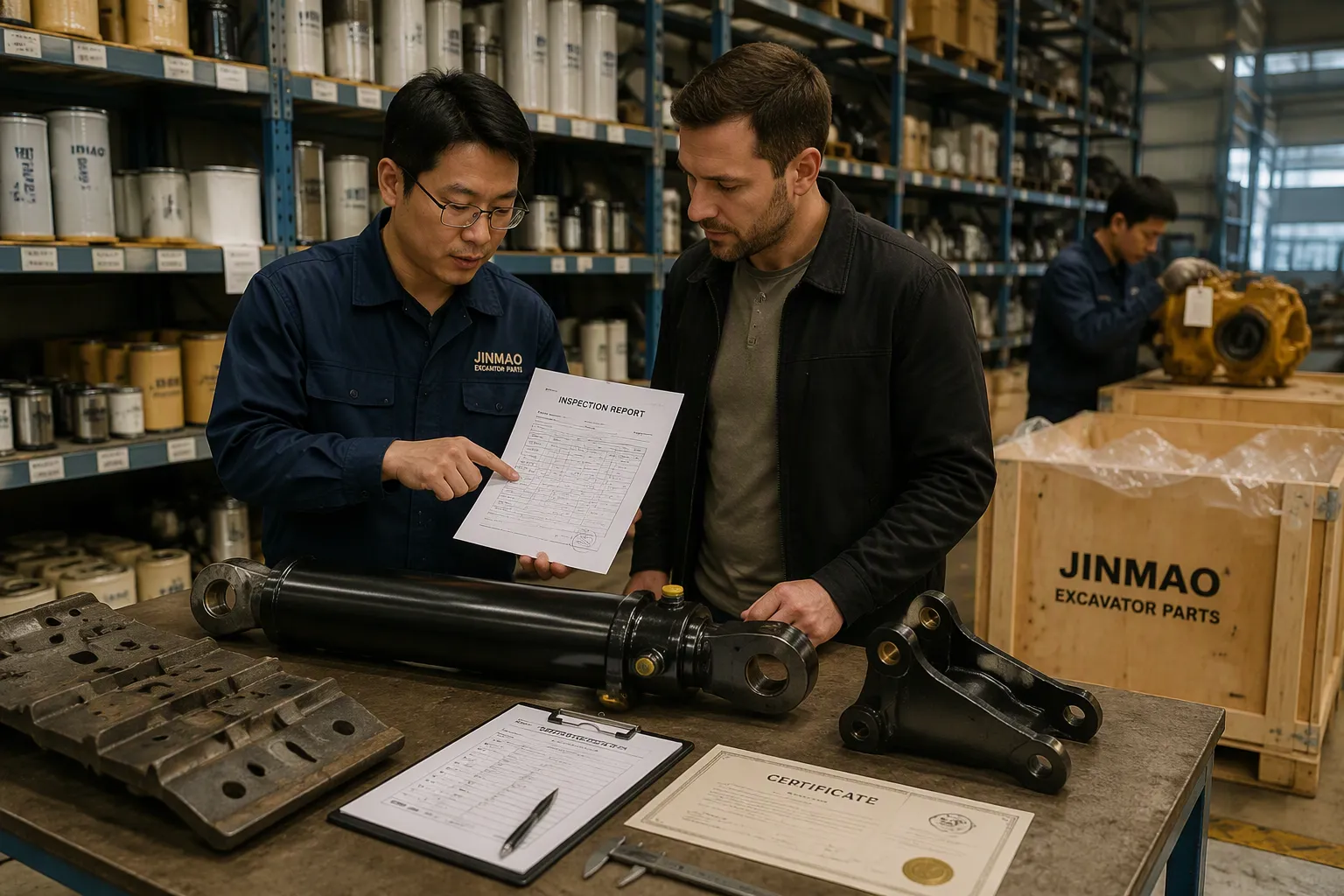
Certifications show what a supplier says they can do. Testing shows what they can prove. You want both before you pay. A good exporter is happy to be checked. A weak one avoids the subject.
Certifications, Testing, and Production Process
Ask the exporter to name their quality standards. ISO 9001 is the common benchmark. This standard describes a quality management system. It does not prove a part fits your machine. It shows the supplier uses controlled processes. Ask for a copy of the certificate. Check the certificate number with the issuing body. That step prevents losses.
Next, ask about their production process. Where does each part come from? Who machines the components? What checks happen before packaging? A reliable supplier explains every step. Ask for inspection reports for the exact parts you plan to order. These documents list size checks and material verification. They give you a paper trail if a problem shows up later.
For used-equipment parts, you need different answers. Ask about the maintenance history of the source machine. Ask whether you can set up a quality inspection before shipment. Some exporters offer video walk-arounds. Others send photos. Take one. A used part without inspection records is a gamble.
Common Failure Points and Custom Parts
A knowledgeable exporter knows where their parts fail. Ask: what wears out first? How does a failing part act? Good suppliers see warranty claims and field feedback. They tell you the weak points before you buy, not after.
Ask about stock availability. Which spare parts sit on the shelf right now? Which require a production run? Your jobs cannot wait weeks for a common filter. A supplier with solid parts supply keeps your machines working. Confirm lead times for in-stock items and factory orders. Write those numbers into your quote.
For a non-standard component, ask whether the proposed design can be evaluated against an approved drawing and the machine requirements. A sample alone may not reveal all material or operating specifications. Obtain technical approval for modifications rather than assuming custom manufacturing establishes suitability.
Pricing and Payment Terms for Wholesale OrderingPrices don’t mean much until you see them written down. You need full quotes before you agree to buy. A good exporter gives you these fast.
MOQ, Volume Discounts, and Total Cost
Ask for the exporter’s MOQ in writing. Exporters set this number to cover what it costs to make the goods. Your buying plan has to match that number. If you need less than the MOQ, ask if a smaller first order is possible. Some exporters let you try a test buy before you order in bulk. Others want a full commitment right away.
Volume discounts give you a better price when you buy more. Ask for a lower price at certain quantity levels. Each tier starts when your quantity passes a set amount. For each tier, the exporter should list the unit price. A detailed quote shows each part, quantity, and charge on its own line. If it’s not listed, don’t commit.
Compare the complete delivered cost of equivalent quotations. Include freight, insurance, applicable import charges and other expenses not already included in the stated shipping terms. Do not compare one supplier delivered total with another supplier unit price.
Payment Methods and Commercial Invoices
Agree on the payment currency, timing, milestones and inspection arrangements before placing the order. Advance payment, shipment-linked payment and credit arrangements create different exposures; none alone guarantees timely shipment. Assess the complete written contract and seek appropriate advice for unfamiliar payment arrangements.
Your purchase quote should state the currency. Currency changes can shift your total fast. Ask which payment methods the exporter takes. Confirm the fees for each method before you pick one.
Ask for a quotation or pro forma invoice for order and payment review, and confirm how the final commercial invoice will be prepared for the shipment. Check the buyer and seller details, descriptions, part numbers, quantities, prices, currency and shipping terms against the agreed order. Have the freight forwarder or customs broker confirm the documentation needed for the actual shipment.
A wholesale exporter with clear terms saves you from these surprises.
Shipping Terms and Export Document Questions
Shipping terms decide who pays when something goes wrong. Get these terms in writing before you pay. Ask the exporter to explain each term in plain language. Do not accept “standard terms” as an answer. Standard means different things to different suppliers.
Export Documents and Shipping Responsibility
Confirm the shipment documentation with the exporter and your customs broker. Relevant documents may include the commercial invoice, packing list, transport documents and origin information. A certificate of origin is required in some circumstances, but should not be described as universally mandatory for every parts shipment. Reconcile quantities and package details with the order.
Clear shipping terms establish responsibility for damage or delay. Ask who handles insurance. Ask who files a claim if a crate arrives crushed. Get the answers in writing. A pre-shipment inspection protects you here. Hire a third-party inspector to check the goods before they leave. That report gives you proof if a dispute starts later.
Lead Times and Replacement parts Availability
Ask about lead times for every item on your order. Some parts ship from stock. Others need a production run. Write both numbers into your quote. A long lead time on a critical part can stall your whole job.
Spare parts availability matters just as much. Ask which replacement parts the exporter keeps in stock. A strong spare parts supply keeps your machines running. Ask about availability of spare parts for older models too. Those parts often take longer to source. Confirm the lead time for each one.
Good parts support goes beyond the first sale. Ask how fast the exporter ships replacement parts after a warranty claim. Ask if they stock common wear items. A supplier with deep parts availability saves you weeks of downtime. That value shows up on your bottom line.
Warranty, Returns, and Technical Support
A warranty only helps you if you know what it covers. Ask the exporter to explain the coverage in simple words. Ask how long it lasts and what problems it covers. Good coverage includes defects in materials and workmanship. Weak coverage leaves out failures you can’t prove. Get these details before you order.
Warranty Coverage and Return Policy
Ask which parts come with a warranty. Some exporters cover every part. Others cover only big assemblies. Ask how long the warranty lasts. Ask when the time starts. Some policies start on the invoice date. Others start on the ship date. Ask what cancels coverage. Bad installation may cancel it. Unapproved repairs may too.
Ask for warranty terms in writing before you pay. Verbal promises vanish when problems come up. You need a document that lists covered parts and the exact time period. Keep it with your commercial invoice and packing list.
Ask about returning a wrong part. Ask about returning damaged goods. Ask about restocking fees. A restocking fee cuts your refund. Ask about the return window. A long window lets you check goods the right way. A short window may end before your shipment clears customs.
Return Responsibility and Dispute Handling
Agree who pays for return freight, inspection, replacement shipping and any restocking charges for each type of problem. The responsibility may depend on the contract and the cause of the discrepancy. Obtain the terms in writing rather than assuming the supplier will cover every expense.
Ask how the exporter settles disputes. Does one person handle claims? How fast do they reply? A strong supplier responds quickly. Ask for photo or video proof of damage. Ask about the timeline for a decision. A slow process makes downtime longer.
Ask about technical support before you close the deal. A good exporter answers questions about installation and fitment. Their support team should know their parts well. Good parts support saves time when problems appear. Strong parts availability matters for warranty replacements. Protect your spare parts budget by confirming they stock common items.
Checking If an Exporter Is Trustworthy and Financially Stable
Years in Business and Contractor References
Evaluate business history alongside relevant customer references, documentation and order performance. Length of operation alone does not prove quality or reliability. Where references are available, verify their identity and ask about comparable orders, delivery, defects and how problems were resolved.
Use a consistent supplier evaluation checklist and keep the evidence behind each assessment. Verify references through suitable contact channels rather than assuming a telephone call or email address proves authenticity. Compare the supplier response with the written records for actual transactions.
Ease of Doing Business and Communication
A steady exporter puts money into its operations. Ask about their warehouse, staff, and tools. A company with good systems serves you better. Ask who handles your account. Ask if that person stays available after the sale. You need a direct contact when problems come up.
Watch how fast the exporter answers your questions. A slow reply during the sales process often means slower service after you pay. Ask how they handle urgent requests. Ask how they report shipping updates. Clear, honest communication stops small problems from growing.
Review the supplier identity, payment beneficiary and agreed commercial terms before committing funds. Payment timing alone does not prove financial stability: advance payment can be a normal commercial condition. Investigate unexplained inconsistencies or pressure to depart from the agreed process, and evaluate the overall evidence instead of inferring solvency from one term.
Use the same checklist for every bulk purchase. Verify the proposed parts, warranty and return terms, itemized quotation, payment arrangements and shipping responsibilities. Confirm the actual documentation requirements with the exporter and customs broker.
Do not trust an exporter who hesitates on basic questions about parts, shipping, or after-sales support. Clear answers protect your uptime and your profit.
Keep the confirmed specifications and order records together so future purchases can be checked against the same requirements.
FAQ
How do I confirm a part fits my excavator before I order?
Give the exporter your machine’s make, model, and serial number. Ask for written confirmation that the part matches. Request a photo or drawing for critical components. A serial number identifies the exact machine generation. Two excavators of the same model often use different parts.
What should a warranty policy include?
Look for coverage of defects in materials and workmanship. Ask how long the warranty lasts and when the time starts. Confirm what voids coverage, such as improper installation. Get all terms in writing before you pay. Verbal promises disappear when problems arise.
Which export documents do I need before shipment?
Confirm the required documents with your exporter, freight forwarder and customs broker. Review the commercial invoice, packing list and transport details, and provide origin information or a certificate where needed. Reconcile the documents with the actual shipment rather than assuming every order uses the same requirements.
How can I check if an exporter is reliable?
Compare verified supplier information, relevant customer references and evidence of delivery and defect resolution. Ask for clear answers about the actual parts and order process. Treat response speed and business history as context, not proof of future performance.
For wholesale excavator parts orders, consider YNF Machinery. Share your machine identification, part-number list and quantities, and request compatibility confirmation, an itemized quotation and written shipping, inspection and return terms before purchasing.



