How do you find a steady, affordable source from wholesale excavator parts suppliers without downtime or lost profits? A bad part can cause machine failure, project delays, and budget overruns. This guide gives a step-by-step plan. You will learn to check wholesale excavator parts suppliers, inspect quality, plan pricing, and manage shipping. Every step gives you tools you can use. You can protect your fleet and bottom line. A reliable sourcing process starts here. You will leave with clear methods to evaluate wholesale excavator parts suppliers and get the right parts at the right price.
Key Takeaways
Good parts save money over time by cutting downtime and repair costs.
Look closely at suppliers to avoid fake parts and late shipments.
Know the part types: new, rebuilt, and aftermarket each have good points and bad points.
Check important parts like hydraulics and undercarriage before you buy.
Get better prices by sharing how much you plan to buy and by building good relationships.
Make sure parts fit your machine by using OEM numbers and serial numbers.
Make plans for shipping and stock levels to avoid expensive downtime.
Use a supplier checklist and total cost calculator for wise decisions.
Why Sourcing Quality Excavator Parts Matters
The Real Cost of Low-Quality Parts
A cheap price often hides a much bigger total cost. Over 5,000 hours of use, low-quality excavator parts cost $32,000 in total. High-quality aftermarket parts cost $16,850 over the same time. That is a difference of $15,150. The cost per working hour tells the same story: $6.40 per hour for low-quality parts versus $3.37 per hour for quality parts. The cheaper choice costs almost twice as much per hour. You pay less at first but much more later.
These numbers matter for your business. Every dollar spent on early failures comes out of your profit. You also face unplanned downtime, emergency shipping costs, and lost contracts. A single hydraulic pump failure can stop an entire crew. The real cost of a bad part is never just the part itself.
How Quality Boosts Uptime and Profitability
Quality excavator parts give clear benefits. The table below compares high-quality parts with lower-cost ones.
Aspect | High-Quality/Factory-Standard Parts | Lower-Cost Alternatives |
|---|---|---|
Initial cost | Higher upfront investment | Temporary financial relief |
Reliability | High | Lower |
Precision | High | Lower |
Longevity | Extended | Reduced |
Breakdown risk | Minimized | Higher |
Efficiency | Maintained | Compromised |
Service life | Maximized | Shortened |
Overall strategy | Invest in quality parts plus proactive maintenance | Short-term savings at the expense of long-term security |
Industry insights from parts makers and fleet managers show that using stronger parts often extends time between services. Your excavator stays working longer and needs fewer repairs. You get less downtime and more productive hours.
Using genuine Cat parts lowers the risk of sudden breakdowns that stop work. Equipment that keeps running keeps jobs on time and money coming in. This helps you avoid costly downtime.
Common Pitfalls to Avoid
One contractor chose lower-cost, non-standard excavator parts. The result was repeated machine breakdowns. After switching to higher-quality, exact-fit parts, reliability improved a lot. This example shows that putting price over quality and fit causes frequent failures.
Two mistakes happen again and again when sourcing excavator parts:
Buying parts that do not match the machine’s model and specs. Mismatched parts cause poor operation or even damage.
Ignoring small maintenance issues. Overlooking small problems like worn seals and gaskets turns into bigger, costlier failures.
A disciplined sourcing guide helps you avoid both traps. Check compatibility before every order. Fix small issues before they grow. Your equipment investment deserves that care.
How to Find Reliable Bulk Excavator Parts Suppliers
Finding good wholesale excavator parts suppliers takes a step-by-step plan. Do not just rely on luck or the cheapest price. A careful checking process protects your business from fake parts, late shipments, and money troubles.
Research and Vetting: Starting Points
Start by listing what you need. Write down the machine type, how many parts, the specs, and your budget before you talk to any supplier. This makes it fair to compare offers.
Look for possible suppliers at trade shows, industry groups, and business directories. Check each supplier’s online info, when they registered, and how well they answer questions. Be careful of prices way below normal. A discount over 20-30% often means fake or low-quality products.
Check that the supplier has a legal registration and business license. Make sure they pay taxes and can import or export. Ask for financial records from the last three years to see if they are stable. A good supplier shares clear financial information and answers your questions.
Key Criteria for Selecting a Wholesale Supplier
Check each possible partner against these important points. The right bulk parts supplier will do well in many areas.
Brand expertise and inventory depth
A supplier’s know-how about specific brands matters a lot. Parts are not the same between manufacturers. Different machine models have different hydraulic specs and tolerances. Ask about their experience with your exact machine models.
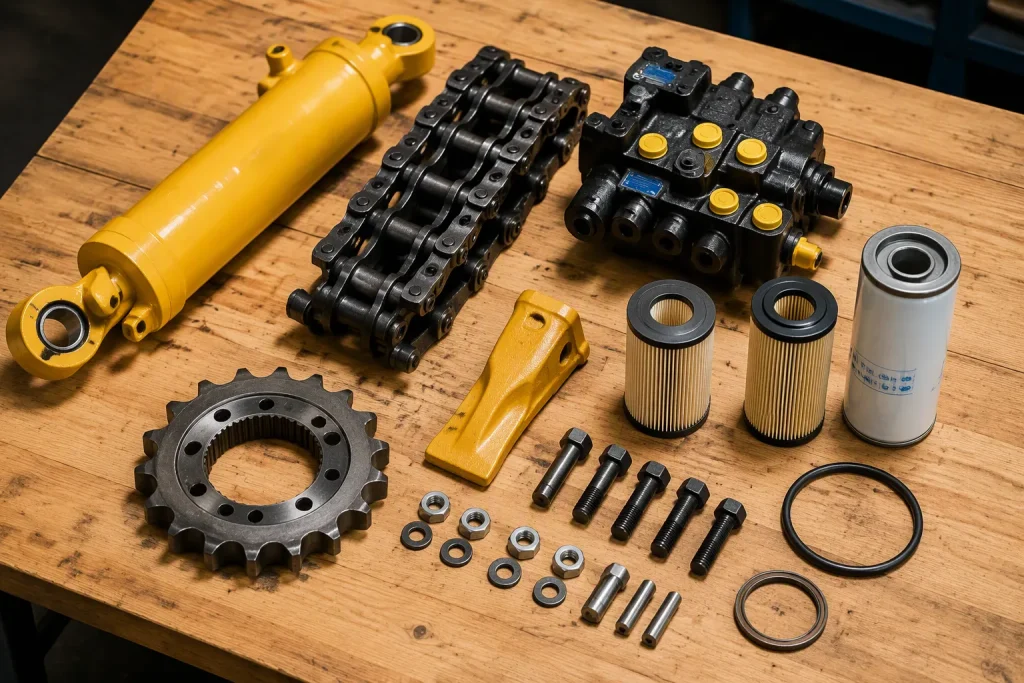
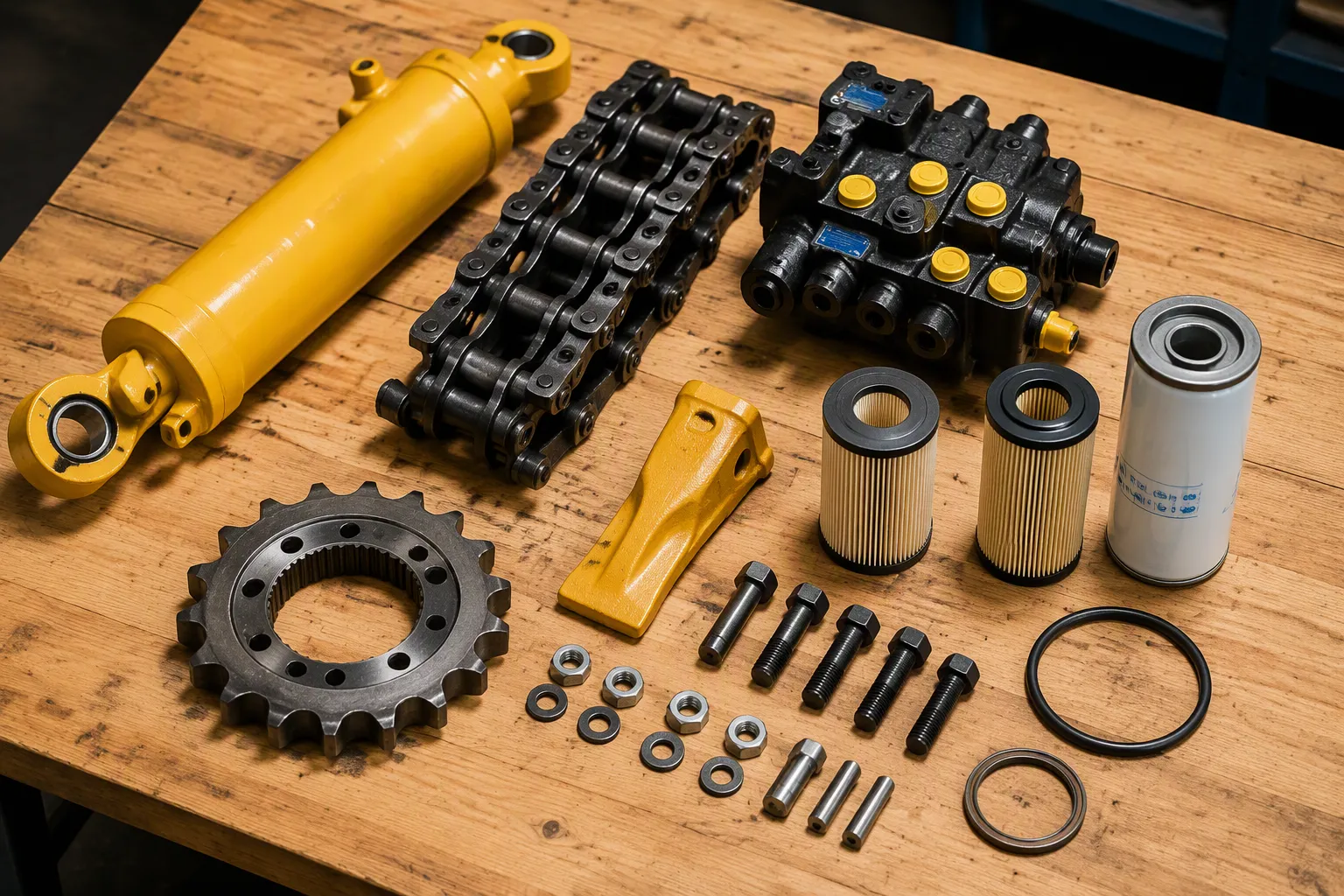
Having a big stock of parts prevents costly delays. A supplier with lots of on-hand stock for many brands and machine sizes avoids long 2-to-6-week overseas waits. Look for parts from small linkage pins to full final drives, swing motors, hydraulic pumps, and track link assemblies.
Part types (new, rebuilt, refurbished, OEM, aftermarket)
Know the differences between new, rebuilt, and refurbished parts. OEM manufacturers make parts to original specs. An OEM manufacturer gives exact fit and performance. Aftermarket parts save money but vary in quality. Rebuilt and refurbished options are in between. Ask for papers that show the part type and condition.
Shipping standards and lead times
Confirm how they ship and how long it takes. A good supplier gives real-time tracking and clear updates. Check their experience with customs and cross-border rules. Suppliers that have shipped across countries show they can deliver.
Customer support, warranties, and return policies
Good after-sales help affects your costs. Professional support cuts equipment downtime by 30%. Quick support improves maintenance efficiency by 25%. Sadly, about 62% of suppliers do not answer customer service emails fast. Test their response time before placing big orders. Ask for a warranty with a clear claim process.
Finding a Reliable Bulk Excavator Parts Supplier Internationally
Buying from overseas needs extra care. When looking for a good supplier abroad, checking the factory is very important.
Ask for a factory audit to confirm they are real. A basic audit checks that the factory exists, its capacity, and who to contact. A deeper audit checks quality systems, facility conditions, and worker rules. If you cannot travel, hire a third-party inspector in the supplier’s country.
Check the manufacturer’s export history. Ask how many units they shipped, to which countries, and over what time. Look at the factory floor by checking welding stations, hydraulic assembly areas, testing steps, and parts warehouses. Confirm certificates like CE and ISO 9001. Test their supply chain by ordering a small sample of common parts. Note dispatch time, shipping method, and part number accuracy.
Check dealer references by talking to buyers who have ordered for at least one year. Visit the factory if you can to see the production line and meet the quality control team.
Use these checks to pick the right bulk parts supplier for your business:
Method | Description |
|---|---|
Supplier Vetting | Check credentials, history, manufacturer ties; look for certificates and memberships. |
Facility Inspections | Ask for tours to see storage, handling, and inventory; avoid suppliers without good facilities. |
Transparent Communication | Set clear channels; good suppliers answer questions about sourcing and have return policies. |
Documentation | Ask for full purchase papers (invoices with part numbers, descriptions) to track the chain. |
Digital Authentication | Use QR codes, RFID tags, manufacturer tools (e.g., Caterpillar Electronic Technician) to check if parts are real. |
Price Analysis | Compare market prices; be wary of offers more than 20-30% below normal; think about total cost. |
Key certificates show a supplier is good:
Certification | What It Proves | Why It Matters |
|---|---|---|
ISO 9001 | Quality management | Steady quality and safety |
CE | European safety | Meets EU quality rules |
SGS | Third-party inspection | Independent quality check |
A Canadian supplier may face different import rules than suppliers from other places. Know your local rules before you finish any international order.
Excavator Parts Types and Quality Checks
New, Rebuilt, or Remanufactured: Which to Choose
When you buy excavator parts, you have three main choices: new, rebuilt, and refurbished. Each one fits different budgets and working conditions.
New parts come straight from an OEM excavator parts manufacturer. OEM excavator parts give you an exact fit and original performance. Genuine excavator parts make sure everything works with your machine. New parts cost the most, but they have the lowest chance of breaking.
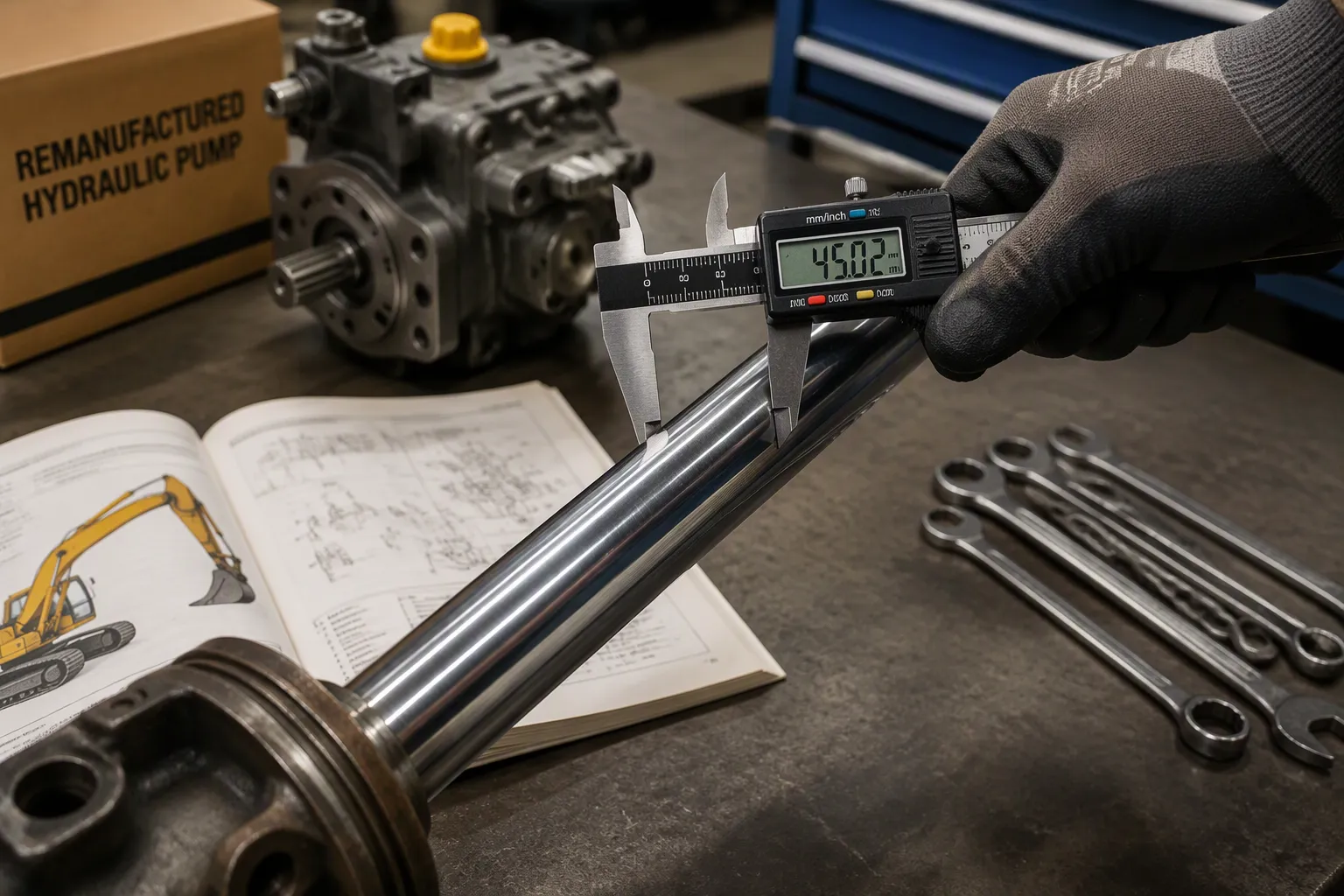
Rebuilt parts use your old core. A specialist takes the component apart, swaps out worn inner pieces, and puts it back together to factory tolerances. These cost less than new but still meet performance standards. Remanufactured parts go even further. The manufacturer fully strips the component and replaces every wear item. The result matches OEM performance at a lower cost. Many shops pick remanufactured hydraulic pumps and cylinders for high-wear jobs.
Aftermarket heavy equipment parts give you another option. They match OEM specs but come from independent makers. Your bulk excavator parts supplier can offer these at lower prices. An aftermarket excavator parts supplier saves you money, but your inspection decides if the part meets your standards.
Used machines often need extra compatibility checks. Past repairs may have added non-standard components. Always confirm fit against your machine’s specific serial number.
Core Parts to Inspect Before Buying
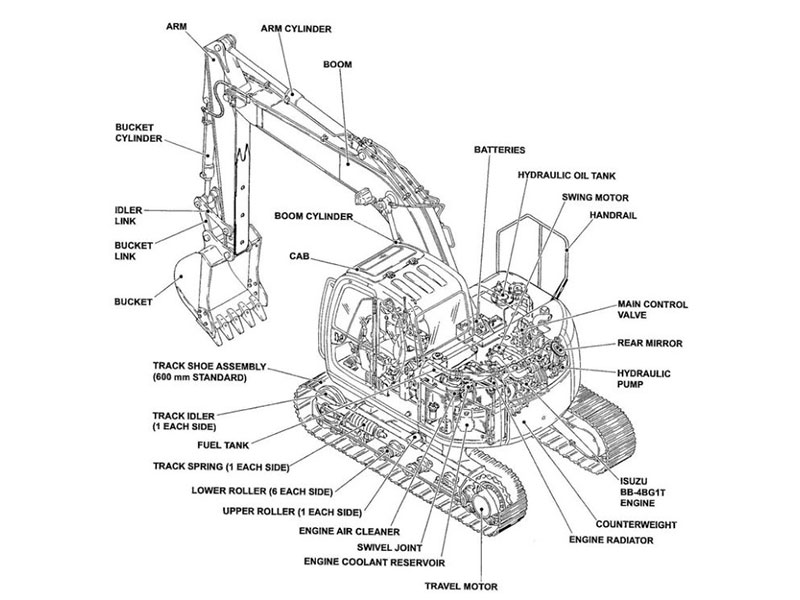
Hydraulic systems (pumps, cylinders, motors)
The hydraulic system powers every main function. Hydraulic pumps and cylinders must meet strict pressure and tolerance specs. Check pump housings for cracks or scoring. Inspect rod surfaces on cylinders for pitting or chrome flaking. Look for contamination in the hydraulic fluid. A clean system with little wear shows proper maintenance.
Final drives and travel motors send power to the tracks. Test rotation by hand if you can. Listen for grinding or knocking sounds. Check for oil leaks around seals. A smooth-turning unit means good internal condition. Replacing worn final drives and travel motors costs far less than fixing damage from a sudden failure. Always verify that replacement units match your machine gear ratio and mounting pattern.
Undercarriage and wear parts (tracks, rollers, sprockets, bushings)
Undercarriage components take up a major share of your maintenance budget. These excavator parts wear against rough ground every operating hour. Systematic inspection stops early failure.
The track chain is the main load-bearing element. Measure pin-to-pin distance against the OEM spec. A stretched chain can ruin a new sprocket quickly. Missing the bushing turn window wastes part value. Track shoe cracks, bends, or missing bolts mean you must replace them right away. Sprocket teeth with uneven wear lower transmission efficiency.
Bottom rollers hold up the machine weight. Check for fresh oil leaks, damage, and free rotation. Packed debris around rollers speeds up wear. Carrier rollers and idlers keep track tension. Inspect idlers for abnormal wear or unusual running positions. A worn idler causes track slip and damages other undercarriage components.
Track frame guides should not show bending or cracks. Final drives need inspection for impact damage. Unequal track sag between sides signals structural problems. Work through this checklist for every batch. Thorough inspection of undercarriage components extends the life of your entire drive system. Investing in quality undercarriage components lowers your total operating cost. Discuss availability of these parts with your bulk excavator parts supplier before committing.
Engine components and filters
Engine parts need careful verification. Check cylinder heads for cracks around valve seats. Inspect pistons for scoring or ring groove wear. Examine turbocharger shafts for play. Replace filters based on manufacturer intervals. Engine problems cause the most expensive downtime. Match part numbers against OEM catalogs. A single wrong injector can cut power and efficiency.
Quality Certifications and Testing Standards
Certifications prove that parts meet known benchmarks. An OEM excavator parts manufacturer usually holds ISO 9001. This confirms steady quality management. CE marking shows compliance with European safety rules. SGS reports give independent inspection results.
Testing standards differ by component. Hydraulic systems go through pressure and flow tests. Engine parts pass dimensional checks. Undercarriage components test for hardness and metallurgy. Request test reports for all critical excavator components. OEM excavator parts manufacturers keep strict quality control. Aftermarket excavator parts may lack the same level of documentation. A supplier who shares certification data openly shows confidence in their products. Combine inspection knowledge with documented certifications for informed decisions.
Pricing and Bulk Purchasing Strategies
What Influences Wholesale Pricing
The unit price is just one cost when you buy excavator parts. The full cost also includes shipping, duties, minimum order amounts, and part types. OEM, aftermarket, and reman parts each have different costs. An aftermarket hydraulic pump supplier costs less than OEM. OEM backorder parts can have higher prices. This price gap matters. Many suppliers show cost breakdowns.
Cost comparisons show that over a 5,000-hour lifecycle, high-quality aftermarket parts cost $16,850, while substandard parts cost $32,000—a difference of $15,150. This price gap matters. Your choice affects total cost. When you check wholesale excavator parts suppliers, know which tier you need based on your budget and how much you use the machine.
Negotiation Tactics for Better Rates
Knowing the full landed cost gives you power to negotiate. Use the following formula as your starting point:
Landed cost = CIF value + (CIF value × duty rate) + VAT on (CIF + duty) + local administrative fees.
Share your total volume projections with the supplier. When you order bulk excavator parts, you have leverage to ask for discounts. Think about combining orders from multiple machines. Negotiate a long-term contract. Talk about favorable payment terms. Ask for free shipping above a certain order value. Every concession lowers your total cost. Building a relationship with your supplier pays off. Consistent orders build trust. Suppliers may offer priority during shortages. They might share market insights. This long-term relationship keeps your supply steady. The goal is to lower total cost of ownership, not just the price per part.
Using Cost Comparison for Informed Decisions
Getting the best deal for excavator parts takes more than just comparing prices. You must compare the total cost of ownership. When you compare quotes from a bulk excavator parts supplier, use this method. Follow these steps:
Compare total scope, not price. Use the same destination, terms, and setup.
Confirm destination costs separately. Include freight, customs, taxes, and insurance.
Use pre-dispatch inspection. Keep records.
Write model, setup, and exclusions into the quote.
Separate machine price, export scope, freight, and destination charges.
Require inspection and document handover before release.
HS code classification affects duty rates. Use the correct HS code to avoid penalties. The landed cost formula is helpful:
Landed cost = CIF value + (CIF value × duty rate) + VAT on (CIF + duty) + local administrative fees.
Apply this formula to each quote. Compare the final landed cost. This step-by-step comparison prevents surprises and ensures you get the best deal. When you check an excavator parts supplier, this method shows the true cost of excavator parts. It helps you pick the most cost-effective option.
Logistics, Compatibility, and After-Sales Support
Ensuring Parts Fit Your Excavator Models
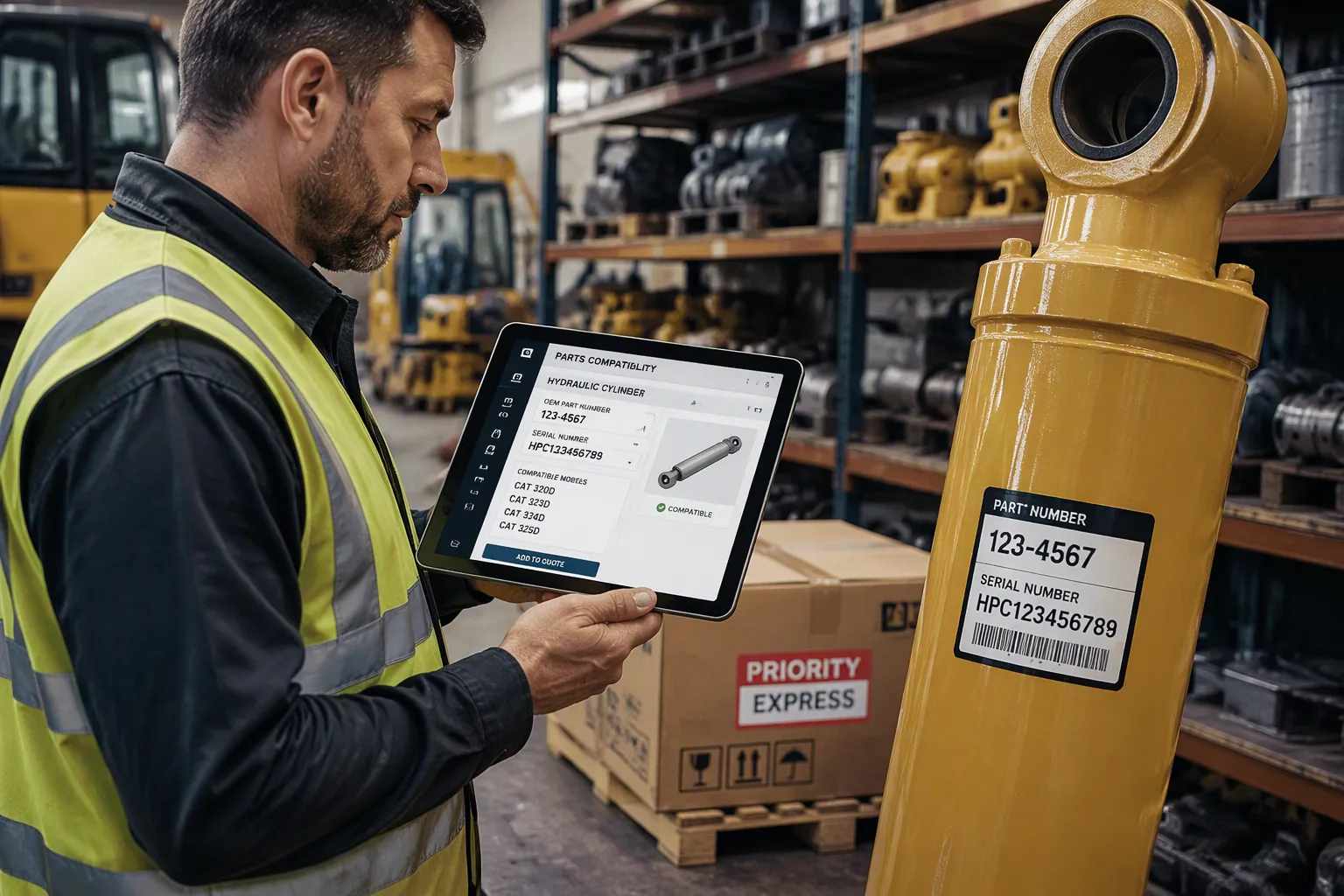
Compatibility mistakes lead to costly returns and downtime. You must check that every part fits before you order. Start by collecting the OEM part number, machine model, and serial number. Give these details to your supplier. The OEM part number lets you identify the part exactly and cross-check it with aftermarket options. The machine model and serial number show the exact series and version.
Cross-check model details against OEM guidelines. This step makes sure the part fits your machinery correctly. Top suppliers keep large databases that link their parts to OEM models. These databases allow direct match checks and give quick reference for fast identification. They also offer detailed lists of different models and parts. Matching data based on evidence ensures accuracy. A trustworthy excavator parts supplier will confirm compatibility before shipping. This practice keeps you from ordering the wrong excavator components.
Shipping Options and Lead Time Management
Shipping methods depend on cargo type and how urgent it is. Traditional freight moves large volumes at low cost. This model works for retail stock but fails for critical after-sales service. When a large excavator goes down, you do not need a shipping container.
Traditional freight is built to move large volumes at the lowest possible cost. This model works for retail stock but is a disaster for critical after-sales service. When a large excavator goes down, you do not need a shipping container.
Standard networks are too slow for B2B spare parts. Every hour can cost thousands of dollars in lost revenue. Fixed schedules cannot handle emergency needs. You cannot track a critical spare part with unclear data. General carriers usually lack the special handling needed for sensitive or high-value components. Time-definite delivery services put your inventory in a priority network. This helps you make the most of the “Golden Hour” — the short window in which a part must arrive to prevent a total mechanical failure.
Lead times for bulk undercarriage orders from China vary by supplier capacity and order size. A supplier with a large facility can support steady output for high-volume production. Confirm sample and bulk lead times before placing orders. Transit times from China to major ports usually range from two to six weeks, plus inland delivery and customs clearance. Shipping costs and times vary depending on method and urgency. Typical transit times from China to major ports are two to six weeks.
Build safety stock for critical components. Place orders earlier and share forecasts with suppliers. Qualify backup suppliers for high-risk categories. Think about alternative specifications when primary options are unavailable. Safety stock levels should reflect lead time variability and the cost of stockout. For critical components, a small buffer is cheap insurance against expensive downtime. Most equipment dealers use a hybrid approach: just-in-time for predictable consumables, just-in-case for critical components with long or unreliable lead times. Lead times for some components can be long, making just-in-case planning essential for any component tied to machine uptime.
Set minimum and maximum stock levels for critical parts. Track usage rates and reorder points. This inventory depth and availability protects your fleet from unexpected failures.
Warranties, Returns, and Technical Assistance
A fair claim window should combine calendar time with operating hours. This balances testing time and storage liability. For example, a combination of time and hours. A mandatory inspection period upon receipt prevents late claims for shipping damage.
Warranty coverage typically includes manufacturing defects and excludes operational failures. Verification methods include microscopic analysis, metallurgical testing, and visual inspection. Freight allocation for defective returns must be clearly stated. The supplier may cover return freight above a threshold, the buyer may handle local disposal, or you may share the cost. Define inspection nodes: immediate visual inspection upon unloading, random sampling and testing within the first few days. Documentation requirements include purchase order number, batch ID, detailed photos with scale references, video evidence for functional failures, and comparison with the pre-shipment inspection report. A claim window from arrival applies for visible damage. Choose a bulk excavator parts supplier who provides clear warranty terms and responsive technical support.
Bulk Excavator Parts Supplier Checklist and Tools
Supplier Evaluation Checklist
A good bulk excavator parts supplier checklist turns fuzzy feelings into facts. Ask every candidate these questions before you pick a bulk excavator parts supplier:
Do you give a certificate of origin, a correct commercial invoice, and matching serial numbers on all papers?
Is the part in stock, being made, or bought from a third party? Ask for current photos and a dated readiness note.
Can you put production, inspection, inland transport, port handling, and sea freight into one timeline?
Which packing and loading method do you use — container, flat rack, break bulk, or Ro-Ro?
Will you give a pre-shipment inspection report on hydraulic performance, undercarriage wear, and structural integrity?
Do your invoice, packing list, bill of lading, and HS code match exactly?
Can you confirm the dispatch date, port of loading, and equipment weight before the vessel leaves?
Do you keep routine service parts in stock, and what is their lead time?
Will you give illustrated parts catalogs, maintenance intervals, and technical support contacts?
Score each answer on delivery timing, escalation quality, and document consistency. Procurement teams track these three areas because they show real reliability. Watch for tight delivery promises near quarter-end and silence after order acknowledgment. These patterns show a supplier who wins orders but struggles to fulfill them.
Total Cost of Ownership Calculator
The purchase price is the smallest part of the real cost picture. Build your calculator around key cost categories such as acquisition, fuel, maintenance, repairs, downtime, labor, quality, and residual value. Downtime often dwarfs the repair bill itself. Filtration, seals, bearings, and engine components act as levers that protect every other category. A failed seal turns a routine service into an unplanned teardown. Compare quotes from wholesale excavator parts suppliers using this full model, not the sticker price alone.
Compatibility Cross-Reference Guide
Wrong part numbers cause returns, delays, and damaged machines. Modern tools solve this problem fast. AI-powered parts lookup tools use computer vision and a connected heavy vehicle parts database to cross-reference part numbers for diverse fleets. Technicians photograph a component or describe a fault and receive the correct part number, compatible alternatives, supplier availability, and pricing in seconds. The system supports photo identification, fault code lookup, and VIN-specific search across major heavy equipment makes. Some manufacturers offer reference guides and apps for parts identification. Ordering through official channels works around the clock once you identify the right number. Build your own cross-reference sheet for every machine in your fleet. Record the OEM number, approved aftermarket equivalents, and the serial number range each part fits. Update it after every order. This habit protects you from compatibility errors and keeps your excavator parts records clean.
You now have a full guide for sourcing wholesale excavator parts. A steady supply chain stands on four pillars: careful supplier vetting, clear knowledge of part types, smart pricing strategy, and solid logistics planning. Use the supplier checklist and total cost of ownership calculator from the last section. They turn each decision into a step you can measure. When you compare suppliers, you protect uptime and profit at the same time.
For your next wholesale order, look for a bulk excavator parts supplier that offers verified quality and dependable support. Contact a supplier for a free quote. You can also download the Bulk Excavator Parts Supplier Checklist today. Your excavator parts supplier should earn your trust, not just your payment.
FAQ
How do I verify a wholesale supplier is legitimate?
Check their business license, tax records, and financial history. Ask for a factory audit or hire a third-party inspector. Request certificates like ISO 9001, CE, or SGS. Test response times before placing large orders. A legitimate supplier shares documentation openly and answers your questions promptly.
What is the difference between OEM, aftermarket, and remanufactured parts?
OEM parts meet original factory specifications and cost the most. Aftermarket parts come from independent makers and save money but vary in quality. Remanufactured parts are fully stripped and rebuilt to match OEM performance at a lower cost. Each option fits different budgets and machine usage levels.
How do I avoid compatibility errors when ordering excavator parts?
Collect the OEM part number, machine model, and serial number before ordering. Give these details to your supplier for cross-checking. Use parts lookup tools and build your own cross-reference sheet. Record approved aftermarket equivalents and serial number ranges. Update your records after every order to prevent future mistakes.
What warranty terms should I expect from a bulk supplier?
Look for a claim window combining calendar time and operating hours, such as a combination of time and hours. Confirm freight allocation for defective returns. Require a mandatory inspection period upon receipt. Choose suppliers with clear warranty terms and responsive technical support.
How do I calculate the true cost of excavator parts?
Build a total cost of ownership model covering key areas such as acquisition, fuel, maintenance, repairs, downtime, labor, quality, and residual value. Downtime often costs more than the repair itself. Compare quotes using this full model, not just the sticker price.
What shipping method works best for urgent parts?
Time-definite delivery services put your inventory in a priority network. This helps you meet the “Golden Hour” when a part must arrive fast. Traditional freight moves large volumes cheaply but fails for critical after-sales service. Choose the method based on cargo type and urgency.
How do I negotiate better rates with suppliers?
Share your total volume projections and combine orders from multiple machines. Ask for long-term contracts, favorable payment terms, and free shipping above a certain order value. Consistent orders build trust. Suppliers may offer priority during shortages and share market insights.
What should I inspect when receiving a parts shipment?
Check for visible damage within a defined inspection period. Verify part numbers against your purchase order and packing list. Take detailed photos with scale references. For functional failures, record video evidence. Compare everything against the pre-shipment inspection report. Document all findings before filing any claim.