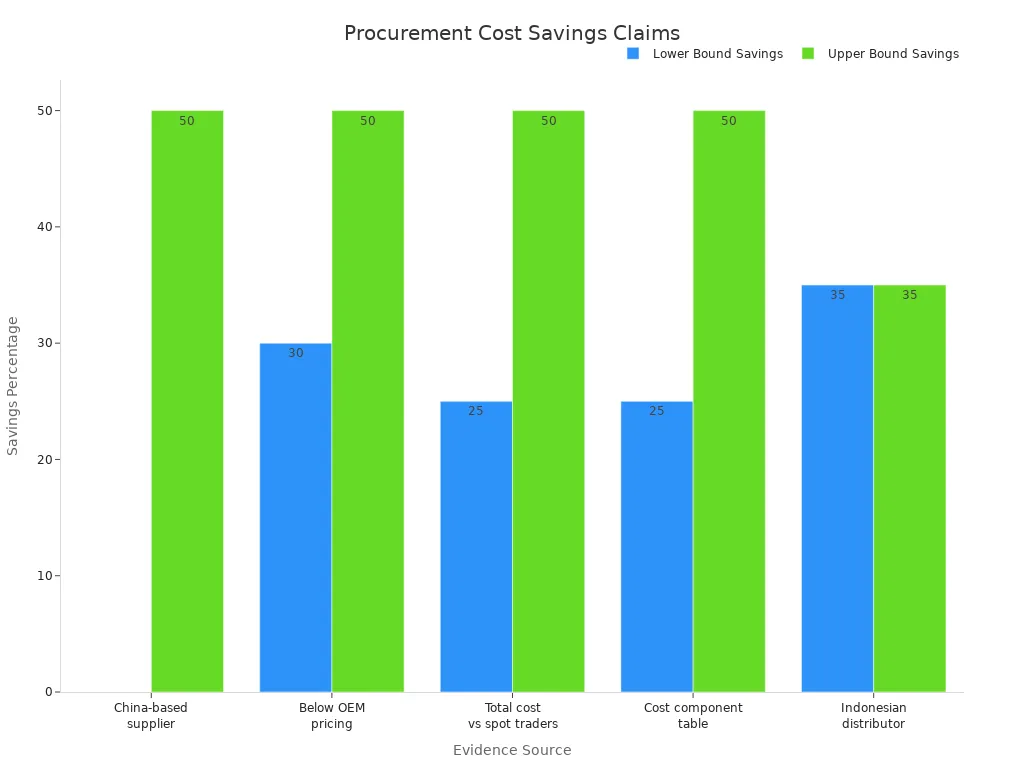
As fleet managers and builders, you need to stop expensive machine breakdowns and lower your spending. Buying straight from the source removes extra fees, cutting your parts costs by up to half.
Making a bulk order for excavator parts directly from a manufacturer improves your delivery process. Using factory-direct parts creates big savings. YNF Machinery serves as a dependable partner for quality equipment parts with 35 years of global trade experience. This guide explains every main buying step for your team. You must check supplier history, confirm machine serial numbers, and discuss contract terms. Ordering heavy equipment parts demands careful quality inspections before shipping. Getting better parts protects your working budget very well.
Key Takeaways
Buying excavator parts right from the maker can lower your total costs by as much as fifty percent.
Visiting the factory yourself and checking company permits prove that a supplier is a real parts maker.
Using set part numbers stops costly shipping mistakes and keeps your work on schedule.
Good quality replacement parts offer original factory strength for less money.
Official bank promises and step-by-step payments help keep your money safe during big business deals.
Third-party pre-shipment inspections make sure parts are fully checked for quality before final delivery.
Guide to Vetting Heavy Equipment Parts Manufacturers
Distinguishing Direct Manufacturers from Trading Companies
Verifying Business Licenses and Registrations
You need to check legal papers before purchasing heavy equipment parts. Always ask for business licenses to see what a company actually builds. YNF Machinery shows proven business credentials with more than 35 years of global trade work.
Document to Request | Verification Purpose |
|---|---|
Business License | Shows official business permission for making goods |
Paper with Company Name & Current Date | Proves real access to a active factory space |
Company Address & Export Details | Tells real production factories apart from basic sales offices |
Conducting On-Site and Virtual Audits
You ought to ask for a live video call straight from the main factory floor. Running CNC machines and busy assembly spots prove real manufacturing work.
Any seller that will not share factory pictures, show video tours, or allow visits is a risky choice.
Evaluating Production Capabilities and Quality Assurance
Reviewing ISO Certifications and Testing Reports
You need to check ISO 9001 quality certificates to ensure proper global standards. Asking for group test reports lets you check strength and correct part sizes.
Test Category | Specific Tests | Evaluation Purpose |
|---|---|---|
Performance Testing | Hardness testing and tensile testing | Checks part strength and physical properties |
Quality Assurance | Random sampling inspection reports | Keeps quality steady and tracks each production batch |
Inspecting Machining and Assembly Infrastructure
You want large factory output for construction equipment parts like overhaul kits, turbochargers, and fuel injectors. Modern plants use a 100,000 square meter factory space to keep full build lines in one building. Automated Schuler 5-station automatic forging lines make strong, heavy pieces. A steady maker supplies reliable goods to stop costly work delays.
Testing Samples and Verifying Component Fitment
Performing Stress and Metallurgical Testing
You should run stress tests on sample pieces before placing large orders. Metal testing helps you tell good parts and genuine parts from fake items. Both OEM components and aftermarket options need careful quality checks. Strong replacement parts stop sudden machine breakdowns during tough, hot jobs. Buying aftermarket spares helps save fleet money while keeping machines running well.
Testing Fitment on Active Excavator Fleets
You must put sample replacement parts right onto working construction excavators. A exact match makes daily repair work easy and stops fixing mistakes. Doing routine care with exact replacement components keeps your fleet running well.
You ought to review total supplier reputation before approving long-term purchase contracts. A strong supplier reputation ensures dependable shipping dates and proper component fitment for all construction jobs.
Preparing Specifications for a Bulk Order for Excavator Parts
Standardizing Part Numbers and Serial Numbers
Cross-Referencing Machine Models and Serial Breaks
You must standardize part numbers to avoid data errors during purchasing. Using clear numeric codes simplifies communication with manufacturers.
Francis Criqui, Director of Engineering Standards, General Motors Corp.: “The easiest and simplest solution is a purely sequential numbering system where the number has no significance other than [as] a tracking ID.”
Systematic tracking keeps your fleet database accurate. Maintaining unique part numbers between 6 and 8 digits prevents mis-shipments during buying heavy equipment parts.
Mapping Schematics Across 26+ Major Brands
Ignoring compatibility issues causes expensive machine delays. You must map schematics accurately across different machinery designs. YNF Machinery offers compatibility across more than 26 excavator brands to protect your operations.
Best Practice | Description | Relevance to Multi-Brand Excavator Bulk Orders |
|---|---|---|
Use numeric identifiers | Avoid letters to prevent confusion | Simplifies sharing data with global suppliers |
Maintain consistent length | Keep part numbers 6-8 digits | Provides uniform standard across brands |
Exact matching guarantees proper component fitment for water pumps, gaskets, and oil coolers. Checking schematics saves time and maintains overall build quality.
Balancing MOQs with Inventory Management
Navigating Minimum Order Requirements Across Product Lines
Managing stock levels requires balancing minimum order quantities with spending limits. Buying construction equipment parts in larger volumes reduces your overall expenses. YNF Machinery supports low minimum order quantities. This flexibility lets you buy essential Excavator Engine Parts without locking up capital.
Classify items into groups using ABC inventory analysis.
Calculate minimum levels using daily usage rates and supplier lead times.
Set automatic inventory alerts to trigger purchases.
Consolidation Strategies for Mixed Component Orders
Combining different parts into a single shipment lowers freight costs. Buying heavy equipment parts together simplifies tracking and reduces administration work.
Buyers save 20% to 50% through direct wholesale orders.
Strategic volume orders yield discounts between 15% and 25%.
Consolidating orders helps you maintain proper stock levels for regular maintenance. Planned procurement prevents stockouts during heavy fleet usage.
Evaluating OEM Replacement Parts vs. Aftermarket
Comparing Material Grades and Durability
You must evaluate material grades when comparing oem and aftermarket options. Top aftermarket replacement parts deliver strong durability at lower costs.
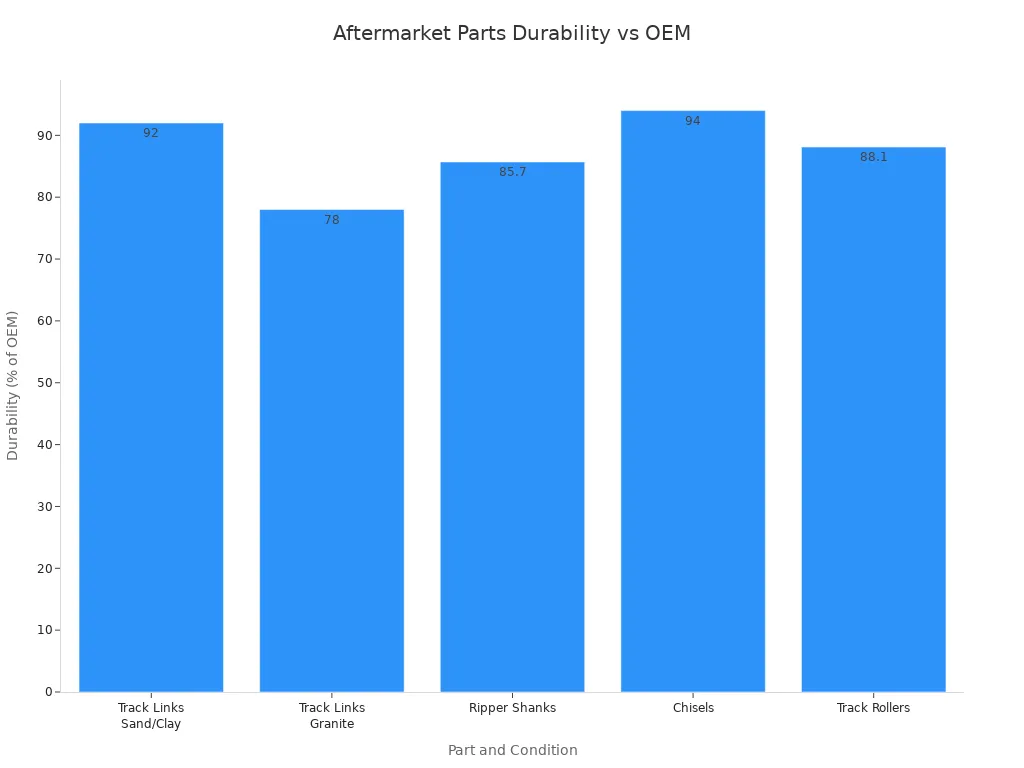
For instance, aftermarket breaker chisels achieved 94% of OEM life at 48% lower cost in mining tests. High-quality parts meet tough operational demands effectively. Choosing tested aftermarket items ensures strong performance during severe earthmoving jobs.
Cost-Benefit Analysis for Fleet Maintenance
Managing total maintenance expenses requires balancing initial price against component lifespan. Using reliable replacement components reduces total machine maintenance costs.
OEM replacement parts offer guaranteed fit for critical systems. However, aftermarket options provide major savings for high-wear components. Fleet managers lower long-term operating costs by performing regular maintenance with trusted aftermarket items. Selecting high-grade options protects your machines during demanding construction projects. Executing a planned bulk order for excavator parts secures your supply chain and improves financial performance.
Negotiating Commercial Terms and Pricing Structures
Establishing Volume-Tiered Pricing Models
Benchmarking Raw Material Costs Against Quotes
You need to check metal market costs before placing a large order for excavator parts. Global metal prices change the cost to make heavy equipment components. Knowing base metal rates gives you real leverage during initial business talks.
Checking factory prices against metal trends helps you verify true production costs. Smart ways of buying heavy equipment parts keep your budget safe from extra markups. You can get fair prices by studying metal market shifts before signing papers.
Securing Long-Term Fleet Supply Agreements
Long-term deals freeze predictable prices for routine care across all your construction machines. Setting multi-year supply plans helps factories buy raw items easily over long schedules.
These supply contracts ensure stable price levels during sudden market shifts. Steady part availability keeps your heavy machines running on job sites without any breaks. Reliable schedule deals protect your fleet from unexpected repair delays.
Structuring B2B Payment Terms and Escrow
Negotiating Deposit Percentages and Letters of Credit
Setting fair payment terms lowers your upfront cash risks during big purchase deals. Large order plans let you ask for smaller down payments on key machine parts.
Letters of credit protect money moves between global trading partners very well. Banks send final money to the maker only after checking full export papers and shipping slips. This safety setup stops money loss and keeps deals safe for everyone.
Tying Payments to Pre-Shipment Inspection Milestones
You should connect final payments right to strict factory checks before items ship out. Outside inspectors check part sizes and metal strength before packing to meet exact standards.
Passing official check papers starts the last payment step to your supplier. This planned payment step keeps quality high across every batch before shipping. Tying final money to inspection steps stops cargo fights after shipment arrival.
Establishing Warranty Terms and Defect Policies
Defining Return Protocols for Out-of-Spec Parts
Clear return rules stop costly fights when you get wrong or broken parts. Official buying papers must detail exact steps for sending bad parts back to the factory floor.
Workers check incoming goods carefully during regular machine care routines. Quick swap rules stop long machine delays on busy job sites. Detailed claim deals state who pays shipping costs for returned bad items.
Securing Spare Part Credit Allowances
Getting extra store credit makes it easy to process claims for small part issues. Making plants often give direct account credits instead of asking for returns on small aftermarket spares.
These money credits apply easily to your next orders for replacement parts. Fleet leaders lower long-term machine care costs through firm quality rules and good payment terms. Store credits save helpful office time for both businesses.
Managing Logistics, Customs, and Shipping Execution

Selecting Incoterms for International Freight
Comparing FOB, CIF, and DDP Risk Profiles
For first-time importers, CIF or DDP is usually the safest choice.
Incoterm | Party Responsible for Arranging Insurance | Risk Transfer to Buyer |
|---|---|---|
FOB | Buyer | Occurs upon loading goods onto vessel at origin port. |
CIF | Seller | Occurs when goods are on board vessel at origin port. |
DDP | Buyer (unless agreed) | Occurs upon delivery to buyer’s named place. |
You select trade rules to manage shipping costs and delivery risks. Free on Board gives you total power over ocean shipping choices. Cost, Insurance, and Freight shifts primary delivery arrangements to the seller. Delivered Duty Paid simplifies door-to-door delivery for new buyers.
Managing Customs Duties and Tariff Classifications
You handle import taxes by labeling incoming goods correctly. Incorrectly labeling heavy components causes expensive border delays and sudden fines. You must check local customs rules before your order leaves the factory.
Clear import rules protect your purchasing money from extra fines. Correct tax calculations prevent surprise port fees during ocean transport.
Heavy Component Packaging and Export Standards
Anti-Corrosion Preservation for Ocean Freight
Long sea trips expose steel parts to harsh salt air and moisture. Sellers put protective chemical coatings on bare metal surfaces before packing. Vacuum-sealed barrier bags prevent rust from forming inside ocean containers.
High component quality relies on proper moisture protection during sea travel. Sealed plastic bags protect smooth surfaces during long ocean trips. High manufacturing quality guarantees strong part strength under heavy dampness.
Custom Palletization for Engine and Hydraulic Units
Heavy engine parts need strong wooden boxes for safe transport. Tough wooden bases support heavy loads during forklift loading. Custom internal braces prevent movement damage inside shipping containers.
Proper structural bracing keeps delicate parts safe during transport. Heavy steel items stay still across rough sea movements.
Ensuring Import Compliance and Documentation
Verifying Harmonized System (HS) Codes
You check global tax numbers to clear imports quickly. Excavator parts usually fit under HS Chapter 84, while full excavators use code 8429.52.
Exact tax numbers ensure correct fee math at border stops. Correct group labels speed up check-in routines at arrival ports. Importing high quality machinery components demands strict labeling precision.
Securing Certificates of Origin and Bills of Lading
You must gather key import papers before your cargo arrives:
Certificate of Origin to get lower tariff costs.
Commercial Invoice showing purchase costs, model numbers, and maker facts.
Packing List detailing cargo weight and box sizes.
Bill of Lading serving as proof of delivery and travel records.
Complete shipping papers stop extra port storage fees. Correct records promise smooth customs clearance for all your heavy replacement parts. Buying essential excavator parts directly needs proven shipping papers. Keeping extra spares and critical machinery parts cuts potential job delays.
Ensuring Quality and Post-Delivery Inspection
Implementing Third-Party Pre-Shipment Inspections
Setting Factory-Floor Inspection Checklists
You need to set firm factory checks before shipping heavy excavator parts. A careful testing process makes sure every part matches top standards.
Engine Start & Idle: Test for quick starting and smooth gas pedal reaction.
Monitoring Systems: Make sure the main screen shows no active error codes.
Operational Performance: Pay attention for weird shakes or odd sounds.
Anomaly Detection: Take photos of any hot spots or flashing warning lights.
Fluid Connections: Inspect every hose and joint for liquid drips.
Reference Manuals: Keep help guidebooks nearby and update safety rules every three months.
Standardizing Random Sampling Protocols
You keep your fleet safe by testing random sample parts from every group. Quality checkers pull pieces to confirm metal strength and exact sizing. This check blocks bad components from ever reaching your work area.
Wise buyers check physical traits to prevent getting any fake product. Checking item strength prevents surprise equipment breakdowns on the job site. Good building methods help non-original parts match official factory designs.
Container Loading and Transit Monitoring
Supervising Weight Distribution and Cargo Lashings
You avoid shipping damage by watching heavy loads get placed in containers. Balanced cargo weights keep delivery trucks safe on the road.
Category | Best Practice Requirement |
|---|---|
Weight Distribution | Put heavy items near the front to stop dangerous swaying. |
Lashing Principles | Pull metal chains tight to stop the cargo from shifting around. |
Tie-Down Points | Fasten marked hook spots far away from soft hydraulic hoses. |
Equipment Specs | Make sure strap strength limits match half of total cargo weight. |
Execution | Use four steel chains and set holding angles between 25° and 45°. |
Tracking Ocean Freight and Port Clearance
You follow ocean cargo closely to process import goods without long delays. Helpful office teams get papers ready to speed up cargo drop-off steps.
You examine shipped goods right when boxes arrive at your repair shop. Complete papers ensure easy border passage and simple help after delivery. Quick releases keep your heavy construction equipment working right on time.
Building Long-Term Factory Partnerships
Conducting Quarterly Supplier Scorecards
You keep standards high by grading factory work every three months. Following clear shipping numbers helps you control total repair spending. Careful testing steps ensure smooth job site work.
On-Time Delivery Rate: Protects your work plans from dropping behind schedule.
Quality Rating: Measures how well goods match build rules.
Defect Rate: Keeps track of broken items and fixing fees.
Fill Rate: Stops partial deliveries from messing up repair work.
Securing Priority Production Slots During Peak Demand
Strong factory ties give your team early factory spots during busy months. Dependable shipping schedules let you do normal fixes without sudden delays. Close supplier bonds help you get good parts when buyer demand jumps.
You protect repair money by picking safe OEM or non-original motor options. Buying a dependable replacement component adds many extra years to total machine life. Working with a proven plant promises simple fixes for all heavy replacement parts. Getting main machine parts from a good supplier brings lasting success.
Placing a successful bulk order for excavator parts requires thorough factory vetting, precise technical specifications, strategic commercial negotiations, and strict pre-shipment inspections. Sourcing high-grade heavy equipment parts, such as premium engine components, reduces overall maintenance costs and prevents expensive fleet downtime.
Follow this concise procurement checklist for key milestones:
Verify machine serial numbers to confirm component compatibility.
Perform rigorous sample testing to verify build quality before full production runs.
Agree on clear Incoterms to manage shipping risk effectively.
Performing regular maintenance with top oem quality replacement parts protects your active construction machinery. Buying high-grade components ensures long-term reliability. Contact YNF Machinery today for competitive quotes, technical guidance, and reliable fulfillment.
FAQ
How do you verify if a supplier is a direct manufacturer?
You should ask to see legal business permits and shipping papers. Always demand a live video tour or visit the actual plant. Watching active build lines and heavy equipment proves they truly build items.
What is the benefit of ordering aftermarket excavator engine parts in bulk?
Buying large batches of replacement spares cuts buying costs by a lot. Top aftermarket goods match or beat original factory builds. They offer long-term power while keeping your repair budget low.
How do you ensure correct fitment across different excavator brands?
You need to use uniform part numbers and match tool designs with build dates. Always double-check diagrams before buying items like water pumps, seals, and oil coolers.
What payment terms protect buyers during direct manufacturer orders?
You can ask for smaller down payments and use official bank payment notes. Linking final cash transfers to factory check steps keeps your money safe from bad goods.
Why are pre-shipment inspections crucial for bulk orders?
Factory checks before loading confirm steel strength, exact part sizes, and build quality. Third-party reviewers check random pieces to keep bad parts from shipping out.
Which Incoterms work best for international heavy component shipments?
CIF or DDP shipping rules give new buyers the safest choices available today. These terms move shipping risks and make border tax rules easy during sea trips.